Mopreme Shakur [Interview]

The 90’s were a strange and triad time for the world of music.  Much like so many protest about the chaos of 60’s when it came to watching young stars parish far too early, the last decade of the 20th century proved just as tragic, yet inspiring.  Grunge music and gangster rap music burst out into the limelight.  And before the decade was over, the most formidable figure of the grunge music scene took his own life, and we lost two of the finest MC’s to emerge during this chaotic time due to unnecessary violence.  The realities and pain of the world that the era’s musicians felt every day eventually claimed these three lives, and several more who didn’t even receive the same notoriety.

Tupac Amaru Shakur was gunned down 16 years ago to this very day.  His dead began the symbolic statement that something had to change in the way artists were living and creating.  Unfortunately, the message was reached in time to save the life of Christopher Wallace, a.k.a.  The Notorious B.I.G.  Both what can be said for both of these slain artists is that they not only left a strong legacy behind, they left some wonderful friends and family who continue to support the life and work of their slain brother.

And few very truly exemplify the treasures that their family left behind that Tupac Shakur’s own step brother, Mopreme Shakur.  Mopreme is a talent all in his own right.  The son of famed freedom fighter Mutulu Shakur, brother of one of the most notorious rappers in the music’s history, and most of all, and amazingly talented artist all on his own.  You heard him along with Tupac throughout his short career.  You knew him as a member of Tony Toni Tone.  He was a key figure Pac’s finely developed group Thug Life.  And, of course, the man has never ceased working and producing his own work.  He has a new album out.  He’s celebrating his brother’s legacy at a special performance with The Outlawz, Bone Thugs N Harmony, Nipsey Hustle, and many Swedish musicians and poets.  And if you find yourself in the Las Vegas area, you will find him stealing the stage at the Fiesta Patrias celebration sponsered by Hennessey.

Mopreme is a figure of the hip hop game who has proved his own independence, but has never ceased to detach himself from the legacy that his brother and his inspirational father created before and alongside him.  For the true fans who remember the days when hip hop reign supreme, Mopreme Shakur will be the perfect example for anyone looking to remember the good old days.

I managed to steal a few words with Mopreme just hours before he boarded a jet across the glove directed at Stockholm.  Sit back listen to the man spit his thoughts on today’s music, his influences, and what the future has in store.

What is your relationship today with the remaining members of The Outlawz and Thug Life?  Do you work with them very much these days?   

We are like family, we don’t run together like we used to, but when we see each other it’s love.  The Outlawz have grown up and have families now so everyone is doing their own thing.  The Outlawz are opening for me at an event in Sweden this Thursday, 9/13.

After over 20 years in the business, what is your current view of the hip hop world today and the artists who embody it?  

I believe Hip Hop here in the US has been watered down and censored. I believe that after Pac and Biggie, the powers that be were scared to death and decided to censor and stifle certain artists and types of music, messages and themes.  Or the machine makes it financially impossible for an indie artist to get some light.  This was already happening before the whole music business shrunk from digital impacting the business of music.  The bubblegum artists get the big machine, but they often sacrifice their message.  The machine has totally immobilized some artists and nearly all reality rap, aka Gangster rap.  At the same time, globally, these same artists are not being censored due to the internet.  Fans are still getting it raw and uncut, and are still able to enjoy it the way they wish.  The labels have less control of distribution in the digital space, but artists have a harder time making a living because the internet hasn’t proven that it can protect artists from having to give their craft away for free.

What would you say are the Top 5 influential albums of all time?  Why? 

I would have to say six. Sugar Hill Gang (Rapper’s Delight), Paid in Full, Criminal Minded, Raising Hell, Public Enemy, All Eyez on Me.  All mark the heights of Hip Hop culture and are our best artists.

What would you say is your fondest personal memory or accomplishment thus far from a creative perspective?

Performing “Keep Your Head Up” on stage with my brother when we toured.

Your father’s life, struggles, and incarceration are world renowned.  How would you say your father has influenced you as a man?  An artist?  

My father is still one of the most impressive people I have ever known. His accomplishments and his struggles inspire me constantly. I always seek to accomplish with my music what he accomplished in his life: to mean something as well as to have fun.

Do you and your father have plans to work together artistically upon his release?  

We do have several projects planned when he is released. He is going to be very busy.  Book, film, as well as television and music projects. All are the family business.

Word is that you will be making your acting debut in Lyndon Howard’s upcoming film 3 Day Notice starring Noel Gugliemi and featuring fellow musicians Yung Joc and Bobby Valentino.  What will you playing?  And what inspired you to move over to acting? 

I have been casted for the project but don’t know when it will come out. I will be playing a cousin to a hilarious character.

What else does the future hold for Mopreme Shakur? 

My mantra is to stay positive and progressive. That’s what I do. I am trying to do a film about my life story, I’m writing my book, working on a television pilot for Fuse Network, with another series in development. It don’t stop!  The Hollywood shuffle baby!

What was the last thing that made you smile? 

My wife and my daughter always make me smile.

Learn more about what Mopreme Shakur has going on by visiting his Official Website.

R.I.P. Tupac Amaru Shakur
June 16th 1971 – September 13th 1996

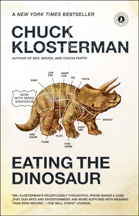
Chuck Klosterman [Interview]

Trainwreck’d Society has managed to draw in some very fine actors, writers, musicians, etc. to share a few words with us.  But, what happens when we ask a modern messiah of the world we pretend to be a part of on a daily basis to say a few words?  Well we just might find out that despite an effervescent presence to so many, maybe they are just like the rest of us!
Chuck Klosterman may not be a name that the average person gets too excited about, if they know of him at all.  But for music nerds and journalism enthusiasts alike, he ranks supreme.  Even if you aren’t a vinyl collecting, Starbucks swilling hipster, you have probably read his work.  In fact, if you’ve ever read a single article in Spin, GQ, The Washington Post, and on and on, the odds are in his favor that you have read his words.  All of this on top of the fact that he has penned 7 books including novels, essays, and a hilarious memoir/history of glam memoir.
To be frank, it was pretty nerve racking to come up with questions to ask this cat.  I’ve been doing the music blogging thing for about 4 years now, which is probably just enough time to become comfortable with associating with or around musicians, but to still feel grateful for their existence.  But, this guy?  If you were given the chance to talk to one of the founding fathers of the profession you pretend to be in on a daily basis, what the hell would you ask them?  Interviews are a part of this man’s way of life.  He is the master of his trade.  Or at the very least, he actually gets paid to do it!  While hopeful degenerates such as myself continue to wallop in the muddy waters of semi-professional blogosphere, guys like Klosterman continue to reign supreme as one of the real creators of the majestic words.  Chuck is one of the last great successors of pop culture journalism to come out of the wood works, and sadly will probably be one of the last.  One of the last writers to come out just as the internet was becoming the number one source for everything, but before we relied heavily on a social media outlet to get “news”.  For better or worse, times have changed since Chuck released his first book in 2001.  Thankfully though, we still have legends like himself around to keep the whole scene grounded.  Let’s hope he doesn’t give up on us, as we as a collective seem give up on something that was once so pure and beautiful.
Alright, soapbox is gone!  Now, sit back web based fans and check out what the legendary journalist Chuck Klosterman has to tell us about journalism, Germany, and so much more.  Enjoy!
What initially drew you into the world of journalism?  Hunter? Lester Bangs?
Oh, neither of those guys. I was just the kind of teenager who always read the newspaper, so when I went to college I majored in journalism, mostly because it seemed like a field of study that led to a definable job (i.e., you got a degree in journalism and subsequently became a journalist). I was naturally interested in writing and talking to people, so it worked out. I had absolutely no idea who Lester Bangs was when I was in college. I’d read some Hunter Thompson books and really liked them, but I never thought to myself, “I want to be like this person.” Although I must admit: There is no better person to be compared to than Hunter Thompson, even if that comparison is totally inaccurate. Because the moment that happens, people start giving you free drugs.
It’s been a decade sing your first book was released.  How long did it take for the shell shock to wear off when you realized you are now a famous journalist.  Did you ever realize a journalist could still be a celebrity?
I have no idea how to answer this question. What basically happens is this: You go through a phase where people suddenly ask, “How does it feel to be famous?,” and you invest a lot of time and effort into denying that this is true. You exaggerate the degree to which it is uncomfortable, and you act totally shocked my the accusation. But then you eventually realize that the only people who get asked that question are people who are already semi-famous, so you kind of conclude, “Well, I guess that happened.” And then you try to stop thinking about it, because it seems so idiotic. But you never really do.
You have been quoted as saying “it’s better to be known for one thing than for nothing”.  If you’re career didn’t become so diverse in subject matter, and it all ended today?  What would you want to be your “one thing” to be remembered for?   
That’s a difficult question. Maybe DOWNTOWN OWL or this story. [http://www.grantland.com/story/_/id/6625899/three-man-weave] But it will probably end up being my participation in that LCD Soundsystem documentary, assuming they eventually start showing it on TV. Television defines people far more than writing; this is why appearing on television is dangerous.
Journalism or fiction: which is more difficult to create? 
Journalism is a reactive art form. Fiction is a creative art form. I would say fiction is at least twice as difficult.
What is the most interesting and/or frightening experience you have had in your career?
The way people reacted to SEX, DRUGS AND COCOA PUFFS.
What are your thoughts on hapless bloggers (such as myself) trying to move into the world of music journalism with little to no experience?
Go for it. It’s a good way to make a living. If you enjoy thinking about music and writing about ideas, there isn’t a better lifestyle. You might not get rich, but what kind of person  believes they deserve to be rich? Only people who were born that way to begin with.
Wikipedia informed me that you spent a summer as the Pcador Guest Professor for Literature at the University of Leipzig.  How did a summer in Germany treat you?  Enlightening in some way?  What exactly were you doing abroad?
That was a goofy four months. I was asked to teach two classes at the University of Leipzig. I’m still not sure whose idea this was. One class was on 20th century popular culture. The other was just a regular creative writing class. I somehow overlooked the difficulty of living in a country where I did not speak the language. I rode my bike a lot. I ate a lot of spaetzle and rotisserie chicken. The students were smart and super-interesting. They were both obsessed and repulsed by the U.S. They would argue that America has no actual culture, yet they were unilaterally fascinated by hip-hop and David Foster Wallace. I showed them an episode of FAMILY TIES and it blew their minds. They had a lot of questions.
How do you choose the publications you write for?  Is there a criteria a magazine or paper must meet in order to have you appear in their pages?
Everything is situational. I can sometimes be convinced to write anywhere for free. But the two main criteria is my specific level of interest and the amount I’m being paid. “I just work here, man.” I’m no different than anyone else.
Considering that your words are holier than Truthspeak to so many musicheads and wannabe music writers across the globe, I have to ask:  Is it officially “okay” to have your music featured in advertisements?  Was it always actually “okay”?
Selling a song to a commercial does not change the reality of the music whatsoever. The song is still the song. However, there’s a certain kind of serious, judgmental music fan who will always view a song differently if it’s used in an advertisement, and that person will subsequently question the motives of the musician. So the real question an artist needs to ask themselves is, “Do I care what serious, judgmental strangers assume about my artistic intentions?” And I think the answer for most rational people is, “Sort of.”
Also in your obviously professional opinion, what city do you consider the epicenter of rock and roll music today?
Some place I’ve never been before.
What was the last thing that made you smile?
Either my wife or Hannibal Buress.
Chuck Klosterman is also a sports nut!  Check out sports related column at Grantland.com.  Also check out the trailer for Shut Up And Play The Hits, an LCD Soundsystem documentary Chuck has had a big part in.   Learn more at his he website.  His latest book, The Visible Man is available now from Simon and Schuster.

Anna-Lynne Williams [Interview]

Anna-Lynne Williams as demonstrated time and time again that she is one of the greatest talents out their singing today.  All with the humbleness and grace of a precious little bird, she tells tales of love and loss and all things sacred, just from a few notes and a few simple strums of a guitar.  Whether as a solo act (Lotte Kestner), or alongside Matt Brown (Trespassers William), or with fellow art smith Robert Gomez (Ormonde), Williams has proven to be one of the hardest working women in the indie music world.  And not only does she produce, she produces magic!

Last her second album as Lotte Kestner album came out which truly rocked the earth.  It was truly original, inspiring, and innovative beyond belief.  And yet, ironically, it was a cover album.  Stolen was a collection of cover songs like you have never heard before.  You may have recognized a Vic Chestnutt or Trashcan Sinatras song from the album (or even the now classic Beyonce cover if you bought the deluxe edition), but you never heard them like this before.  This is what she does.  It seems as though Anna Lynne greatly realizes that to cover another artist does not simply mean to play the song, and hope somebody likes it better or equally.  For her, it means to re invent the wheel each time you do it.  She applies her own personal touch, and makes the song completely her own.  This becomes extremely relevant in her recent cover of that Gotye song that seems to be getting on everybody’s nerves, “Somebody That I Used To Know”, and perfectly exemplified when she re-established the brilliance of Elvis Costello’s “I Want You”.  Yes, she is a craftsman when it comes to the cover song.

But, this year it’s all about the originals!  Trespassers William is no longer available, but we will be fortunate enough to have one more giant release coming soon, A Lotte Kestner album is coming soon, and Ormonde’s Machine (check out the music video for “I Can’t Imagine, directed by Gomez himself, here)is already out and thriving and contending to be one of the greatest albums of 2012 (check out my review from Fensepost.com).  You can also catch her randomly performing across Seattle with the excellent band, Ghosts I’ve Met, and she also happens to be featured on Seattle MC and fellow Trainwreck’d interviewee Sadistik’s new album!

Obviously, Ms. Williams is a very busy woman these days.  So, we are very fortunate that she was willing to take the time out of her busy life to swap a few words with us.  I have had the pleasure of communicating and working with her for the better part of two years now, and I have always made it a point to introduce her music to any and everyone who appreciates brilliant musicianship.  And so should you!  So, sit back and bask in the brilliance that is Anna-Lynne Williams.  Enjoy!

What brought you from SoCal up to the rainy city of Seattle so many years ago?

Everyone in Trespassers William had been born and raised in California, and we were all ready to see another part of the world (or coast, at least). We had just signed to Nettwerk and decided to record our next album (Having) somewhere new. We voted and settled on Seattle, and at that point we decided to quit our day jobs and just stay in Seattle after we finished the album. It was a toss up between Portland and Seattle, at that point it really didn’t seem to make much difference, we just wanted to move somewhere different, cooler, north. Seemed like a good climate for our music and our personalities. Of course decisions like that end up guiding your whole life, but at the time it just seemed like a question of backdrop.

You recently suffered a serious hand injury.  How are you feeling?  And how is the guitar playing going these days?

Yeah I ruptured a tendon, and it ended up almost paralyzing my arm last summer, the long term effects lingering in my hand.  I spent a few months unable to move around or do much, which affected me in a lot of deep ways besides just not being able to play the guitar. I went through a cycle of physical therapy, tried to ease back into the guitar in the winter, but I still haven’t really healed up. It’s so much better than it was that my general feeling is relief, but I have given up the guitar for the most part. I just play for a few minutes at a time if it’s for something important, like recording. I’ve taken to leaning more on my voice and my wurlitzer. And other people.

How did you come up with your surrname Lotte Kestner?

I love Goethe’s “Sorrows of Young Wether.” Lotte was a character in the book, and Charlotte Kestner was the woman who inspired the character. It’s a great sounding name so I borrowed it.

You appeared on the The Chemical Brother’s amazing album Push The Button, which was certified Gold.  Where do you keep your Gold Record?  Any significance?

That’s funny that you ask that, I do in fact have one and it’s in my kitchen in a sort of out of the way place. But we inadvertently got it in a shot in the homemade Ormonde video and I was worried someone would spot it and think I was showing off. 🙂 Being an artist for a living is a bizarre thing, every week you have to juggle crushing insults with excessively generous compliments. You learn to believe something in between the two.

How did your new duo with Robert Gomez, Ormonde, come to life? 

Robert and I met in a recording studio in Texas, had some friends in common, ran into each other a few more times while I was in town. We exchanged cds and must’ve listened to each other a lot, because we both became convinced we should make an album together. We have a lot of the same sentiments in our music, but none of the same weapons.  So it was exciting and natural to merge. I think we saved each other from our writer’s block and spent a full month together making an album in a rented house. I came out of a chrysalis.

If you were chosen to sing the national anthem for a major sporting event, what would be your choice of sporting event?  Why?

I would probably have a heart attack. 🙂 Do they do the national anthem at tennis matches? Maybe that.

You’ve had much of your music featured in film and television.  What has been your favorite to date?

“Different Stars” in A Love Song For Bobby Long is probably the most prominent and fitting placement we’ve had. That was really lovely. I’m also really excited to see Pin-Up Dolls on Ice when it comes out because Robert and I actually wrote a song for the movie, which I’ve never done before.  It’s a horror film.

So, I hear we are fortunate enough to get one more dose of Trespassers William this year.  What would that be?

Yeah, Cast is coming out on Saint Marie Records in a matter of days. On New Years Day I announced that the band was breaking up, and to soften the blow for us and for listeners I put some unreleased material up on bandcamp. That’s when Saint Marie offered to release the songs properly,  said we could make a whole double disc affair of it. So we took everything down that was floating about on line and compiled our favorite rarities, and recorded a few brand new tracks.

Ormonde (w/ Robert Gomez)

And Lotte Kestner?  When will we hear a follow up record from your solo project?

The album is very finished and ready, and I’ve got a long play EP done as well. I’ve been nesting on them for a while, waiting for the Ormonde and Trespassers William to come out and have their proper moments. And artwork and videos and other things that can slow things down. But they should both be out very early next year. I can’t wait. The Bluebird of Happiness album is very much a best of times/worst of times sort of album. There’s a lot of love on it, of the hopeful variety, and then there’s all the agony of giving up guitar and not being able to get out of bed on there too. Last year was a big one for me, and that’s when I wrote all those songs.

Your label Saint Loup Records is over a year old now!  What else can we expect to be released in the near future?

Well, since some bigger labels came along I decided to put out all my main releases in the traditional fashion this time around, labels and PR companies and everything. But I’ll be releasing my EP myself. Almost as an experiment. And because it feels good to do things with your own hands sometimes.

What was the last thing that made you smile?

A picture of my new nephew.

Discover more Anna Lynne goodness at her Lotte Kestner tumblr.  Discover more releases at the website for Saint Loop Records, and pick up Ormonde’s new album from Hometapes. Also, be sure to watch for new releases via Saint Marie Records as well!

Hattie Winston [Interview]

In the late 1990’s, Ted Danson made his way back into our hearts and living rooms after a long stint from his days on Cheers.  He came back as the grumpy practician with a heart of gold, and a medical practice in the hood.  It was a basic premise, not entirely edgy, but still had relatable factoids for everyone.  I still personally go on record as calling Becker one of the last great situational comedies to ever appear on television.
But, with all due respect to Ted Danson, for he was phenomenal, it was his supporting crew that truly made the show.  There was the crew from the coffee shop he frequented and his employees at his run down doctor’s office which also became host to some very bizarre patience at times.  Becker was basically an ill-mannered man who meant well, but he kept great company around him to keep him grounded.  There was Jake (Alex Desert), the witty playboy blind newspaper man, Bob (Saverio Guerra) the dim-witted patron of the coffee shop who always seems to find himself in some sort of mess, Reggie (Terry Farrell) the good-natured ex-actress turned coffee shop owner/only employee/terrible cook, and Linda (Shawnee Smith), a woman who probably should have never been allowed near a doctor’s office professionally, yet Dr. Becker simply didn’t have the heart to let go.
And then…..there was Margaret.  The rock, the savior of Becker’s life, and the only person on the show who was strong, most of the time, and kept a cool head on her shoulders.  Margaret was portrayed with zeal and zest by the legendary Hattie Winston.  The lovely and talented Hattie Winston.  The versatile actress who can be the soft caring head nurse/favorite aunt at one moment, and then find herself dancing around in glittery outfits to the Supremes.  She’s been on the silver screen for many years, and with her charm and charisma, she’s hopefully not going anywhere anytime soon.
I just wrote a whole lot about one time of her career, as Margaret on Becker, but that is strictly personal.  This is where I knew her.  I was 13 years old when Becker came on, and I was a fan until it ended 6 years later, and I still find myself intrigued by re-airings during the middle of the work day.  But, Hattie Winston has been doing this thing for long time!  You saw her in the 70’s in The Electric Company, in the 80’s in the drama Homefront, in Becker in the 90’s, and dozens of film and stage roles in between.  She’s even got a new show going at this moment.
So take some time out of your hectic and dull lives to check out these few words we were able to steal from the legendary and infamously talented Hattie Winston!
What would you say is your fondest memory from working with the likes of Morgan Freeman and Mel Brooks on The Electric Company in the 70’s?
 
Those were glorious times.  I do, however, must mention other cast members..Rita Moreno, Judy Graubart, Skip Hinnant, Luis Avalos, Jim Boyd, Short Circus…all excellent actors, who continue to work today. Mel Brooks, Gene WIlder, Joan Rivers, Zero Mostel did mostly voice-overs. The times were glorious because in addition to having a steady gig, we were stretched as actors…during the course of a shoot day, you could be required to improvise, sing, dance, use accents, cartoon character to librarian.
 
What was set life like on Becker, your longest running gig to date?  When the show ended, was it similar to a relationship ending?
When Becker ended I compare it to losing a (or many ) member (members) of your family. Ted Danson was our leader and therefore our set was one of ease, laughter, fun and professionalism. Our goal was to do the best possible work and to do in an atmosphere of harmony.  Wonderful, because this is always the case.
What are some unique items one might stumbled upon in the Hattie Winston Collection at the University of Kentucky (Lexington)?
The Hattie Winston Collection, which is housed in the Ekstrom Library @ University of Louisville includes, original scripts by primarily African-American writers ie: James Baldwin, Samm-Art Williams, August Wilson etc. and scripts of shows that I have been involved with. Original television scripts, movies, artifacts.
How did you become involved with AFTRA’s Equal Opportunities Committee?  What was your role in the organization?
For many years, as a member of Aftra’s Board, I was Co-Chair of AFTRA’s Equal Opportunities Committee. I became involved, because as you know I have been in this business for a long time  and sometimes this involved inequality in respect, opportunities, salaries. I felt that if things were to change, then I needed to do as much as I could to contribute to that. As Chair, I would sit in on contract negotiations, inform membership, make certain that EEOC requirements were implemented. 
I hear you are quite the public speaker.  Do you feel as though there is some coalition between acting and speaking?  Does acting make a public address easier?
Public speaking is a different animal than acting.  When there is a topic that I am passionate about, it is easy for me to address those issues publicly.  I know some incredible actors that a absolute terrified to speak without the aid of a script. Just as some screen actors are terrified of the stage, where there is no re-take.
Was is strange and/or awkward doing a solo dance for Robert De Niro in Jackie Brown?  
It was strange because IT WAS ROBERT DeNIRO!!!!!!!!!!! But I did my best!
Which do find to be the greater thrill – acting on the stage or on the screen?
 
Performing without a net on stage is the most nerve-wracking! Living the life of the character, in the moment is the ultimate risk taking.
What does the future hold of Hattie Winston?
I am currently a recurring character (Sister Corrine Pearly) on The Soul Man, with Cedric the Entertainer and Neicy Nash. I am also writing a book…very exciting….and hopefully book will be published, I will tour and do public speaking. Life is good!
What was the last thing that made you smile?
I woke up this morning and my husband said “Good morning honey.”
Continue to follow Hattie Winston as she recurs her role on the new hit comedy, The Soul Man.  And to learn more about The Hattie Winston Collection at the University of Kentucky, check out the school’s website.  Learn more about AFTRA’s Equal Opportunity Committee, here and look for Hattie Winston herself on Facebook!

Danny Tamberelli [Interview]

If you were a child in the 90’s, there are many faces that will forever continue to placate your mind.  And I don’t particularly mean the hacks you see on reality TV shows and commentating on VH1 about their fellow hacks who are starring in said reality shows.  No, I mean the exceptionally charismatic ones.  And few people stand out to me more than the cast of Nickelodeon’s now cult classic The Adventures of Pete & Pete.  You remember it.  Anybody between the ages of 25 to 35 who doesn’t remember this show missed out on one of the finest shows for the youth ever made.  This was our Wonder Years.  And while we were probably more active and went outside more than the youth today who hide behind smart phones waiting for something witty to cross their minds to call a status, we still made every second of our designated TV time count every time.  Choices may have been fewer, but they sure were grander, weren’t they?

As previously mentioned, it was big Pete & little Pete who rocked our world in the 90’s.  The disturbing yet funny awkwardness of these two brothers, their friends, and the antics they would all partake in were so genuinely kind-hearted and real that they felt like they were family rather than regular characters in an irregular world that was far too unobtainable for any of us to imagine being a part of.  For many of us, we yearned for Danny Tamberelli over JTT.  We watched him slime celebrities and melt our hearts.  And while he may not be the Nickelodeon star who moved onto Saturday Night Live or shitty reality TV shows, it turns out he may very well be one of the most creative individuals from the era of the second round of child stars.  The last of the stars who weren’t discovered on a YouTube video, or proved to be a shameless offspring of a shameless country singer.  Anybody who thinks Tamberelli simply fell off the map is seriously mistaken.  The man is an artist who has been doing whatever the hell he has felt like doing since he was 7 years old.  From film, to sketch comedy, and to a lengthy career in music for some amazing groups.  He’s worked and lived for his chosen art.  Which is one of the most commendable acts one can commit in the creative world.

So, we at Trainwreck’d Society were honored to be given the chance to share a few words with one of the most inspiring child stars turned relevant artist of our time.  Ladies and gentlemen, Danny Tamberelli.


Tells us a bit about “Man Boobs” if you would.

Manboobs is my sketch comedy crew out of NYC. Jeremy, Brendan and I make videos and post them on our site manboobscomedy.com and our YouTube page.  We have been creating content for 3 years now and are working on a live show to perform at the Peoples Improv Theater in the fall.  It took me a while to get back into writing sketch comedy, but now I cant stop writing and making videos.

Any other acting jobs coming soon, or have recently done?

I have a few projects in production that I can’t really talk about.  Both are animated.  Most of my on-screen acting is coming from Manboobs these days.

How was it being a child star?  Was it has estranged and surreal as some people have made it out to be?

My parents were really cool about keeping me grounded as a kid.  I went to public school, played soccer and baseball in elementary and middle school.  I had as normal of an upbringing as I could.  Biggest problem was not being able to go to a movie theater or the mall without a big crowd reaction.  I worked continuously from 6-18 so when I finished high school I decided I wanted to go to college and take a break.  You won’t see me on celebrity rehab or child stars gone wild…

Are you often recognized on the streets by the late twenty/early thirty somethings who probably saw you everyday on television? 

Yes, it happens every day still.  My face hasn’t changed, I’ve only gotten fatter.  The cool thing about it is that most everyone that stops me are chill people who were really into the shows.  Especially the Pete and Pete fans. Some show me tattoos that my fake tat inspired. They tell me how much the show meant to them and how it affected their childhood. It’s a great thing to hear because it changed me as well.  I was 7-14 on the show so I did a good chunk of becoming the person I am today on the show.

Do you still see Big Pete (Michael C. Marona) very often?  Was working with him at such a young age sort of like having another big brother?  (Explain)

I see Mike every once in a while.  We are texters and sometimes we meet in Brooklyn for a sneaky pint or 2.  When the two of us are in a bar together for too long it gets weird.  I am the oldest in my family with 0 brothers so Mike was for sure an older brother figure.  He talked to me about music and girls and growing up.  My first taste of NYC living was hanging out at his apt in the east village that had the shower in the kitchen..

Has there ever been any consideration for a Pete & Pete reunion special?  And would you be interested in doing such a thing?   

We’ve done a few reunion panel discussions which have gone extremely well selling out 2 shows in NYC and one in LA.  I think we are doing another one in LA in August.  As far as an actual show, it would be excellent to work with everyone but part of me is fine leaving it alone.  It keeps the integrity intact.  Mike has already appeared in a Manboobs sketch and we have Toby Huss on the docket next time we get out to LA to shoot.

I hear you are currently an acting musician as well.  What sort of work can we expect to hear you performing?  Any live shows coming soon?

Yup, been playing bass since I was 12 on the Pete and Pete set.  Haven’t put it down in 18 years.  I play bass and sing in my own band Jounce (Jounce.org), we have been touring the east and west coasts for 11 years now and released three records.  We are recording a 4th in the fall at Downtown Studios in NYC.  I also play bass for one of the founding members of the CBGB era NYC post punk band Television, Richard Lloyd.  We have been playing together for 3 years now.  Lastly, I play for a funk/hiphop group out of Virginia called Midnight Spaghetti. ( http://www.midnightspaghetti.com) They have been recording and touring through the east coast, Canada and Costa Rica.  I have been with them around 2 years.

Acting or Music, if you were only able to do one, which would it be?

I think this is a cruel question.  I love them both, guess I’d be forced into musical theater to be able to do both…please dont make me do that.

What was the last thing that made you smile?

the answer to the previous question because it’s so ridiculous to think of myself doing musical theater…still smiling.

Tim Arnold [Interview]

On a very personal basis, Good Old War is a stellar example of a few of the brighter sides of the technological advances we have experienced in the last few years.  Specifically music streaming.  I know the moment I first heard Good Old War.  I was outside at the beginning of the summer hovering over a grill littered with steaks when “Not Quite Happiness” caught my ear via Pandora’s perfect suggestion based on my listening to The Weepies station.  I was hooked instantly.  Beer in my belly and excitement in my brain, I turned to my wife and told her I dug this guy.  She then informs me that they are all over The Lumineers station as well.  She dug “Amazing Eyes”.  Who are these matadors of the Pandora world?  Where did they come from?  And where the hell have they been all our lives?

Now, in thanks to modern technology, I cashed in and purchased their latest album Come Back As Rain, and Good Old War is becoming a staple in my household.  Even my three small children can dance and laugh and enjoy these happy, interpersonal, and extremely exciting tracks.  Good Old War is that band that you simply can not help put fall in love with and feel as though their songs are the soundtrack to your own personal life.  Their songs are inviting and enticing.  They are an eccentric bunch to say the least.  Whether in good times or in bad, once you accept the beauty of Good Old War, you will be blessed with the idea that life is always going to be alright.  Someway, somehow.

I was fortunate enough to steal a few words from the very funny and insightful drummer of this band of rising stars, a Mr. Tim Arnold (he puts the “AR” in Good Old War”, look it up!).  So sit back, let the sun shine onto your electronic device of choice, grab a strong espresso, and learn a little bit about a trio that is certain to teach you how to love again.  Or, at least entertain you beyond all matters of reason.  Enjoy!

How did Good Old War come to be?

The first thing we ever did as a band was open for Anthony Green. Keith and I were in a band called ‘Days Away’ and we were billed to be the opener on his tour and the band sort of fell apart so we called Dan up and asked if he would come out with us and do an acoustic sort of thing. Anthony really liked it so by the end of the tour, we were playing songs together and the next week, he asked us to play on his record as the backing band and it’s just been like that ever since. Keith and I have been friends with him since forever. He’s always been so supportive.

If you could perform for any non-musical historical figure (alive or dead), who would it be?

I would perform for Marilyn Monroe or Audrey Hepburn. Two classic sexy ladies. I think I would play the best I ever have.

 If you were to perform in front of audience completely composed of one type of animal, what animal would you like to entertain?

 Wolves. They would howl along with us.

You have debuted some of your music videos on Country Music Television.  Your style of music is very different from the likes of Toby Keith or Sugarland.  Why do you believe your music fits on such a channel?

All I know is that it is the “country music channel”. I’d say we have some country influences. They may not be Toby Keith or Sugarland, but that’s fine. I’m sure they have similar influences as well. It’s hard to get away from a style of music that is so ingrained in our souls. We’re an American band, it’s American music, country music channel is fine with me.

Your songs all seem extremely personal, but still vague enough in the lyrics department to leave fans with the ability to interpret as they wish.  That being said, how personal is the songwriting process and development for you guys?

The songwriting process is deeply personal. I think that we create vague situations as a result maybe of not wanting to put it all entirely out there. I’ve always loved songs that kind of set up a situation and leave you to insert said situation in your life somehow. It’s a good way to deal with stuff or appreciate things on a different level.

 What do you believe sets Come Back As Rain apart from your previous work, if anything?

Come Back As Rain, to me, is a special album for many reasons. It was the first record we made in a big fancy studio and we had a producer Jason Cupp (Maps & Atlases, Danzig). We actually did some pre-production before we went in to the studio which was a bit different. The previous two records were made slightly hastily with the first one being a situation where we made it in a week and were very new and trying to figure out our sound. Our second record was made by ourselves in a home in the Pocono mountains and we pretty much showed up with song ideas and what we wrote right there, we recorded.  come back as rain was worked on heavily before we even saw the studio.  lyrics were rewritten and changes/structure of songs we were fine tuned weeks before we went in and all of the changes were made as a group. In the past it was usually Keith or Dan coming to the table with a song and we say “that’s great, lets record it!” This time we really examined the songs and worked as a group to build them and all did a bit of writing. It was a great experience and I think a natural progression for a healthy band. We’re getting to really know each other in terms of the art we are creating and can lean on and trust each other. It’s a good feeling.

 You’re only a few months from hitting the road with the legendary trio Dispatch.  Are any of you long time fans of them? What is your fanboy status?  (Explain)

None of us really listened to Dispatch (sorry), but we are definitely new fans. Our fanboy status is that of the kneeling, bowing and thanking them on the regular for the wonderful opportunity to play with them and for their fans in some of the best venues in the country. Fanboy status = stoked.

photo by Andy Patch

 You’re pretty steady when it comes to record releases.  Should we expect some new material in the near future?  (if not, why not?)

Oh yeah. We never stop writing or working for that matter. We’ll be in the studio asap to make a new record. Count on it.

What was the last thing that made you smile?

A cold beer after a hot bike ride.  I’m still sweating.

 Find out if Good Old War is coming to a stage near you (which the very likely will be, they never stop) and how to pick up a copy of Come Back As Rain at the band’s website and Facebook page.

Tim Arnold is also an Ambassador for the wonderful travel blog, Matador Network.  Check out his wonderful tales from the road HERE.

Adam Kimmel [Interview]

There is something about a great film that can make you feel so many emotions and make you start to questions where the real world and the world of film cross paths to create your own crazed plain of existence.  Everybody has one of these films that affect them in such a manner.  Hell, maybe you have a dozen of them.  When a film is written, directed, and shot so majestically perfect, there are very few end products in this world that can drive you to emotional bliss and/or insanity.

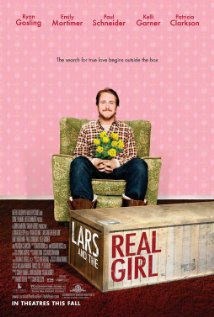
Adam Kimmel happens to be the man behind the lenses of three films in particular that hold such a strong place in my heart for different reasons entirely.  He’s shot over two dozen projects in his career, and has earned a solid reputation as one of the greatest directors of photography to work with in the business.  He has two Independent Spirit nominations under his belt and has stared down actors like Billy Bob Thornton, Phillip Seymour Hoffman, Dennis Hopper, Harry Dean Stanton, Ryan Gosling, Denis Leary, and the list goes on and on.  A stellar and thriving career to say the least.  But, the three films that get to me?  the powerhouse 90’s independent film Beautiful Girls.  The only movie that almost brought me to tears, Lars and the Real Girl.  And the amazingly gripping Capote.

Adam Kimmel was nice enough to answer a few questions we threw at him.  But, to be perfectly honest, the world of cinematography is a blunder of characters and figures that I simply do not understand.  I’m a writer (at best).  The technological aspects of film making are confusing and scary to me.  Thankfully, my dear friend and fellow Trainwreck’d Society, Chris Eaves, is an independent filmmaker/screenwriter/DP/all of the above based in Portland, Ore.  He has been working extensively with Sound Skript Entertainment, who has creating some amazing work, and have even more great projects to look forward to.  So, I was fortunate enough to get Chris to ask a few questions about the creative process of shooting a film, the equipment to use, etc.  Thank you Chris for helping out with this one, and keeping me from asking ridiculous questions like “what does Emily Mortimer’s hair smell like?”.  That could have been embarassing.

So come along people now!  Check out this amazing interview done by Chris Eaves with the acclaimed cinematographer Adam Kimmel.  Enjoy!

Do you have a certain style you use in your role as DP and can you point to anyone specifically who has influenced or guided that style?

I don’t like the idea of imposing a style on a project, but usually by the time someone has shown an interest in working with me,  there’s work I’ve already done that has sparked that interest, and so that can become a point of departure to develop our own sensibility.  I’m never interested in making the same film twice, but hopefully the choices I’ve made and the accumulation of work starts to steer things toward me that I’ll want to be involved with.  As for guidance, I think almost everyone I’ve worked with has influenced me, I try to always be learning, and in one way or another, everyone can teach you something.  I think we are all the sum of everything we’ve done.

Does your approach as DP change depending on the project’s director, screenwriter, producer, etc?

Yes, I hope it does, as each film has its own requirements, its own personality, it’s own strengths and weaknesses. I had a great lesson early in my training by working with the same cinematographer on two films in a row, each with a different director. I was an apprentice to the camera department and it was all new to me, but on that first film I watched the way they functioned together and thought I understood. When I went on to the second one, I saw that the way the cinematographer works should really be in balance to the way the director works, and that it could be a completely different version of the job because of that. The cinematographer was Michael Chapman, and the films were Phillip Kauffman’s The Wanderers, and Martin Scorsese’s Raging Bull.

What do you look for when designing your shots?                                                    

I like the idea for shots to come from the mood or emotion of the story, this goes back to trying to choose projects that I have a feel for because without that I think it’s possible to start creating shots that aren’t part of the whole, but I like to prep in a way that allows the clearest ideas to be explored first, and for those to then start informing the rest of the story, to build on that until we can go through the script and have a sense of where we’re going with every scene and every transition, (and of course to know that we may alter or completely discard it as new people and elements come together.) But as we refine and flesh out the scenes, I start to truly know the language of that film and it becomes more second nature to know what belongs or feels out of place.  I think that’s why I like to start with whatever presents itself most clearly in the beginning, so you build on your strongest and clearest ideas.  Shot listing is where you make so much of the film, and it’s a process I really enjoy.


Do you consider your career work or fun?

Hmm, well responsibility, pressure, and endurance are a big part of the job, and I don’t find any of them especially fun, but I find great joy in creativity and accomplishment.


You create beautiful imagery in order to tell stories. Do you have any desire to create your own works?

Honestly, I think everyone has stories to tell, but I feel that when a collaboration between a writer, a director, and actors is strong, that I do get to create my own work, there shouldn’t be cinematography that functions independently,  that’s separate from the narrative or the performances, so even though my expression may come through light, and composition, and movement, I’m still expressing my ideas , and I’m going to arrive at those choices differently than any other person offered the same possibilities.

I didn’t attend a film school, but I always thought it would be a great learning experience for students to each have the exact same script and resources, but to see how many ways you could arrive at telling the same story.   Each one of us brings our sensibilities in, and if it all works well then trying to unravel it becomes like trying to separate the pages of a book from the story they tell.

What is your most recent memorable experience at the movies – good or bad?

I saw Wim Wender’s film Pina in 3D and thought it was just stunning, he spoke before the screening and explained the long and winding path it took to get made, and it was a great chance to remember how many things have to happen in just the right way before we can see what was in the directors mind, but when someone gets it right, it’s still pure magic to me.


What movies did you grow up watching?

Because of television, I watched all kinds of movies as a young kid, and loved things like the Twilight Zone as well.  Then once I started choosing for myself, there were so many great films that caught my attention – remember, this was a  pretty thrilling time to be discovering movies –  Midnight Cowboy, The Godfather,  A Clockwork Orange, Badlands, The French Connection, Butch Cassidy and the Sundance Kid, The Exorcist.   These are all films I saw in the theater when they were released, and that’s when I started to be truly moved by the power of film. I was fortunate in that my mom was very much aware of what was out there and never held my curiosity back.  I was still quite young when I started working on films and getting to see behind the curtain and watch how it was all done, just sealed my fate to pursue this as long as I’m allowed.

How did you find your way into the film industry?

From about age nine I was aware of how much certain films effected me and I wanted to know how they were made, so I asked for a super 8 camera for Christmas and my dad took me to pick one out.  My brother and I immediately started making little narrative films:  coming up with ideas, figuring out the mechanics of lighting and shooting and editing, and then creating soundtracks to the edited films (this usually resulted in having to hit play on a cassette player at the same moment you hit run on the projector) but regardless of how we arrived there, we were telling stories with a camera.  By the time I was seventeen, I had become pretty passionate about making these films, and my Dad offered to introduce me to someone he’d known since childhood who was a DP on commercials, I jumped at it and worked on a hand full of low budget TV ads as a P.A. I was really only interested in the camera and so at lunch or wrap I would hang around the camera assistant and ask questions, or try loading short ends with my eyes closed. After a few months of this, he offered to try to bring me onto a film he was going to be the operator on, the film was The Wanderers and he made it happen.  After that I went on to Raging Bull, and then to Brian De Palma’s Dressed to Kill, with Ralf Bode shooting.  I had three years of working as a trainee with great people on memorable films.  After that, I was the second A.C. on a Jack Lemmon film called Tribute, then five years as a very busy first A.C., (a job that I always loved).  Around 1986 I started shooting.  Actually Caleb Deschanel was someone I had always greatly admired, and I was assisting him when he sort of gave me the push to start shooting on my own.

Who has the best catering?

Some of the best meals I’ve ever had on set were in the most remote place you can imagine, where you may be offered only one choice and you eat in some little makeshift shelter, but it’s real food cooked by the local people and there’s nothing missing. Like Salmon just caught and cooked over an open fire on the bank of a fiord in  the north of Norway.

What do you think about when choosing a project?                                                  

I look at the whole project, the script, the director, the other people involved, the resources etc. but it’s also based on where I’m at creatively at that time.   There are films I might be interested in now that I wouldn’t have been ten years ago, and vice versa. But ideally I want to feel like I’m the right choice for the project as much as that it’s the right choice for me.


Have there been any projects you have passed on and later regretted it or took and later regretted taking it?                                                                                                                                 

No regrets, but there are always those moments when you wonder what would be different if you had made different choices.


What are your thoughts on the growing use of DSLRs for low budget filmmaking such as Cannon 5d Mark II?

I think it’s fantastic to have the accessibility and immediacy that these cameras offer, and I’m sure there are stories being told that might not have been without them, but I don’t think it’s the right choice for everything. Now more then ever, with all the options out there, I think choosing the right equipment for the job is critical and a huge part of the creative process.


What is your camera of choice?

For me it’s always been more about the lenses and the medium then about the camera, but give me an Arricam and a 235 and I’m pretty happy.

What was the last moment while working on a project that made you smile?

In Paris on the glass roof of the Grand Palais, lighting of the Palace, the Pont Des Invalides and the Seine in the distance. (That was last night, and I’m still smiling)

Be on the look out for more great works of art from this cat coming soon.  Check out his website to see what he has in line, and check out his latest film, a short entitled I’m Here, directed by the legendary Spike Jonze brought to you by Absolut Vodka.

Also be sure to check out the work of Chris Eaves and Sound Skript Entertainment at their Facebook page.

Eddie Lee Sausage [Interview]

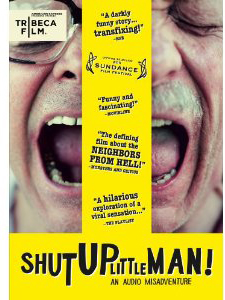
I was browsing around Netflix a few months ago when I found myself relentlessly tired and ineligible in creating a decent thought worth sharing with you fine readers.  This actually happens quite a bit as I am fairly prone to laziness and alcoholism.  No matter, I managed to stumble upon a documentary that struck me right from the title.  The film was entitled Shut Up Little Man.  Intriguing to say the least.  And then I read the brief description and….holy shit.  What I saw in this brief yet full of content film was absolutely breathtakingly hilarious and beautiful.  It was something like nothing I had ever known before for so many reasons.  One, it was a phenomenon that seemed so much more impressive to me since I can only vaguely remember audio cassettes and the obsession with home recording that I too once had as a child.  Two, I could only imagine the film’s main characters on display as nothing less than Hemingway and Bukowski locked in a room to learn to love.  And thirdly, it was freaking hilarious!  If none of this makes sense to you thus far, good.  Keep reading.

I know directly after viewing this wonderful film about a wonderful artistic endeavor that the now renowned Eddie Lee and Mitch had created that I had to speak to one of them.  Soon.  I needed to know more.  I begged to know more about these two and what the hell they had been doing since.  So, I managed to wrangle myself a few words with Eddie Lee Sausage to discuss the phenomenon at hand, the cult following it has received, the documentary that ensued, and how a phenomenon such as Shut Up Little Man has stood the test of cult and time.  And if you are still lost and disillusioned, you should probably hate yourself just a little bit for not knowing about this by now.  I personally feel that I wasted 27 years of life by not knowing about this amazing phenomenon sooner.  Enjoy the read, and be sure to Google yourself right towards Shut Up Little Man as a project, and to the amazing documentary.  Enjoy!

If you don’t mind, could you drop us a quick synopsis of Shut Up Little Man.

Shut Up Little Man is a collection of urban field recordings made by my roommate Mitchell and I in the late 1980s in a low-rent apartment building in the ghetto of San Francisco.  The recordings feature the real-life comical rants, hateful harangues, and drunken fistfights of Peter and Raymond – the two alcoholic homicidal roommates that lived directly next door to us.  The recordings quickly spread via the underground into a worldwide phenomenon that inspired numerous artists, playwrights, film-makers, and musicians to illustrate, incorporate, and sample the stark and darkly comic arguments of Peter and Raymond into their comics, theatrical works, films, and music.

Are you and Mitch still close?

We are close in a brotherly sort of way.  We have known one another for 35 years now, and we have been through a lot together.  As we live halfway across the continent from one another, we don’t get to see each other much, but in another way our relationship isn’t affected at all by the distance.  Every week or two we will text a line or two from Shut Up Little Man to one another.

Do you think your life would have been far different if you hadn’t moved into the “Pepto Bismo Palace” twenty years ago?  How?

I don’t think my life would have been very different at all, actually.  It has been a bizarre and magical unfolding, and SULM is just another enchanting episode along the way.

What do you consider your greatest accomplishment since SULM first came to life?

The single best thing that has happened due to SULM has been the ability to build friendships with other creative people and to collaborate on projects based on the recordings.  Artists and musicians who have inspired us — for example Dan Clowes, Kurt Cobain, Devo, and Mike Flinn — were in turn inspired by our recordings to the point where they felt compelled to create art and music based on Shut Up Little.  We have grown some really great relationships out of SULM.  This is ironic in a way, considering that these friendships grew out of the dynamic of two people who never really seemed to get along at all.

Have you recognized a growth in interest in Shut Up Little Man since the release of the critically acclaimed 2010 documentary?

The movie appears to have introduced Peter and Raymond to a broader audience.

Even in the era of YouTube, Tosh.O, and iTunes, it is still reasonable to believe that SULM would have been a viral hit.  What do you believe it is about those old tapes that intrigues people so much? 

I think the popularity of the recordings is easy to understand.  Partly, their appeal is due to the authenticity of Peter and Raymond’s dialogue.  There is a raw intensity to the recordings that is unusual and rare – they aren’t varnished or adorned or fake in any way.  And, I think this quality makes them stand out in an over-processed culture where even ‘reality entertainment’ feels scripted and phony.  Of course, at the center of their appeal is the bizarre and complex dynamic between Peter and Raymond.  The stuff that comes out of their mouths is so hilarious, provocative, disturbing, and saddening – and often all of these things at once.   It makes for memorable listening.  I have been told by many people that after listening to Shut Up Little Man they felt immediately compelled to share it with other people.  The recordings seem to be something that people don’t passively consume and then move on or forget.  Also, I think Peter and Raymond seem to operate on some kind of Jungian archetypal level, because they seem to resonate deeply with such a broad range of people.

How do you think the entire Shut Up Little Man phenomenon is viewed in the younger generation?

I have no idea how younger people view Shut Up Little Man.  I don’t think they would be impacted any different from an older person would be.  It seems evident by the volume of emails and correspondence we have received over the years that interest in Shut Up Little Man transcends gender, race, ethnicity, and age.  That gets back to the archetypal thing.

How was your experience at Sundance?

Sundance was a bit of a blur and sort of surreal, as you can imagine.  There was so much to do with the screenings and press and parties and so forth.  One of the first things that happened after I arrived was that it began to blizzard snow while at the same time the sun was shining brilliantly.  I stepped out right into this weird weather after checking into the hotel and bumped into Pam Anderson and her entourage and the trailing paparazzi.  Very surreal.

I was surprised at how well the first half of the film worked on a live audience.  I have never been in a film audience that laughed that hard, that frequently, in such a sustained way throughout the first half of the film.  As many critics have noted, the second half of the film is overwrought and morally jaundiced and outright boring – and the audience responded accordingly.  The director’s goal, as he has noted in interviews, was less about telling the truth about what happened, and to quote him more about “spinning people’s moral compass” and making them uncomfortable about why they were laughing in the first half.  He succeeded in doing that, but I thought we were working on a documentary.

Then, on the final day, we did like a 6-hour press junket in a room full of press.  We were surrounded by famous actors – Kate Beckingdsale, Demi Moore, Greg Kinnear, and Ellen Barkin all stumping for their latest films.  We had no business being in that room.  It really brought out the punk in me.  So, again, it was very surreal.  At one point Demi Moore relayed to us that her dog was named “Little Man.”

If Shut Up Little Man were to be the highlight of your career, would that be acceptable to you?

Judging what is a ‘highlight’ is way outside my realm of control.  But, if that was the judgment that comes down in the end, that would be fine.  In many ways Shut Up Little Man is the perfect synthesis of stuff I have been working on with my creative projects all my life – trying to elevate everyday life to the level of art, creating an art that doesn’t have an artistic self behind it, celebrating those pockets of weirdness that invade normality, absurdum and the human condition, that kind of stuff.

What was the last thing that made you smile?

I was filming my 22-month old daughter in the woods a couple of days ago and she bent down and moved a snail off the path with a stick.  I asked her why she was doing that, and she said: ‘so that nobody would be stepping on it.’  That made me smile.  She makes me smile every day.

For more information, and ways to free yourself form stupidity, check out the Shut Up Little Man Official Website.

Jamie Jones [Interview]

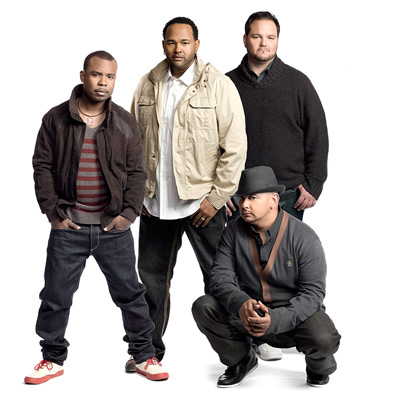
For children of the 90’s such as myself, or R&B lovers alike, or anybody who has been able to hear for the last twenty years, you know Jamie Jones.  You know him as 1/4 the amazing multi-platinum, Grammy winning foursome known the world over as All-4-One.  All-4-One came to reach success in 1994 with their debut self-titled album that rock the nation oh so smoothly with their hit single, “I Swear” which has now been dubbed one of the greatest love songs of the 20th century, and likely to be of all time.

All-4-One was a sensation to erupt in the mid 90’s, along with the likes of Boyz II Men, Brandy, and Soul 4 Real.  For those of you too young to remember directly, this was before the explosion of the disgusting time in our history that would be the boy band, pop princess era.  So many artists, with actual talent, were almost entirely wiped off the mainstream media map because of the obsession of the youth (sadly, my very own generation) with these prepubescent creatures like NSYNC, Britney Spears, O-Town, Backstreet Boys, Christina Aguilera, etc.  But, for the true fans, they never dissolved.  And one stand out group that has continued to flourish in their own right has been All-4-One.  They’ve continued to record music and astonish millions with their live showings throughout all of Asia, Europe, and back to the states alike.  In 2009 the group released their first album in the US in quite some time entitled No Regrets.  The result was an amazing comeback that exemplified the wonderful mixture of soul and blues that made the group such a hit 15 years prior.  Proving once again, that talent will always override exposure in the world of rhythm and blues.

And Jamie Jones has been their every step of the way.  And the years since “I Swear” first hit the airwaves have been pretty damn good to him.  His voice is more than intact, it has flourished.  His talent is as overwhelmingly superior to so many others as it ever has been.  He’s putting in some solo efforts, continuing work with his amazing production team The Heavyweights, and of course, gearing up for another All-4-One album that will likely sweep us off our feet and rip out our heart strings once again.  We were fortunate enough to steal a few words from Mr. Jones himself.  Let’s see what he has shakin’.  Enjoy!

All-4-One’s amazing 2009 release, No Regrets, is a beautiful blend of new and old school R&B.  Was it a challenge to keep your old style valiant, while still hoping to appeal to a whole new audience?

First off thank you. We just tried to stay true to who we are instead of trying to chase trends or anything else.

The album’s sweetest and obvious highlighted track “My Child” sounds insanely personal.  Is it directly related to yours, or another member’s, life?

It wasn’t personal at all. I did the music and gave Delious the instrumental and he came back with that idea. My best friend was going through that at the time so I did use him as inspiration.

You spent the first half of this millenium touring extensively, and almost exclusively throughout Asia and Europe, even having an album on released in Asia.  How did those years abroad effect you as an artist today?

 Those years really grew us as singers and performers. It also taught us how to perform and relate to different types of audiences.

You’re 1994 single “I Swear” is considered by the ASCAP, and listeners alike, as one of the greatest love songs of the 20th century.  Why do you think this is?  How does a track become such an amazing song on such a beautiful, yet sometimes complicated, issue such as love?

One thing I think of all the time when I’m writing is that I’m not just writing songs, I’m writing emotions. Music has a way of attaching itself to your memories and emotions. A great song like I Swear touches people right where it counts. It also allows people to say the things they wanna say, but don’t know how to say.

How did your production team, The Heavyweights come to be?

It started back in 1997 when my partner Jason and I did a song together for my wedding.  I met our other partner Jack around 2001. All-4-One had been asked to sing on a charity song he wrote called “Love Shouldn’t Hurt”. We hooked up to write and have been partners ever since.

The Heavyweights have been known to cross boundaries into the likes of hip hop music.  Do you ever see yourself experimenting in that field as a singer turned rapper?  

I am a secret rapper, but I’ll never do it for real as a whole CD. Maybe a verse here or there.

I always have to ask…where do you keep your Grammy?

Over my fireplace in my living room.

What is in store for Jamie Jones personally, as well as All-4-One?

I’ve been working on a solo R&B project. You’ll hear it really soon. I’m also getting some new music together for the group to also record soon.   I’ll be tweeting about it so stay in touch at twitter.com/jjones26

What was the last thing that made you smile?

Your last question : >)

Discover more Jame Jones and All-4-One news at their website.

Ralph Steadman [Interview]

For literary, political, and/or drug related resource, we all know we can turn the magical pages of the work of the legendary Hunter S. Thompson.  He was a enraged yet compassionate genius who touched everyone from philosophy scholars, right on down to pot smoking Bob Marley poster having philosophy scholars.  And it is almost entirely possible to envision Hunter and his distinct work with another name we all know and love.  No, I’m not talking about Johnny Depp.  Although he is dreamy in his own way.  No, our hero of the hour is the very Ralph Steadman.

When Hunter S. Thompson teamed up with Ralph Steadman over 40 years ago, the world would never be the same.  Gonzo was born.  What is Gonzo?  Well, if you think you can describe it, you most likely have no God damned clue.  Lest it be said, those who truly understand Gonzo, are probably the most fascinating creatures and bastards of this world.  The only people who truly understand the world and the trite yet mystical piece of shit it can be.  And if you think you truly understand it, you probably don’t.  You egotistical bastard.

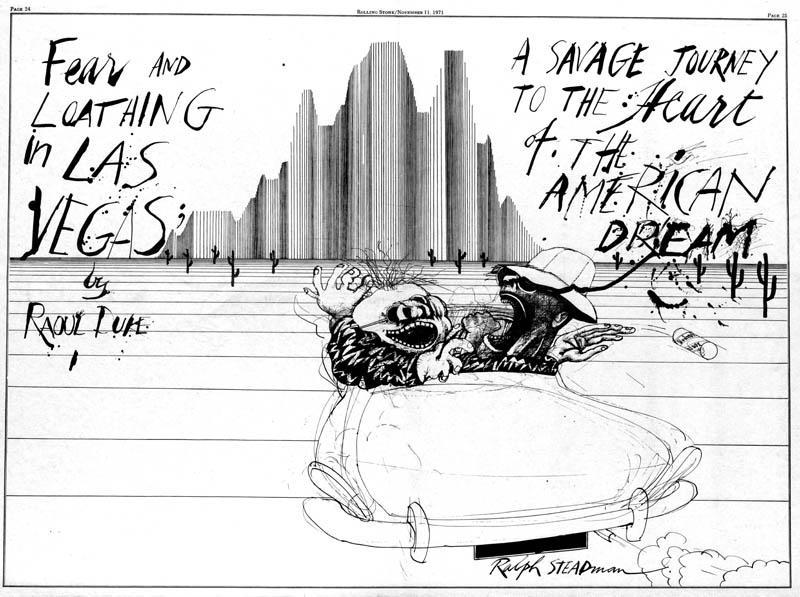
But, I digress.  Ralph Steadman’s fascinating drawings and artwork for the likes of Fear and Loathing In Las Vegas, The Kentucky Derby Is Decadent and Deprived, Curs of the Lono, etc. have become synonymous with the world and work of the late Thompson.  An accomplishment in his own right.  But, his work has not stopped with the Gonzo world.  He’s done work for almost any damn periodical you can think of.  He’s penned his own books.  He’s contributed art for anything from Alice in Wonderland adaptations, to album artwork, to Vonnegut tributes.  The very art school he once failed out of now has even celebrated his life’s work.  His work speaks for himself.  But, I thought it would be fun to let him speak for himself as well with a few questions for one of the greatest artists of the last century.  So, that being said, here are a few words with the legendary Ralph Steadman.  Enjoy!

If you weren’t an esteemed artist and writer, what on earth do you think you would be doing?

Trying to solve Grossenheimer’s Laws of Adiabatic Masses!!

Fear and Loathing In Las Vegas

Nothing vicarious! Good down to earth wet ink! It creates the surprises because I never make ‘roughs’ first….

Did your time served in the Royal Air Force shape you into the person you became in any way?

Only that I failed to make it as a Pilot! I would have loved to be one of those- and I never liked Factory life making the damn things!! Though I used to make model Airplanes- ad infinitum!

If you were to create a soundtrack of music to represent your creation of and in experience with Gonzo art, what sort of music would we hear?

I think it would be something like- Bob Dylan’s ‘Somethin’ is happening- but you don’t know what it is- Do you- Mr. Jones….??

On the topic of music, you are known to have done some pretty amazing cover art for some amazing acts… Are there any artists out there you would like to do some art for that you haven’t already?

I have just done something for SLASH.  And if the Kinks ever do anything else- that would be a plus!

Your illustrations of Alice In Wonderland, Animal Farm, and Treasure Island were absolutely phenomenal.  Can we expect any other revised visuals of classic material? 

I have recently done Ray Bradbury’s Fahrenheit 451- that looks OK!

Do you have a defense against naysayers for the obvious ideals that cartoonists and caricaturist artists can have the same fortitude and importance as, say, more straight laced or classic artists?

I am not accepted as a ‘real’ artist ‘cos I do cartoons!! FUCK those people!!!

What would you say is your finest non-artistic accomplishment in your life?

Swimming every day I am at home- in my own pool- whatever the weather!!!

from the Fahrenheit 451 collection

What can we expect from Ralph Steadman in the remainder of 2012?

I have just completed the drawings for a book of ‘Extinct Birds/Boids’- with an excellent text by Ceri Levy.

What was the last thing that made you smile?

Watching my grandsons Ollie and Toby bouncing up and down on their trampoline this morning in the garden!

Learn more about Ralph Steadman, including art for sale, when you will see him again, and his thoughts of carp, America, and all that is eternally sad with the world, at his website.  Also check out his company’s site where you can drop some cash for some amazing art.