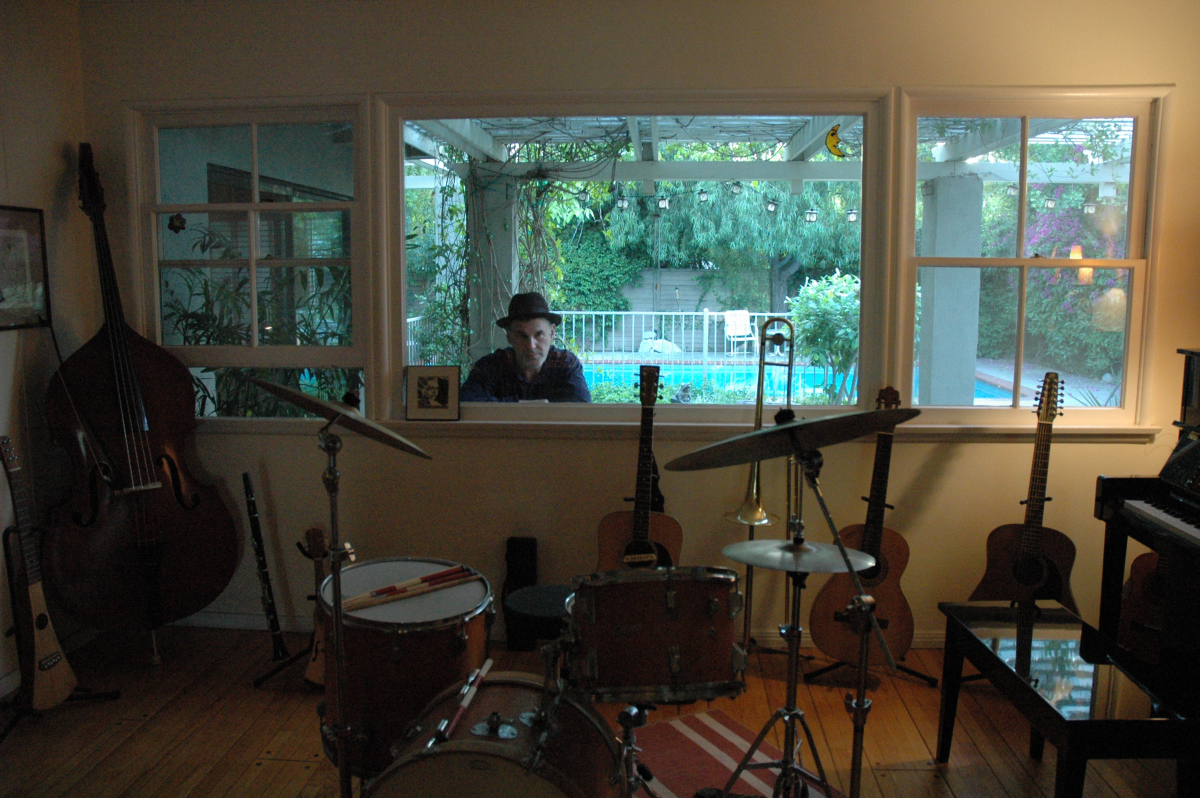
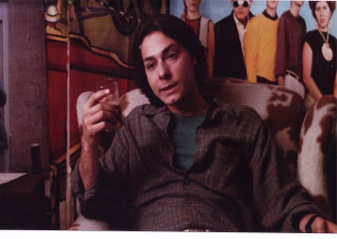
Thomas Leveritt [Interview]

thomas leveritt
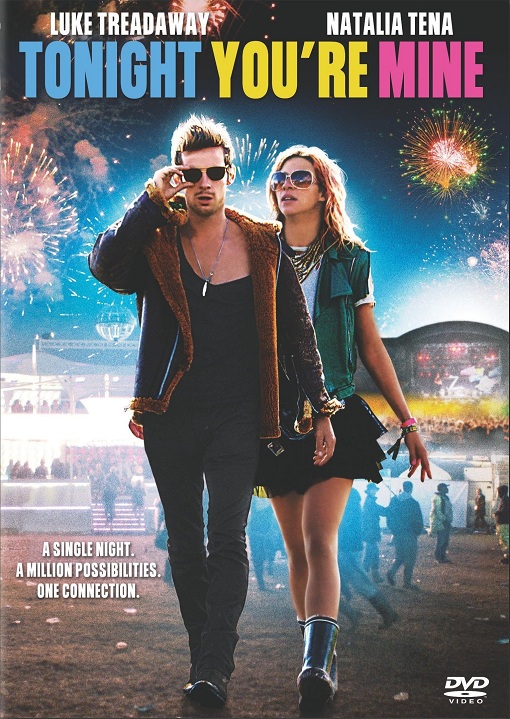
Oh Netflix.  Bloody, bloody Netflix.  For all of your bemusement, you sure can bring out the best in a body at times.  That is why when my wife recommended a little film entitled Tonight You’re Mine because of our mutual adoration for music festivals and quirky comedies that was currently instant streaming on the site, I bit.  And in a nutshell, the film was……good.  Not grand.  Not spectacular, just, good.  Good as it was, I found myself only truly falling in love with the concept of the film itself.  Some of the dialogue was choppy and seemed ill rehearsed.  Antics ran wild, and only to a certain annoyance.  But, eventually my bias opinion for these modern day PG-13 rated orgies took hold, and I enjoyed the film just enough.
But as a man who once aspired to be a screenwriter, I once again found myself blustered by the idea that the story was so magnificent, that there had to be a genius mind behind writing the film.  This of course is not to knock the filmmakers and all those behind the film, but my personal preferences have always led directly back to the writing.  It is always the writing that amuses and entertains me most.  So, I decided to find out just who was behind the keypad on this one.  And lo and behold, I discovered an extremely interesting man, who has been far more renowned in other works besides penning words for films.  The great Thomas Leveritt is a painter, author, and so much more.  He has been through war and tyranny, and love and laughter.  My research on this illustrious cat was found to be quite inspiring.  And said inspiration ran so deep that I decided I need to get a few words from this mastermind, and see what else he has going on and maybe learn his thoughts on one my latest Netflix findings (you may or may not be surprised by what he has to say).  And out of pure unadulterated luck, he was willing to speak with us.  So here you have it folks, a few words with the modern day wise man Thomas Leveritt!
You are a painter, a novelist, a journalist, a screenwriter, and more.  Tell us, what don’t you do?  And are you ever going to get to that?
Music! Never been able to do music. I learnt to play a slew of Radiohead songs on guitar, but it was more out of brute memorization than a grasp of things like keys, scales, etc. Having a tin ear I couldn’t sing along, so I wasn’t even any use around a campfire.
Having said that, I did write a screenplay about musicians, which later found life as the worst movie ever made. In general, the more I get into narrative film, the more I realize that it’s kind of a music-delivery system.
Can you tell us about the Royal Society of Portrait Painters and what it means to be part of such a society?
Oh, it’s just a trade body. Full of charming painters. They have an annual show at their HQ on the Mall, just down the road from Buckingham Palace, and if you’re interested in having a portrait painted they’ll connect you with the one of your choice & charge an agent’s fee. While much in Britain is secretive & caballic & requires ludicrous hats, this isn’t one of them. They came out of the great craze for oil painting at the end of the nineteenth century, around Whistler and Sargent (both Americans in England), when a lot of these societies sprang up: the New English Art Club, the Chelsea Arts Club, and so on. Don’t know how they got the ‘Royal’ part, though. The royal family periodically just turns things royal. Like, whole towns. Lynn became King’s Lynn; Tonbridge Wells, Royal Tonbridge Wells. The National Theatre was recently royalized. It’s one of the perils of English living.
The Bosnian War is no secret to our regular readers here at TWS thanks to the our friends Mike Phillips and Bill Carter and The Spirit of Sarajevo.  And your 2008 novel, The Exchance Rate Between Love and Money, used the war as a theme as well.  If would, could you tell us how this came to be?  What inspired you to use the war as a background?
I left school in June 1994 and went straight out there to see what was going on. The media picture was badly muddled; there was a lot of false equivalency, a lot of ‘they’re all as bad as each other’. Once I got out there I realized, there had been pretty much no war with as clear-cut good guys and bad guys. It got under my skin.
Anyway, in 2005 I had just read Written on the Body by Jeannette Winterson. It’s basically 200 pages of lesbian sex, and I thought, hell, I can do that. It started out with some kind of lysergic love scene, in which a wedding-gown unpeels itself and tiptoes out of a room, and it was all very lovely & soft focus, but you can’t have that all the time, and I needed something hard & grey to offset it. So I set it in Sarajevo, and then the war got its feet under the table and ousted all the dreamy lovemaking. As that war tends to. So…
thomas leveritt the echange rate between love and moneyHave you returned to Bosnia since the book was released? 
Sure. The skiing is great. If you recall, the 1984 winter olympics were held there. If you go off-piste, the tape doesn’t just say ‘off-piste’, it says ‘Danger: Mines’, which adds a frisson.
How did the idea for Tonight You’re Mine come about?  
Oh, christ. Well. Basically, the central requirement in reluctant-buddy movies is to force two people who don’t want to be together to be together. Devices include the Irascible Police Chief, the Eccentric Court Order, the Adorable Stepchild… I just thought, hell, why not handcuff ’em together? I liked the idea of a musician having to play a gig while handcuffed to some loomer, who’s just sort of standing around on stage trying to look inconspicuous, and the rest of the screenplay emerged from there.
It was a fluffy little project that emerged out of an offhand joke with my girlfriend in the summer of 2009. So I pounded out a screenplay – I set it at Glastonbury, and saw it as one of those ensemble Working Title productions that have been so good at enunciating an offbeat British happiness (Four Weddings, Billy Elliot, Love Actually, Wimbledon). No-one’s made a really definitive festival movie, and since it’s one of the major aspects of British life these days, I thought Working Title might go for it. But they were working on a Eurovision script at the time that was insufficiently different. But the production company who’d optioned my novel wanted to know if I’d ever written a screenplay before, before they let me adapt it, so I showed them this festival movie script, which they liked, off the back of which they got the money to make it from BBC Films.
Reviews for the film were mixed.  Paste Magazine said it was “pap of the dullest variety”, whatever that really means.  Meanwhile The New York Times said it was “unusually fresh and lively”.  So from the mindset of a screenwriter, what was your opinion of the final outcome?
Oh, it was a trainwreck (is this why you’re interviewing me?).  The Times was just being civil.
There was a lack of control in pre-production; the director let the actors choose their own band-names (they chose ‘The Dirty Pinks’, which – just – o.m.g.?), write their own songs, which the musical directors were rehearsing while the director hadn’t told them had already been cut from the script, etc, all of which indicated this amazing disregard for overall vision. When time came to shoot, there was no script supervision, so the actors more or less made up lines where they thought something should go; whole scenes simply weren’t filmed; there were no pickups to reshoot them afterwards, so a lot of the script made literally no sense. The male lead was hideously miscast. It was a mess. I wasn’t even that wedded to the script, the director had me do five rewrites in a week, which I did for free, just for the pleasure of helping get the thing made, but in the end it was so clear that it was going to be this pointless bonfire of someone else’s money that I left them to it, about a week before principal photography. I tried to be nice about it; I thanked them very much for making my script and wished them luck, and didn’t go around badmouthing them, even to BBC Films, but it didn’t make any difference. When films go bad, I guess the recrimination & bad blood is more or less inevitable.
So, I still think there’s an unfilled slot for a festival movie. I periodically try to persuade execs to make one.
thomas leveritt tonightyouremine
If we were to steal your iPod for a day, what sort of stuff would we hear?
Rilo Kiley (people still use iPods?)
What can we expect to read/see/hear from Thomas Leveritt in the near future?
After that filming experience, I decided to start directing myself. So I’ve been making a lot of short films, both narrative and documentary. Right at the moment I’m producing Vice-style mini-docs for a new internet title that’s launching in September (at Supercompressor.com). One of them is on UV cinematography, which, if it works, will be pretty amazing. People look radically different in the UV spectrum: grizzled, war-torn. It’s like seeing their soul.
What was the last thing that made you smile?
As I was being thrown out of a bar last night, the bouncer gave me $5 compensation for my unfinished beer.

James Merendino [Interview]


James Merendino3I’ve never truly understood Punk Rock. I’m also certain I never truly will, and I am okay with that.  I have enjoyed several different artists who have been tagged as being “punk”, but I never really put so much thought in to whether they are “truly punk” and what not.  Of course, this whole bloody debate is as old and tired as who came first, the chicken or the egg, the man or the god, and so on and so on.

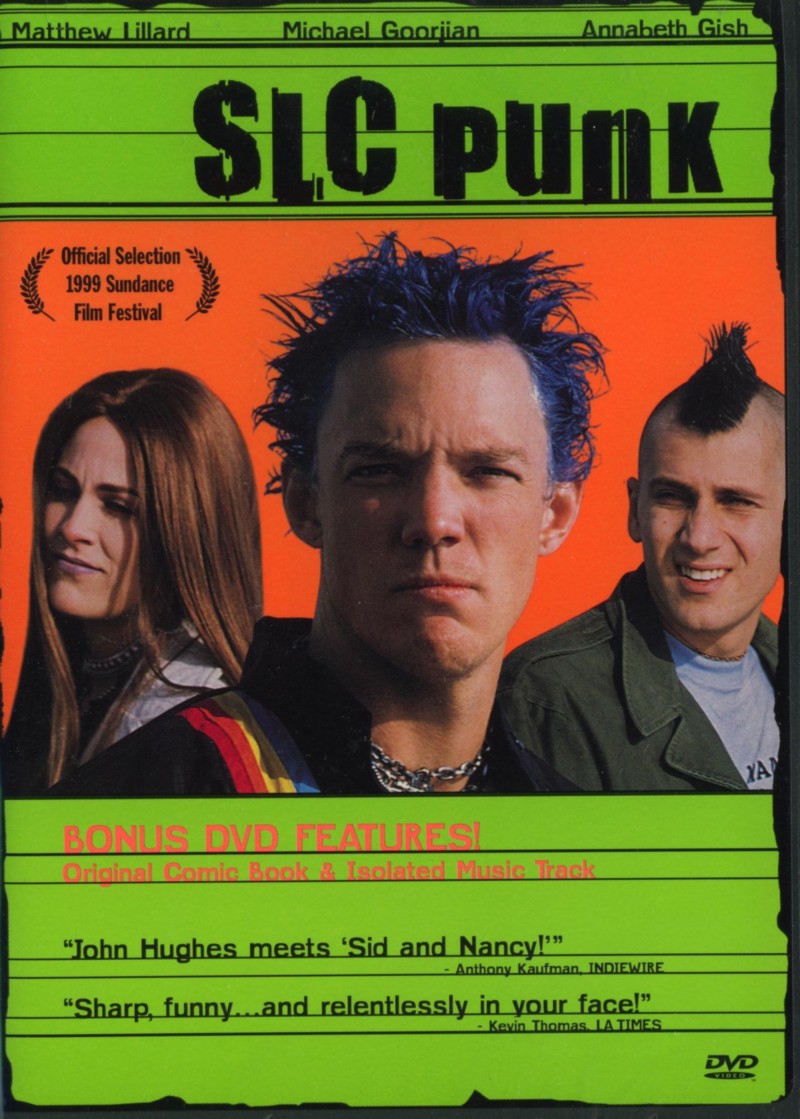
But one thing is for absolute certain, using Punk Rock as a theme in the world of cinema is definitely a go to strategy.  And some times it falls flat on its face, most likely due to the internal conflicts of the world of Punk Rock.  But, sometimes the entire demeanor of the lifestyle is captured so damn perfectly behind the lens that even the most pretentious of “true Punks” have to give props.  And in the late 90’s, we saw a shining example of such a film in the critically acclaimed film SLC Punk, a film that has continued to be a mesmerizing tale that has inspired so many people be it punk rockers or not.  And this was all in thanks to the mastermind known to the world as James Merendino.  His semi-autobiographical masterpiece has continued to intrigue audiences with each passing year, and has even developed a whole shit ton of buzz around the idea that Merendino is currently working on a “sequel” of sorts to the legendary film.  James is also the genius behind films like The Invisible Life of Thomas Lynch and El Club de la muerte.  And he was kind enough to take some time out of his busy ass schedule to give us a bit of insight on the background of the legend he has created for himself, about his upcoming film, and basically just shooting the shit in general.  So here you have it folks, the great James Merendino!

I understand you worked under the wing of the legendary late Daniel Melnick.  What was your involvement with Mr. Melnick, and how did said tenure affect and influence your career? 

The answer to that question could fill three books. Short answer. Working with Dan Melnick was the best worst thing that ever happened to me. In the end, it had no physical effect on my career. But he definitely taught me how to play.

It is widely known that SLC Punk is semi-autobiographical to yourself, and many of the characters are based on real people.  Tell us, do you still hang out with some of those characters? 

Actually just one, and I talk to a few on FB.

What do you consider to be your biggest achievement as a filmmaker on a personal level?  

The ability to even make a movie is such a herculanian and ill advised endeavor I would say that being able to say I am a filmmaker is the achievement.

In your professional opinion, what do you believe the greatest difference between the American and European film industries and what do you believe to be there perks and common traits with one another?

I am not sure. I guess I find European Cinema to be more friendly to Independent movies and the US is friendlier to Huge ideas.

slcpunkWhat is your opinion on the current state of punk rock?  What do believe the future holds for the genre?

I have no opinion about Punk rock. Other than I like it and I am sure it will stick around.

If you could create the biopic for any punk group from the late 70’s or early 80’s, who would it be? 

Minor Threat. Simply because I really respect Ian.

What made you decide to revisit the world of SLC Punk with the forthcoming sequel due out next year?

I just feel and felt that there is more to say about ones own life. It’s not so much a sequel as much as it is the way I feel comfortable talking about things that concern me.

What else does the future hold of James Merendino?  What have you been working on lately?

I will keep making movies and eventual die. Lately I’ve been working on a sequel/spinoff to a movie I made called SLC Punk.  Before that I made a few small movies. And I’ve been a hired hand on several screenplays.

What was the last thing that made you smile?

This question.

Hilary Holladay, PhD [Interview]

OLYMPUS DIGITAL CAMERAFor many years now, I have been obsessed with the Beat Generation and the characters that made up such a powerful movement.  But, much like so many profound writers and artists of so many different times, it is actually their own lives that are even more interesting than even the work they produced.  Of course this is not to discredit the beauty so many of these great folks have brought to this earth as it is crucial to this world.  But, I will be damned if I didn’t admit that what has always interested me the most about this cast of characters was the life they lived outside of their work, which ironically was almost directly reflective of their real lives anyway.
I get this.  But even better, an person of actual intelligence and sound mind seems to believe the same.  Hilary Holladay is one of today’s most brilliant minds in the world of literature.  She has taught the growing minds for several years at James Madison University, as well as giving the rest of us so much more.  She has written on Kerouac and his importance in American literature.  But, as an even greater feet, she wrote to us about a man that seems to be forgotten at times.  I am speaking of the late great Herbert Huncke.  The man who is ultimately almost as responsible, possibly even more so than, Lucien Carr in being the side characters that made the Beats in to the legends they are today.
Of course I could go on, but I think it is best to stop right here and let Hilary explain a bit more for the noobs and new Beat fans out there.  Also it is about time we get to know Hilary a bit more and get to know a woman who has contributed so much to the world of literature and writing that we should all bow and praise such a wonderful human being.  Ladies and gentlemen, I present to you, Hilary Holladay…..
For those of us who are unilaterally misinformed, who is Herbet Huncke, and why did you decide to profile this man in your book American Hipster: A Life of Herbert Huncke?
Herbert Huncke (1915-1996) was a young hustler from Chicago who arrived in New York City in 1939. Intuitive, curious, hooked on drugs, and haunted by a difficult childhood, he spent much of his time on 42nd Street getting to know fellow crooks and addicts. In 1944, he met William S. Burroughs and, through Burroughs, Allen Ginsberg and Jack Kerouac. He showed these young apprentice writers the gritty underside of New York, spoke in a jazzy hipster style that bemused and fascinated them, and told stories (many of which he later wrote down) that convinced Kerouac that Huncke was a “genius of a storyteller.” In time, all of the major Beat writers included a Huncke-based character in their writings, and Huncke’s use of the word “beat” (as in “I’m beat, man”) inspired Kerouac’s coinage of the label Beat Generation. Huncke went on to publish several books, including a memoir titled Guilty of Everything, and The Herbert Huncke Reader appeared in 1997, a year after his death at age 81.
As to why I wrote American Hipster: A Life of Herbert Huncke, I was just deeply curious about this guy. He always showed up as a footnote, an anecdote, or a thumbnail sketch in the bios of major Beat authors, and I wanted to know his whole story or as much of it as I could track down. When I read the Huncke Reader, furthermore, I discovered that he was a truly unusual and talented writer. There is a pared-down eloquence and honesty to his stories and sketches that Kerouac and Ginsberg aspired to do but rarely achieved in quite the same way that Huncke did. If he hadn’t been a good writer as well as a key catalyst for the Beat Movement, I probably would not have pursued the project.
HilaryHolladayWhat was it that initially interested you in the members of the illustrious folks known as the Beat Generation?
They were fun, maddening, sexy, irreverent, bold, candid, and so different from most of the authors I read in school. As fate would have it, my first job out of grad school at the University of North Carolina at Chapel Hill was at the University of Massachusetts in Lowell–Kerouac’s hometown. So I was literally on a Beat path, and that path led me to teach the Beats, run a conference on them, and sweat it out for many years writing American Hipster: A Life of Herbert Huncke.
In your expert opinion, how do you see the Beats being perceived today?  What do you believe is their ultimate impact?
Every generation seems to discover the Beats and embrace them in its own way. This time around, we are seeing a lot of movies inspired by the lives and writings of the Beat authors. These movies may lead some people to read Kerouac, Ginsberg, Huncke, et al., who would have overlooked them otherwise–so, yay for that. Also, I think the level of Beat scholarship is on the rise, and that is good news for everybody who wants to go beyond reading these authors just for pleasure. There is still much research to be done, of course, on the women of the Beat Movement, the overlap between the Beats and the Black Arts Movement, and the larger landscape that includes the musicians, painters, and other artists who hung out with the writers we know so much about. Ph.D. students looking for dissertation topics might want to explore these subjects if they are into the Beats.
As for impact, it’s hard to imagine the counterculture of the 1960s without the Beat Movement as foreshadowing and partial impetus. The Beats had some influence on the punk scene of later years and, especially through Gary Snyder, on environmental activism. They also helped bring Buddhism into the public eye. Because so many of the Beat writers were gay or bisexual, and were very open about sex in their writings, they continue to liberate readers who are just coming to terms with their own sexual identities. Finally, though the Beat preoccupation with street drugs has never interested me very much–not so long as I can get my hands on wine and chocolate–it is an important dimension of the Beat Movement, and some enterprising soul could possibly stitch a thread connecting the Beats’ drug use with the current trend toward legalizing marijuana in the U.S.
How we perceive the Beats’ lasting impact depends so much on our individual perceptions that I hesitate to generalize. However, they don’t seem to be going away anytime soon. There are plenty of good writers–much better writers, even–who don’t get all the fanfare and discussion this particular gang gets. The Beats have a continuing charisma that we may as well call sex appeal. They are not for everybody, but everybody feels some kind of buzzy attraction or frantic annoyance upon encountering them for the first time.
What are you most proud of when you look back on all the time you have spent as director of the Kerouac Center of American Studies at the University of Massachusetts in Lowell?
I’m still just thrilled to my toes that we were able to bring the On the Road scroll (the 120-foot long, single-spaced draft of the novel that Kerouac typed in three weeks in 1951) to Lowell National Historical Park. It was so great working with the curator, the historians, and the park superintendent in putting the exhibit together, and the rocking, wall-shaking opening night reception was the best party I’ve ever been to.
In your expert opinion, how has the world of blogging and tweeting changed the world of writing as profession?  Are uneducated hacks such as myself destroying the medium?
Well, I have no reason to believe you are an uneducated hack, and I’m not an expert on blogging or tweeting. However, I think as professional writers we need to be very careful to limit our time on the web so that we don’t exhaust ourselves with the trivial and the banal–and by that I mean what we write as well as what we read. We would all do well to heed the advice a woman once yelled at John McEnroe when he threw a tantrum at Wimbledon: “Shut up and play your bloody game!”
Can you tell us a bit about The Poetry Foundation?
My interviews with Lucille Clifton and W.D. Snodgrass appear on the Poetry Foundation website, and the Poetry Foundation is an excellent resource for anyone seeking poems and bios on poets. I use its website all the time as a resource when I teach poetry classes.
Do you have any other books in the works?  If not, is there anything you are interested in profiling?
I have a novel coming out in 2014 from Knox Robinson Publishing called Tipton.It’s about a group of teenaged orphans coming of age in rural Oklahoma in the years leading up to World War II. Several of these orphans go off to war and eventually make their way to Orange County, Virginia, where they seek out the former orphanage housemother they were all, to varying degrees, infatuated with. I recently moved back to Orange County, where my family roots are, so I’m living right where much of the book takes place. In mood and subject matter, Tipton is about as far from the Beats as I could get.
What was the last thing that made you smile?
I’m going to revise the question to the last thing that made me laugh: a hawk that chased my cat and me across the lawn. But there was a lot of yelling and running before the laughing. 

Eli Hastings [Interview]

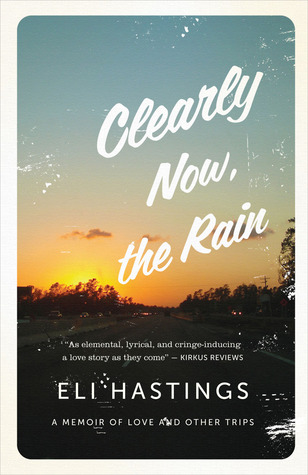
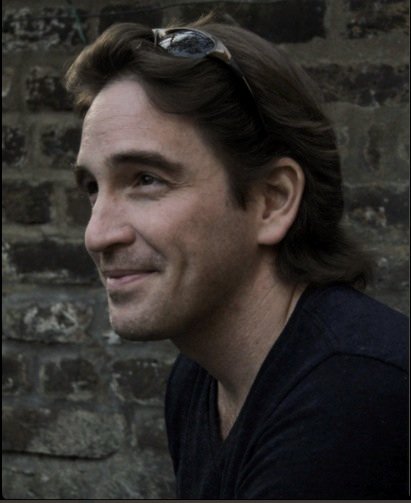
EliHastings3Eli Hastings is an incredible author living in Seattle who has just published a new memoir titled, Clearly Now, The Rain: A Memoir of Love and Other Trips.

Clearly Now, the Rain traces the decade-long relationship of Eli Hastings and his friend Serala: from ill-advised quests for narcotics in Mexican border towns through summer road trips, from southern California to Tennessee and on to New York City and Seattle, from 1996 to the very last days of 2004, when Serala’s journey concluded tragically at age 27.

Kirkus Reviews says “Clearly Now, The Rain” is “… a candid, bracing memoir of love, addiction and self-destruction … as elemental, lyrical and cringe-inducing a love story as they come.”

Eli is passionate about using writing to help at-risk youth, and is a team leader at PONGO TEEN WRITING.  We caught up with Eli to ask him some questions about his life, his new memoir and to learn more about his work and the lessons he’s learned.

Can you tell us a little about Clearly Now, The Rain?

Clearly Now, the Rain traces the ten years I shared with my lover and best friend.  It takes place in Seattle, NYC, Venezuela, Mexico and many other places.  Because of how wild a ride those years were, the book has the good fortune of being a gritty travelogue, one of those “mental illness and addiction memoirs,” an unorthodox love story, a painful reflection on trauma and abuse and, in many ways, a tale of adventure.  But most important to me, it’s an elegy.  I used to tell Serala (my friend) that when she died, I was going to write a book about her.  She’d scoff and say “you’d better.”  Of course I lied.  It’s not a book about her; it’s the story of a friendship through which I’m trying to share what she taught me about loving people—and letting them go.

The book goes into great depth about your best friend Serala’s struggles with mental illness and addiction. What advice would you give to someone with a loved one dealing with similar mental illness?

I could write an epic response here.  Instead I will say this: be courageous in cultivating your spiritual beliefs.  You will need them.

At the Jack London Bar in Portland Oregon you talked about using writing to heal. How long did it take to write this book, and how long until you started feeling that healing? 

Serala died in the last days of 2004.  In February of 2005, I had a month’s residency at the Vermont Studio Center.  My first day there I stared at a blinking cursor for over an hour and then began to type.  I wrote 385 pages in 12 days.  Then I drank two bottles of wine and got into bed for two days.  Then I got up and started revising.  The book was published in May of 2013. All of the interim was a ceaseless and often painful fight through 17 revisions.  I could not allow it not to happen.  That is the nutshell.

Clearly Now The RainHave mutual friends read the book as well? What was it like having them read it? 

I think that virtually everyone in the book has read it.  I had some mild concerns but have received almost nothing but overwhelming positivity and support.  One person—Serala’s other closest friend—was impressed by how differently she would have written it and felt I didn’t capture Serala’s joy.  So she didn’t love it.  Of course, she knew Serala when her joy was more intact, earlier.  We agreed her response is what it should be.

What was the writing process like?

Ha!  Like digging big shards of glass out of your knuckles.  Which is something I also did in that era.  It really was like digging a bullet out of yourself—exquisite pain that means you will survive.

How would you describe your writing style?

Hmmm.  Unapologetically lyrical?  Risky?

Any favorite writers who have inspired you or influenced your work?

Oh man.  I’ll take only the second part of that question on: Ann Patchett (Truth & Beauty: A Friendship), Mark Doty (Heaven’s Coast), Mary Karr (The Liar’s Club), William Styron (Darkness Visible), David Wojnarowicz’s Close to the Knives. And even though it only came out when my book did, I wish I could have read Christa Paravanni’s Her at the time of first writing.

Which phrase or passage from Clearly Now are you most proud of?

Too much pressure!  Maybe this one:

“We circled the fire clockwise, scoping out gaps between logs to float the remaining MISSING posters. The embers were a huge spill of searing heat and it was hard to get close enough. We managed to, though not without burns. One by one, stepping in enough to singe our brows, to release and back out, like a martial art or a dance. Her face whirled and slid with the air currents around that massive blaze, falling with something like grace into the pulsing white center, curling into the holy nothingness of ash, delivered through the whirling smoke to the impossible silence of the sky.”

Much of the book takes place with the backdrop of the Pacific NW in the late 90’s early 2000’s. What local albums or bands were you listening to during that era? 

You know, it’s funny—I grew up in central Seattle in the 90s, my mother’s house not a stone’s throw from Kurt Cobain’s.  But in high school we were all steeped in Led Zeppelin, De La Sol, A Tribe Called Quest.  It wasn’t until college that I realized the musical mecca I’d come from.  Then I dove pretty hard into Pearl Jam, Mad Season, and even reached back into Nirvana and Mudhoney and stuff.

How have the experiences you discuss in the book influenced and informed your current career path?

Let me count the ways…we don’t have the space here.  I work with distressed and traumatized youth via therapeutic poetry in Juvenile Detention for Pongo Teen Writing and I am finishing my clinical internship in youth and family therapy.  I think that if I hadn’t lived what I did with Serala, I would still be banging my head against the academy, trying to scrap my way to tenure somewhere (which isn’t to say that I wouldn’t take it if someone put it on a platter).

Eli Hastings4What do you hope people take away from your book?

A compassionate but severe self-interrogation about how well they are loving others.

What was the last thing that made you smile? 

My little boy, Pax, wearing nothing but Crocs and blue sunglasses dancing in a sunray this morning.

Learn more about Eli and his new book at his Official Website.

Mark Anthony Galluzzo [Interview]

Mark Anthony Galluzzo

Several years ago, I came across a little independent horror film entitled R.S.V.P.  And while the concept seemed intriguing, a Hitchcockian like mystery where you already knew who the killer was (but not who was next on his list!), I did have to admit that it was the appearance of the legendary View Askew favorite Jason Mewes that led me to checking out this film.  But, what I was not expecting was to completely fall in love with the film.  It had a certain touch of brilliance in the mystery genre that you simply didn’t see much during that time (circa 2002) and even to this date.  It still remains a steadfast go to film when I am looking to be thrilled, scared, and yes, even laugh a little at the terror of others.

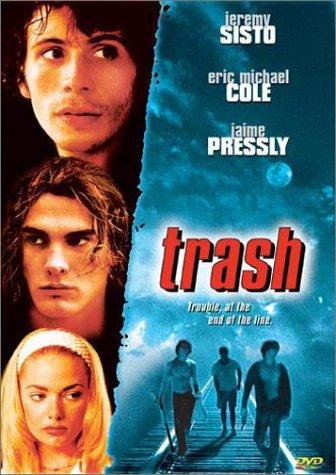
The film became even more intriguing when I discovered that the film’s director, Mark Anthony Galluzzo was sort of a one man show behind the camera.  Writing, directing, filming, producing, even some stunts.  The idea of a filmmaker taking the reigns like this has impressed me ever since I caught my first Robert Rodriguez film twenty years ago.  So, I did some research and discovered some of Mark’s previous work including his amazing and acclaimed film Trash, which is a must see for anyone who is a fan of other side of the track films.

Mark as been out of the game for a little while, but he has definitely kept himself busy as I would learn after asking this modern marvel a few questions.  So ladies and gentlemen, please allow me to introduce a cult hero in our time, Mark Anthony Galluzzo.  Enjoy!


What was the first film you remember seeing and realizing that you wanted to be in the world of film?

That’s a tough one. I don’t really remember any eureka moment. I think it was more of the fact that my dad loved to watch old movies on TNT on Sunday. So I got a good early exposure to Hitchcock (Rear Window, Strangers on a Train come to mind), War films (The Great Escape, Battle of the Bulge, Longest Day), Bond films (Dr. No, Goldfinger) and Westerns (Shane, High Noon, Once Upon a Time in The West).  When I got older I gravitated to the films of Oliver Stone, Scorsese and Spike Lee and that naturally led me to want to go to NYU.

I understand you were a real “go for” guy on the set of Saturday Night Live in the beginning of your career.  How was this experience?  And overall, what did you take away this experience?

Ha. I reckon it was more the ‘go get it’ guy.  I was a writers’ assistant, which meant I had to hang around all night in case one of the cast/writers needed something.  SNL was written fresh each week so after the show Saturday night followed by the party Sunday morning (1:30 am it would kick off) everyone would recover on Monday and roll into 30 Rock on Tuesday.  Table reads were Weds afternoon so a lot of the talent would just pull an all nighter on Tuesday. And that’s where I came in.

David Spade wants some onion rounds and sugarless peanut butter at midnight?  Sure I’ll get it. Sandler left his guitar at his apt? Sure I’ll get it.  XXXX forgot his special cigarettes?  Well you get the picture.  But let me tell ya finding sugarless peanut butter in midtown Manhattan at midnight ain’t easy!

All in all it was a good time. I learned a hell of a lot about deadlines and execution, as writing the material was one thing but then only having 4 days to make it real with costume, rehearsal, set design, hair and make up, props, graphics, camera blocking… And after all that frantic work, they put it on live. No net…  That’s old school.  That’s what makes it special.

Your Hitchcockian-esque thriller R.S.V.P. is be far one of the most interesting modern horror films I have seen.  What made you want to make this film?  Where did the idea and story for this film come from?

Other odd one this… After Trash I was approached by a guy who said he had the cash to shoot this remake of Rope. I think it was called Unscrupulous or something. I read his script and it was terrible. A complete retelling of Rope without any changes or insight. I explained it wasn’t possible and offered to write something new that was ‘inspired’ by Rope instead of just ripping it off.  At the time, teen horror was quite big but the formula was getting so stale that the audience could anticipate the beats like a veteran script analyst. Thus I thought, hey, let’s turn this mo-fo on its head and completely take the piss out of the current genre expectations. Instead of putting the ten beautiful people in our story and having the audience guess who the killer is whilst watching them get bumped off one by one, let’s just show the audience who the baddie is and let them come along for the ride.  This lead to some very strange developments that really pushed the script into black comedy and satire territory. For by simply pulling apart and reordering the old teen thriller genre, it threw up a lot of laughs as well as insights into why audiences even go to see these movies in the first place. Thus the motif of Bull Fighting throughout the film.  A bullfight is very scripted with the outcome pretty much never in doubt.  Same with the teen horror. Oh there may be a twist or two but they all end pretty much to script. Thus turning the genre on its head sort of lets the Bull win for a change. Although as I found out to my peril, when you fuck with a genre / audience expectations, be prepared to make some of em fighting mad.  Yeesch, some people were really pissed off.  Where’s the tits! Where’s the blood! I knew who the killer was in the first ten minutes (um, duh, we did just tell/show you)!  I think the one key shortfall of winning over these people was we didn’t have a likeable enough protagonist.  Rick did an amazing job considering the circumstances but originally we had Ian Somerhalder to play Nick (Ian dropped out 3 days before shooting for a film with a bigger paycheck) and I think his boyishness would have taken some edges off our twisted psychopath. Somehow we also let Ryan Gosling slip through the cracks during auditions.  Kicking myself for that one.   I’d love to see the old audition tape again to figure out what I missed or if he was just having a bad day.

Mark Anthony Galluzzo2Your casting of Kevin Smith’s well-known sidekick, Jason Mewes seemed sort of shocking and surprising.  What led you to casting the young Mewes?

He was a friend of the casting director Shannon Makhanian. Originally I was going to use Troy Garity who lived nearby in Venice Beach and did some table reads of the script as Terry, but when the film got pushed by six months, he was booked.  Shannon thus set up a meeting with Jay, and he must have been on good behavior because I thought he was perfect. I was unaware of some of the personal problems he was going through, which made for a very stressful shoot. Still I’m glad he’s back on his feet and doing well as he has a lot of heart and talent.  Glenn Quinn was pretty much the same. When I met him he was all business and fired up to play Hal, but once in Vegas, the temptations were too much and he headed on a downward spiral.  Glenn tried to clean up after he hit rock bottom in LA but fell off the wagon for one lousy weekend and it ended with tragic results. I’m just glad Jay managed to pull it together in time.  Losing Glenn and his great talent and love of life was enough.  I joked with my bro that I should have shot in Provo Utah.  No drink, no drugs, no gambling. Perfect!

Exactly how much of your acclaimed independent film Trash is autobiographical? 

All the characters in Trash are based on people I knew and the things I saw growing up outside of Jacksonville.  I took traits (good and bad) from several different individuals and combined them to create the lead characters.  Most of the events are true but aggregated from the town itself and attributed to the leads.  The opening hunting accident is real.  Great guy I played football with, Curtis Cantrell, was tragically shot and killed by a young boy while turkey hunting. It profoundly affected a lot of people. Shortly after graduation, another boy was shot by the police after robbing a jewelry store (His girlfriend was the getaway driver).  A third boy was killed cleaning his father’s gun.  Two others died in a car accident.  We had a pretty bad run of luck my senior year culminating in a brawl between some parents, students and teachers involving baseball bats and chair legs. Blood, broken bones, cops, ambulances and a crying baby. Quite surreal in hindsight.  Shame, I never figured out how to weave that one into the story!    Back then too, the trailer park community wasn’t as stereotyped as it is now thanks to reality TV. Back then it was just how poor folk lived and no one thought too much of it.  As the character Sonny says “Here or there, poor is still poor.”

Mark Anthony Galluzzo3What was behind your decision to move to become an English citizen, and begin teaching over there? 

The usual…. A girl.  A Welsh one in fact, so we have to be careful with the English citizen bit. Technically I’m a dual citizen US/UK.  I got the 2nd passport as it makes travel a lot easier in the EU and supposedly I will get a pension one day if the government isn’t broke by then.   Also I have three kids now and all have these funny British accents, so I guess I’m in for the long haul.

Teaching was just a way to stay active and get involved in the UK film community. I’ve stepped back though as I think they are pumping out too many media grads and there just aren’t enough jobs out there… well, unless you want to teach. Sort of a ponzi scheme I didn’t want to be a part of.

And do you think you will be getting back behind the camera soon?

Definitely. I took a few years off to run a business and start a family. Both have been a smashing success and have allowed me the opportunity to return to making films.  I also reckon the time away from the industry has helped mature my storytelling.  When you’re young and ambitious you are convinced that what you’re doing is always the best way and if people don’t get it then they are just wrong. As you get older you learn to take on feedback and comments and pick out any hard truths that you are willfully ignoring.  I look at Trash and see a young artist who needed a guiding hand to really make that film a classic. It was very close to achieving greatness but the handling of the final reel held it back.

I’ve got three new scripts on the go. One is an ensemble comedy / drama called Dirty Little Secrets that I’m shooting in Wales next Summer.  My producing partner and I are taking it out to talent at the moment. It’s sort of a Gen-X Big Chill.  The other two are bigger budget genre pictures.  First up is a sci-fi thriller called Prisoner’s Dilemma that we’re hoping to take to IFP Film Week in New York.  It’s a futuristic noir using post WWII Berlin as inspiration.  Lots of spies, smugglers, femme fatales and outlaws. After that is a Western adventure about a motley group of hunters, trackers and killers hired to track down a monster that killed the son of an old West land baron. It’s called Helen Ballard and The Fall Creek Ten and has gotten some good heat on the new Blacklist.   Sort of a Western version of Avengers Assemble.


What was the last thing that made you smile?

My three kids waking me up on Fathers’ Day with homemade cards.

Scott Schiaffo [Interview]

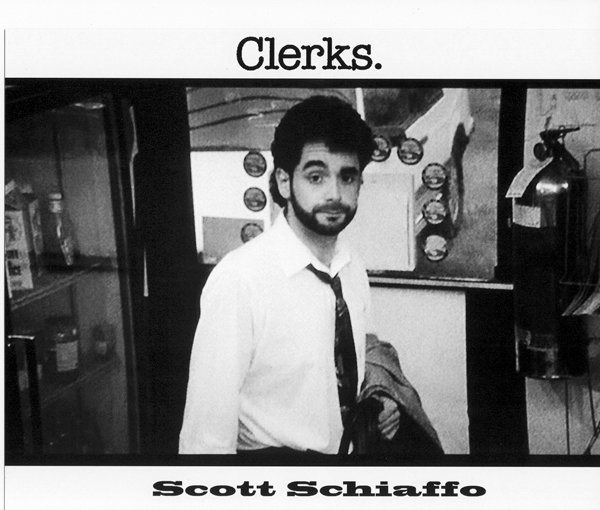
Scott Schiaffo1


Every once in a great moon, a film comes out that is absolutely perfect in so many ways.  And one of the things that makes said film so wonderful is usually (don’t quote me) is a wonderfully assembled cast.  Granted there are great films out there that only require on terrific lead character to make the whole thing work, but who can resist a group of great actors all gather as one?

And in 1994, a little gem of an independent film came out known as Clerks.  This is a film that shocked the world with its vulgarity, roughness, and brilliance.  It is also a film with an amazingly real and wonderfully spoken cast who ironically enough, had never been heard of before appearing in this now cult classic memoir of the everyman.  And one of those characters was portrayed by the amazingly talented actor/musician Scott Schiaffo who starred as one of the most heinous characters of all time (think the indie film’s version of Nurse Ratchet).  It was Scott’s interaction with Dante (portrayed by Brian O’Halloran), Veronica (Marilyn Ghigliotti), and an angry mob that really kicked things into gear for Clerks, and has marked itself in history as one of the greatest scenes of commotion and hilarity in independent film history.

I thought it would be cool to see what Scott Schiaffo has been up to these days, and man, the man has had a career that is definitely of note, and has come along way from portraying one of the most infamous pricks of all time.  And I can personally vouch that he is one of the nicest, kind, and generous folks you could ever know.  Nowhere near is insulting to human life as the gum slanging douchebag we all love to hate.  So check out what Scott has been doing, what is in his future, and basically gain a little insight from one of the independent film world’s greatest talents.  Enjoy!

How did you score the gig as the ever hated Chewlies Gum representative in Clerks, and how was the experience of shooting with the young Kevin Smith?

It’s funny that you label the Chewlies Gum Guy as “ever hated” because I tend to agree that he’s pretty much an “A-1 LOUDMOUTH A$$HOLE” but fans of the film seem to embrace him in an almost oddly endearing way, which is awesome for me 20 years later, but still it makes me wonder why he’s “liked” because he’s pretty despicable. I say that all the time and the response usually is, “well he’s pretty funny” so I guess that redeems him but he was written to be an A$$HOLE and I played him like one.

I scored the role by auditioning. I didn’t know Kevin or any of the production folks I was coming from about an hour and change away from the auditions. I saw the ad in a New Jersey newspaper classified section. Usually I’d get audition notices in papers like Backstage but this was in with the classifieds of a north jersey newspaper, the Star Ledger I believe, and it struck me as interesting. The wording was something like, “Indie film maker explores the day in the life of a convenience store clerk.” I am paraphrasing, of course, but it was a very interesting little ad.

It was additionally attractive because it was going to be filming in New Jersey and back then there weren’t that many indie films being shot in NJ, at least not any that were listing auditions in the trades I was following at the time. We’re talking no internet or cell phones at this time, the stone ages!

As for shooting with the young Mr. Smith, I personally was very quickly impressed by Kevin. I was older than most of my fellow cast mates on this film. I went in feeling like an older statesman. Kevin’s command of the English language was very apparent from jump. He has a great vocabulary. The banter between Dante & Randall is priceless as is the interplay between Brodie & T.S. and so on and so on.

I felt quite confident that he’d whip us all into shape and make a cool little film. Of course none of us had any idea this cool little filthy B & W film would outperform our wildest expectations. At the risk of sounding melodramatic, it was a dream come true for pretty much all of us on that film and balls man, how often do you get to be a part of something like that?

Did you ever foresee Clerks becoming the legend that it has become? 

Absolutely not. If I could foresee that type of thing I’d produce films and make tons of dough! No man that was kismet, serendipity or just plain old dumb luck. Honestly, I didn’t think we had a chance at cross over or mainstream success because of how crude the dialogue was at the time.

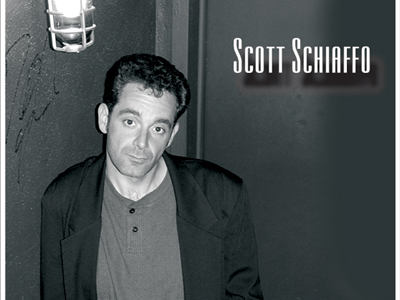
Scott Schiaffo2I thought the film was hilarious and quite unique but I thought we’d get a small run and become a cult thing in the college and indie world. I mean come on; if you remember they wanted to slap an NC 17 on it because the language was so brutal so usually that meant a smaller audience which would have been fine by me too. When it was accepted to Sundance I was floored and when it won at Sundance I was speechless. What a wild ride that first year was for all of us involved in the film!

You are a renowned Jersey boy, and have been featured in several films shot and based there.  What do you feel is New Jersey’s status in the film industry?

You can’t have an intelligent conversation about the film industry and not give New Jersey the recognition it deserves.  Well known New Jersey native, Thomas Edison, not only invented and built the apparatus for filming and projecting motion pictures, he also produced films for public viewing.

As far as New Jersey’s current status in the industry, it’s common knowledge we’re a force to be reckoned with.  I’ll give you a conservative guesstimation and say half of the actors, directors, writers and producers working in Hollywood today came from the Garden State or the East Coast.


Can you tell us a bit about the 2006 film, Idiots Are Us, in which you starred, co-produced, and wrote?  How did the idea for this film come about?

The main character of Mo came from a short film I did many years ago called I Got Stuff.  Writer/director Michael P. Russin saw this short and enjoyed the hapless nature of the character and he and I being frequent collaborators decided to build a comedic duo off of the back of this character and do a feature length treatment.  Michael’s instincts served us well as Idiots Are Us won Best Comedic Feature in the New York International Independent Film and Video Festival in 2006.

I understand you are a musician as well as a man of the screen.  What do you play?  Do you still perform?

I’ve been playing guitar since age 13 and it’s my main instrument and the one I embrace above all of the others. But in no particular order I also play piano/keyboards, bass, harmonica and the drums.

Scott Schiaffo3I have a project studio where I record, mix and master professional recordings for musicians and songwriters, but I mostly create music for film and video in my studio. I do digital video post and media design too. It’s on a per project basis and level but it’s really been a lifelong passion and dream to have a project studio set up where I can do everything from MIDI keys/strings to live drums and loud guitars!

I am releasing a CD later this year. It will be a collection of film music I’ve scored and produced for indie films over the past 15 years.  The proceeds will go to the abused and homeless animal charity I’ve been working with called the Angels of Animals. They are based in northern New Jersey where I live.

Is there a role or type of character that you feel as though you were just meant to play?  

If you asked me that question many years ago I would have waxed on tirelessly! Today I am thankful to continue to be cast in a myriad of interesting roles and projects. Certainly my turn as the Chewlies Gum Guy in Kevin Smith’s audacious debut film Clerks assured me the opportunity to be seen as a versatile and spirited actor.

What have you got going on these days and what can we find you doing in the near future?

I appeared in two films which were shot over the last 18 months that I am looking forward to seeing released in the not too distant future.  The Puppet Apocalypse, the brainchild of Scott Meaney and Christopher Laudando of Constellation Park fame, is an insane comedic half man half puppet madcap romp.  I can say no more, but be afraid – be very afraid…

Charlie Esser’s I Know You Want This is a physiological thriller set in a Jersey strip club (my home away from home LOL).

Both of these films are unique and independent in spirit, and run the gamut from drama to comedy and back again. I am very fortunate to have been cast in these projects.

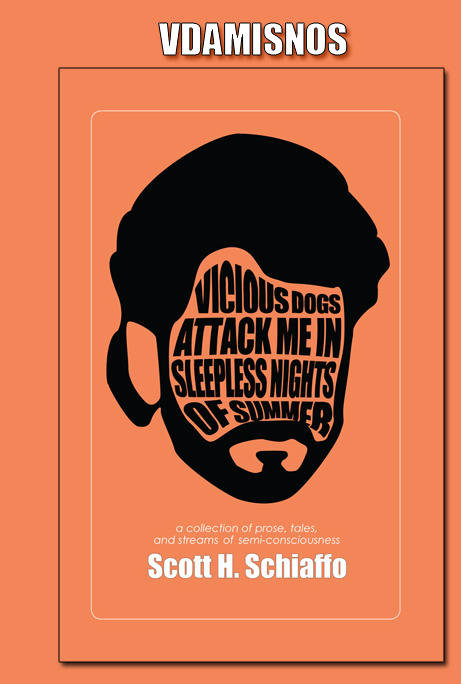
Lastly I’m still promoting my book from 2012, “Vicious Dogs Attack Me in Sleepless Nights of Summer” which is available worldwide on Amazon.

(www.amazon.com/Vicious-Attack-Sleepless-Nights-Summer/dp/0615587402)

What was the last thing that made you smile?

That is such an awesome question, I am glad you asked! This past weekend I went to the New Jersey State Fair with people I am very blessed to have in my life today. We had a fantastic night of fun, excitement, laughs and memories.

Scott Schiaffo4As we walked around the fair grounds and took it all in I became consumed with happiness and gratitude for the life I have today and most importantly for the people who are in it! I mean I could not wipe the grin from my face all night and I felt like a kid on Christmas Eve all night long!


Be sure to head over to Amazon.com to pick up a copy of Scott’s incredible book, Vicious Dogs Attack Me In Sleepless Night Of Summer.  You’ll be glad you did! 

Lian Lunson [Interview]

Lian Lunson Head Shot 1

Like so many other folks I know, I find that Netflix can be overwhelming at times.  There are just so many options to choose from.  Do I re-watch the episodes of Arrested Development since it came back around?  Or do I watch the “dark independent comedies featuring a strong female lead” that they always seem to recommend, much to the dismay of my manhood?  Nah, I think I will just watch another random documentary.  And alas, I found quite the gem recently with Leonard Cohen: I’m Your Man.  If L.C. wasn’t awe-inspiring before watching this film, he sure got to me after!  This is one of those documentaries that is far from just a simple biography told through the lips of random individuals.  This was special!  Half concert, half doc, full on awesome.

I loved this film so much I felt I desperately needed to reach out the creator of this fine gem and ask her a few questions to gain just a little more insight on how she managed to produce what should be considered a classic, and will be in due time.  So ladies and gentlemen, I present to you the lovely and talented Lian Lunson.  Enjoy!


What made you want to develop Horse Pictures, and transition from the world of acting to documentarian?

I actually just always loved films..when you are young and a girl, the first thing you think is you want to be in them. Going to Drama School was very good for me..I think it gave me the confidence to pursue what I really wanted to do. I didn’t set out to make Documentary Films..It’s just what happened. I won’t make them forever..but I will always pursue the subjects that I am most passionate about.

What sort of process do you go through whilst watching hundreds of hours of photage and deciding how to condense it down to a normal length film?

I think the process involves letting the film make itself a lot of the time..and following your intuition. When you have a lot of footage and ideas, there is so much choice..how do I start the film..how do I finish?

They are the two elements I tend to start with..and the title..those three parts to me are the key…Once I have those and I know in my heart they are the right choices, the rest of the film falls into place.

What would you say is your greaest non artistic inspiration?  What keeps you motivated?

I would have to say the Unknown. I study Metaphysics..and Film Making and the Metaphysical world are very connected…they feed off each other..also the lives of animals. I am very inspired by animals, they teach you something constantly..so these are the things that keep me busy and happily motivated.

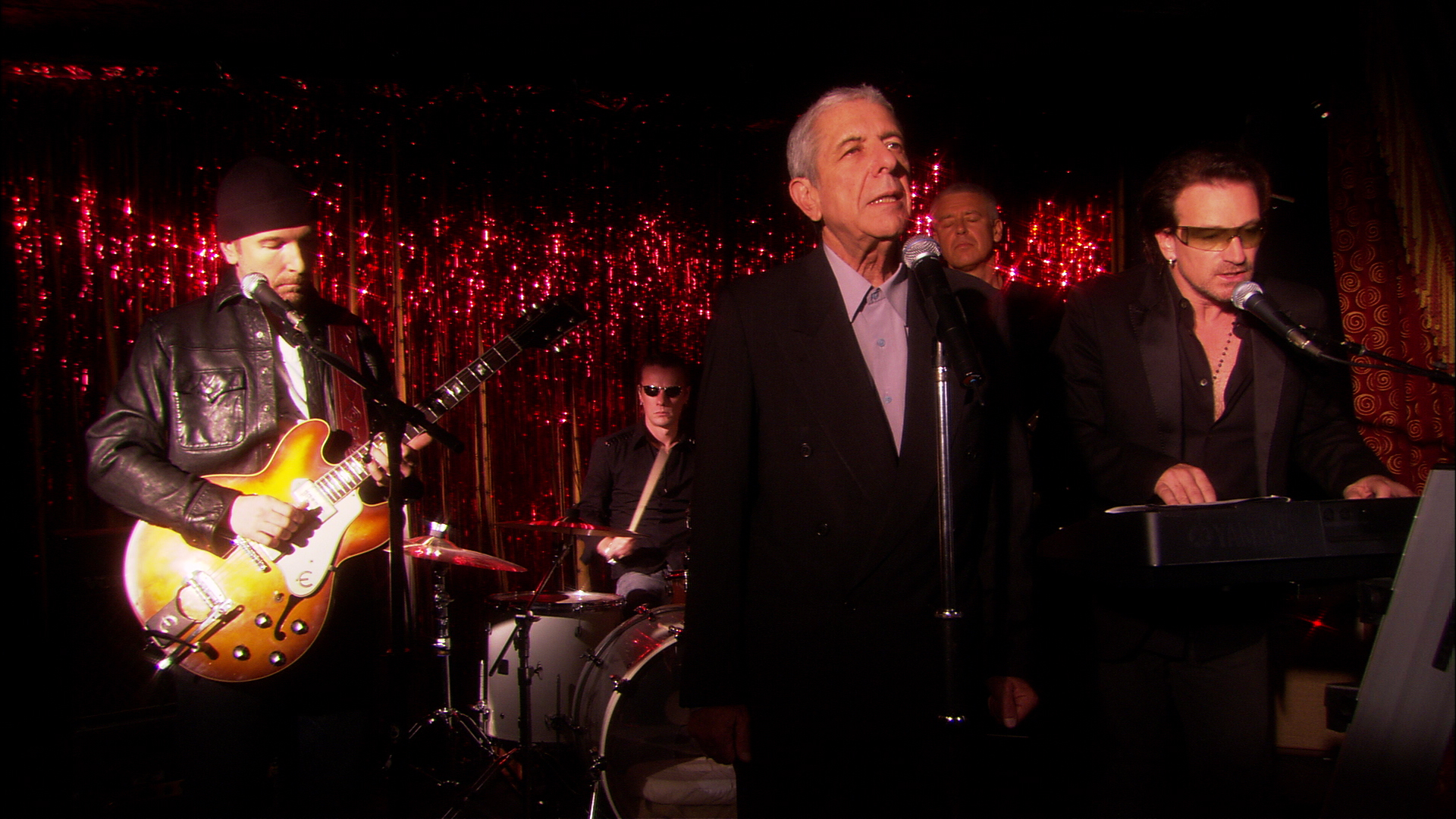
Leonard Cohen & U2 as seen in Leonard Cohen: I'm Your Man

Leonard Cohen & U2 as seen in Leonard Cohen: I’m Your Man

What was the most interesting fun fact you learned about Leonard that others might not have known during the making of I’m Your Man?

That he is more mysterious than anyone could possibly imagine.

Who are some other folks, musicians or not, that you would like to profile and have yet to do so?  

I never talk about those subjects until they cross my path or knock at my door.

Can you tell us a bit about your upcoming project entitled The Boom Boom Room?

It is a script that I have written..it is a beautiful story about Faith Love and Family…I have tried really hard to get it made..now I am not trying. The film will get made when the time is right and all the forces are lined up in it’s favor…then it will have the best opportunity to be the most visible.

Lian Lunson - Rufus and Martha 1

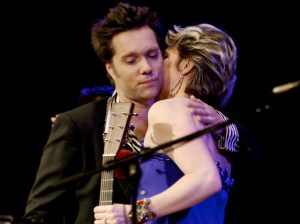
Rufus & Martha Wainwright as seen in Leonard Cohen: I’m Your Man

Magic, endless possibilities, et l’amour et l’appréciation de cette belle vie!

What wast he last thing that made you smile?

The transformation of my last rescue dog..seeing her face change when she realized she was now loved and no harm would come to her.

Michael Polish [Interview]

Michael Polish4

It is no secret that independent cinema is, in my opinion, where some of the finest stories are told in this day and age.  It is literature in plain sight, poetry that is literally in motion.  And one film that truly sparked my interest in the independent cinema world was a little film that made big news was the wildly entertaining, Twin Falls Idaho.  It was a film that stormed the festival circuits, and made heroes out of Michael and Mark Polish.  The left Sundance with the Grand Jury Prize, and have never looked back.  The have become the masterminds of film, and Michael Polish has become one of the most well respected filmmakers of now.  Hey, he managed to bag the beautiful Kate Bosworth, so he must be doing something right!

And as if other films like The Astronaut Farmer and Northfolk. weren’t enough to solidify this cat as one of the day’s greats, he has moved onto some even more sensational territory – The Beat Generation.  For those of you who know me personally, you will know that the Beats are an extremely influential part of my life.  Almost everything I do in my own work, I tend to try and reflect to this beautiful creatures.  And one of my favorite novels from the era was Kerouac’s mildly renowned book Big Sur, which didn’t receive nearly as much credit as it deserves.  And with the somewhat disappointed take I had on the recent adaptation of On The Road, I am delighted to know that Michael Polish is going to be the man behind the lense for the Big Sur’s adaptation.  Not to talk smack about Walter Salles and the work he put into creating his film….but this is an Kerouac adaptation that is completely Kristen Steward free.  And as pretentious as that may seem, that is all I really need to enjoy a Kerouac adaptation.

So, ladies and gentlemen, I am pleased and extremely honored to introduce a man who should need no introduction at all….the great and legendary writer, producer, director, overall film genius, Mr. Michael Polish.  Enjoy!

What made you want adapt the work of Jack Kerouac with Big Sur?  Are you a fan of the beat generation?  

I have a lot of respect for the landscape of Big Sur, as a place and novel. I believe that Jack Kerouac captured the environment internally.

I admire the writers of that time. I was most attracted to Kerouac’s spontaneous prose and how that would translate to the movie screen.

What sort of things were you looking for in the actors when you were casting Big Sur?  Was there a lot of research involved when casting folks to portray such legendary figures?

I wasn’t as fluent in all of characters until I adapted Big Sur. I traveled to San Francisco and stayed there for months tracking the moments recalled in the novel. The poets like Michael McClure are published and he’s alive today, I was able to visit with him on the set of the production. There is also a Beat Museum in North Beach — The owner Jerry is probably one of the most knowledgable people on this subject. I still learn new stories from him even after making Big Sur.

What was the inspiration behind making Twin Falls Idaho?  Was it metaphorically symbolic to the relationship with your own brother? 

Twin Falls was inspired by Cheng & Eng Bunker, the conjoined twins who coined the phrase “Siamese” twins. They were from Siam and become famous in the sideshow business. Their story is fascinating and worth telling someday in cinema.

Metaphorically it’s about marriage and interdependence — those are symbolic  to any close relationship and not exclusive to brothers. That’s probably why the story has universal appeal.

What would you say is your greatest non-artistic achievement?

Michael Polish3Jasper Polish

The majority of your catalog of work survives in a realm of independence and somewhat low budget work.  Is this by choice?

The stories I tend to be attracted to do not garner a lot of attention in terms of financial support. A movie about conjoined twins doesn’t open up the check books, therefore the budgets are lower. That’s the nature of independent filmmaking. Sometimes a subject matter like The Astronaut Farmer appeals to a studio, like Warner Brothers. That movie could go either way, thankfully WB came on board to the launch that rocket. It was a wonderful experience. A movie like For Lovers Only is the exact opposite, a black and white movie on the streets of Paris, a camera and two actors. No crew, no budget. It always depends on the story you want to tell, that usually determines the budget.

What is the overall experience like working with your sibling so closely?  What are perks and a downsides?

The strength of working with a sibling is what we do differently. When you have complimentary talents it’s a great team. I have never co-directed any movie, but I could possible see that as a downside.

Michael Polish2If you could make a film about any American travesty in the last 100 years, what would it be about, and why?

I’d like to make a movie about Custer’s last stand. However, that is over a 100 years ago. I’m interested in the blueprint behind the conflict with Sitting Bull.

Can you tell us a bit about your upcoming film, Hot Bot?  What can we expect to see?

Hot Bot is my homage to Weird Science. Two teenage boys run into a sex robot. It’s frustration and fun from that point on.

What else does the future hold for you?

That question.

What was the last thing that made you smile?

Her name is Forever

Ethan Wiley [Interview]

Ethan Wiley1

In a world so obsessed with notoriety and acclaim, there are brilliant minds in the film industry that tend to go unnoticed to the outside world but hold great accord within the industry and the products we know and love, and see virtually every day, would not be the same without them.  Case in point – the illustrious Ethan Wiley.  In so many different shapes and forms, he has been involved in some of the greatest sagas in film history.  From writing and directing the classic 80’s horror film series House, to chiming in in his own right to the Friday the 13th series, Gremlins, Star Wars, etc., etc.  And there are his original inputs like the latest christmas romp featuring Wee-Man of the hit television show Jackass, and his forthcoming feature, China Bigfoot: Legend of the Yeren featuring Sasha Jackson.

This is a man who is constantly giving his greatest efforts in the film, and music, industry and has literally produced nothing short of greatness.  His tireless effort to provide great cinema will definitely not go unnoticed as he proceeds to wow audiences across the globe.  We were for fortunate enough to steal a few words from the man himself to tell us about the glory days of yesteryears, and what the future holds for this great artist.  So check it out folks, this is a great one for ya!

In your early days, you were a special effects guru, designed some very well  known creatures like Gremlins.  You even worked on a small independent 1983 film called Return of the Jedi.  What was your role in the final film of that little known saga?

Guru is an overused word, which I use all of the time.  I happened to get a job literally sweeping the floors of the creature shop at ILM, and then when things got busy I got my first assignment:  making Ewok feet.  Then soon after, I was called to the 2nd unit location in Northern California (still the biggest movie I ever worked on) and was an Ewok “wrangler” helping outfit and costume the Ewoks for filming.   What a time to be in that world, surrounded by people such as Joe Johnston, Dennis Muren, Ken Ralston, Phil Tippett — even a young guy named David Fincher was in the camera department.

Later I left ILM to become employee #1 for Chris Walas, who left to start his own company, CWI.  After bidding on several movies, we finally landed Gremlins.  I worked on Gremlins for almost 2 years, from initial design phases to puppeteering for the movie.  It was an amazing experience, everyone was so cool with allowing a hungry 21-year-old kid to follow them around and ask stupid questions.  Joe let me sit in on picture editing sessions, Mark Mangini let me watch him edit the sound.  Chris Columbus took me to dinner to share some of his hard-knock screenwriting experiences.  I learned so much working on that movie.

What sort of consideration goes into creating, not just a sequel, but a 5th addition to a well loved series as you did in Children of the Corn V: Fields of Terror?  How much do you reference the 4 previous films? 

Ethan Wiley7I had seen the original film, but not the sequels.  The first thing was to sit down and watch all the films so I wouldn’t go into Miramax and pitch something that might already have been done.  Dimension was definitely in “Scream” mode and wanted the movie populated by a group of hip, attractive 20-somethings.  I happened to have a total unknown named Eva Mendes walk in the door to audition.  So I tried to go back to the basic premise of “what if a real cult of children existed”?   How would it function, why had this group of children ended up on this rural farm?  So I explored the idea of these children having been abused and neglected by the adult world, so they create a “religion” and isolate themselves from the “adult” world.  And then added lots of sharp objects that rip through people in various ways.

You’re film Elf-Man is one I might share with my small children.  The rest of your body of work for the most part, not so much.  What made you decide to enter the world of making a family friendly film?  Was it a tough transition?

No, actually, it was pretty easy to go in that direction for me.  If my work has one connective thread, I believe it is creating worlds where “imagination” or “fantasy” play a big part in the storytelling.   Also, I hope that my movies usually have a sense of humor, so I’ve always loved writing comedy.  House 2 is pretty much a children’s movie in a lot of ways.  Why family films?  Because there’s a market for them, and it’s a nice change of pace from gore and slasher flicks.

I understand you are also quite the musician, and have even released an instrumental album.  Care to tell us a bit about this?  What do you play?

I play mandolin and mandocello mostly, also guitar and bass.  After I moved to New York in the ’90’s, I became good friends with guitarist Jon Sholle, who had toured and recorded with two of my mandolin heroes, David Grisman and Andy Statman.   One day I got the courage to play Jon four-track demos for my tunes and he was really impressed and said we should record them.  So, we gathered some of the best acoustic musicians on the East Coast and we put out the CD, which thankfully was very well received.  If anybody’s curious you can hear the music at www.meanbunny.bandcamp.com.  I also play on soundtracks, do some gigs around town and record on other people’s CD’s.  My greatest claim to fame was opening for Chris Thile (Nickel Creek, Punch Brothers, a MacArthur Genius) when he was eight years old.  I was just so thankful I went on BEFORE him, instead of after, or I never would’ve gotten up on the stage.  Sometime I’ll get to making another CD, but the movies keep me pretty busy lately.

How did you come to be the man behind those great little ditties from Jason X?

_MG_4801I was good friends with the late Jim Isaac (who tragically passed away last year from cancer).  We grew up together and worked on many movies together.  He needed end credit and source music and was in a panic because they were about to start their final mix.  He called me on a Friday night, because he knew I had a pretty good knowledge of music and musicians.  He told me he needed some “space anthem rock” and did I know someone who could deliver him six minutes of music by Monday morning?  I said, Jon and I will take a crack at it.  We sent him the tracks, he loved them and put them in the movie.  We went for a purposely “retro-futuristic rock rave space” music and it turned out pretty well, thanks to Jon’s insane guitar wizardry and despite my dubious keyboard skills.

Can you tell us a bit about your upcoming project The Quarry?

The Quarry is actually on the back burner at the moment and we have some other projects that will be coming along sooner.   I just finished directing China Bigfoot: Legend Of The Yeren , shot in the remote mountains of rural China.  We’re currently in post-production.  Chris Walas did the creature design and we also wrote the script together, so it’s been fun working with my old boss again, after many years.   Chris also did the Elf-Man design and created a lot of the fun props for the movie.  Richard Jefferies is now my partner in Wiseacre FIlms, and he’ll direct a new family “dog” movie next, which we just wrote.  We’re also prepping Elf- Man 2 , and we’re in talks to do another Chinese creature movie.

What was the last thing that made you smile?

Or laugh out loud?  A great new documentary about the wild life of Cream drummer Ginger Baker.  Beware of Mr. Barker.  Highly recommended.

Robert Romanos [Interview]

Robert Romanus

When people remember a classic film that was never intended to be anymore than a summer sex romp known as Fast Times At Ridgemont High, it seems as though Sean Penn gets all the credit as the zany stoner known as Spicolli, and Pheobe Cates with her historical topless scene.  But, there are a few of us who know better.  Well actually, more than a few.  Robert Romanus’s role as the illustrious Damone, and the equally as attractive and twice as topless Jennifer Jason Leigh.  Yes, these were the true stars in some of our eyes.

And as the years have gone by, Robert Romanus has proven himself to be a truly intriguing and respectable human being.  Without ever actually meeting the man, he still seems like the most mild mannered and relaxed individual in Hollywood.  It appears as though he does just about whatever he wants!  His film career is ever progressive.  He is also an acclaimed musician with his fantastic group (that seemed to be spawned just for fun) known as Poppa’s Kitchen.  He also teaches the youth of today, and owns his own swanky little coffee shop in West Hollywood named simply, Bob’s Espresso.  And whilst sharing a few words with Robert himself, we learned here at TWS that he is also one of the most interesting men we have spoken with since Frederic Raphael.  So sit back and enjoy a conversation with one of the smoothest cats in the show business, Sir Robert Romanus!  Enjoy!

I understand you are also a musician, and your original intentions were to become a singer prior to acting.  How did the transition into film come to life?

I came to LA in 1976 with it in mind to be Doc Sevrerinsen”s drummer on the tonight show…. obviously that didn’t work out.  So I took a job as a singing waiter and after I had finished what I thought was a lovely ballad…  a very pretty girl walked up and said, “maybe you should try acting”…  I took it to mean I wasn’t very good as a singer.  I was also very shy so I took an acting class to help with my shyness and there I found the freedom to be all the things in life I had a hard time with… ie: the lover, the asshole, etc.  Next thing you know I was playing Jodi Fosters boyfriend in a movie called Foxes… I started focusing on that.

Can you tell us a bit about Poppa’s Kitchen?  

I met Steve when we were singing waiters together… over the years we have always gathered with friends and jammed all night long…  Steve and I decided about 17 years ago that we would get together every Tuesday and Friday night and write… we are still getting together every Tuesday and Friday night… 7 CD’s worth of material and a whole bunch more that didn’t make the cut…  always something I can look forward to no matter how the weeks going

Robert Romanus3Obviously the world of teaching is not the most profitable occupation, which is pretty sad.  But I am sure it can be rewarding in its own right.  What do you personally get out of teaching?

Any time I can help a kid get a troubled kid on the right path I am happy.  Showing a 4 year old how throw and catch a ball or open a juice box makes me happy.  My focus as a teacher is to help these kids find their voice and like it, like themselves, and know their worth.  I’ve taught from pre-school through high school and the goal is always the same for me. Then again, I teach the arts…

What made you want to open Bob’s Espresso Bar?  Has coffee always been a passion for you?

I’ve always loved coffee houses… I’ve always thought great music has come out of coffee houses and I’ve been a coffee consumer since I was 12…   Not a connoisseur mind you… but I know what I like…  truth is I needed a job so I decided to take a chance and throw my money into Bob’s and hire myself…  it’s basically an extension of all the things that make me happy music, art, coffee conversation and the occasional game of chess…

How did your role in a music video for indie rocker’s The Moog come about?  Were you a fan of the group?

The Moog’s manager called and asked if I would be interested… I heard the music and said let’s do it…  I am now a fan….

You recently reunited with the Fast Times At Ridgemont High castmates for The Men’s Choice Awards.  Was it like old times, as some would say?  Had it been a while since you have seen any of them?

It was nice reuniting with the cast.  I don’t see them often but when I do it’s always a fun experience.  I’m very proud of Fast Times. Who knew what seemed like a silly summer movie would get so much respect…

You have been in no less than seven films from acclaimed director John Putch.  Is there an illuminati like relationship going on here?  Are you and John close?  Does he write roles specifically for you?

Putch and I have been friends for many years… when he has a part for me now a days it’s usually written for me…  he’s an awesome director and I would work for him any time any where…

Robert Romanus2Can you tell us a bit about your upcoming film The Midnight Game?  What will your performance be?

The Midnight Game is a fun little horror flick that I shot recently based on a kids game like “bloody Mary”  it’s good and scary… I come in at the very end to buy the house where the crazy-ness ensued… when I realize this is that house… I head for the hills..

What was the last thing that made you smile?

The last thing that made me smile was my daughter asking me if she could work at the shop with me…  she now works every saturday night (music night) and we are having a blast…