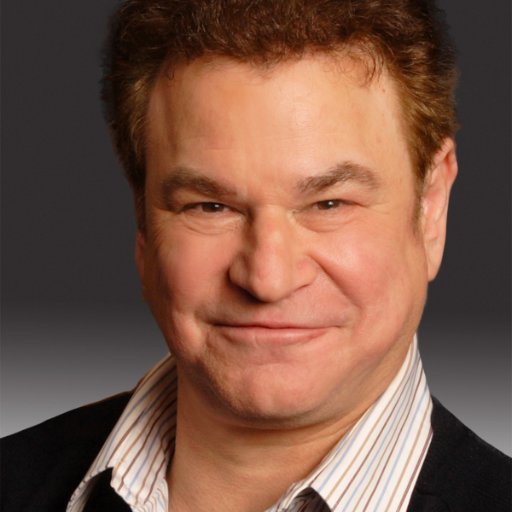
Joseph Cassese [Interview]


As you may well remember, last Sunday we showcased a wonderful film for our Sunday Matinee showcase, Vincent Periera’s indie classic A Better Place, in celebration of the premiere of Shooting Clerks in New Jersey this weekend. Basically the View Askew nerds like me are running wild at what is happening! And in said Sunday Matinee I may have mentioned that we would soon be having an interview with a cast member of the film go live “soon”.  Well, apparently by soon, I meant a few days later. Because here we are!

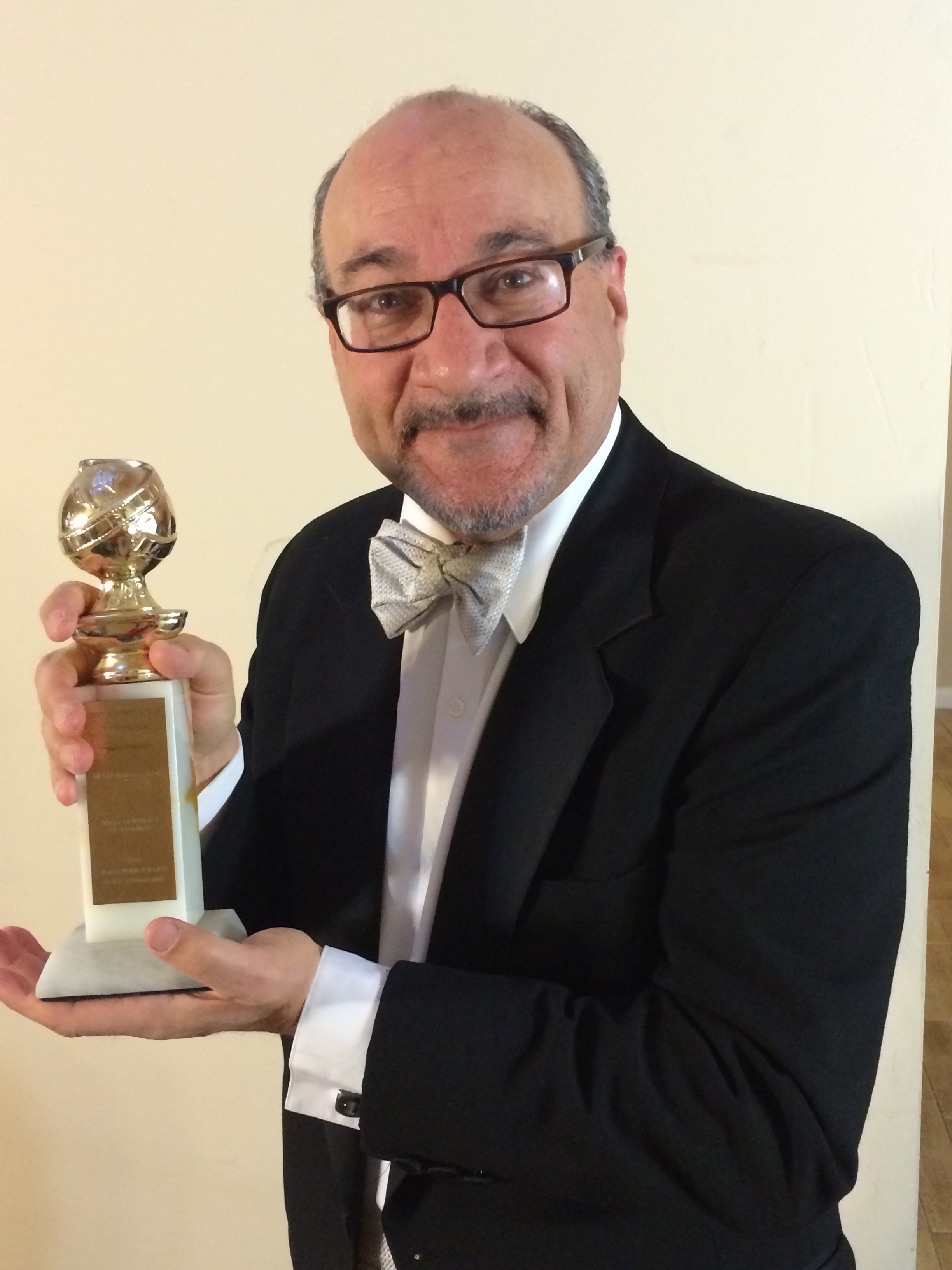
Jospeh Cassese has had a wonderful career in the world of stage and film for over 20 years, appearing in dozens of film projects and on stages across the land. And as promised, he is the actor behind Todd in A Better Place. He was brilliant in this film, as he generally is with everything that he does. And we are so happy that he has been willing to give us a few great words here today! Joseph gave us some brilliant insight into the making of A Better Place, as well some fun stories about the making of the film. And of course we delve into the rest of his brilliant career.

So without further rambling, It is my pleasure to introduce to you all, the brilliant actor Joseph Cassese!

Reading through your bio, I learned that you were originally planning on studying law, but switched gears into acting shortly thereafter. What prompted such a dramatic swing?

At the time, I was an undergrad student studying in college towards pursuing a career in law because I was inspired by an uncle of mine who was a very successful NY attorney and politician. Seeing the life that he was living was something that I was attracted to and once I learned what he did for a living, I believed that was what I wanted for myself. As I got older and learned more about how the world worked, I realized that although I have traits and talents that would have likely benefitted me in a career as a litigator, there was something about the boundaries of that profession that started to appear to me as confining. At the same time, I was experiencing some challenges in school as well as with several other circumstances in my life that probably had more to do with my evolving philosophies about “what it all meant”. My thoughts about  what I wanted to do for a living began to shift. I remember that things and circumstances around me began to stand out to me more significantly, what a person may have said, or how I observed someone’s behavior, or the dynamics at work in my immediate surroundings as well as those of the world in general. I was seeing and looking for deeper meaning and interpretations of all of those things that were showing up in my life. There was a moment, where I realized that no matter where you go or what you are doing in life, somewhere, somehow, a form of politics will be at work. There is just as much politics happening within a group of custodians responsible for cleaning a school as there is amongst a group of corporate bureaucrats jockeying for position to be recognized and promoted. With that, I figured if I am going to be involved in a situation, a career, a pursuit, and the politics of that pursuit is inevitable, that pursuit may as well be in the service of something that I enjoy doing, and I realized that my creativity is something that I cannot escape. My imagination and desire to be creative seemed to be best suited to acting and telling stories. So off to New York I went to take my first acting class.

And what keeps you going in the business? What makes you want to continue working in this world?

To be surrounded by other creative people, working towards a common goal is something that doesn’t get old for me. When I am exchanging ideas and creative energy, and conversations, and dialogue, I feel ignited. Storytelling, cinema, stage, the concept of creating something for the people who are watching to feel or think about something that they may not have felt or thought before watching, there is something about that idea that keeps me in it.

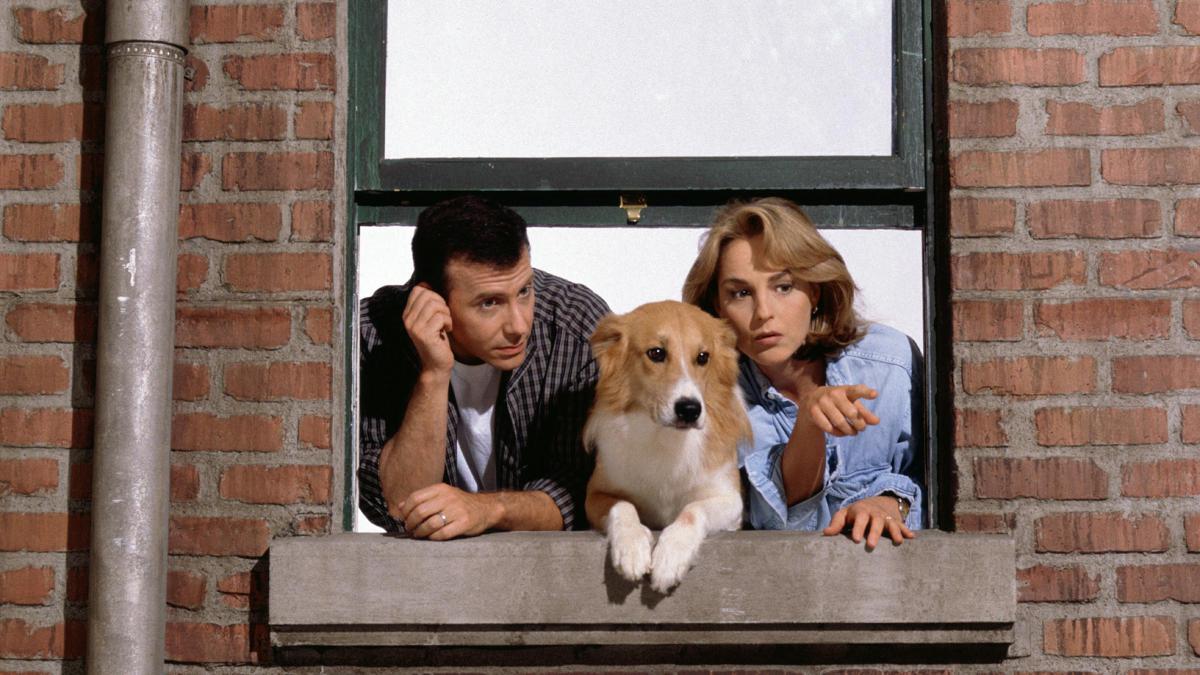
It has been 20 years since the release of one of my favorite films of all time, Vincent Pereria’s A Better Place. I’d love it if you would tell us a bit about your experience working on this legendary cult film? What drew you to the role of Todd?

Truthfully I was initially drawn to the project before I knew anything about it because of the production’s affiliation with Kevin Smith’s View Askew production. The era of independent film being considered as a viable part of the entertainment business and how it was being taken more seriously was gaining notoriety. I had quickly become a student of how rapidly that element of the business was launching careers and making some incredible films. Being a kid from Jersey who was trying to find my way in the NYC arm of entertainment industry, seeing a notice for an open casting call in Red Bank, NJ from an affiliate of View Askew, I wasn’t going to miss the opportunity to go out for it. When I arrived, not having a fully developed understanding of preparation as it related to the auditioning process, I hadn’t realized that I was supposed to have had a monologue prepared and didn’t. So I just went right up to one of the people running the casting, whom I’d later learn was the Producer, Paul Finn, and explained my dilemma and asked if I could cold read from some sides from the script. After looking at me like I had two heads, he told me to wait a minute. A few minutes later he returned with some pages from the script, one scene was a Todd scene. I think I did pretty well considering they offered me the part. As for the Todd character itself, I was never really the Alpha Ego type in high school but knew enough of them to understand what my version should sound like, look like, and how he should carry himself. With that, I began to develop who I thought he was.

A fun story about the making of A Better Place……

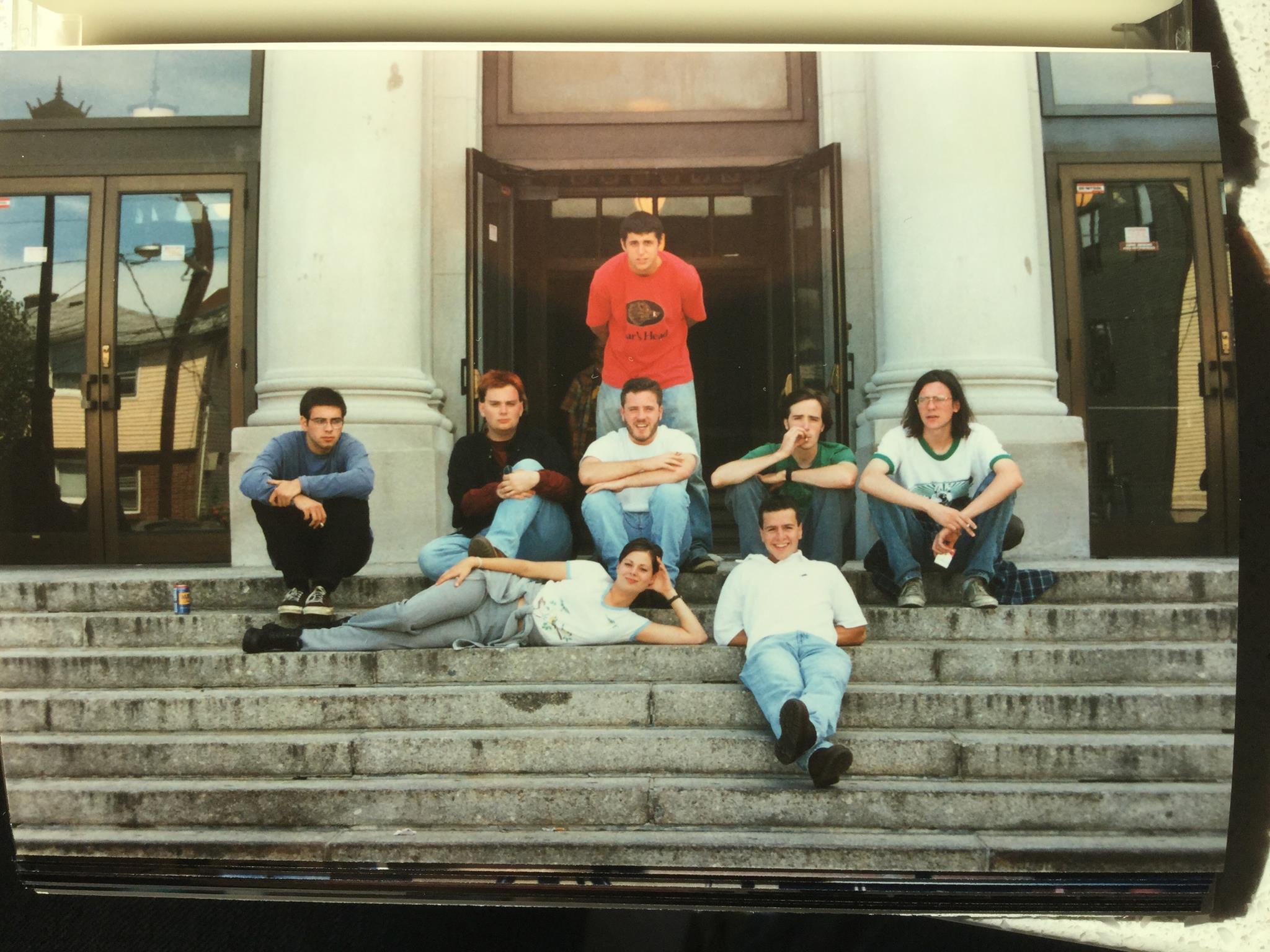
It was the middle of the summer in 1995 and we were rehearsing and the project was in preproduction. There was a critical moment where Vincent received a call from the Executive Producer, Scott Mosier, wherein he confirmed that if we didn’t designate a confirmed location list, the project accountant wasn’t going to release the check to the insurance company. Without the production insurance, we couldn’t rent the camera and lighting equipment and we would have been effectively dead in the water. For the most part, Vincent and Paul had established most of the locations, many of which would be shot guerrilla run and gun style. But the biggest, and one of the most important, was the school location where many key scenes would need to be shot. Without the school location locked, we had nothing. We were in the backyard of Vincent’s parents’ house and his bedroom was in a rear structure which was detached from the main house like a bungalow. Very cool. It had his bed, TV and it’s walls were decorated with film posters, with his Laserdisc collection on prominent display. As we were all discussing the severity of the moment, I went into Vincent’s room and began dialing 411 and getting the phone numbers of all of the Board Of Education departments in schools districts that I could think of. With each new number and subsequent call, my introduction and pitch as a “Location Scout” working for View Askew got better and better. I recalled that Kearney High School had allowed filming of a series that briefly ran starring Montell Williams. When I called them, being that they had experience in that area, they immediately knew who to transfer me to. Once I spoke with the right person, we had preliminary approval pending a script review. We were set, and I’m still waiting for the additional credit from Vincent as associate producer or at least location scout. 😄

20 years later
, and I feel the film still holds up, and is even more appropriate in the post 9/11 world. What are your thoughts on the film, and is there anything you wish you could have added to the film in hindsight?

If there is one word I think best describes Vincent’s concept for A Better Place, it would be prescient. I remember him telling me about his own perspective on the world and his views about how pervasive nihilism was becoming amongst the youth in our country and around the world. He cited an event where a couple of kids in England had stoned another kid to death and he was inspired leading him to drawing a parallel of how Ryan was so consumed by his anger which fueled his indifference. Remember, this was five years before Columbine and Vincent was giving a voice to a soul who had been disenfranchised, felt as nothing was worth it, with the exception of looking for an opportunity to reverse an injustice, and in doing so, found something and someone to attach himself to. I thought it was unique in that he was telling the story of how and why a kid can get to that kind of place. It wasn’t a simple coming of age story that ends in tragedy, it was much more than that, I thought. As far as me adding to it in hindsight, the only thing that comes to mind is a more layered character development for Todd. At the time, I had studied acting and taken some classes but still had a lot more to learn in terms of craft and technique, so what you’re seeing is a performance based upon not a lot of experience and a lot more to learn.

In more recent years, you have done a lot of work with the brilliant  filmmaker Anthony Marinelli, creating some wonderful pieces of film. How did this working relationship begin, and what is it about your relationship that works so well?

The friendship I have with Anthony and the collaborative creative work we’ve done together began at a casting session he called me into, to read for his first short film, Joey’s Gonna Kill Me. At the time, Anthony was working as a professional editor with A Cool Dry Place, an in-house production company under the umbrella of DDB-Needham, a very large ad agency. The casting was on a weekend, in the agency’s main headquarters office in a big brown skyscraper in midtown. I will never forget how Anthony commandeered one of the supply closets and turned it into a casting room, shelves of paper towels and copy paper notwithstanding. About 85% of the script was me on the phone talking to different people with the other side of the conversation being completely imagined. So I had to create that other dialogue to work with for my written dialogue and respective reactions. I loved the challenge and how it forced me to work on my toes and create a significant part of the story even thought the audience would never hear it. From that point on, I have been fortunate to have been asked to work with him again and again, with very rewarding results. To date, we have collaborated in several award-winning films and stage productions, most notably the Cannes film festival, twice. I think what works so well about our relationship is that we both bring zero ego to the table. There is definitely a shorthand that has evolved over the last twenty years where he knows what I can do in a character and when I read what he’s written, I immediately understand his intentions as for how he wants the character to be seen and portrayed. Also, I think because we both love storytelling so much, we both understand the different elements that enhances not just a moment but the overall arc. One of the things I enjoy most about being a creative artist is the chance to dissect a script, character, a shot set up, a moment, and doing that with Anthony is always a pleasure. His approach is typically all-inclusive and open to see what the spontaneity of the situation may bring or how it may inform the goals of the story. Those discussions and conversations are like mini explorations and we have done that so many times, it’s become something to look forward to each time we work together.
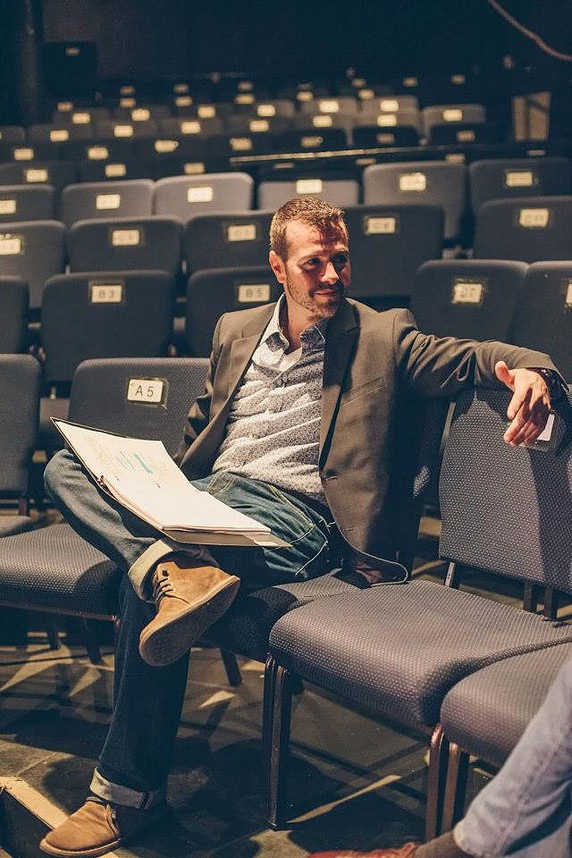
If you were given the chance to portray any legendary figure in American history, who would it be?

If the phrase American History were to be considered all-inclusive and wide-ranging, I’d say the history and evolution of American Cinema has a rightful place at the table. With that, the era that has always fascinated me was Hollywood from the mid to late 1960’s through the 1970’s. There is a great book titled Easy Riders, Raging Bulls by Peter Biskind. It’s the story of how some of the greatest filmmakers in the history of cinema, against all odds, against all forces of convention, bucked the system, and reinvented filmmaking, wresting control away from the big studio heads and putting the control into the hands of the artists. Coppola, Spielberg, Lucas, Scorsese, DePalma, Altman, Bogdanovich, Robert Evans, and the list goes on. It is because of this collection of visionaries and their creative resistance against the old guard and the old ways, that gave rise to the most memorable films ever made, and more so, inspired the next generation of filmmakers to continue on that path. (See Rebels On The Backlot)

I think it would be exhilarating to play anyone of those aforementioned people because each has such a rich history and interesting trajectory that put them into their respective places of influence. If I had to choose one though, it would have to be Robert Evans. His life story, The Kid Stays In The Picture, is one that truly represents the idea that, with relentless perseverance, anything is possible when you set your mind to it, all while operating where the word ‘no’ doesn’t even register. His vision, as well as his versatility in and understanding of the intersection between business and art has yielded some of the most memorable and important pieces of cinematic art and subsequently the acting careers born from them, in the history of the entertainment business.

What does the future hold for you? Anything you would like to tell our readers about?

The future is bright. I am continuing to audition for new roles both in front of the camera and well as on the stage. I am working on developing a new play by an established Playwright with whom I’ve had the honor of forming a friendship with. With my production company, Luloco Productions, I am also working on getting some film projects made by some friends of mine in front of distributors because I believe each of the projects (two documentaries and two features) have unique stories to tell, and because of their relevance, I think they will appeal to the public. Also, my latest short film, Marital Arts, written and directed by Anthony Marinelli, which just screened in Cannes this past May, will continue to circulate through the film festival circuit.

What was the last thing that made you smile?

Thinking that I have three beautiful children and a great girl to go home to later today, that made me smile.

Dominic Bogart [Interview]


It has turned out to be a HUGE summer for all sorts of things that we love and enjoy hear at Trainwreck’d Society. Two beautiful albums are out or coming soon, a huge premiere is happening in New Jersey that I would personally give my first born to be able to attend, an intense Kickstarter campaign has rolled out and started to form some new interesting kinships….and now there is a summer movie coming that we are damned excited about! It almost feels like too much, but we are so happy to attempt to handle it!

Today’s interviewee is a brilliant actor and musician who will be appearing in what we are hoping will be the hit film of the summer, The Glass Castle. His name is Dominic Bogart, and while he is already a star in our mind, his performance in this film is sure to kick his career into a whole new gear. The film also features the always perfect Woody Harrelson and Oscar winning actress Brie Larson, our modern day Grace Kelly. It looks to be one of the finest films of 2017. Note: After you have read through Dominic’s amazing responses, check out the trailer for The Glass Castle below!

And Dominic Bogart also brings us back a bit to our music roots as he is the brilliant frontman for the band Canines, that most of you will recognize as the cats who brought you the wonderful sound and story behind the cult classic film I Am Not A Hipster. Mr. Bogart is a multi-faceted human being who we are so honored to have join us during this surreal time at Trainwreck’d Society. We are honored that he has agreed to join the TWS family and share a few words with us today.

So ladies and gentlemen, the great Dominic Bogart!


I always love to hear stories about Middle American kids falling in love with acting for one reason or another. So, as a young man growing up in Dayton, Ohio, how did you first come to realize that you wanted to play pretend for a living?
I

I grew up 40 miles north of Dayton on a 90 acre thoroughbred horse farm ten minutes down the road in every direction from lots of small towns and I had a highschool teacher that fostered the interest in music and theatre performance in myself and my three brothers. Two older brothers ventured into theatre and I followed them. I saw them excel at it and I thought it looked fun. They had something to wrap their hearts and minds around that pushed them hard and I watched as them grow as people in the make-believe world that engaged them as much or more so than sports had done. Acting was a way out of the academic world (which for me was insufferable), the manual labor force (which I knew well from an early age and feared as a trap), and performing offered me a replacement for what football had been. I saw my older brothers move audiences in collegiate and professional theatres and I thought I could be for me too.

And when did the music come in? Has acting and music always been sort of synonymous to your livelihood, or are they entirely different ventures in your mind?

I started playing guitar and singing at an early age. I learned to sing by listening to and emulating Axl Rose, Frankie Valle, Lane Staley, Chris Cornell, Smokey Robinson, Keith Sweat, and my brothers. My first professional ventures were in musical theatre and I worked on shows like Rent and Jersey Boys. When working in musicals you tend to try to fit the bill, and I attempted to give the powers that be what had come before. But that approach can often lead to disappointment. As a musician I’ve always toiled because I thought that I had to say something unique. I’ve the same instincts as an actor, and it’s difficult to figure and cultivate your narrative or niche. Though I work as a singer and songwriter, I’ve had challenges doing both. I have my limitations, and I’ve tried, failed and succeeded as a musician. I don’t know why, but Dominic the Actor seems to win out in the fight. There’s always been more infrastructure established, but I’d be equally fulfilled if I could touch people via music.

You have had a wonderful career as both an actor and musician, with your group Canines, being the musical centerpiece of the film I Am Not A Hipster. While I assume both creative processes have their benefits, I am curious to know which one would you consider yourself to be as a focus? Between music and film work, which one brings you the most joy, and would overpower the other if given a choice to do only one?

I think I covered this. I don’t ever want to stop singing and making music. I want to get out of my own way and get better at it. Creating the band Canines and the original music for Hipster was a dream come true. I was flanked by greatness: Joel P. West and The Tree Ring musicians Darla Hawn, Kelly Bennet, and Douglas Welcome. We recorded a full album of original songs, performed live in the film, at ASCAP at Sundance, and nationally throughout the festival circuit and release of the film. We continued to release music online. http://songs.caninesmusic.com/album/canines I hope we get to do more Canines in the future.

I’ve learned that you have some appearances coming up on the hit series Fear the Walking Dead, alongside our old friend Colman Domingo. So what lead you to want to join the world of zombies? Have you always been a fan of this genre?

I had the pleasure of working with Colman Domingo on The Birth of A Nation. He is vulnerable and fierce in the film and I had a great time with him as we shared the Sundance experience and was impressed by him as a representative of the film and it’s message throughout its release. I didn’t have any scenes with him on Fear The Walking Dead, but I’m a fan of his work on the show. I am thrilled to have taken part in something that so many people have connected to on such varied levels. People are equally wild about its violence and its humanity. I think that if you’re able to tap into the affairs of the human heart in the world of zombies you’ll have a hit. If it was just hokey characters, walkers limping, bleeding and eating flesh all the time, viewers would not engage. As an actor, when you get a high stakes situation that’s life and death and family, you’ve got an ideal unpredictable and compelling situation in which to play.

I understand you joined an extremely talent-loaded cast in the upcoming drama The Glass Castle that looks to be absolutely fascinating, and one of the most anticipated summer releases this year. So how was your experience on this project? There were some heavy hitters to contend with, was it an overall pleasant experience? Any fun anecdotes you can share with us?

I was thrilled to share the screen with Woody Harrelson and Brie Larson on this film. I can’t thank my friend, Destin Daniel Cretton, enough for the opportunity. Having grown up in the same area in Ohio as Woody had in his teens, I always felt a kinship to his nature. But that’s the strength of his magnetism-don’t we all feel that coziness toward him? It’s a reason among many why he’s wonderful as this colossal character, Rex Walls.

Arriving to set overly prepared and anxious, my first scene with Brie was a nightmare for me. Brie played the scene a different way than I had anticipated, and I had to call lots of audibles on the spot. It was a great learning experience (You were right Willem Dafoe: “You don’t plan it. You experience it”). It’s supposed to be uncomfortable. That’s compelling to watch. But I went back to my hotel that night considering retirement and words I’d write in apologetic emails to the director and producer. But the Montreal sun rose again and I went back for more. Brie, director Destin Daniel Cetton, director of photography Bret Pawlak, and I got rolling nicely with a vernacular that we’d all developed from years of working together on films like Short Term 12, I Am Not A Hipster, Deacon’s Mondays, and numerous other shorts. We had improvisation, we played loosely with the lines, and staging, and the light and heavy elements/dynamics of the scenes and characters’ relationship I think came together nicely. I started to feel better and haven’t retired yet.

What else does the future hold for you? Where can our readers plan to see you next?

The Glass Castle releases August 11th. In October I’ll be on Season 6 of the CW’s DC Comics superhero tv series, Arrow. I’ve auditioned for the show a few times. Apparently the 9th time is the charm.

What was the last thing that made you smile?

Last week I was home spending time with family and friends, singing at a wedding, seeing my childhood friends married with children, riding horses, the farm, nature.

Check out this trailer for The Glass Castle featuring Dominic Bogart, Woody Harrelson, Brie Larson, Max Greenfield, and Naomi Watts in theaters today!

Christopher Downie [Interview]

For several years now, I am have been following the production of a film that I have been so excited about that is finally coming to the world! If you happened to check out yesterday’s Sunday Matinee  about Vincent Pereria’s A Better Place, you will know I am talking about Shooting Clerks. If you are just joining us today as a Christopher Downie fan, well, I am still talking about Shooting Clerks, but go back and read that when you are done here! Yes, several years ago Scottish filmmaker Christopher Downie began an adventure in telling the tale of how one of the greatest films in independent cinema came to be. And this coming weekend, the world is finally going to get a glance at one of the most anticipated films of the decade.

And wouldn’t you know it, I have finally secured some wonderful words from the great Christopher Downie! He is an absolutely lovely gentleman who we are so excited to have with us today. He is a brilliant filmmaker that we will definitely be paying a lot of attention to throughout the rest of his career that is sure to flourish. Christopher Downie has been working in the world of Kevin Smith for quite some time now, but Shooting Clerks marks his first feature film based around the beautiful world that Kevin has created over the last three decades. Shooting Clerks is bound to be a brilliant experience that you certainly will not want to miss. And with a genius like Christopher behind the project, there is absolutely no way this film is not going to be one of the best films of 2017.

Shooting Clerks will premiere this weekend in the place where the whole journey began almost 25 years ago, Highlands, New Jersey. Downie and several cast and crew members will be at the event, as well as Kevin Smith himself on August 5th! Pick up your tickets to the event right HERE.

But for now, please enjoy this amazing interview with the great Christopher Downie! Enjoy!

What was your first exposure to the world of film that made you decide that this was what you wanted to do with your life? What drew you to this world?

When I was 13 years old, a friend of mine offered me a copy of Dogma; a film he had watched once and instantly took a disliking to. I eventually wore that tape out. I then saw Chasing Amy, having found out that Jay and Bob appeared in both. A shared universe like that, in a comedy, blew my mind and instantly captured my imagination. I had to have more. Luckily, there was more – a lot more.

What is your own film community like in Scotland? For those of us who may simply be ignorant Americans that can only think of Trainspotting, what is the artistic community, specifically in the world of film like in your area of Scotland, and the country as a whole?

Trainspotting is definitely the pinnacle when it comes to Scottish filmmaking, although it wasn’t directed by a Scot. Usually, there are two types of films produced back home; Gangster films or period pieces. These are the country’s bread and butter. Occasionally you’ll get filmmakers like Peter Mullen, who’ll knock out a real belter of a film about the class struggle of the nineteen seventies but usually we stick to the aforementioned fair.

What sort of research did you go into to retell the story of the making of Clerks? I know Kevin is a talker, and has probably told variations of birth of Clerks on several different formats over the years, but were there any other tools you may have used to help develop this story into a cinematic venture?

I think I started gathering material in the late 2000’s, unconsciously of course. I seem to retain dates and film facts really well so when the time came to lay out the treatment, I did it without any additional research. As I started to re-draft, I went digging. I managed to get in touch with all the main players, from Brian O’Halloran to Marilyn Ghigliotti. Everyone was very accommodating and generous with their time. Using these interviews, I managed to hack down the bloated treatment into something that resembles what we ended up with. If not for the kindness of people like Brian and Marilyn, as well as Ernie O’Donnell, Betsy Broussard and my man, Scott Schiaffo, this film would be a shadow of it’s current self.


It seems like a great bit of a fortune that you managed to have several cast members from the original Clerks film on set with you some of the time when filming Shooting Clerks, including our old friends like Marilyn, Scott, and Ernie. As folks who were there when the events were actually taking place, did they manage to give you any solid input during shoots? Anything specific you can tell us about?

I really don’t want to spoil it for you or your readers. That being said, my chats with Ernie helped shape the dynamic between his character (as in the character of Ernie) and that of Kevin’s.

Along with cameos and appearances from original cast mates, you even manage to film exterior shots in the original locations of Quick Stop and RST Video, and the general area of New Jersey. What was it like being on those sacred grounds, and working to set the place back in time to almost 25 years ago?

Sadly for me, I didnt shoot those sequences – the on location shoot was orchestrated by my producer and 2nd unit director, Ryan James. I did shoot one scene there, a scene we decided to add to the film when we were promoting the film back in November. That was surreal, I can tell you – it was like setting foot on the set of the Death Star. I can’t wait to go back.

Now that the film is done and about to be released upon the world, what do you believe that die hard Kevin Smith fans (i.e. those of us who genuinely love Yoga Hosers!) are really going to enjoy about this film?

Aside from the obvious nods to certain scenes and scenarios from the original film, I think the fans will get a kick out of the Easter eggs and references to Kevin’s other work. There are literally hundreds of them in there. I’m hoping the arcs of both Kevin and Bry will satisfy fans of SModco podcasts like Highlands: a Peephole History and Tell ‘Em Steve Dave.

Now that Shooting Clerks is soon to be out in the world, what is next for you? Anything else you would like to plug to our readers?

We have various productions in the works at the moment with one in particular circled for 2018. It’ll be something of a departure from Shooting Clerks – a socially charged horror film set in the 1920’s. Way to jump genres, right? Even though it’ll be a period piece with one foot in the supernatural, it’ll be a heck of lot easier to make than our first feature film outing.

What was the last thing that made you smile?

I have to say that being interviewed by you is up there. These last few days, and everything that’s unfolded, have been some of the best times of my life.

Check out this amazing trailer for Shooting Clerks courtesy of Auld Reekie Media, if you find yourself in New Jersey this weekend, be sure to catch Christopher at the Atlantic Highlands Cinema 5 on August 5th with special guest Kevin Smith:

Robert Wuhl [Interview]

Today we have probably one of the most recognizable figures in the world of comedy with us here today. The great Robert Wuhl has been a staple in the world of entertainment as a comedian, writer, and actor for a few decades now. His career has been so varied and delightful it is almost unbelievable. It is definitely hard to dream up what he may be “best known” for with all the amazing work he has done. But, let’s try!

Die hard Madonna fans will recognize that handsome mug for his appearance in her greatest music video to date, “Material Girl”. Baseball fans are sure to know his work in Ron Shelton classic films like Cobb and Bull Durham, as well as his successful HBO series Arli$$, which isn’t entirely about baseball, as we will discuss further. Oh and if we want to throw basketball in there, let us not forget Blue Chips, penned by Shelton. Then of course there are is 2 Emmy’s for writing for the Oscars during their glory days when Billy Crystal reigned supreme. And that is all without even mentioning his amazing life in the world of stand up, and performances in classic films like Good Morning Vietnam, Tim Burton’s Batman, and The Bodyguard.

Or if you are just a dumb 90’s kid like me, he was that guy who wanted to flip out on Kel Mitchell in The Good Burger. Yep, that was my introduction to the genius of Robert Wuhl. Obviously I have become an actual adult and can respect Robert’s other works as well. But dammit if I don’t love me some Kenan & Kel!

With that, we are honored today to be able to share a few words with the legend himself, the great Robert Wuhl!

What lead you to the world of stand up comedy? Was it something you were always passionate about as a youth, or did you just sort of fall into it? 

I enjoyed watching stand ups growing up on TV (Ed Sullivan, Tonight Show, etc.)   I wanted to break into filmmaking and following the path of Woody Allen, Mel Brooks and Paul Mazursky I began putting together a stand-up act to showcase my writing and comedic talents. 


The stand up world has obviously changed quite a bit since when you first started. What are your thoughts on the current world of stand up comedy, compared to what it used to be in the 80’s? Are things better in some ways? Worse?  

Certainly there are many more ways to be seen because of the internet, YouTube, etc.  I think most things are generational so I couldn’t say if things are better or worse, they just are different.


Your hit HBO show Arli$$ is one of those ground breaking classic shows that really set the precedent for what television would become, in my opinion. In your own personal opinion, what was it about this show that you felt made it special? 

I was trying to do a show about a guy running a business that happened to have a very specific, unique clientele.   Fran Leibowitz, the author, once approached me at a party, saying, “I hate sports, but I love your show.”   The thing is, the show was never about sports.  It was about CHARACTERS in the world of sports which is a very different thing.

I have always had a soft spot for Ron Shelton’s Bull Durham, in which you were amazing in by the way. But, the Shelton film, that you were also in, Cobb, is the one that has always stuck with me. All of these years later, what are your thoughts on this, in my mind at least, seminal film?  

Thank you for the kind words, Cobb has a special place for me.  It was a project that Ron and I spoke about for years before it actually came to fruition.  It was a job to make, however, as I learned, it wasn’t for everyone’s taste. It’s a dark tale and about a dark subject and also about celebrity and journalism in America.

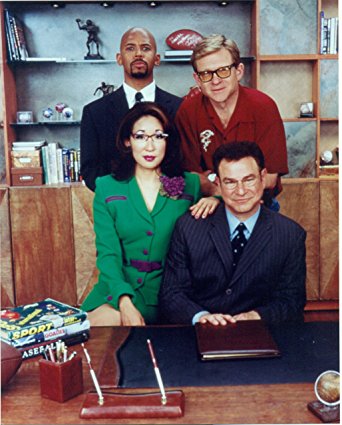
COBB, Tommy Lee Jones, Robert Wuhl, 1994, (c)Warner Bros.

When you look back on your amazing career in so many different areas of the film and television world, what would you say you are most proud of?   

I’m fortunate in that I’ve been able to juggle a number of different balls and stay working.  I can generally say that I’m proud of most of the body of work I’ve been a part of.  Also, that I’ve been able to work with really really good people.

And we always like to ask our statue holding friends this question: Where do you keep your Emmys, and does their physical locations hold a certain significance to you?

They’re in my office.  And not really.

So what is next for you? Anything you can plug to our readers?   

I’m putting together a follow-up to my Assume the Position with Mr. Wuhl show entitled, Shistory Happens.

What was the last thing that made you smile?

The thing that makes me always smile — my dogs!

David Gborie [Interview]

We have been spending a whole lot of digital time and space in the world of comedy lately, and even more specifically in the world of comedy podcasting. And god dammit if we don’t have a PERFECT interview for you lucky son of a bitches today! A few months ago we had a delightful digital conversation with one of my favorite comedians working today, the brilliant Sean Jordan. And shortly after, wouldn’t you know it …he appeared on a brand new podcast, and I felt compelled to give it a listen.

What I would hear would be the greatest podcast to emerge within the last year known as All Fantasy Everything. I would also soon be hipped to a couple new voices I was ashamed to not have already known. The first would be the show’s host and creator Ian Karmel, a man who hails from the greatest region on the planet and one of the two neighborhoods I would frequent as a youth to go dumpster diving in the rich areas (FYI, This would be the greater Portland area of the Pacific Northwest, and those neighborhoods would be Beaverton & Lake Oswego, Ian hailing from the first)….and there was that other voice. That sweet sultry and seems to only have the ability to be charming and hilarious, no matter what the topic.

I am talking about David Gborie, of course. The AMAZING David Gborie! The man who had the gull and genius to pick the theme music of a Mazda commercial as a “Summer Jam”, and another astonishingly surprising pick which he will mention below. While David is not exactly a “co-host” of All Fantasy Everything, he has appeared over half the show, and is a god damned delight on it. In fact, I can not think of another podcast where I go through the motions on the iPhone app, and become GENUINELY excited to hear that the same two “guests” will be appearing. Yes, while the world is crumbling around us, and all hope seems to be dissipating into a vast darkness of despair and misery….we can find solace in knowing that Ian, Sean, and David will be around on alternating weeks to tell us a perfect Taco Bell menu.

Seriously, if you haven’t gotten around to hearing the magic that is Ian, Sean, and David, please stop what you are doing and check out this great episode of All Fantasy Everything, also featuring the very funny Chris Carpentier, Episode 36: Band Names from the HeadGum Podcast Network.

And as per usual, David’s involvement in AFE has led me to dive in and research some of his stand up work. And wouldn’t you bloody know it, his natural off the cuff brilliance on a podcast translates brilliantly on stage! Catching every video I could on line, I can easily state that Mr. Gborie is one of the finest young comics working today. And if ever given the chance to catch a live show, you can bet your sweet ass I will be down in front getting buck with laughter as he throws out one giggle worthy line after another.

I seriously can not say enough great things about this cat. I hope you enjoy these great words from a man I truly do hold in very high regard in the comedy world. He’s one of the best and brightest in the game, and he tends to surround himself with fellow brilliant individuals. I have a sincere feeling that if you are not aware of the work of David Gborie, simply wait a week. If you are a fan of comedy, somebody is bound to throw his name out there at ya. So ladies and gentlemen, please enjoy some amazing words from the great David Gborie!

When did you first realize you were a hilarious human being, and you owed it to the world to share your brilliance with people across the land as a stand up comedian? What were some of your earliest influences?

Ah man I don’t think I ever thought directly that I was hilarious but I know that sometime in high school I decided that humor was the most important thing to me. Probably around the first time I saw Old School, I just really liked that these kinda dumb normal looking dudes used humor to be the coolest guys in the room. I felt like that reflected how I liked living my life and the kind of people I liked to be around. As far as stand up, I never really liked it that much growing up or anything like that. I honestly kind of thought it was corny. But then after high school my main man Sam Tallent started doing it and I slowly started seeing it wasn’t lame. Then I got a dui. Then I started standup.

I’ve learned that you began your stand up career in San Francisco, but do know that you are from a city that is renowned for being great for comedy, The Mile High city of Denver. After the success and the fan base that you have created around yourself, what is it like to go back to your hometown to do stand up? Are you still getting old high school chums coming out to see what you have been doing with yourself?

Well I’ve been going back and forth to Denver at least 3 times a year for extended stays since my first year in comedy so it sort of feels like I started there too. It’s always great going back! I’m good about staying away long enough to make sure I have new stuff every time I come back so it’s always exciting. Plus you can get real high a lot there which is fun. A few friends from high school come out and get too drunk sometimes and it’s always a bunch of fun. Those guys are great. It’s always nice to have them see that I’m doing good and that I’ve gone  totally hollywood. JK I’M ALL THE WAY REAL.

Since beginning as a stand up, you have managed to work all across the land making people laugh all over. What have been some places you have performed at that some people may not realize is a brilliant city to see a stand up show? Anywhere off the wall that you can remember having a wonderful time at?

I really enjoy traveling so it’s all pretty great to me. Going to a place for 4 days with no responsibilities other than talking about your dumb dick for 45 minutes a night is probably the best way to see the world. Everyone one is usually pretty nice and excited to show you all the cool parts of their weird little town so you basically just get the hits. I’ve found that I always have a really good time in Reno if that means anything.

Last winter you busted your proverbial TV nut with one of the best Conan spots I have seen in a LONG time. It was absolutely fantastic! So how was your first experience doing a late night TV spot? What level of nervous were you before going on?

Man that shit was pretty crazy. Even after I started I’m not sure if I ever fully bought into the idea that a dude like me could get on tv. I had been sleeping on couches for a little over three years straight the year before I did Conan so it was really dope to finally feel like all that had been leading to something. I wasn’t too nervous about performing because I had been practicing the set for a few months but then they let me add an extra joke the day of and I started freaking a little. I played it pretty cool though. That’s how I get down.

I am a HUGE fan of All Things Fantasy Everything, as it is one of the finest podcasts available now. How did you manage to hook up with my former homeland’s own Ian Karmel, our old friend & past TWS interviewee, the bean burrito king himself, Sean Jordan, to become the best “Throuple” in the podcast game? How did this amazing team of hilarious superheroes form?

It was all pretty organic. I’ve known Ian for years from stand up and twitter and stuff and knew Sean tangentially through the same shit. I think it was sometime after Bridgetown that Ian told me he was starting a podcast and he wanted me to be a frequent guest on and around the same time Sean Jordan moved to LA and we all had started hanging together a lot. Then we wrote and filmed Ian’s comedy central pilot and really bonded over that and now we get too buck together on the reg.

After so many appearances on AFE, what would you say has been your best pick, in any category, thus far?

I’m definitely proud of picking the Star Spangled Banner on the one hit wonders episode. People really went nuts over that one. I think it’s because it was a very creative pick from a swashbuckling risk-taker and people tend to find that kind of thing sexy.  I think that solidified me as the bad boy of AFE.

What does the future hold for you? Anything you would like to plug to our reader(s)?

The future holds more AFEs more standup dates and a few more tv appearances and stuff. Follow my twitter and I’ll keep you updated. I promise

What was the last thing that made you smile?

I accidentally spilled a bunch of ground up marijuana on my naked body after my shower this morning and I laughed so hard I got lightheaded, which feels kind of like being high anyways so I like to think of it as a win-win.

Check out David’s now infamous appearance on Conan, courtesy of Team CoCo right here:

Sarah Wise [Interview]


Today’s interview is a real combination of aspects of the world of entertainment that I seriously enjoy just so much. One of them is brilliant writing, as we have showcased several times in the past. Another would be the exhilarating television show that has developed a very unique and deserving popularity, From Dusk Till Dawn. And on a more important note: I love to hear stories of bad ass women who are killing it in the world of television writing.

And as I mentioned, today’s amazing interviewee is involved with or excellent at being ALL of these things! Sarah Wise is an amazing young woman who has paved her own way in the world of television, and is absolutely amazing at what she does. Fans of From Dusk Till Dawn will definitely know what I am talking about. And what a story she has! On a proverbial wing and a prayer, Sarah made a courageous jump to reach the level she is at now.

And I will get to letting her tell you all about it! So ladies and gentlemen, please enjoy some great words from the amazing writer, Sarah Wise!

How did you get into the world of television, and more specifically, television writing? What made you want to get into this way of life?

I’ve always loved writing and television, but it wasn’t until after college that I considered writing for television as a possible career path. I was working at The Walt Disney Company in Internal Communications during the era of Lost, Grey’s Anatomy and Desperate Housewives and decided to try my hand at writing a spec script. At the time I thought I wanted to be a comedy writer, so I took a stab at writing a spec of How I Met Your Mother. Ultimately I quit my cushy, regular, old office job and took a job as an Office Production Assistant on Raising Hope.

My next job was as a Writers’ Assistant on In Plain Sight, followed by Writers’ Assistant jobs on The Client List and From Dusk Till Dawn. I wrote a pilot script that was a good sample for From Dusk Till Dawn and gave it to our showrunner, Carlos Coto, to read. He liked it and promoted me to Staff Writer the following season.

You’ve been working on the television adaptation of From Dusk Till Dawn for a while now, and it is some of the best television I have seen in quite a while as well. And to most of us, it is obviously the writing that makes it so great. What is the writer’s dynamic like on this show? What you believe it is that is happening behind the scenes that makes it work so well?

First off, I have to give an immense amount of credit to Carlos Coto for fostering a wonderful space for the writers to create and for always driving us toward brilliant character moments and storylines. The original film was so unique and engaging and it gave us a lot of material to expand into a bigger universe.  I think all the writers on the show felt passionately about the characters and the Dusky world they inhabited and we always strove to put those characters in dark, challenging, funny and fresh circumstances. It was a very open room where every writer was allowed to voice their opinion and make suggestions to improve storylines.

When you are working for/with a person like Robert Rodriguez who happens to run the network in which a show will air, does it feel a bit more freeing than working for one of the major cable networks? Is there a noticeable difference?

Robert Rodriguez is sort of the tastemaker of the El Rey Network. In a regular major cable network, I don’t think you write as much toward one person’s preference, but you write a show that hopefully fits the brand of the network, and the network executives are there to help you hit that mark. Our showrunner got notes directly from Robert so we got very specific feedback if a story we were working on jived with his sensibilities.  It definitely streamlined the process to have a direct line to Robert.

It certainly feels that although it is 2017, and times should have changed, that women are severely outnumber and underrepresented in the world of film and television when it comes to writers, directors, cinematographers, and more. In your professional opinion, as someone who is actively working in this world, what do you believe it is that is continuing to guide this old school “Boy’s Club” mentality? What needs to change?

Oh man, I wish I had a punchy, smart answer for this. I think people tend to gravitate toward people who are like them, and there seems to be a lot of older men in entertainment mentoring and hiring younger men that remind them of themselves. That’s why it’s wonderful when someone like Ava DuVernay has an opportunity to hire directors for her series, Queen Sugar, and she hires a bunch of “untested” female indie film directors. There’s a self-perpetuating cycle in Hollywood where you can’t get hired to work on a project unless you have experience, but obviously you can’t get experience unless you get hired to work on a project.

People have been aware of this underrepresentation for many years now, but clearly awareness is not moving the needle in a significant way. I think a proactive move to give more opportunities to female creators might start to nudge the door open. That doesn’t mean mandating that 50% of all films or TV shows should be written and directed by women (though that would be nice), but I’ve heard anecdotes of studios putting together potential director lists for upcoming films that don’t include a single woman. If you don’t even give a woman an opportunity to interview for a job, she’s clearly not going to get the job. That absolutely needs to change.

What is next for you? Any projects you can tell us about and that our readers should be looking forward to?

I’m shopping around a TV series concept – I can’t speak to specifics at the moment, but hopefully I will have some good news soon!

What was the last thing that made you smile?

I finished the first draft of a new pilot this morning!  After many weeks of eating, breathing and dreaming in that world, it’s an incredible feeling to have a completed script.

Marc Jaffe [Interview]


Regular TWS readers are sure to notice that we have developed quite a fascination with the world of comedy over the last year. Especially in the world of comedy writing. It is without a doubt one of the most fascinating gigs we have invested time in and hope to continue to do so with regularity. And today is another great day for comedy fans, as we have the brilliant comedian and writer Marc Jaffe in the digital house!

Mr. Jaffe is naturally funny cat who had a great stint as a writer on a little show you may have heard of called Seinfeld. Like his TWS predecessors Peter Mehlman and Steve Skrovan, Marc is one of the geniuses who made this legendary program what it is today. Marc has also written everything from television pilots to plays to brilliant memoirs.

Perhaps one of the most fascinating aspects of Marc’s life is his work in the world of Parkinson’s research. For very personal reasons, which he will explain below, Marc Jaffe and his wife Karen have done some amazing work with their organization. They have raised a literal shit ton of money for Parkinson’s research through the Michael J. Fox Foundation. And they have a lovely event coming September 9th with Dominik Farinacci and Shenel Jones, with comedic hosting duties from the great Jimmy Dunn at the legendary Playhouse Square in Cleveland, Ohio. If you are anywhere near this event, I can not recommend this brilliant night of entertainment that supports a great cause. Check out Shaking With Laughter’s WEBSITE for details and tickets!

So without further rambling, please enjoy some amazing words from the brilliant Marc Jaffe!

When did you first decide that you wanted to become involved in the world of comedy? Was it always a passion of yours from an early age, or did it just sort of happen?

I loved comedy as a kid. I would get comedy albums by Bill Cosby and Flip Wilson and Woody Allen. (At least one of those didn’t have scandalous sexual behavior.) I was always writing humorous poems or skits for school assignments or assemblies. Of course, I didn’t realize it could actually be a career until I was in graduate school for business and thought I wasn’t going to make it in a suit every day so it better be a viable career.

We have spoken with some of your fellow Seinfeld writers, Peter Mehlman and Steve Skrovan, and have had their take. But, how was your experience working on the show? Was it as pleasurable of an experience to work on as it was for the viewers to watch?

It was a privilege interacting with such great comedy minds as Jerry, Larry David and Larry Charles. I learned a lot and in retrospect I am humbled to look back on it and think that my work was worthy enough to be a part of theirs. When I was on staff, the very first full season, it was supposed to be a mid-season replacement show, so there wasn’t the time crunch many shows have. We were working on shows in September for January air, so it was relatively relaxed. (Larry David wouldn’t say he was ever relaxed.) There weren’t the staying up all night doing rewrites atmosphere. Larry and Jerry wrote together. That would change after the first season when new scripts were being worked on the same time as one was being produced so Jerry wouldn’t have time to write and act.

It was a great time to be there, with everyone kind of figuring out what this show was going to be. Then, most nights I would accompany Jerry to the Improv or other comedy clubs and work on and critique the stand-up bits that were going in the show. It was fun getting to hang with Jerry and meet other name comics in the clubs.

And in your own personal opinion, what do you believe it is about the show that has made it a full blown classic, and still completely relevant show today?

I think it’s about growing up and how hard that is, and how we wallow in our personal angst and our own little quirks and peccadilloes and in a way let them define us even while they keep us from having meaningful relationships. While the setting is specific and the characters are of a certain upbringing, the feeling and challenges of single 30 year olds in Western society is pretty universal, so it resonates today.

With all of the changes that have been happening in the world of comedy, with so many new arenas to enter like Netflix, podcasts, etc., what are your thoughts on the world of comedy these days? Do you believe things have worked for the better as more opportunities are brought upon those who wish to enter this world?

There is definitely more opportunity to get your stuff out there to find an audience. I have old videos and audio tape of things I did just starting out with friends who have gone on to be known comedians and directors, that we were just hoping to have as a calling card or entry to a producer somewhere. Now, that stuff would have been up on YouTube or on a podcast and we could have garnered a following and some income immediately which would have led to something else.

The downside is, much of what is put out there isn’t really ready and we benefited in the long run by being able to grow outside the public eye and without the responsibility of having to produce content. Though I would say the way it is today, because people who wouldn’t normally get an opportunity are able to, is much better.

The tough thing I can’t imagine trying to do now is keep up with the number of outlets there are. As a comedian, I used to get a video once every other year to send to producers or club bookers to get work and TV spots. When I came up with funny stuff it was for something to get paid – stand-up, magazine article, book proposal, TV show, movie. Much of what I wrote ended up going nowhere. Now, that stuff ends up on a blog or twitter and is necessary just to keep a public profile. I don’t know how people keep up. And I don’t know if it’s better to have all that output available where we have to sift through for the gems, or to have all that stuff be in the file cabinet where only the gems get out.

Can you tell us a bit about your organization Shaking with Laughter? What sort of things have you done with this noble non-profit to help with Parkinson’s research?

When someone you love is struck with a degenerative disease like Parkinson’s, you want to help, but there is little you can do to stop the progression. One thing you can do is help the research to maybe find a cure. That is done by participating in clinical trials which I have done, and by raising money for research. When my wife Karen was diagnosed about 10 years ago, I thought I could do that by putting together a show with some of my comedian and musician friends I’ve made over the years. (We kept her diagnosis a secret for 3 years so it took a while before we got it together.) I was figuring on a one-time show and thought maybe I could raise $20,000. I asked my old friend Dave Coulier if he would do it and he said yes. I also asked Wayne Cotter who I had worked with when he was the host of Comic Strip Live and he said yes, and I asked guitar great John Pizzarelli who I had met on the road, and he said yes. So it was an amazing show with two great comedians and the fabulous Pizzarelli quartet all doing it for free and we raised around $130,000! We called it Shaking With Laughter – my wife’s shaking, I’m laughter.
Once we we’re so successful we realized we had to keep doing this and on Sept. 9th we will present our 6th one and we expect it to bring us over the $1 million mark in funds raised. All our talent has been kind enough to donate their time for the performance and we are so grateful to them. Comedian-wise we have had Jake Johannsen, Wendy Liebman, Brian Regan, Moody McCarthy and this year Jimmy Dunn in addition to Dave and Wayne. It’s a really fun evening with great spirit and we really feel like great things are on the horizon in terms of a cure.
All the money we raise goes to the Michael J. Fox Foundation. They are creative, innovative and smart about leading research to the goal of a cure. Their goal is to close their doors and thus don’t have an endowment – every penny goes directly to research. Karen is on th Patient Advisory Council of the Fox Foundation.

So, what does the future hold for you? Anything you would like to plug to our readers?

I’ve been doing some stand-up again and will continue to do so sporadically. You can see me here Marc Jaffe, I wrote a play based on an interesting part of our journey with Parkinson’s that has had some runs, but I’m open to future opportunities with that. You can read a condensed version of it that appeared in the New York Times, Modern Love column here Finding Equilibrium in Seesawing Libidos (Updated With Podcast) And I’ve got an hysterical game show that we are trying to sell called BONK. (Doesn’t have the same meaning in the States) We call it Jeopardy meets the Three Stooges. You can learn about that here. http://www.bonkshow.com/ And, finally my book about my life with my wife before Parkinson’s, when she was a working OB/GYN is available on Amazon. It was picked up by Danny DeVito’s production company to be a sitcom but didn’t get past the pilot stage. The book is still a lot of fun though. You can find it HERE.

What was the last thing that made you smile?

With my wife in a park that had a playground. We got on the teeter-totter (see-saw). We turned into kids again. So much fun seeing her so happy.

Nick Brimble [Interview]


There are few mythical tales out there that really hit the way that Robin Hood does. It is an absolutely brilliant moral driven legend that I have been fascinated with since I was a young boy. And for me, at this time, it was the film Robin Hood: Princes of Thieves that really struck me as the greatest depiction of the Robin Hood mythology. I’m certain that some could argue against this, but no one can argue that it is a fantastic film, and a brilliantly told story of Robin Hood. And one of my favorite characters of note from the film was the man with a bit more common sense than the rest, the wonderful Little John. And wouldn’t you know it, I have a man here today who just might know a thing or two about this character, as he is the brilliant man who brought it to screen!

That’s right folks! Today’s interview is with the legendary actor of screen and stage, the wonderful Nick Brimble. Now, I may have just given a long winded introduction about Robin Hood before introducing Mr. Brimble, but as regular readers will know, that was only the kicker. So often I become intrigued by an artist for some piece of work they have done, and then I quickly realize that they have been a part of some other amazing works of art as well and are continuing to wow audiences in a career that is nothing short of stellar. And that is definitely the case with the brilliant Nick Brimble. He is also a very versatile actor. BBC viewers will recognize him from his work on Granchester, and horror fans may be familiar with his work in Roger Corman’s brilliant take on another creature of mythology in Frankenstein Unbound. And he has done just SO much more.

Obviously we are very excited to have Nick Brimble on the site today! So let me stop the babbling and let you all get on with some great words from the brilliant actor, Mr. Nick Brimble!

I’ve come to learn that you studied philosophy and English Literature in college. Which isn’t so far off from acting, in some respects. But, how did the transformation into acting come into play? When did you realize you wanted to perform for a living?

The one thing you know after completing a degree in Phiosophy is that you don’t know anything. That disqualifies you from almost every profession….. except perhaps being an actor!

My father was a keen amateur actor in Bristol where we lived and I used to go to rehearsals, take him through his lines and occasionally take part if they needed a kid. He also did some radio drama work and again I would sometimes take part.

I was also given a season ticket to Bristol Old Vic, our local repertory theatre and went to every play from the age of 11 until I went to University at 18. The standard was very high and I got to watch some fantastic actors (including a young Peter O’Toole) doing all sorts of work.

When I was in my mid-teens my father also took over the management of a French/Czech troupe of High Wire Artists (called the White Devils) when they were touring England, and for three summers we toured with them.

He would do the commentary and I would sell souvenirs. One year he arranged a blind-fold crossing of Cheddar Gorge which was a pretty big event at the time. At the end of the English tour I was sent with them touring through France, helping put the equipment up and living in the back of a truck . When it was time for me to go back to school they would give me my trainfare and I would find my own way home. It was huge fun.

All of this background meant that a steady job didn’t really appeal to me.

After leaving Sussex University I got a job as Lecturer in English at the University of Baghdad. The ex-pat life style appealed to me as a young man and I might well have continued on that path but at the end of my first year in Baghdad the Six-Day War broke out and I was forced to leave.

Finding myself back in England I took a job teaching at a large London School for a year before deciding to try something in theatre.

I was offered a job as “Youth Theatre Organiser” at a theatre in Canterbury. My job involved organising tours of plays to schools in the area, as well as performing in them, driving the van, helping build the sets for the main theatre productions and playing any small parts that were available in main theatre.

From this I was, to my surprise, offered a job as an actor in the Northcott Theatre company where I worked for three years before going on to work for the National Theatre, the Royal Shakespeare Company and in the West-End

As a man who has mastered the craft of acting in the world of film, television, and stage…what would you say is your favorite type of production to be a part of?

Well, I wouldn’t claim to have mastered my craft, part of the fun is that you are continually learning and reinventing yourself.

Initially I only considered theatre…. it didn’t occur to me that I could work in film or television, but once I began to be offered screen work I found I really enjoyed it.

Wessex Tales was one of my early “film-for-tv” jobs. I remember being taken to a field where the art department had created a fabulous Inn. The scene involved me meeting the girl I was in love with. I watched as she came over the brow of the hill in a stage coach pulled by white horses…. it was a marvellous sight.

The director called “Cut”, then told me that I had done a really good job which confused me because I hadn’t done anything…. just watch.
That was the beginning of learning about screen acting.

In 1990, you performed as the legendary Monster in Roger Corman’s Frankenstein Unbound. What was it like to take on the role of such an iconic figure? What sort of preparation did you do for this role?

I tried to create a different physicality for the Monster. He had been created to be better than a normal person, he was stronger and had more sensitive hearing and could speak and reason.

I got help from a movement teacher and worked on walking without opposing movement of the arms and legs. Then we developed a loping run with both arms moving together. I used to practice this run early in the morning on Wimbledon Common near where I lived… and scared a few early morning dog-walkers!

The prosthetic make-up was designed by Nick Dudman and I spent hours with his fabulous team each day applying it all. The final bit was the eyes, which were rigid pieces with art work showing that different eyes had been stitched together for the Monster. This gave me very limited vision and I had to be helped on set. I was told that on no account should I get any dirt in my eyes….. So, naturally, the first scene I shot had me running behind a the horse-drawn carriage while a wind machine blew handfuls of dust in my face.

We had the best fun making that film. I spent most of my evenings in fabulous restaurants in Milan eating, drinking, laughing and arguing with John Hurt and Raul Julia.

A truly unforgettable time!

Roger Corman is a legendary filmmaker and producer with a very specific way of doing things in the world of cinema. What was it like working under the guise of a man like Mr. Corman?

Roger is a very conservative seeming gentleman….. but with his own wild ideas.

In one early scene we shot, The Monster has gone into the town where a fiesta is taking place. The noise of fireworks hurts his sensitive ears and in his distress he frightens some children. A nightwatchman runs up blowing his whistle which makes him even more distraught. He grabs the nightwatchman, plunges his fist into the man’s chest and pulls out his still beating heart which he holds up in front of him. Seeing this the poor man dies!

As we prepared to shoot I had a tube running up my arm which was pumping sticky artificial blood through the throbbing prop heart in my hand.

Roger came up to me and said, “Nick, at this point over-acting is impossible”.

1991’s Robin Hood: Prince of Thieves will not only go down as my favorite Robin Hood story of all time, but one of my favorite films of all time. And you were freaking Little John! What was it like to work on such a iconic film, and what are your thoughts on the final cut of the film that we know and love?

I grew up on the Disney live action film with Richard Todd as Robin and James Robertson Justice as Little John. I saw it several times in the cinema.

There was a stream near my house and as a kid we would act out the fight in waterfall. What a treat to get to act it out again – this time in a hugely popular modern version!

The actual shoot was chaotic and hard work….. we had no idea it would be such a success. Our fight in the waterfall was shot in Aysgarth Falls in Yorkshire…. in November. And let me tell you, it was cold!

It took three days to shoot that sequence – what you see in the film is a small part of what we actually shot. We were in the water first shot to last shot, for three days, fighting on treacherous boulders in fast moving water, and because of the fighting we couldn’t wear wet suits under our clothes.

But I feel so lucky to have been part of something that people know and love.

After being in the world of acting for over 5 decades, what is it that keeps you in this business? What is it that you still adore about the profession of performance?

You never know what you will be asked to do next. That is priceless.
Getting an early call to be driven out to some exotic location to meet your fellow cast members and crew never grows old.

So, what is next for you? Anything you would like to plug to our readers?

I’m so lucky to still be asked to do things. Currently I’m in the third series of Grantchester which is a joy to work on. Set in the 1950s, James Norton is the Anglican Vicar of Grantchester and Robson Greene the local policeman.

I came into the first season in a guest role and immediately felt at home. I was asked back to do a couple of episodes in the second season, and now in the third, I am a potential romantic interest for the vicar’s house-keeper played by Tessa Peake-Jones.

Who could have predicted that!

What was the last thing to make you smile?

I just heard that after a five year hiatus there is a new series of “Curb Your Enthusiasm”.
Can’t wait!

McNally Sagal [Interview]

Today’s interviewee is somebody extremely special to the TWS world, and someone we have wanted to talk to for a very long time. A few years ago we had the fortunate experience to receive some great words from actors like Christopher Reed and Michael Ornstein, both known for their brilliant performances on the hit TV series Sons of Anarchy. And today we have reached a whole new level in the SoA universe. Today we have the brilliant McNally Sagal on the site! McNally as you will definitely remember portrayed the brilliant Margaret Murphy, the doctor who wants to help all the wrong people, probably because she has a few secrets herself. She was absolutely brilliant in this role, and was definitely a major highlight of the program.

Now, as per usual, McNally Sagal is a brilliant actress who has managed to not be pigeonholed into being known for one performances. Since SoA, McNally has been a regular on the hit series Secrets & Lies, and has appeared on other great shows like Scandal and Jane the Virgin. And even before SoA, McNally appeared in another project that has been very special to us here at TWS, the brilliant indie classic film SLC Punk, directed by our old friend James Merendino and featuring our new friend Michael Goorjian. And that is all without even mentioning the fact that she appeared in one of the most underrated comedies of all time, a classic in my book, High School High. As well as a break out role in Clive Barker’s horror masterpiece, Night Breed.

Yes, McNally Sagal is a brilliant actress who has been proving for decades that she has the goods and is one of the greatest in the business for very obvious reasons. And we are so very excited to have her as our featured guest here today at Trainwreck’d Society. So please enjoy some great words from the amazing McNally Sagal!

When did you decide that you wanted play pretend for a living? Was it always an aspiration of yours, or did it just sort of happen?

I grew up in the middle of 10 children outside of Chicago, IL. My father is a reconstructive plastic surgeon. He clearly loved his work and his hope for all of us was that we found something we loved to do and make a living doing it. His often repeated phrase was, “Convert your hobby to your job and it will never feel like work.” I was an excellent student in high school, and thought that my parents might have their hearts set on my going into dentistry or medicine. I was shocked when I told them I wanted to study theater and they just said, “Great!” I graduated from Boston University, and then moved cold to NYC.
And after all of these years in the business, appearing on dozens of the best television shows and in some amazing films, what is it that you still enjoy about the business as it evolves into what it is now?

I love that I never really know what I will be doing or where I will be as the days unfold. I look forward to getting an audition for something that I know nothing about…then I work hard on it…and lo and behold, some days I get the opportunity to experience a whole new world that had never crossed my mind until that moment. For example, I had not seen The X Files when I got an audition for the show…it was 2 full days of multiple call backs…then the next day I am on a night shoot, standing on top of a flying saucer, holding an infant, with wind machines blowing and cursing at the top of my lungs! Ya know, things like that.

This might be a bit of a specific stretch here….but, Nightbreed is one of my favorite horror films of all time, and what I still consider Clive Barker’s most honest work. And it was one of your first on screen roles, according to my little research. So I am compelled to ask about what it was like working so early on a film like Nightbreed? Was it a positive experience overall?

I love Clive Barker! I was pretty scared doing the role actually….screaming my head off as a severed head is plopped on the counter and I am getting stabbed in the chest. I so enjoyed his sense of humor. He cast me again in Lord Of Illusions as what he described as a lip stick lesbian. We spent a lot of time together actually. I went to his home with my then 3 year old son, Boris. There was Clive’s artwork displayed all around the house, and my son was in awe….and then he said, “This is scary pretty.” Clive encouraged me to submit a story for his Hellraiser series of comic books for Epic Comics and I had a story published. That was pretty cool…although it is a pretty gruesome story about stand up comics in hell being pulled apart on stage when the audience yells for , “The Hook!”


How long was it into your career when you realized…I am an actress! When did you realize you were living as a working actor in the business? Was there a specific project or time period where it really hit you?

Well, uhhh, I moved to NYC right after graduating from college…and beleive it or not…I was offered a role in Amadeus on Broadway, 3 weeks after my arrival. So, yeah, I figured I had gambled correctly. Although, I was sure that I had nowhere to go but down. I did that job for a year and a half…so I was able to save some money and support myself as an actor ever since.

We have had the fortunate experience of talking with fellow Sons of Anarchy alum Christopher Reed and Michael Ornstein about their experience with the show. And you were absolutely AMAZING on the show, one of the major highlights in my opinion. So what was it like working with this strangely complex and conflicted character? How was the experience overall, and how much of the characters personality was of your own creation?
First off…shout out to Chris and Michael. They were great in their roles and really fun to work with!
I came in to audition for Kurt Sutter for a role where I had to literally turn myself inside out with grief and horror at the death of my teenage daughter. I totally lost it (as my real daughter was the same age as the daughter in the show) One of those times when I think the casting director thought maybe they should call an ambulance. Kurt told me there in the room….”I can’t see you doing this….you will not get this role….but I have something else in mind.”  Then of course, a year goes by and I let it go….

Then I got a call to come play a role on SOA…it was a very short scene in the hospital with Maggie Siff who played Tara on the show. I thought that was going to be it…I am a team player/trooper…just go where I am hired…had no more expectations. But then my character kept popping up, and the story and character arcs were so fun and amazing. I never knew what to expect or what might happen…I would just open my email to see if I was in the episode or not and what was going on. One day I was reading a script and I kind of made a yelp squeal and almost fell out of my chair….because I found out that my character literally had a “Back story”…and that I would sport a full back tattoo, get kidnapped, tied up in an attic, shoot a gun, get punched and strangled, kicked in the chest and thrown to the floor, black eyed, past heroin use, punch others in the face, lie on legal forms, lie to murderers, lie to the cops…you know, that kind of stuff. It was a blast!

Another close tie in we have is our relationship to the filmmaker and cast of the film SLC Punk, in which you had a wonderful role in as well. What can you tell us about set life on an independent flick based around the world of punk rock? Was it a memorable shoot for you?

It was very memorable because…and as I said earlier, why I love what I do…..I got a call at 9 p.m. one night, from a frightened, soft voiced, young woman….she was whispering….I could barely hear her. She said, “I have to be quiet because they are shooting a film on set. I don’t know if you remember me, but I used to work for your agent. I am here in Utah doing this movie, I am P.A…..and Julie Haggarty is very sick and unable to play a role…it works tomorrow in Salt Lake City….and um, as everyone was freaking out about who could play the role, all of a sudden…I kind of said that you could do it in a heartbeat…and so, now they want to hire you. But, um, now I am really nervous and my job depends on this. so, um, can you really do it? and can you leave RIGHT NOW?” I jumped on a plane and basically ran on the set and did that fun scene with Mathew Lillard and Christopher McDonald.

What does the future hold for you? Anything you would like to plug to our readers?
My son is going to be a senior in high school next year…one more year before I have an empty nest! Who knows where he will go to college…or where I will be? Or what the future holds? That’s what makes it fun and keeps me on my toes!

What was the last thing that made you smile?

Well, thank god, I smile a lot…and have lots to be happy about. But, a few months ago, I was visiting my daughter who is in college in Boston. I was sad to say good by, and kind of sad that I would be flying home to LA during the Academy Awards….I got a txt that said my flight was cancelled. They re-ticketed me for the next morning and said they would cover my hotel and dinner that night. I was so happy to call my daughter…who came running into the hotel room and we put on the white robes and had room service and wine and watched the Awards on TV. Fun, unexpected joy! And…. then the whole Warren Beatty thing….we were in ecstasy!

Bill Grundfest [Interview]


Why hello there old comedy loving friends. As you may have noticed in the last few months, we have grown quite fond of the world of stand up comedy lately. It is an ever-loving passion we have had for quite some time, but we have worked to bring to to an all new light lately. And today we have a perfect guest to help put us directly on top! Today we are speaking with the legendary comedian/writer/founder of the acclaimed Comedy Cellar in New York City, the great Bill Grundfest.

If you are any sort of fan of stand up comedy, or truly funny in general, there is no possible way you are not aware of the the legendary Comedy Cellar. It has appeared in just about every project that took comedy even remotely serious, including the recent De Niro fronted film The Comedian, which I have I recently watched on a plane, and have to say was actually pretty damn entertaining. Anyway, our main man Bill is the man who’s ass you should all be proverbially kissing, because he is the man who developed the original concept, and created the now legendary Comedy Cellar.

And what is more interesting….he left it all. He developed a comedic empire, and then simply gave it away. Why the fuck would you do that, you may ask? Well, when the end result would eventually be to become a Golden Globe award winning television writer on the coast with more sunshine, it probably wouldn’t seem so crazy. And that is exactly what he did. A man like Bill Grundfest is loaded with so much talent that it is almost unfair to his peers. He has had an incredible career that has spanned decades.

And we are so damn excited that he was gracious enough to share a few words with us here at Trainwreck’d Society today! We have had some legends in the past, but having Bill here today feels absolutely surreal, and we are so damn happy to have him! So please enjoy some great words from the amazing Bill Grundfest!

What was some of the earliest material you can remember performing when you first began telling jokes?

My first joke was when I was 5, and my audience was my Post World War II immigrant, barely-speaking-English parents. It was the Knock Knock, who’s there?, banana/orange joke. If you need me to write the joke out, forget it.
When you decided to develop the now legendary Comedy Cellar, what made you think it was going to work out? And could you have ever imagine what it would become shortly after you opened it, and what it became after you moved on from it?

I knew it would work, I just didn’t know it would last 35 years. Nobody and nothing in New York lasts 35 years. Neither me nor Manny imagined the level of success it achieved, especially under Noam and Estee’s execution after I left and Manny passed. I know he’s smiling from behind an oud in heaven.


You made one of the craziest decisions I have ever heard of when you decided to leave your successful career running the Cellar to pursue a career in the world of writing for television. In retrospect, you obviously made a perfect decision as you have had some amazing success in this business. But, what the hell, man? What made you decide you wanted to take such a crazy risk? What compelled you to leave such beautiful conformity?
I was 34, had had a radio show on NBC, a couple of cable specials, but I wasn’t becoming a star, and could see 40 looming. I wanted to be in the major leagues of television and if it couldn’t be as the star of a sitcom or talk show, then as a writer/producer would be fine. Rule #1: If you are willing to do literally anything to achieve a clearly envisioned goal, the odds are actually pretty good you’ll achieve it. Most people aren’t willing to do literally anything. I was – starting with being brutally honest with myself about my chances of becoming a star.
I recently heard you explaining to Barry Katz on Industry Standard about how you first kicked off your career in television by handing out spec scripts to whoever may take them. This is probably a pretty dated concept these days, but it obviously worked. What would you consider to be the modern day equivalent of these acts? What do you believe a new writer has to do today to break into the business?
It would work still today. New anythings in this business need to step outside the norm and do something crazy. You must break out of the safety of the “norm.” Failure to become a success is what’s normal in show biz. If you want to succeed in anything, you have to risk looking like an idiot.
What have you noticed to be the biggest change in the “writer’s rooms” and television writing in general since when you first began in the business, up to now? Besides the lightening of the wallets of course. And despite less pay, do you believe the quality of television has gotten better, or worse?

There’s an amazing amount of good TV out there. My only complaint is: can we stop with the “anti-hero” bullshit? It’s not funny, not cool, it’s really coarsening the culture and destroying the very idea of a “value system.”


Mad About You was one of those shows that has always stood out to me personally as a reasonably beloved show by both critics and audiences, although it was against some serious competition during its run. In your obviously much more knowledgable opinion, what do you believe it was that made Mad About You stand out amongst the crowd? 

Writing a sitcom is like writing a song – to be a hit you have to write a great song and have a great performer sing it. As writers, our staff was among the best in TV, and we had Paul Reiser and Helen Hunt to sing what we wrote.

We always have to ask our statue holding friends this one question: Where do you keep your Golden Globe? And does its physical location have any sort of significance to you?

It’s in a shrine my mother has to her sons, in between my 3 Emmy nominations, and a Peabody award.

So what do you have coming up that our readers should know about?

I’m attached to a couple of pilots and am very big in China, where we adapted Mad About You for a Chinese cast and audience – and were the number one show for our run with hundreds of millions of views.

What was the last thing that made you smile?

BMy kids. They love me. Go figure.

Just so you know, Bill was not over exaggerating about the impact of Mad About You in China. Check out this amazing insight from The Wall Street Journal: