Justin Hunt [Interview]

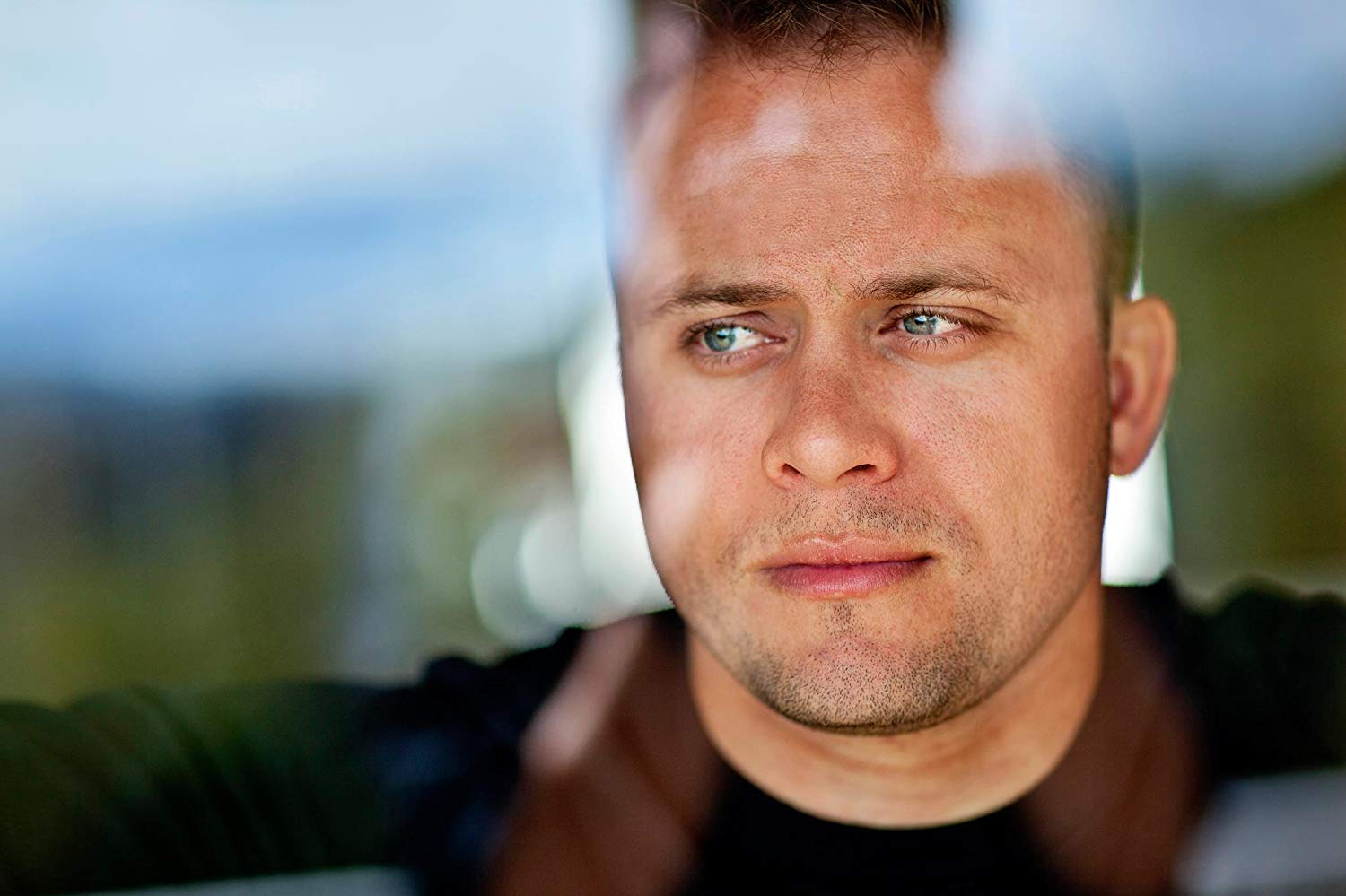
Photo by Ben Chrisman

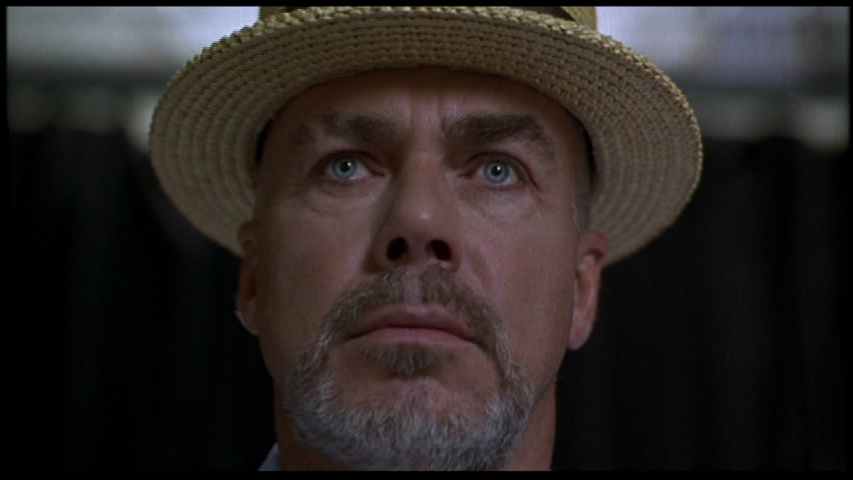
Oh hot damn, do we have a wonderful interview for you fine folks today! We have some amazing words from the brilliant filmmaker Justin Hunt! In 2007 he released one of the most compelling documentary films of all time entitled American Meth that really drove home the issues of meth addiction and the terrible consequences of falling into this world.

And beyond American Meth, Justin has only continued to put out some very amazing work, both in the feature film and documentary world. Justin’s list of credits are so delightfully varied, covering several different topics from drug addiction, to pornography, and beyond.

I am so honored that Justin was able to share a few words with us here today. He has had an amazing career that actually did not start in the world of film. He has an amazing story to tell, and we are so excited to share it with you all today! So check it out!

I understand you started your career at a very young age in the world of television broadcasting. So, what led you to the world of documentary filmmaking from your previous field? Was it a seamless transition overall?

After learning just how much I disliked the corporate structure of broadcast journalism, I started my own video production company while still anchoring for an NBC affiliate in New Mexico.  After a year or so of doing those things concurrently, I left TV and focused on my company.  In 2005, I challenged myself to take on a bigger project, a feature length documentary, which eventually became American Meth.  When we screened that film for the first time in 2007, I was hoping to get 100 people or so to come out and watch the film.  Over 2,000 people showed up and that’s when I think I realized that I was capable of a lot more than I gave myself credit for.  That’s really where the fire started burning for the documentary films.  And, in all honesty, it really was a seamless transition because what are documentary films other than just longer news stories.  Plus, with the one-man banding I was doing at NBC, making a film on my own was no different.  I shot them, wrote them, produced, financed, edited, everything.  With Absent and The Speed of Orange, I even narrated them.  It was no different than being a news man, simply on a larger scale and with a lot more eyes on them.

American Meth is without a doubt an absolute modern classic in the world of documentary filmmaking. I am curious to know what it was like to dive into such a truly disturbing world? And what are your thoughts on the impact that your film has had on the country as a whole?

First of all, thank you for that compliment. I’m not a person who reflects a lot on past accomplishments or completed projects, so I’m often surprised when someone says something like that about a film I’ve done.  Calling it a modern classic is a humbling statement, so thank you.  Whether with American Meth, or any of the other films, walking into those worlds as a filmmaker leaves a lasting impression on you, things stick to you, like the smell of smoke on curtains.  Especially spending time in the home of James and Holly in AM, you go into this subconscious reporter mode, where everything is two-dimensional because you’re seeing it all through a viewfinder.  It’s only after the fact, when you’re going through footage and editing, that you see things more realistically and you realize you were just dealing with some crazy shit.  I’ll give you a perfect example:  there is a scene in American Meth where James and Holly are arguing with each other, screaming, the kids are bouncing around the room, it’s chaos.  While they’re yelling at each other, one of the little boys, who was 6 or 7 years old at the time, walks right in between them and pretends to hold gun up to his dad’s head and shoot him. I never noticed that until two or three years after the film came out.  It’s then that you realize what a unstable, ugly situation you were actually in.

As far as the impact it’s had, I’d like to think that it’s helped people.  I can attest to hundreds if not thousands of emails and letters that I’ve received over the past decade from people whose lives have been improved by learning more about that issue through the film.  It’s still extremely popular as far as distribution is concerned, still watched a lot, so I’m hopeful that it’s still serving a positive purpose.
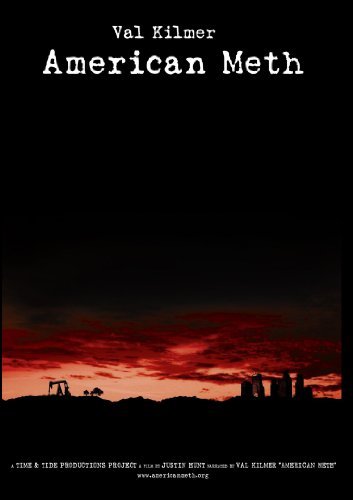
How did Val Kilmer become involved with the project? Were you simply old friends, or did he have some sort of vested interested in the subject matter?

I’ve always loved this question because the answer tends to throw people off.  I simply called and asked and he said yes.  That’s it.  I used some old reporter skills to track down the number to his ranch in New Mexico, called and left a message and the next day they called back and said he’d do it.  In my opinion, I think that there were a few variables that piqued his interest.  I was a fellow New Mexican, I was a young filmmaker that he wanted to help and I think he appreciated that I had the balls to call and ask.  Also, not long before that, he’d done The Salton Sea, where he portrays a meth addict, so I’m sure he’d gained an appreciation for the devastating nature of the drug and wanted to help get the word out.

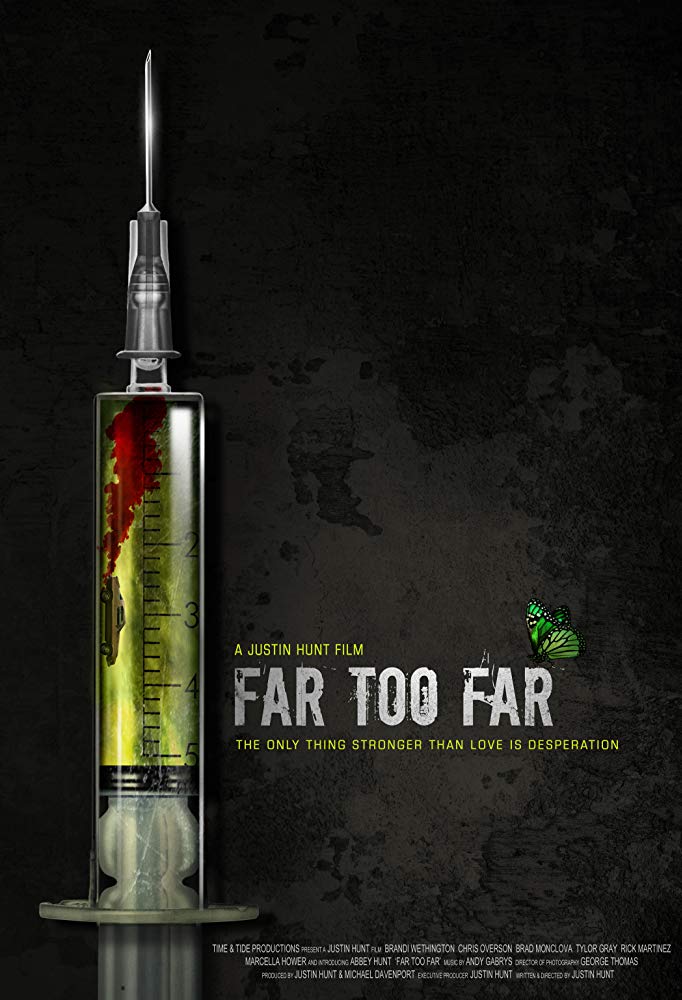
In 2015 you took the subject of meth addiction to the scripted world with the film Far Too Far. When comparing a narrative film with a documentary, which would you say was the more difficult format in which to express the true terror of the world of meth addiction?

First, I have to say that the process of making Far Too Far was a dream come true for me, to a degree.  Despite the success with the documentaries, my love has always been with narratives and I have been striving my entire career to get into that marketplace.  Writing, directing, or both, would be the dream job for me.  I want to be a part of that history of film.  I’m extremely proud of the story I told with Far Too Far, I simply didn’t have the finances or the seasoned talent to tell it properly.  I challenged myself to make it and I did, but I’d love to eventually see it made right.  Having said that, I would definitely say the more difficult format to express the nature of meth addiction is the documentary.  Sure, we could go into a meth house and show people shooting up and capture all that salacious bullshit, but I think that’s irresponsible filmmaking that exploits people.  I’m not into that at all.  Case in point, look at what we did with Addicted to Porn: Chasing the Cardboard Butterfly.  There’s not a single provocative image in that film because what good does that do?  It just hurts those dealing with the issue.  In the narrative arena, you have creative control over what is said and shown.  You can tell the story in a more effective manner setting up situations and conversations in a controlled environment. Also, in a doc, you can’t control everything that people say and do, nor can you show everything that you see and hear.  If so, most documentaries would be five or six hours long.  Most people don’t know this (because most people don’t know about Far Too Far), but Far Too Far is actually a purging of what was left over in my mind from the making of American Meth.  I took some of the horrible things I was exposed to while making the documentary and turned it into a narrative script.  For example, the primary story line about the mother and daughter is a true story.  What the woman does to her ear at the party…true story.  That’s why I believe the narrative landscape actually gives you more space to create the truth of a story.
In your illustrious career thus far, you have covered a lot of different situations and events. I am curious to know how you decide what you want to showcase next? How do you choose what you want to show the world?

That’s a great question and the answer isn’t a very clear one, for you or for me.  Situations in life seem to present themselves to me and then the light comes one.  American Meth was the result of a Christian men’s retreat I was on.  Absent was spawned from a couple of different books that I’d read and the fact that I was a single father raising two kids on my own.  The Speed of Orange was brought about by my mother being diagnosed with cancer.  Addicted to Porn: Chasing the Cardboard Butterfly started with a conversation with an old friend I went to high school with.  The seeds get planted and start germinating in my brain, then I start really thinking through what kind of impact they might have, and, finally, I have to consider what it would take to make them and if they’d be marketable.  I’d love to be able to say I’m independently wealthy and I’m just making these films to take on issues that others don’t have the courage to, but I do have to consider the business side of things, as well.  As far as what’s next, I’m really not sure.  ATP took me over four years to make and was extremely taxing on me financially, physically, emotionally and spiritually.   In essence, it knocked the wind out of my documentary-making sails.  But, you never know what might come along and garner my attention.  I think I’m good at making documentaries, but I also know that, to me, each one needs to be better than the last.  If an idea comes along that I feel can do that, I might make another doc.  Otherwise, I’ll just keep doing what I do to make a living and keep looking for opportunities to write and/or direct narratives.

In your work as a documentarian and storyteller, you have covered some very dark subject matter whilst profiling real people who are living in these sad and sometimes dangerous worlds. So with that, do you ever manage to keep in touch with any of the folks you profile? Have you noticed any sort of individual impact after somebody has been featured in one of your films?

There have been a handful of people who I’ve stayed in contact with, but not a ton.  It’s just like anything else, there are some people you connect with and some you don’t.  I’ve stayed fairly close with James Hetfield, Johnny Tapia’s family, some of the folks from American Meth, a few people from ATP.  I have definitely seen some positive impact from the films on those I’ve featured, but I’ve also seen it have a negative outcome for others.  People in the public forum can be quite brutal in their comments about documentaries and the interviewees therein.  That’s why I always try to be very upfront with someone I’m going to interview about the magnitude of exposure they’re going to be getting.

Photo by Ben Chrisman

What does the future hold for you? Anything you would like to plug to our readers?

The future looks pretty bright for us at the moment.  I basically decided to reinvent myself and my company about six months ago.  After 16 years of being Time & Tide Productions, we changed the name of the company to White Whale Pictures, Inc., got a new logo, a new office and started focusing on new kinds of work.  Although my main focus is writing/directing feature narratives, we have just signed with an agency for an episodic television show I created, I’m working on a feature script I’ve been commissioned to write (and hopefully direct), and we’re keeping things fresh by working on a myriad of different creative projects in the corporate/commercial marketplace.  Naturally, I’d love for folks to continue watching my films when and where they can and I’m sure this interview will help.  We’re really trying to grow a bigger presence on social media with the new company, so I’d like to personally invite people reading this to come follow us on Instagram at @whitewhalepictures.  Other than that, just keep an eye out for whatever we throw out there next!

What was the last thing that made you smile?

My wife and four year old have been in South Africa for the past seven weeks, so my 17 year old son and I have been bachelors for the past two months.  I’d have to say the last thing that made me smile is watching all of the little indicators that he’s becoming a man, and a good one at that.  And, naturally, the young buck has to test the alpha male, so the wrestling matches, arm punches and giving each other shit has been a ton of fun.  There’s nothing like the feeling of being a dad, which is a very noble role, and realizing you’ve done a good job.

Check out the trailer for American Meth right here:

Sarah Minnich [Interview]

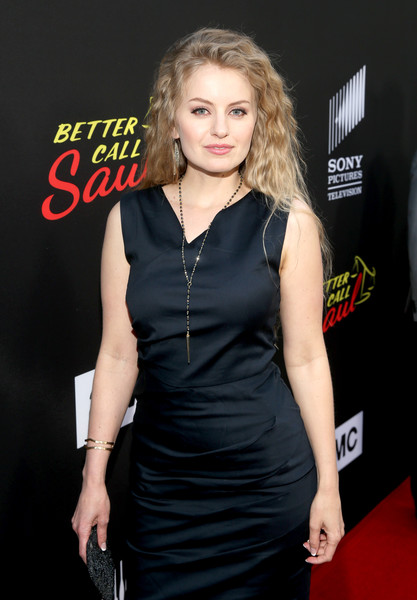
Today’s guest here at Trainwreck’d Society is one of the finest young talented performers of these modern times. Sarah Minnich has had an incredible first decade of performances thus far, and her future only gets more and more bright with each passing year. Since appearing in the delightfully campy horror film, Spring Break Massacre, Sarah has gone on to have a re-occuring role on the hit series Better Call Saul, and has appeared on other amazing shows such as From Dusk Till Dawn: The Series, Breaking Bad, Preacher, Godless, and so many more.

As you will read below, Sarah also has some pretty amazing films and TV appearances coming soon, including a lead role in a very intriguing Lifetime film. She has so much to tell us about, so let’s just get right into it! Please enjoy some wonderful words from the brilliant Sarah Minnich!

When did you first realize that you wanted to work in the world of acting? Was it a deep-rooted passion you have always had, or did you just find yourself in this life out of nowhere?

Interestingly enough, I both did know and didn’t know… let me explain. From an early age, I knew I wanted to be in front of the camera. My father is a photographer, and literally from the moment I was born, I was in front of the camera. For the longest time, I had it in my mind that I wanted to be a model. From the age of maybe 12 to roughly 17 I doggedly pursued modeling and was told time and time again that I was too short. Finally, at 17, I signed with an agency just outside of LA that represented both models and actors called Peak Models and Talent. Soon after, they sent me on a low budget feature film audition (or I had self submitted and got an email requesting that I audition… I don’t actually remember the details of how it happened), and somehow I booked one of the leads. After working on that film (Spring Break Massacre), I was hooked. Although 2005 was when my career technically started, it wasn’t until five years later that I actually got serious about pursuing acting.

We are huge fans of the world of horror here at TWS. And one of your earliest roles was in Michael Hoffman Jr.’s brilliant indie horror known as Spring Break Massacre. Being that the world of horror isn’t your primary focus, I am always curious to know how folks enjoy working in the world of horror occasionally? What is it about working in the world of horror that sets itself apart from other genres?

As I mentioned earlier, working on Spring Break Massacre was one of the most fun experiences in acting that I’ve ever had. I was young, gosh I was so naive, we filmed out of state in Illinois, all the cast were literally in this camp/hotel type thing (so it was actually like a big slumber party) … it was ridiculous. I think when you are young and totally not aware of what you are or aren’t supposed to be doing on set, it’s so much more fun; as we age, our experiences are clouded by ego, competition, conformity and 1,000 other terrible adult things. To answer the question though (based on my little experience working on horror), I would say that working on a horror set is like an adventure into the uncharted … it’s like playing with fire without the risk of catching aflame yourself.

You had a small role in the hit series Breaking Bad, which turned into a re-occurring role on the show’s equally amazing prequel series Better Call Saul. I am curious as to what it was like to work within the world created by the mind of someone like Vince Gilligan?

I love those people; the Breaking Bad and Better Call Saul shows respectively have been my Acting 101 and Intro to Film classes. Both Vince and Peter are like kids in a candy store when they’re in their element; it’s wonderful to work with and to watch people that love what they do. I have learned a lot watching Rhea Seehorn work, and the two or three times I’ve had the chance to work with Bob Odenkirk have really tested my professionalism. Bob’s the kind of actor that is so on top of his game, that if you don’t rise to the occasion, you die of mortification. Episode 1 for me was like being thrown into a pool having only learned to swim by reading about it … I had to swim.

Scrolling through your credits, I have noticed that you have work in the world of production on a few occasions. I am curious to know if you have had any thoughts on getting behind the camera and into the director’s chair at all? If so, what sort of projects would you like to create?

It’s interesting you ask; last week I was daydreaming about what steps I would need to take to direct something. Obviously, I would start with something small that I had written myself. My mind keeps jumping back to stories I have written about childhood experiences. There’s this one story I wrote years ago called “The Replacement Pig” about an incident that happened with a man my mother was dating after she and my father divorced… but I’m still trying to wrap my brain around how to turn this into a screenplay. I’m actually looking at taking a screenwriting class this coming semester. Maybe I’ll have something to show for these aspirations sooner than later.

If you were handed the role of any historical figure from world history, who would you want it to be?

Oh man! Great question. I’d love to play a German immigrant from the 1770’s (which is roughly when my great-great-great-great-great-great grandparents immigrated here (prolly like 5 more greats needed there). Also, I’d be interested in playing Harriet Beecher Stowe (1811-1896). She was a major anti-slavery campaigner whose writing contributed to the American Civil War. Also, in about 20 years, when movies are being made about her, I’d be interested in playing Hilary Clinton actually; what a role that would be.

What does the future hold for you? Anything you would like to plug to our readers?

Yes! I just did my first TV lead in a feature film called Dying for a Baby directed by Lauro Chartrand, to premiere on Lifetime sometime in the next few months… no spoilers, but I play the bad guy (evil scientist laugh). Also, coming soon, I just played Nicolas Cage’s wife in a feature called Running with the Devil directed by Jason Cabell. The last one I’ll mention here (although there are like 10 things coming out, lol) is a movie called The Wave directed by Gille Klabin, where I play the livid wife of Justin Long’s character.

I don’t have release dates on these yet, but if you follow me on Instagram or Twitter, I post updates when I have them:

Instagram @sarah.minnich

Twitter @sarahaminnich

-What was the last thing that made you smile?

My dog, Max … he makes me smile every 5 minutes! Photos on Insta.

Thanks for taking the time to interview me Trainwreck’d Society!

Cheers to filmmaking!

Maria Blasucci [Interview]

We have an absolutely incredible interview to share with you fine folks today here at Trainwreck’d Society! Today we have some wonderful words from the hilarious and crazy talented woman by the name of Maria Blasucci! She was so kind to share a few words with us here today.

I first learned about Maria’s brilliance by watching one of the greatest history based TV shows of all time known as Drunk History. I quickly learned that I had been admiring her other work this whole time, and didn’t even know it! Maria also happens to be a member of the amazing recreational basketball team, The Pistol Shrimps, that was featured in a documentary of the same name on STARZ. It is available now, and so damn great. Also, our dear friend Stephanie Allyne is on the team! How cool is that! Also, every other member of the team happens to be truly hilarious people who we haven’t had the honor of interviewing on the site (yet?) but still find amazing, including Aubrey Plaza, Angel Trimbur, Molly Hawkey, and more!

Other credits of Maria’s that I found awesome was her role in Christopher Guest’s Netflix Original Movie, Mascots, which also featured our old friend Jim Piddock. As well as an appearance this year on one of my favorite TV series out now, Another Period!

She’s so wonderful, and we are so honored that she is here on the site today! So let’s get into it!

When did you first realize that you are a hilarious human being, and that you should join the world of comedy? Was it something you always dreamed of doing, or did you just find yourself in this world one day?

First of all, thank you, that’s very nice of you to say. I always enjoyed making people laugh. I’ve always felt very comfortable onstage whether it’s doing improv for theater. I’ve wanted to be an actor since as far back as I can remember which is a gross thing to say but I’m not going to lie to you so there it is. I just kind of started on this trajectory of wanting to be a performer at a very young age and never stopped. 

I absolutely love the series Drunk History, which you have been appearing in various roles for the last 5 years. The format of the show is very specific and very different. I am very curious to know how what it is like to work on such an incredibly innovative show like this? Is it as fun to work on as it is for us to watch?

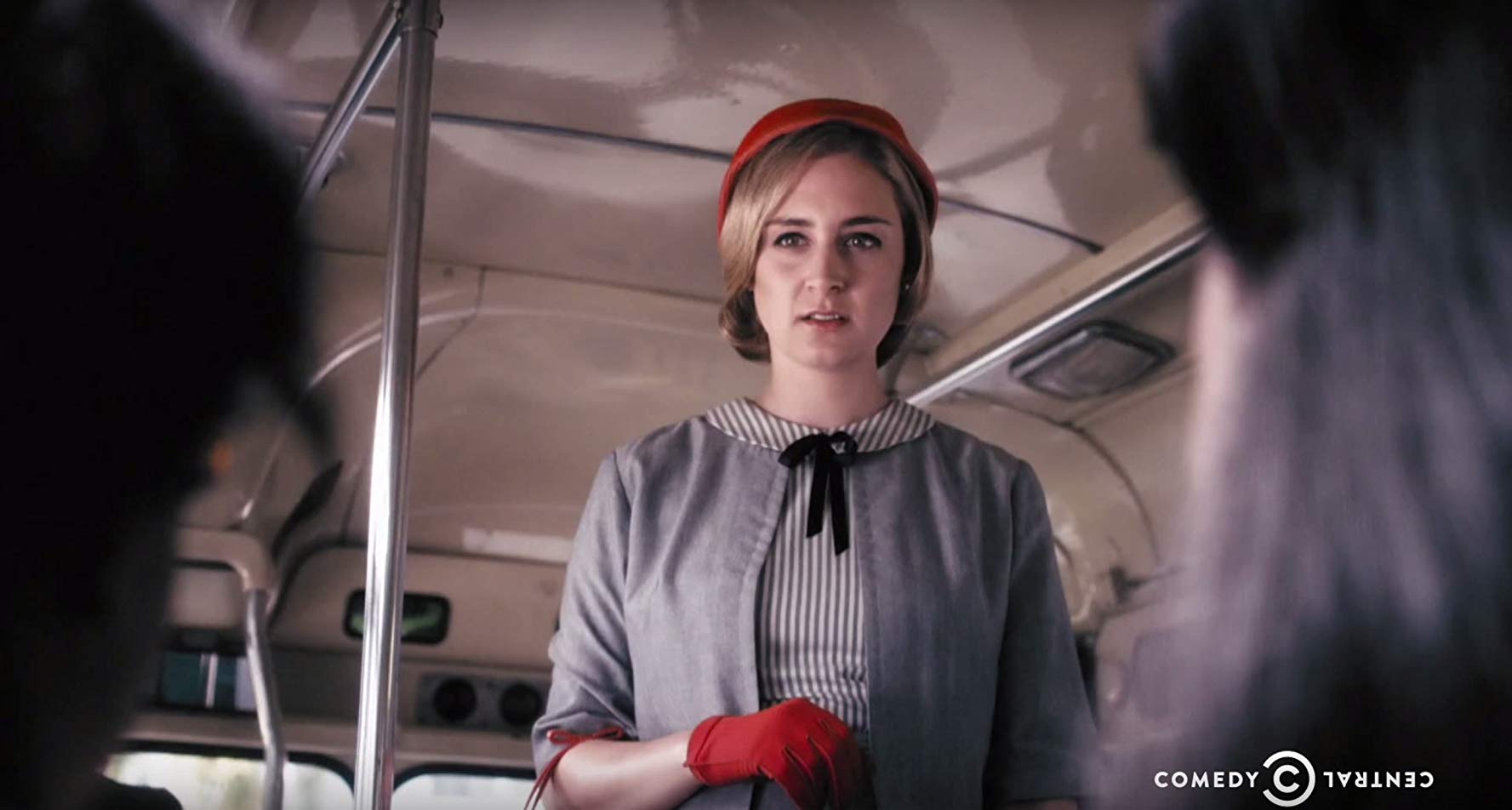
Drunk History is such a blast to work on. Every day on set is a new era, a new character, a new story, a new location. It really does feel like that stereotypical version of a Hollywood set where you’re on a backlot and a camel walks by next to an astronaut. It’s just a fun show all around and the people that work on it are some of my favorite people in the world. Derek Waters and Jeremy Konner have created such a unique environment where people are allowed to just be creative. From costumes, to make up to hair to props to set design, I think everyone feels like they are doing the most awesome school project with a bunch of their best friends. As a performer you obviously have to stick to the line you are lip synching to, but it’s fun to use the narrator’s inflection and attitude to inform your character. There is something really satisfying about being forced to color inside the lines, but with the ability to pick any color and medium you want.

 What has been your favorite historical story that you have worked on during your tenure at Drunk History?

Hmmm. This is a tough one. It usually has to do with how fun the guest star is.  I have the best time when Jack McBrayer comes by to do a story. I’d have to say anything that takes place around the 1950’s is fun because of the clothes and hairstyles. But the Rasputin story with Jerry O’Connell from this season was one of my favorites because I had a pretty great monologue to play around with.

Can you tell us a bit about your podcast The Big Ones? What inspired you to create this incredible original bit of ear pleasure?

The Big Ones is a podcast I do with Amanda Lund where we invite a guest on to talk about life’s big questions! Like, would you kill your baby to save a village? Or, what would you do if you woke up as Beyonce on the morning of her Superbowl performance? The podcast is really just an excuse for Amanda and me to talk for an hour like we know everything without really saying anything. I guess we were inspired by the fact that Amanda has a podcast studio in her house so we thought… let’s use it for something! And that’s how we became two of the world’s most recognizable names in morality and ethics.

I absolutely love what you have done with recreational basketball on the world wide phenomenon of a team known as The Pistol Shrimps, which also includes our past guest and brilliant soul, Stephanie Allynne. For those who may be unaware of the Pistol Shrimps can you tell them a bit about the team? And how can new fans support the cause?

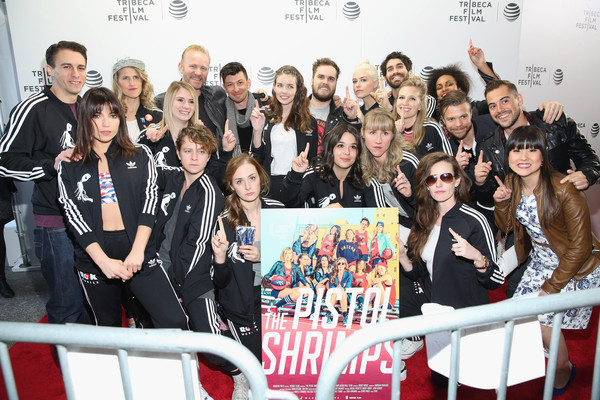
Thank you! The Pistol Shrimps is the founding team of the LA City Municipal Women’s Basketball League. A few years back I got the sudden urge to play team sports again. I’d only ever played basketball so I looked around online and found that there was an all women’s league.  put out a facebook post and got a team together but when I went to sign up, the LA City Parks department told me that the league had been defunct for years because women didn’t sign up to play. So we spread the word and now the league has 26 teams! You can learn all about it in the documentary that is now available on STARZ called The Pistol Shrimps.

New fans can support the cause by following us on Instagram and twitter! We post our seasonal schedule on our social media so if you are in the LA area you should come check out a game!

“Pistol Shrimps” at the 2016 TriBeca Film Festival

And for the question that I hate that I ever have to ask, but I feel like if we don’t keep talking about it, nothing will change: As a woman working in the world of comedy, both on screen and behind, has the climate of the industry seen any actual changes over the last couple of years? Has there been any progress of note? 

See below!

What does the future hold for you? Anything you would like to plug to our readers?

Amanda and I are launching an all female podcast network called Earios with our good friend Priyanka Mattoo. Check it out on Kickstarter! 

What was the last thing that made you smile?

My dog, Ms. Piggles. She walks around our apartment like it isn’t a big deal that she’s a tiny monster. She’s an angel.

Sven-Ole Thoreson [Interview]

I am always excited when we have legendary folks on Trainwreck’d Society, and I never forget how blessed I am to have this platform to share words from amazing figures in the world of film, television, music, etc. But, Folks, this is an AMAZING interview that truly hits close to home for me personally. And it should for all of you as well!

We have spoken with a lot of folks who have worked in both the View Askew and post-Jersey world of the brilliant filmmaker, and recent heart attack survivor Kevin Smith, over the last few years. And today we have another brilliant individual from this world who is forever embedded in my mind as one of the best “villains” of all time in the View Askew world. He has also had a brilliant career beyond this one film, which we will definitely discuss below, but it behooves me to emphasize just how much I adore Sven-Olen Thoreson for his role as LaFours in the cult classic film Mallrats.

Sven-Olen is not only a legend in the world of acting, he is a renowned body builder, even receiving the covenant title as Denmark’s strongest man. He has also managed to have been killed by his friend Arnold Schwarzenegger on screen more than anyone in history! Which is very impressive considering the death toll that the former California Governor has racked up on screen.

So Folks, please enjoy some amazing words from not only a legend in the world of all things Kevin Smith, Schwarzenegger, and body building….but a genuinely cool and wonderful person we are proud to call a friend of Trainwreck’d Society, the great Sven-Olen Thoreson!

What inspired you to join the world of acting? How did you transition into this line of work?

In Denmark based on size not talent, I was asked to work on a few pictures. And based on my friendship with Schwarzenegger, after inviting him to promote Pumping Iron in Denmark, I was invited to work on 3 Conan films, Conan the Barbarian in Spain, Conan the Destroyer in Mexico and Red Sonja in Italy, still living in Denmark.

When I moved to LA, the only person I knew was Arnold, so I called him and was invited to Grifith Park where he was filming Comando. Joe Silver the producer, became very impressed by my huge size, being much bigger than Arnold, that he offered me $20K to work as a stuntman and train Arnold to keep him in shape. I had to become a member of SAG and to get a US Social Security Number. I went to SAG and produced proof of prior movie work and gave them my Danish SSN, and from then on I have worked non stop for 30 years and so far been apart of over 160 productions both on Film & TV.

In 1995 you appeared in the cult classic comedy film Mallrats, as the antagonist to Jay & Silent Bob, La Fours. What was it like to work on a project like this? How did working under the guise of Kevin Smith differ from other work you have done?

The year before I had worked with Jean Claude Van Dame on Hard Target and the producer Jim Jax promised me, that I would work for him in Mallrats.

Working with Kevin Smith was a thrill and working in the biggest mall in US in Minesota. The whole cast and crew was such a joy.

Your line of work is obviously a very dangerous one at times. What would say has been the most unfortunate accident that has occurred on one of your projects?

In Dragon, The Bruce Lee Life Story Directed by Rob Cohen, where I played the demon, and have a big fight scene with Jason Scott Lee, shot in Hong Kong.

The finish of this particular scenes was moved on location in Granada Hills in California where my character comes up from a grave to fight. Because of the light the scene had to be shot just before sunrise…

I was supposed to come up by a lift from 12 feet underground and had to ware an oxygen mask based on heavy smoke that covered the graveyard. So before stepping on to the lift I asked the special effect guys if it was secure & safe. I was told that there had been 6 people on the lift tested several times. We did the first take of final scene of the fight scene and it was perfect.

The director was happy, but asked us to do another take while we still had time before sunrise… so I was yet again prepped with an oxygen mask and steped out on lift to be lowered down the 12 feet, when the cable broke and dumped me to the depth of the hole and I broke both my knees and lost the oxygen mask and could not breathe. I recall that I could not get out of there, so I screamed for my life and fainted. Next thing I recall is laying on the ground and seeing the crew and director looking down on me and said “Yes! Thank God, He ain’t dead!”

When you look back on your career, and the extremely impressive body of work that you have done, what would you say you are most proud of?

The scene from Gladiator, directed by Ridley Scott, where my character Tigris fights Russell Crow who plays Maximus must be the one to mention here, becourse when I arrived in Malta where that scene was shot, I was given a 30 page storyboard with the movements and camera angels of the entire fight. 4 weeks of prep and 3 weeks to shoot the scene.

I was 55 and the role was very hard and tiredsome, but due to my discipline I could carry on and it got me 2 Stunt Oscars, the Taurus Awards, one for best work with Animals ( Tigers ) and one for best fight.

When you’re not out there hard at work on set, what would we find you doing for a little bit of “me time”?

I’m often to busy for me time, but writing scripts, books, hanging out with family and friends, working out, hiking and reading and giving public speakings and seminars all over the world has my time outside of the set of filming.


What does the future hold for you? Anything you would like to plug to our readers?

I have upcomming filmings in Israel, the US, and Denmark and still fit for fight.

I plug my stuff as it comes up for promotion so I suggest the readers tag along on my website www.sven-olethorsen.com and find me on Twitter, Facebook, Instagram and Linkedin.

What was the last thing that made you smile?

This, your question 🤪

Believe in your self, pain no gain, body and mind, you only have one body look after it!

I salute you all!

Check out this amazing video entitled “Muscle For Hire” created by Mick Hedge that can also be found at sven-olelthorsen.com:

Robin Riker [Interview]


We have a great interview for you fine readers today here at Trainwreck’d Society! Today we are talking with the brilliant actress who has been rocking the world of television, film, and most importantly, the stage, for over 40 years! It’s Robin Riker!

I first discovered Robin’s work when she appeared as Chris Elliot’s nemesis in the cult classic TV show, Get A Life. I absolutely loved her character on this program, as she was the only one who was willing to truly call him out for his ridiculous behavior in a world surrounded by enablers. And then I caught Robin on a couple episodes of on a recent favorite series, You’re The Worst, and I thought I would try to track her down and get some words from this brilliant actress. And we did!

As it turns out, Robin actually has a wonderful book available now that is not only a tutorial on how to survive the world of acting, but also tells a bit about her life as an actress. So while I encourage you to continue reading her amazing answers below, I would more so encourage you to follow the links provided to find out even more about this amazingly talented human being!

We are so excited that Robin was able to share some words with you fine readers here, so let’s just jump right into it, shall we?

When did you decide that you wanted to join the world of performance for a living? Was it an early passion of yours? Or did you just find yourself in this life one day?

I think my life choice was kind of inevitable.  I’m the 3rd generation of perfomers in my family…on both SIDES of my family.

My paternal  grandfather was a clown in Ringling Brothers, my father was an actor from a very young age in TV and radio, my maternal grandmother was an amateur actress and my mother was a professional actor and writer and director.  For a few years after I was born, my dad did the weather and operated the TV camera and hosted a childrens’ television show in Harrisburg Pennsylvania.  The show was called Captain Rick’s Showboat, and he often had kids in studio as his audience…you guessed it…my older brother and I were, sometimes a couple of those kids.

I made my stage debut at the age of 2 playing the little girl in a local production of The Littlest Angel.  I still remember the first lines I ever uttered in front of an audience, “ Daddy, why is the star on top of the Christmas tree?”

I discovered a short-lived but ultimately hilarious show about 20 years after it originally aired, entitled Get A Life, in which you were a regular star. I absolutely adored this program, and can always go back to it for a good laugh. So, I am curious to know what it was like to work on such a bizarre and hilarious sitcom like this? Was it as much fun to work on as it was for the fans to watch?

Oh, we had a ball!  The cast and crew were all  such fun and I loved the character I got to play. “Sharon” was the nemesis of Chris Elliott and got to say all the things the audience was thinking about his ridiculous behavior.  I loved working with Chris.  In fact an episode in which Chris and I played rivals in a community theatre production of “Zoo Animals on Wheels” was named by TV Guide as one of the 50 funniest moments in TV history….I’m very proud of that fact but its hard to work that into everyday conversation so thanks for giving me the opportunity to bring it up!  🙂

We have had the pleasure of showcasing quite a few folks who have worked in the world of Soap Operas. You have managed to work quite extensively in this world as well! I always like to ask folks on both sides of the camera what it was like to work in such a fast paced environment? And what sort of knowledge did you happen to draw from working in this field for the times that you have?

I’m very lucky to have inherited a tiny chip of my grandfather’s genetic material…he was an attorney with a photographic memory…so that is a great help in learning the pages of dialogue required everyday in the  fast paced production of Soaps.  I was also classically trained in the theatre so that’s a great help as well because, they do VERY few takes so  if you falter in a scene but have the ability to  cover the mistake and get to the other actor’s cue its a real asset.  I never really aspired to working in soaps but when my agent called and asked if I’d be interested in accepting an offer to join the cast of  Days of Our Lives for a while, I paused and then replied, “Well, yeah if it’s something interesting like a homeless woman who lives under a bridge.”  There was a much longer pause on her end of the line and then she laughed and said,  “She IS a homeless woman who lives under a bridge!”

Well, when the universe answers you so quickly and specifically you have to say yes!  Soap Opera fans are so loyal and the soap world is a tight community so once you’ve acquitted yourself well on one of them it’s not unusual to be invited to other shows too.  I was lucky enough to receive a couple of subsequent offers from The Bold and the Beautiful and then General Hospital as well.

You have worked extensively in the worlds of television, film, and the stage. You’ve had some great success in all of these forms, but I am curious to know what is your preferred method of performance? if you were destined to work in only one field for the rest of your career, what would it be?

Theatre, hands down.  There is nothing quite like telling the story from beginning to end every performance.  The immediate connection with an audience of living breathing people only feet away from you is thrilling and dangerous and extremely fulfilling.  One’s performance grows and evolves over the run of a show and you discover more and more about the character you’re portraying with each performance. I’ve often said that despite the rehearsal process –  which I also love but  you don’t get much of when doing a film or TV show – I feel just about ready to open a play the night it closes.

I understand you have a book available now that sounds very intriguing? Can you tell us a bit about what the book is about? And what inspired you put it out into the world?

Its called A Survivor’s Guide to Hollywood: How to Play the Game Without Losing Your Soul. I was asked to address the students in the  theatre department of Wright State University in Ohio.  The day before I spoke, I said to myself, these students have just gone through a couple of years of theatre history and scene study and all the academic aspects of acting so what do I have to share with them that they don’t already have freshly implanted in their minds?  And then it came to me:  I can tell them what its like to actually LIVE the life of an artist.  The day to day struggles and the philosophy that can support you through those struggles.  The perspective one needs to live a happy life even when you’re not booking the jobs and receiving the encouragement so vital to all of us – no matter what profession we choose.

I’m not teaching them how to “act”, I’m suggesting ways they might want to ‘behave” in order to keep their creativity and their happiness intact. This business, indeed this world, has a way of diminishing accomplishments that aren’t “spectacular.” I show you ways to recognize that you are far luckier than you think, you accomplish far more than you give yourself credit for, and that being aware of the company you keep are all critical to maintaining the sort of self support one needs to succeed as a person in any profession.  In fact the reviews that have made me extra happy are the ones from readers outside show business – house painters, therapists, attorneys and political activists – who have said what a useful philosophy for life my book has been for them.

Thank you so much for asking about it!  Now for a little shameless self promotion:  “A Survivor’s Guide to Hollywood” is available world wide at Barnes & Noble, Amazon and through bookstores but if  ordered from my website, I can personalize it for you!  Its a very funny and good read, I’ve been told and I’m quite proud of it…can you tell? 🙂  robinriker.com

What does the future have in store for you? Anything you would like to plug to our readers?

I just shot a film for Lifetime called Killer in a Red Dress.   I’m neither the Killer nor the Red dress but the role was a lot of fun.

I’ve just completed a pilot entitled Hildy & Maude which we are shopping around and I’m looking forward to launching into…I’ll keep you posted as to where and when that can be found and I’m starting a new book of short stories.

What was the last thing that made you smile?

This question 🙂  I just love the fact that you know how important it is to smile!  There have been psychological studies done which prove that if you force yourself to smile even when every feeling in your body says “there’s nothing to smile ABOUT” the simple act of maintaining that reluctant smile will, in fact, uplift your mood!  Wild isn’t it?

I think it’s important to realize the power of a smile that’s freely given, too.  Just try it for yourself the next time you go out. Simply smile at a passing stranger.  Even if they don’t smile back, you have changed the energy around them.   All the technology we are immersed in every minute of every day tends to isolate us from each other even as we think we are connecting by text and instagram etc.  Looking at a person as they walk by and smiling at them is a real  and all too rare connection these days.  It  can change a person’s day…both for the smiler and the smilee!

Sherren Lee [Interview]

Happy Monday Folks! Today we are kicking the week off with some wonderful words from one of the finest indie filmmakers working today. It’s the wonderful Sherren Lee! For those of you who managed to check out our Sunday Matinee that went live yesterday for the brilliant short film, The Things You Think I’m Thinking, you may recognize Sherren by name. Or if you are just a fan of brilliant modern cinema, you probably have been following Sherren for years!

Sherren has had an amazing career thus far, and with her latest short film straight blowing up in the festival circuit, it is only a short matter of time before she is a household name across the globe. With that, we are so excited that she was able to take some time to share some words with us here at Trainwreck’d Society. So, without further babbling, please enjoy some great words from the brilliant Sherren Lee!

When did you discover your passion for the world of filmmaking and storytelling? Was it always something you have wanted to do since you were a youth, or did you just manage to stumble into this world?

For as long as I can remember, I wanted to be an actor. So, as a kid, I was in all the school plays and sent my headshot to any agency I could find (and got rejected by all of them). In university, I studied Marketing and Organizational Behaviour, and kept acting on the side, mostly doing community musical theatre. Then, as I was about to graduate, I directed a play for the first time… and never acted again. Since then, I knew I wanted to be a director and has pursued nothing but.

Your short film The Things You Think I’m Thinking is one of the most interesting short films I have ever watched, as it manages to be both heart warming & wrenching at the same time, often moments apart! So how did this project manage to come to life? What made you decide to bring this incredible story to the screen? 

That is such a compliment, thank you! It’s very important to me to tell stories that move and warm our hearts, so that means a lot. The project was brought to me by Jesse LaVercombe, the screenwriter. He wrote the script specifically for Prince Amponsah, who plays our lead Sean. The story was completely inspired by Prince and his real life story. Jesse has such a knack for writing unique and charming characters, and they felt real to me right away. The script also made me feel uncomfortable — I was scared of not being able to handle the subject matter in the “right” way, and that made me want to do it. I knew it was an opportunity to tell a story that focused on empathy, and to challenge my own discomfort… so I leaned into that.

The Things You Think I’m Thinking (2018)


I understand you have been working the film around the festival circuit lately, and have managed to take home some very covenant awards at some wonderful festivals. So, overall, what has the fan reaction been like to the film? Have you noticed an impact on people’s lives? 

It truly has been a humbling experience. You never know how your film is going to affect other people, and the stories that audiences have shared with us about their own lives have been so moving and unexpected. The thing I’m most excited about, is that most people just get it–we all know what it’s like to go on a first date (which is excruciating enough) and to be afraid being judged for own flaws that we’re desperately trying to hide. We all have demons, but Sean’s can’t be hidden: so this scenario of a first date is a universal entry point for audiences to only imagine how difficult it must be for Sean, a burn-survivor and amputee, to put himself out there, to not be in his own head… things that we all need to work on.

I am always curious about relationships between those on screen, and their directors. I often ask actors and actresses “What makes a great director?”, but I would also like to know what you believe makes a great actor to work with? What do you believe has to be in place for a solid relationship to exist between those in performing roles and those you are guiding the process as directors? 

I think that great actors come from all kinds of places and have all kinds of different processes. For me as a director, it’s part of the job and part of the fun to get to know how your actors work and how to communicate with them. But ultimately, trust is the most important thing. If an actor comes with their own prep and their own ideas of who their character is, that’s very very exciting. And then we can have a dialogue and craft this character together. Basically, we’re partners. We want to give each other what we want. I’m there to make sure the character we’ve built comes alive on screen. I’m so in awe of actors because when the camera starts rolling, they are completely vulnerable, honest and open to me whispering in their ears… and they’re capable of shifting every so slightly to hit the sweet spot that we’re looking for. That experience is magical.

If you were handed a limitless budget, and a laundry list of your favorite performers and crew…and were tasked to create a biopic for any female figure who has affected world history in some way, who would you choose? And who would you want on your team? 

Oh my goodness, this is an impossible question. There are SO SO many talented people I want to work with. I’d really love to make a classic Wuxia (martial arts) movie with a female hero. One that hasn’t been told, through my female gaze. I’ll have to start doing my research to find this story! That would be a dream.


What does the future hold for you? Anything you would like to plug to our readers? 

I’m currently working towards my first feature film, With Might and Grace, about a grieving mother and talented chef at the height of her career who checks into an illegal assisted-suicide facility with a reflection period of fifteen days. There, she meets a group of people, each with their own struggles, who challenge her right to choose own fate. I’m also about to start prep on two episodes of Murdoch Mysteries Season 12! I’m so excited to be returning this year after directing two episodes last year. And after that, I’ll be going straight onto CBC’s new show, Coroner, to direct one episode.

7) What was the last thing that made you smile? 

Watering my plants after being away for a month. My roommate calls me the plant lady. It’s gonna be okay.

Mark Rosman [Interview]

We have a wonderful interview with a brilliant writer and filmmaker who has had such a varied and stellar career that we are so honored that he was willing to take some time out of his busy life to share a few words with you fine readers today! We believe you are worth it, and we are so happy when someone as talented as Mark Rosman does as well!

Mark is responsible for one of the greatest cult classic horror films of all time, 1983’s The House on Sorority Road. This was our initial reason for wanting to hear from Mark, but we would then learn that he has done some amazing work outside of the world of horror, and we wanted to talk a bit about HOSR as well as they plethora of other fine projects he has done. One highlight would definitely be his work bringing the wonderful young actress and music sensation Hilary Duff to the limelight by being entrusted to direct her work several times in both the world of film and television. And there is so much more to learn! We wanted to know how he got his start, and where we can catch him in the future. And we did just that!

So please enjoy some great words from a damn fine man, the great Mark Rosman!

When did you first realize that you wanted to join the world of filmmaking? Was it a passion you derived from an early age, or did you just happen to find yourself in the business?

I wanted to be a filmmaker from a very young age.  My interest began with photography.  My brother, four years older than me, had a Pentax still camera and took pictures on family vacations and more artsy pictures as well.  He converted his bathroom into a darkroom and I became his assistant.  Around fifth or sixth grade, I started taking pictures myself and developing them.  One in particular stands out to me as a clue that I wanted to expand my interests into movies.  I went to a Dodger baseball game and took a series of photos of different plays.  In the darkroom, I picked out the ones that told the story of one play: from the pitcher pitching, to the batter hitting, to the infielder fielding and throwing, and finally to the first baseman catching the ball and making the out.  I printed the pictures and then cut them up into smaller pieces and mounted them in a vertical sequence.  My first storyboard!  Soon after that, I was asking my history teacher if I could make a small movie about the California Gold Rush and turn that in instead of a written essay.  That led to me filming a satirical take-off on the TV series “Mission Impossible”.  And finally in eighth grade I wrote and made my first original narrative short movie called “The Room” about a small, one room apartment that has a life of it’s own and takes revenge on the drunk who’s living there after he wrecks the place.  I was hooked after that.

What was your very first gig you can remember working on the film business? And did that first experience leave any sort of impact on you that you still feel in your work today?

My first real paying gig in the film business was working as a PA on a TV movie called Love For Rent in 1979.  I had just graduated NYU undergrad film school and actually had an amazing experience (that didn’t pay) being Brian DePalma’s first assistant director on a feature called Home Movies.  Brian was already famous for directing Carrie and other films (this was right before Dressed to Kill) and he wanted to make a low budget comedy working with a largely student crew.  He recruited kids from Sarah Lawrence College (one of his alma maters) and since I was dating a girl from there, I snuck into the mix and quickly volunteered to be his first AD when they were passing out job assignments.  I had made a few student films by then but knew nothing of what a real production was like or what a first AD did.  Needless to say, I learned a ton.  I spent the rest of the year in New York City being the worst PA imaginable, then for some reason one of my lungs collapsed (not really that serious, but laid me up for a couple weeks) and I finally decided to come back home and live with my parents in LA.  My father, a dermatologist, had a TV producer as a patient who hired me to be a PA on this TV movie.  I did all the typical stuff like get coffee and pick-up the lead actress when her car broke down.  The one thing I remember that I still apply to my directing came when I happened to be one of the first crew members on a new location right when the director arrived and saw the set for the first time.  He gave notes to the art department about how the set dressing needed to reflect more of the personality of the character living there, and how some areas on the walls were too empty and needed filling up.  Very simple stuff, but I ate it up.

Your 1983 film The House On Sorority Road is held in a very high regard in the horror community as an absolute classic. Aside from the 80’s being a heyday for horror filmmaking, what was it that made you want to tell this tale? Where did this story come from?

Thanks for calling it an “absolute classic”!  I’m not quite sure about that.  After graduating college, I was trying to figure out how to start my career as a film director.  At first I thought I could find a script to try to get made.  After reading some bad scripts, that concept didn’t work.  Then I tried to find some writers that would write something for me.  That didn’t work either.  I had co-written one script with one of the student  crew members on “Home Movies”.  His name was Sam Irvin and he’s gone on to direct many films and TV movies.  We collaborated on this script about a mother who keeps her demented son in a closet in some hick town and he occasionally got out and killed people.  It was a really bad script!  But there was one idea I liked in it – the mother who keeps her mentally ill son locked up.  Once I realized that I needed to write a script in order for me to start my directing career, I took that fragment of that idea and married it to a world I was familiar with from my first two years of college – the Greek fraternity and sorority world.  I was in a fraternity at UCLA before I left and went to NYU (the reason was that I wasn’t accepted into the UCLA film department).  I knew that horror films were cheap to make and were doing really well at the time – films like Halloween and Friday the 13th.  I wasn’t actually a fan of horror films — what I loved were thrillers.  I saw myself as the next Hitchcock and John Frankenheimer.  So I decided to write a script that had enough of the horror elements to sell it, but it would essentially be a murder thriller that focused on an ensemble of seven sorority sisters.  There were two things I really wanted to accomplish story wise with the script.  The first was that the victims of the crazed killer, the sorority sisters, needed to bring about their own demise due to their own misconceived actions.  In other words, they were at fault, they weren’t just innocent pieces of meat.  And the second was that the final girl was going to die at the end.  Well, I accomplished the first and I shot the movie the way I intended for the second, but the distributor had me change the ending to indicate that the last girl survived.

In your own personal opinion, what do you believe it is that sets The House On Sorority Row apart from the plethora of other amazing horror films that were released during that era? I know why it is special to me, but I’d love to know what your thoughts are on the matter as the mastermind behind the project?

What sets the movie apart, I believe, is that first story element I just described above.  In many of the horror films of that time, the victims’ only fault was that they either were having sex or they stumbled into the wrong place at the wrong time.  To me, that was just so thin and uninteresting.  I loved movies where you put a bunch of people together in a room and they are all in a desperate situation and they argue about how to solve it.  One of my favorite scenes in the movie takes place in the kitchen during the party just after they realize that the body of the house mother they’ve accidentally killed, and put in the pool, is now missing.  We see the girls arguing over what to do and I pit the good girl vs. the bad girl and see the choices they must make.  The other girls chime in one way or the other and they all now regret having done what they did.  In other words, I desperately wanted there to be a vivid, dramatic story happening to real characters in this movie while at the same time they are being stalked and killed.  This was my attempt at a Hitchcockian horror film!

In more recent years, you have been known for works that are a bit away from the horror/sci fi/thriller genres you were working extensively in at one point. More recent work has actually been a bit more family friendly or youth oriented. How was this transition for you? What are some commonalities in working in two very different types of films?

I never intended to go into the family film genre.  But when my good friend from NYU, Alan Shapiro, got an overall producing deal at the brand new Disney Channel in 1984, he asked me if I could come up with something suitable for that family friendly network.  At first I balked, thinking that wasn’t for me.  But luckily, I realized that this was an opportunity I shouldn’t pass up, so I sat down and started to come up with ideas.  One of the things I did was write down a list of regrets and/or wishes in my life.  One of the things was I wished I had known my grandfather who died when I was five.  As I grew up, everyone said how much I seemed to be like him.  He was in the metals business, nothing creative, but was an amateur photographer with a great eye who took really nice family pictures.  So I had this idea about a boy who goes back in time to meet his grandfather.  It was half an idea that was cool but it didn’t go anywhere.  One day I was biking around Palm Springs with another friend of mine, a producer named Steven Fazekas, and he said, “what if the boy goes back in time to save his grandfather’s life?”  Bingo.  That was a movie idea.  Thank you, Steven.  I ended up pitching that story to the Disney Channel and they hired me to write and direct it as my second movie.  It was called The Blue Yonder and starred Peter Coyote, Art Carney, and the boy from the the movie Terms of Endearment, Huckleberry Fox.  The film came out really well, was nominated for Best Cable Movie of the year at the ACE Awards and for Best Children’s Script at the WGA Awards.  Suddenly I realized that I was good at this family genre and really liked playing in that sandbox.  From that point on, I went back and forth between writing and directing thriller and sci fi movies that went straight to video and making Disney Channel TV movies and eventually directing some Disney TV shows like Even Stevens and Lizzie McGuire.

As far as commonalities between those genres, I’d say they have in common what all good movies have in common — great stories and characters we can relate to and root for.  That’s what I’ve always tried to achieve in my films.  Also, those two genres are benefited by being visual.  I try to create a world to put the characters into and I try to show that world and tell those stories in the most visual way I can.

What does the future hold for you? Anything you would like to plug to our readers?

Lately I have turned to writing more personal, indie types of films.  I wrote a script that’s been a passion project of mine for many, many years and I finally finished it a few years back.  It’s part autobiographical, and part historical fiction.  In 1965, the Beatles were next door to my house in Beverly Hills!  I was eight at the time, but a huge Beatle fan and I was in my own little band playing guitar.  We lived next door to the president of Capitol Records who invited the Beatles over.  The band was actually renting a house nearby while they were in town to play at the Hollywood Bowl.  One night, the fab four met with Elvis Presley, who was John and Paul’s idol and the reason they loved rock ’n roll.  In my story, a 16 year old boy who lives next door to the house the Beatles are renting, finds John Lennon passed out on his lawn.  When John wakes, he tells the boy that he wants to meet Elvis one on one before the rest of the group, and the boy helps him get to Elvis’ house.  It’s a coming of age tale for both the boy, who finds out his hero isn’t just the fun loving jokester he thinks, and John who was going through a depressed time that he referred to as his “fat Elvis” period.  It’s a pivotal time in Beatle history when John changed his whole approach to writing pop songs and penned great songs from the album Rubber Soul, like “In My Life” — which is the title of the movie.  I have a producer interested right now and hope we can shoot it soon.

What was the last thing that made you smile?

I just saw a 2016 documentary called American Typewriter that is about the typewriter and the people who are passionate about it on the one hand, and on the other hand, a fascinating look at what we’ve become in our fast paced, digital world, and how the tools we use to create might just effect the actual thing we are creating.

Joseph R. Gannascoli [Interview]


Today Folks,  it is a day to honor an absolute LEGEND! Joseph R. Gannascoli is an incredible actor that you all surely know and love from his amazing role in the television series that changed the world known as The Sopranos. Or maybe from his multiple film appearances in projects like Mickey Blue Eyes, The King of Brooklyn, Bad Ass, and more. He is an incredibly charismatic man who has had an incredibly fascinating life thus far, and we are so happy that he was so kind to share a few words with us.

And, we are so excited that he felt that it was best to express himself through his own voice! Today we have our first non-voice over artist interview that was done with a voice text! And it I can not think about a better person to kick this hopeful trend off. He has such an amazing man with an amazing story to tell, and we are so damn excited that he wanted to share it with us!

So please enjoy some brilliant words with the Joseph R. Gannascoli!

How did you find yourself in the world of acting as a profession? I understand you were previously a pretty accomplished master of the culinary arts?

When you were first began your tenure on the now legendary HBO series The Sopranos, were you able to tell from the beginning that you were about to be a part of something very special? Something historical at that?
Your character Vito Spatofore hit on a subject that rarely tends to be brought up in the macho paradox of mafia related films and television, which is the subject of homosexuality. How did this storyline come to be? And how has the reaction to your role as Vito been from the fans, especially possible fans within the gay community?
I’ve come to learn that beyond being an accomplished actor and chef, you are also an author. I understand you have a novel out there right now? Can you tell us a bit about it?
When you’re not on set, cooking, or working on one thing or another, what do you do for a bit of “me time”? What would we find Joe Gannascoli doing in his down time?
What does the future hold for you? Anything you would like to share with our readers?

What was the last thing that made you smile?

Olunike Adeliyi [Interview]

Today we have a wonderful interview with a brilliant artist who was kind enough to share a few words with us here today. That person is Olunike Adeliyi. If you are a simple mind like I am, Olunike could be first recognized for her brilliant performance in the Saw franchise that we know and love here at TWS. But, as per usual, there is so much more to love about Adeliyi. She is an amazing actress, voice over artist, and even the curator of something truly cool to learn about entitled The Monologue Slam that we get into in the conversation below that is absolutely fascinating.

For readers just tuning after the last Comedy Showcase we did, only to find that we have jumped into a Sunday Matinee with a french film about suicidie, and now sharing some words from a brilliant dramatic artist…welcome to the diverse land of Trainwreck’d Society! Art is art, and we appreciate all of it. Whether you are standing in front of an audience with the intention to make the react directly at you, or you are on stage attempting to make the audience feel empowered/frightened because of the words you are saying…we love it all. And because of that we, are truly honored that Olunike Adeliyi was so kind to share a few words with us about her amazing career thus far, and what the future holds for this extremely talented human being. So please enjoy some amazing words from one of our new favorite performers, Olunike Adeliyi!

When did you decide you wanted to be a part of the world of acting? Was it an early deep rooted ambition you can always remember having?

I decided I wanted to pursue acting professionally in my early twenties. I started in background and knew very quickly that this wasn’t the angle where I could be in front of the camera at a higher level. So, I left the industry for a few years to attend theatre school at the Academy of Dramatic Arts in New York to get trained properly and have more opportunities as an actor. I recently revisited an old diary from when I was in grade five and it said that’s what I wanted to do, so it has been in my subconscious my entire life.

Your performance in Saw 3D: The Final Chapter was the absolute highlight of the film, in my opinion. The Saw franchise is a fascinating one to say the least, so I am curious to know what it was like to jump into the world of Jigsaw? What were some highlights for you personally whilst working on the film? 

Being involved in the Saw franchise is kinda like hitting the jackpot, because it’s so well recognized around the world. I receive a lot of interview questions about Saw, because that’s the major impact it has made. I definitely enjoyed the process of making the movie and also became less scared of horror films. All that blood is corn syrup so it helped with the “trauma” I developed from 80’s and 90’s horror films. The highlight for me was the stunts I had to perform. I was hanging on a wire about 20 feet up in the air while holding onto a pipe. That experience was so intense for me, because I’m scared of heights. I got through it and started doing A LOT more of my own stunts since then.

You have actually worked on a quite a few other horror projects, and with this genre being quite a staple here at TWS, I am curious to know what you enjoy the most about working in the world of horror specifically? What sets the horror world apart from the plethora of other work you have done?

Working in the horror world is fun, because I feel there are no limits when it comes to boundaries. Finding new creative ways to scare an audience so that it stays with them for life seems like a fun job. We are still talking about Jaws, A Nightmare on Elm’s Street, Friday the 13th, or The Exorcist. I enjoy working in the horror genre now, because I get to react and reveal all my fears organically. I love all genres equally though. As long as I continue working and perfecting my craft I’m extremely happy.

I am also fascinated by folks who have worked in the world of video game voice over work, which you did on the 2014 award winning game Watch Dogs as Poppy. I am curious to know what it was like to work on a project like this? Was there a creative freedom in trying to bring a character to life with just your voice? 

I did have creative freedom on Watch Dogs. The Ubisoft team was looking for a project to put me in for months. I’ve become a part of the family and it’s a loyal family. Poppy was developed based on my image, physicality, personality, and voice, which I thought was an incredible honour. No acting required.

You have worked extensively in film, television, voice over, and on the stage with amazing roles in each category. With that, what would you consider to be your most beloved way to perform? If you were destined to only do one of them for the rest of your career, what would it be? 

If I could only chose one, which isn’t fair at all, I’d chose theatre. It’s where I began and what will always continue to stretch my talents. It’s the training grounds for actors. Notice all the greats we admire have a lifetime relationship and commitment to the theatre. Broadway has also become my acting class over the past 15 years. I have a ritual where I jump on an overnight bus or fly into New York for one day and see a few plays. Watching the best that do it elevates my motivation to continue perfecting my craft. I just saw Denzel Washington in The Iceman Cometh on Broadway and I was front row centre for four hours watching my mentor kill the game. I haven’t missed any of his plays since Julius Caesar. I have even developed a live stage show called the Monologue Slam in Toronto and Vancouver with my business partner Andre Newell that showcases actors every month in front of a panel of industry professionals. Actors battle it out with monologues and the audience picks the winner. It’s a lot of fun and we have been running it for several years now. Many actors have also booked jobs after appearing on our stage. The Monologue Slam keeps an actor practiced while having fun.

[Editor’s note: Learn more about The Monologue Slam at  www.toslam.com ]


If you were handed the opportunity to portray any person of any historical significance in a biopic, who would it be?

Nina Simone or Mariam Makeba (Mama Africa). They were entertainers who used their platforms to freedom fight. They brought awareness to the injustices brought on humanity, especially for black people. As an artist it’s important for us to reflect the times and they certainly did their part with the time they were given. I’m doing that myself with the philanthropy work I do in Haiti with the charity Third World Awareness (twawareness.org). I want to play these extraordinary roles to embody their strength, their vulnerability, their art, their complicated lives, and their grace.

What does the future hold for you? Anything you would like to plug to our readers? 

My future continues to be bright no matter what comes my way. Even when it’s time off to get lost on an incredible journey across the globe. The universe has my life mapped out already so all I have to do is show up and play. Right now I balance university, work, and personal time. I’m a student at the University of Toronto aiming for a Psychology degree and eventually my doctorate, I’m about to start shooting season three of Workin Moms for CBC, the film Darken I star in just released in theatres, I’m working with Ubisoft on a new project, I recently completed the film She Never Died directed by Audrey Cummings, and Chaos Walking starring Daisy Ridley, Tom Holland, Mads Mikkelson, David Oyelowo, and directed by Doug Liman releases next year. I’d say I’ve been blessed and will be eternally grateful to those who recognize my hard work and continue to give me opportunities. I’m also working on my next vacay adventure. Where do you think I should go? Preferably somewhere warm.

[Editor’s Note: Olunike…Croatia! I seriously can’t recommend it enough!!]

8) What was the last thing that made you smile? 

My daughter

Shane Mauss [Interview]

Photo by Bruce Smith (@beepsmith)


Welcome to the grand finale of our Comedy Showcase here at Trainwreck’d Society! It has been a glorious two weeks. And please don’t fret, there will be more. This Showcase actually only happened accidentally because I managed to get so many responses back from some damn fine comedians that it just sort of worked out this way. So again, this is not the end. Sporadic funny people are already scheduled to show up soon.

We are closing this one out though with a god damned motherfucking BANG! Today’s interviewee is a true killer in the world of stand up comedy. He is the ever-prolific and extremely insightful Shane Mauss! He’s also a guy who has opened my eyes to different possibilities of psychedelics. He has a brilliant documentary about it out now, as well as a wonderful podcast where he speaks with scientists in several different fields that are all equally fascinating, and tend to prove Shane’s ideas oh so perfectly. It’s also most important to mentioned that Shane is really, really, funny. Which is first and foremost, the important part of his entire career! He’s also one of the hardest working comics I have ever heard of. He will perform EVERYWHERE, and for months and months on end. It’s so damn impressive to say the least.

So please enjoy some amazing words from the brilliant Shane Mauss!

When did you first realize that you were a hilarious human being, and you wanted to make people laugh for a living? What drew you to the world of stand up comedy?

When I was about 8 yo a friend explained to me that there were people called stand-up comedians that stand in front of people and make them laugh for their jobs.  I decided before I ever even saw a stand-up comedian that I was going to be one. There was not a single other occupation I even considered until later in life when fear and uncertainty caused a few passing thoughts about having a backup plan.

Nothing else ever made any sense to me.

What was your very first time getting on stage like? Were you a nervous wreck, or did you feel some sort of positive energy right away?

I was a nervous wreck.  I could barely get through my jokes.  I was horribly nervous for my first 2 months.  Then I had enough material to confidently get laughs.

You have been touring like a madman in your career thus far, performing just about everywhere. So, what have been some of your favorite cities to perform in? Which ones have proven to be more of a challenge to you?

It really has less to do with the city itself and more to do with how the club is run.  Dallas, for example, has so many different clubs that bring in so many different kinds of comedians and crowds.  So to say you are performing in Dallas gives no indication of whether the crowd is going to be full of a bunch of drunk older Texans who want to hear street jokes, it it’s going to be one of the higher end mainstream clubs, or if it’s going to be a bunch of hipsters at an indie venue.

That being said, I love Madison, Minneapolis, Denver, Austin, and Portland.

I’ve never had a good time in Toledo, OH.  I don’t think many people have.


Can you tell us a bit about your podcast Here We Are? How did you come up with the premise of the show?

Each week I interview a scientist about their work. It’s mostly life science stuff about how humans got here, how we behave, make decisions, etc.

Years ago I started reaching out to academics because I wanted to introduce science into my act and had questions.  I had the most fascinating conversations and thought it should be a podcast.

When the time comes that you decide to hang in the proverbial towel in the world of comedy, what would you like your legacy to be? What do you want to be able to see when you look back on your career in the world of comedy?

I would ideally like to think that I’ve influenced people’s perception of the world.  I believe I’m already doing that.  I’ve really already accomplished what I wanted to accomplish in comedy and am just trying to stay interested and inventive.  I’m not too concerned about leaving behind some kind of legacy.  I think that one day, someone would be able to listen to my podcasts and get a free education that is going to be a better education than most people pay huge tuitions for.  That would be kind of a neat thing to leave behind.  Maybe it would make up for all the dumb crap I’ve done in my life.

I understand you have a very interesting documentary coming out next year that involves psychedelics, of which you are an obvious expert on. So what can viewers expect to see in this film?

Pyschonautics: A Comics Exploration of Psychedelics is mostly a journey into the world of psychedelic research through my eyes and experiences.  There are tons of amazing researchers in it, some of my stand-up and me doing a dangerous amount of psychedelics to find the very edges of reality.  We just won an award for Best Documentary at our world premiere in the Dances With Films festival.  Because of that we have a number of distribution offers already.  I’m hoping we get on a big platform so the world can see it.  My guess is that it will be early 2019.

What else does the future hold for you? Anything you would like to plug to our readers?

I have tons of projects in the works that are very close to being announced so please join my mailing list and give my podcast a listen.

What was the last thing that made you smile?

I’ve been practicing whistling with my hands quite a bit.  I can do the Mario Brothers music now.  It’s silly and fun.

Shane Mauss is constantly touring, and seems hell bent on literally performing “everywhere”. He seriously goes to places, both physically and mentally, that many other comedians wouldn’t dare to go. Check out shanemauss.com for dates and details!