Hallie Shepherd [Interview]


Oh do we have a wonderful interview for you fine folks! Today we  are featuring an person who is not only extremely talented, but is a truly multi-faceted artist. Hallie Shepherd has done some amazing work both behind and in front of the screen. In 2018 alone, she earned credits as editor, producer, writer, and actress in two very incredible films, Last Seen In Idaho and Bayou Caviar. The later was recently released last month and features the brilliant Cuba Gooding Jr. in a role of his lifetime.

We get into these films and so much more with this wonderful interview with such a brilliant artist. So why don’t we just get right into it. So Folks, please enjoy some amazing words from the brilliant Hallie Shepherd!

When did you first decide you wanted to join the world of filmmaking and performance? Was it an early aspiration for you, or did you just find yourself in this world one day?

When I was a little girl, I really wanted to take dance and acting classes and be a gymnast, but I grew up in a small town of one thousand people in western Washington. It didn’t have much by way of activities beyond sports. So sports and academics were pretty much my life growing up. I was always reading novels and writing my own stories. I’d also create little newspapers. I’d interview other kids to be staff writers, and then I’d edit and distribute the papers. And I also loved writing plays and casting other students. I would beg my teachers to let us perform them for the school. In grade school, I really only had one teacher who didn’t support my creative pursuits. That teacher had the mentality that the class needed to do everything together at the same pace. I was spilling out of my skin that year.

When I was in sixth grade, my teacher contacted the county newspaper and told them he had a student who had started a sixth grade newspaper and would they let me write an article? I had no idea he was going to do that, and of course I was thrilled when I found out that they said ‘yes.’ I guess my first article about my class hatching fish eggs must have been a smashing success, because they let me on the staff as a weekly columnist. I did that for three years, stopping when I went into high school and started working on the yearbook.

I’ve always known I wanted to write novels, which only recently I’ve started to work on when I have time. But filmmaking and screenwriting seemed like worlds away. While my young mind could conceptualize the process of writing a book and getting it published, the process of making a movie was so foreign to me. My family had a VHS camcorder, so in grade school and high school, I’d write and direct little movies with my friends. I loved to act, so I was usually the lead role. But it felt to me more like a hobby than a career path.

When I was in high school, Good Will Hunting came out, and I saw it in the theatre with my mom. I just loved that movie – “How do you like them apples?” When Matt Damon and Ben Affleck won the Oscar for that screenplay, I thought to myself, “Hmm… maybe I could write screenplays.” I remember feeling really inspired by that, but I kept that aspiration a secret for several years.

At Western Washington University, I got a B.A. in English, but it wasn’t until my senior year there that I started taking acting classes and performing with the theatre department. That’s the year that I finally just said, “Screw it, I’m really doing this. This is who I am and this is what I want to do!” I haven’t looked back since. Even when things get rough – and trust me, they do – I think to myself, “I didn’t come this far to only come this far.”

You have worked extensively with fellow writer/producer and filmmaker Eric Colley on quite a few projects over the years. I am curious to know what it is that makes you both a solid team of highly creative people? And what is it like to work extensively with your own partner? Are there some sort of professional and personal boundaries that can prove challenging?

Eric is the most amazing teammate. We have a similar work ethic, and we believe in creating a really positive environment on set and working with good, trustworthy people. This is our chosen career path, but it’s also what we’re passionate about, so it’s wonderful to be able to share that with each other. When you work with your partner, there’s also a level of trust and understanding that’s automatic. We challenge each other creatively and when we don’t see eye to eye on something in one of our projects, we debate it passionately. But it always feels productive and supportive. If one of us gets overly busy or stressed out, the other one picks up the slack. We have each other’s back. Making movies is hard, but working with Eric is actually the easy part.


I really loved your film released earlier this year, Last Seen in Idaho. I’m a sucker for a well made, female-driven, thrill ride such as this film. I am curious to know what inspired you to tell this tale? 

Thank you! I miss the classic ‘90s thrillers. I was coming of age when Sandra Bullock starred in The Net and Julia Roberts starred in Conspiracy Theory. Those were exciting thrill rides for me, and I looked up to those women. They were strong and resourceful and relatable. I love a good thriller with twists and turns.

As for the specific story premise of Last Seen in Idaho, I don’t recall the exact moment I came up with it. People often ask me how I come up with story ideas, and the answer is that I rarely actively try to think up ideas. There’s no shortage of plots and characters and scenes floating around in my mind. I’m a daydreamer. The problem is there’s not enough time for me to turn all of my ideas into screenplays or books!

Ten years ago, Last Seen in Idaho was one of the first scripts that I ever wrote, and as first scripts go, it was terrible. Over the years, I’d revisit the concept and I’d write an entirely new script: new plot, new characters, new everything. It went through several incarnations. The script that we finally made into a movie is nothing like the original script I wrote all those years ago. The only thing that’s the same is that the heroine is named Summer, and she sees a missing person flier with her face on it for a kidnapping that’s in the future. She has to solve and stop her own murder before it happens.

I’m really proud of Last Seen in Idaho and the cast and crew that worked on it. It was a pretty ambitious production on an indie budget, so everyone wore a lot of hats to get it done, which you can see if you watch the “Making Of” on the DVD. The film is out now on DVD from online retailers like Amazon and Best Buy, and it’s also available almost everywhere on Video-On-Demand, like iTunes, Amazon Instant, Google Play, Vudu, Xbox, PlayStation, and from you local cable or satellite provider.
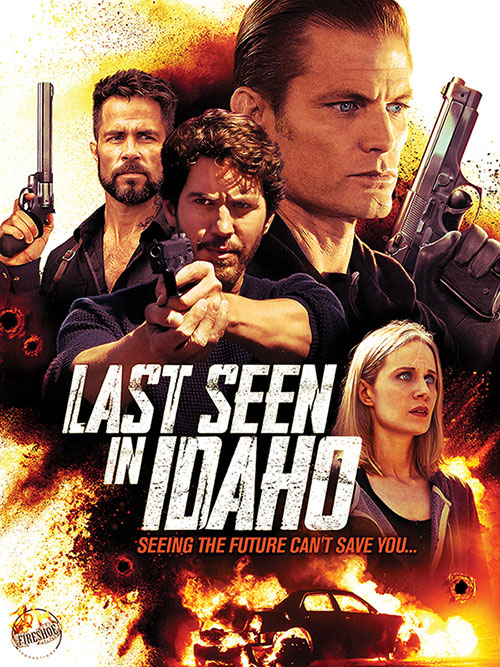
In making Last Seen in Idaho, you found yourself shooting in my beloved home state of Washington. How do you enjoy filming in the Pacific Northwest? What sets working in this region apart from many of the others that you have shot in?

I love shooting in the Pacific Northwest. Washington is a beautiful state with such variety. We have waterfront, rainforest, good-sized cities, rural areas, mountains, all kinds of stuff. And if you want to venture to the eastside, you can get the desert look. I’d like to go over there and shoot a post-apocalyptical story someday.

For Eric and me and our company Fireshoe, as long as it makes sense for the project, we prefer to shoot in Washington. Logistically, it’s easier for us. We have so many friends and family members and business contacts here that we can pull from for resources. The film community here is pretty small, but because there aren’t a million movies being filmed here, the non-film people aren’t jaded about it. In Los Angeles or New Orleans or areas with bigger film industries, people get annoyed with city streets being shut down or filming that causes some noise in the neighborhood. But here, people are excited to be part of the process. Rather than paying an enormous fee for a location, people open up their doors for you. That’s in part because it’s not commonplace here and in part because we know so many people in the area that we can reach out to our network and say, “Hey, do you know someone with a secluded log cabin? Or, would you lend us your RV? Or, do you want to help us build this set? Or, do you want to be an extra in this party scene?” Doing that also creates a great community around the project, because everyone who contributed in some way is part of the team and in support of the film. 


I am very intrigued by the upcoming project in which you will appear in and be a producer of entitled Bayou Caviar. How did you become involved in working on the directorial debut of Cuba Gooding Jr.? And what should your fans be excited for when the film is out there?

Eric Colley and I came on board the project during the early financing stages. With our partners in China, we financed a large portion of the budget. The title of the film has actually changed a few times. The original script was called Burbank Caviar and it was set in Burbank, California. When we were considering different filming locations, New Orleans was on the list. Cuba really liked the look and feel of the city, and I agree that it works well with both the vibrant story elements and the sordid story elements. So then it was renamed Louisiana Caviar, and the pig farm in the script was changed to an alligator farm, which is even more interesting anyway. Alligators are scary! Finally now it’s titled Bayou Caviar.

My acting role is tiny. It’s just a small scene with Cuba, but it was fun to switch from producer to actor for a few hours. And that’s actually what I’m most excited about is the performances in this movie. Cuba is great as a boxer who’s past his prime, and Richard Dreyfuss is a wonderful bad guy. There is a reason that both of those men have won Oscars. Famke Janssen is fantastic as a tough, manipulative character whose moral compass is off-kilter. Actually, most of the characters in this movie have moral compasses that are defective. That might make the film challenging for some audience members. Who do you like? Who do you root for? There are story elements that are uncomfortable, and some themes and topics that are quite timely.

 What does the future hold for you? Anything you would like to share with our readers?

Sure! I recently wrote two new scripts, and we’re in development on them right now. One is a fun action-thriller and the other is an eerie psychological thriller. We’re working on the financing and packaging.

Throughout the last six months or so, I wasn’t really acting or auditioning. My focus was almost entirely on my screenwriting and my editing of the “Behind the Scenes” for The Last Seen in Idaho DVD and social media teasers. There are only so many hours in the day! But I’m feeling the acting bug again, so I need to get back out there. It’s my understanding that a psychological thriller that I acted in late last year is just finishing up post-production. It’s called Losing Addison and it stars Sherilyn Fenn from Twin Peaks. I play a pushy District Attorney in it, and I can’t wait to see it.

I have a website where I write a blog and post my short stories that I call “Tiny Stories.” I also give updates about my projects, so people can always check that out to see what the latest is. I’m really active on Instagram too.
www.HallieShepherd.com
www.Instagram.com/hallie.shepherd


What was the last thing that made you smile?

This interview. I smile and laugh a lot! Life is weird, so you have to. 


Bayou Caviar is available now on VOD wherever you stream movies. Check out the trailer here:

Josh Roush [Interview]

Oh, do we have a special one for you fine folks today! Regular readers here know that based on the plethora of folks we have had featured on the site that have been involved in the world of Kevin Smith, View Askew, Smodco, etc…..we are HUGE fans of the world that Kevin has built around him. One of his greatest strengths and talents in the business has always been that he surrounds himself with wonderful and incredibly talented people. I feel as though he would totally agree with this statement. And today we have some wonderful words from another of the amazing people that he has on his team. It’s motherfuckin’ Dr. Josh, Ya’ll!

For fans of Hollywood Babble On, that last sentence probably made total sense. For the rest of you who may not have checked out this amazing live show/podcast, first of all how dare you?, and second of all I am talking about filmmaker and multimedia jack of all trades Josh Roush! Josh has been working in the Smith universe for quite some time. In fact, it was his work as a personal assistant to the legendary and sorrily missed Michael Parks on the set of Tusk that has led him to create a wonderful documentary about the life of Mr. Parks that seems so damn intriguing. It’s called Long Lonesome Highway: The Story of Michael Parks, and it is geared to be the most definitive story of Parks’s life you will ever need!

We were so honored that Josh was willing to grace our digital pages to tell us a bit about the doc, his work with Smith, and the plethora of other brilliant things he has managed to create in the world of entertainment. We learned so much about him and we are so proud to have him on the site today. So let’s just jump into it shall we? Please enjoy some amazing words from the brilliant Josh Roush!

What inspired you to get into the world of film and television? Was it an early aspiration you can always remember having? Or did you just find yourself in this line of work one day?

I’ve always been a movie buff, but growing up in a small-town in Ohio, it was hard to get your hands on anything outside of popcorn-fodder (not that there’s anything wrong with big flicks). So, the idea of being a filmmaker never even dawned on me. I honestly moved out to Southern California to pursue my love of Punk Rock and took out a massive student loan to do so. After a few years of playing live music and taking classes I eventually had to choose a major and film seemed the only thing I could see myself doing without being miserable in 30 years. So, I took classes, made a few friends, and suddenly I found myself doing quality control work for Sony.

After years of being in bands in the punk scene, I finally got tired of the egos it takes to make a band work. You have four or five people, all with their own opinions trying to make one group project work in a ten-foot by ten-foot practice space, so I quit music. But then I discovered something about myself and my nature: I’m an incredibly self-destructive person when I’m not being creative. That’s when I began treating film as more than a job I wouldn’t hate, but as a passion, and I began writing and directing short films, music videos, etc. Even today, my work on my newest project is winding down, and I find myself drinking more and more, so it’s time to start writing again.

We here at TWS are long time fans of the View Askew/Smodco world that Kevin Smith has created, having spoke with several different figures in that world. And you yourself are no stranger to the SmodCo world. So how did you find yourself working with Kevin on a multitude of projects. And what sets this world apart from other projects you have worked on?

One day I was sitting in class and I read a tweet from J.C. Reifenberg saying that he was looking for a few interns to work on live stuff he was doing with Kevin Smith and I figured what the hell, I needed an internship credit anyway. I worked at Sony during the day, got off, went to J.C’s house, edited all night, crashed on his couch, shot live shows on the weekends, and over the course of working 100 hour weeks, proved myself to be a valuable asset. One thing leads to another and suddenly I found myself shooting the Jay and Silent Bob tour in Australia.

I think working with Kevin and company right off the bat really kind of ruined me, and I mean that in the best possible way. It’s not a huge crew, so there’s a real family vibe to most of the work. It wasn’t until I showed up for a corporate shoot one day wearing my stupid punk rock vest and got weird looks that I realized, “Oh yeah, that’s not how most of the world operates.” So it’s a real family vibe all around, you’re allowed to be yourself which is unfortunately rare.

I was doing a lot of side gigs leading up to Tusk, so when I got there my instinct was to not wear my normal attire (I dress like a cartoon character, same dumb punk vest, same camo shorts). When I showed up Kevin’s partner Jen asked, “Where the hell is your vest?” and I remember breathing a sigh of relief that I was back in my little version of normality.

One of those specific projects you work on is being “Dr. Josh” for one of my favorite podcasts of all time, “Hollywood Babble On” with Smith and Ralph Garman. This damn show is just such a joy to listen to, and seems like a live show that I simply have to try and make it to one day. With that, I am curious to know how your experience has been working on this program? Has it been insane to watch it blow up to what it is today? What are some fond memories?

Well do come and see it live, I know a guy that knows a guy who might be able to score you a ticket.

Back when I was interning, I was working the crowd camera for Babble every show which meant I had to be on stage next to Kevin and Ralph. So, my history with them goes all the way back to some of the first shows at Universal City Walk. One of my jobs for the show is I help run their video service BabbleVision (unapologetic plug) and you can occasionally see me on stage with them in those older episodes.

It’s not been insane honestly. Kevin and Ralph are two of the funniest and most talented cats on the planet, I know I’m biased, but I see it as they’ve rightfully earned their status. As for fondest memories, it was only a few months back when I was having an issue with a documentary I’m working on and I asked Ralph’s advice after the show. He took me outside and we talked through it for more than an hour, which was not only an incredibly kind thing to do, but it made the project what it is. Working with people that support you and the projects you make is amazing, I’m very fortunate in that way.

You have done some impressive work in the world of horror, and we are huge fans of the genre. We even dedicate an entire month to showcasing the genre. So with that in mind, I am curious to know your thoughts on working in the world of horror? What is it about this world that makes it unique from the several other realms you have worked in?

I can’t stand horror. That’s not to say I dislike it at all, The Evil Dead franchise is my favorite series of films ever made. I can’t stand it. Like, it freaks me out, I have nightmares and I’m all out afraid of horror flicks. On like a 10-year-old level. One of my best friends in the world is the legendary Robert Kurtzman, I’ll go out and visit him and he’ll show me these fake cadavers, severed penises (you’ll have to ask Bob what that is about), random body parts and I can’t sleep for weeks! I recently went out to see the set of The Haunting of Hill House and I had to walk away from the set I was so freaked out. So, I appreciate horror, and I’m truly in awe of the storytelling, effects, and especially the fan base for it, but I can’t stand it in the fact that my mind (or perhaps a lack of testosterone) won’t let me watch it. I can work on the flick if need be, but I’ll avoid the special effects room like the plague. 

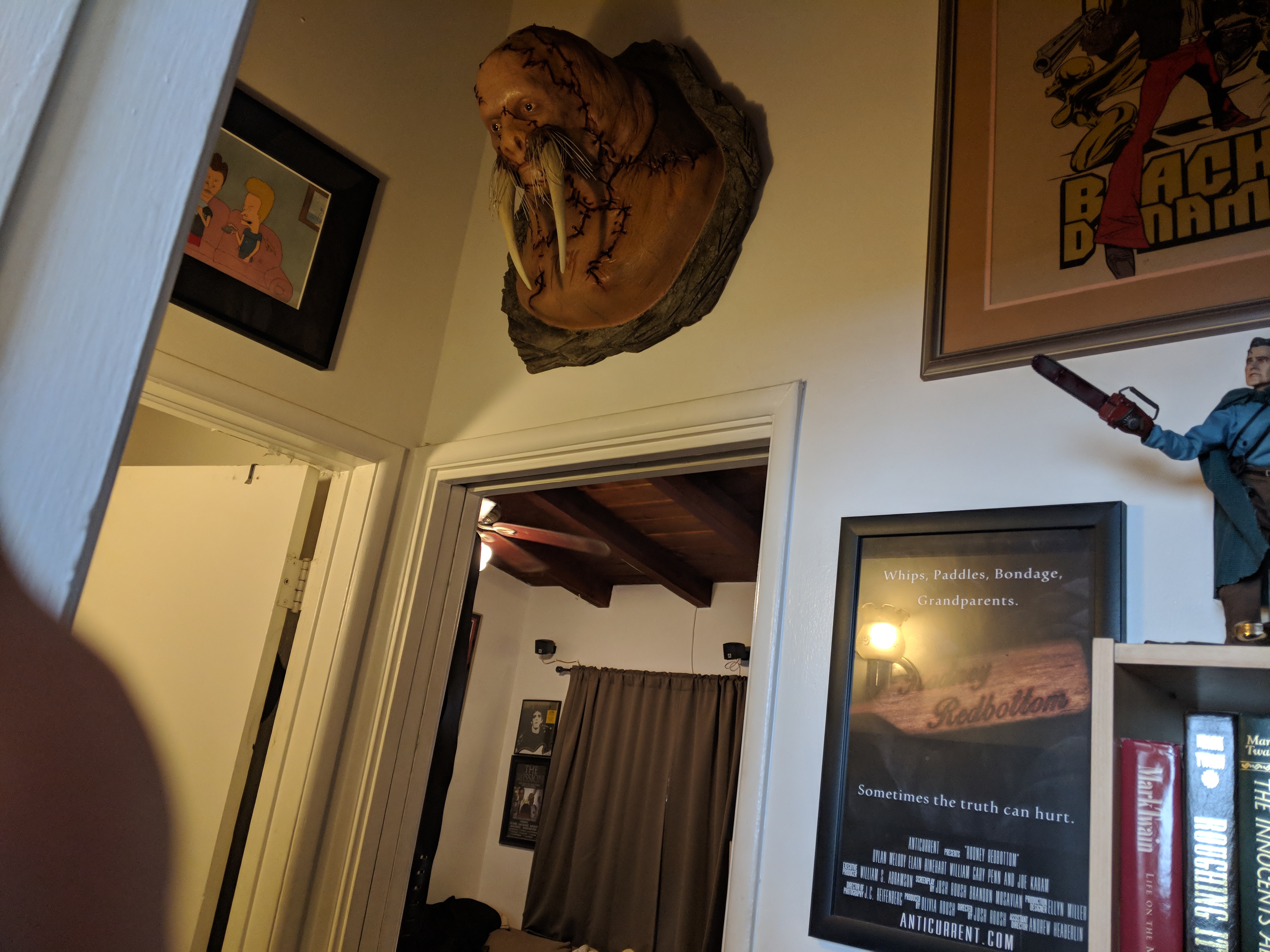
That said, I do have a life-size head sculpt of Justin Long in full walrus makeup in my hallway, which you can see from a certain angle when you’re sitting on my toilet (which CREEPS out guests). But I worked on that flick for so long I became a little desensitized to it.

I am very intrigued by the documentary you have coming out entitled Long Lonesome Highway: The Story of Michael Parks. I have read that you were his assistant on the wonderful film Tusk. So how did you manage to develop a fascination with Mr. Parks, enough so that you decided to invest the time and cash into creating a documentary about him?

Life is weird, and if you let go of the reigns it can occasionally take you to some strange and wonderful places. I showed up on the set of Tusk at the same time as Michael, but what no one knew was 6 months prior he had just had a massive accident that left him with a very aggressive brain injury. So, when he showed up, he was not so much the energetic Michael that had been on Red State. Kevin and Jen saw that he was having a hard time getting around, so thankfully they trusted me to take care of him.

It was strange at first, weird green haired dude and a crotchety old man buddying around the set. We had no idea what to make of the other, but when I mentioned Lenny Bruce his eyes went wide because come to find out, they had been great friends. So, talk about him led to all these other cats that Michael knew like Johnny Cash, Miles Davis, Frank Sinatra (who he swung on once), and even Martin Luthor King. That’s what most people don’t remember about the old man, in the late 60’s he was being groomed as an A list actor and as a result he knew everyone worth knowing. He had a 6-album music career, Tarantino once called him “the greatest living actor”, he had his own television show, his list of accomplishments really does go on and on. 

But, it wasn’t fascination per say, it was more appreciation. He did all these amazing things, and yet was born in the most impoverished of conditions (at 12 years old he was hopping the boxcars to chase farm work). He endured hardships that would have broken a lesser man (his second wife OD’d at 24, his brother drowned at 25, he had a 12-year-old daughter pass) and he continued on anyway. But, because he had flipped the bird to an executive or two along the way, he was blacklisted in Hollywood in the 70’s and the world kind of stopped paying as much attention as they should have. I got to be strangely close friends with one of the most talented humans that has ever existed, and it’s not fair that more people aren’t aware of him. Our goal is to change that.


What else does the future hold for you? Anything you would like to plug to our readers?

Thanks, as you can tell I always appreciate a good plug. You can check out ParksDoc.com to keep up on Long Lonesome Highway, and if you take a look at my website AntiCurrent.com (I’m always uploading my dumb projects there). Right now, we’re in pre-production on our debut narrative feature Wrong Reasons which my far-more-talented wife Liv Roush is producing and starring in and Kevin is Exec-producing as well. It’s not a horror film, but it is set in a cabin. Also, thanks to my buddy Cam Mosavian (the composer behind all our projects) starting up the band The Overrides, I’ve started to get back into music and sub in for second guitar when their main player is out of town so being back on stage has been exciting.

What was the last thing that made you smile?

Just now, you letting me tell people about Michael. Thanks for that.

Tina Parker [Interview]


Happy Friday Folks! And welcome back to the real world after a full on Month of Horror. Today we are sharing some words from an absolutely amazing actress who also happens to be a part of the horror community as well, but has talents that go way beyond just the world of horror. It’s Tina Parker! You know and love her from the world that Vince Gilligan has given us that is known as Breaking Bad and Better Call Saul. She is brilliant on these programs, and in everything she does. Including her work on several other projects that we will discuss within the interview.

We are so damn excited to have Tina grace our digital pages here today. She is a wonderful actress, but more importantly she is a wonderful human being! So let’s not waste your valuable time with my ramblings, and just get right into it! Please enjoy some amazing words from the brilliant Tina Parker!

When did you realize that you wanted to join the world of acting? Has it always been a deep-rooted passion for you?

I’ve known since kindergarten- when I played a spinning top  in the first graders’ Christmas play (I was really tall and really goofy for my age) –that I wanted to be an actor.  I toyed with the idea of being a horse jockey (but was already too tall in 1st grade) and a heart surgeon in fifth grade (which lasted for all of 5 seconds) but other than that- I’ve always wanted to act. Luckily for me, I have a family and have had teachers along the way who really encouraged and supported me along the way of this crazy creative adventure.

What was the very first paid gig you scored as an actress? And was there any knowledge you learned from this first experience that you still use today? 

My first ever gig was an extra in the background of a banking commercial.  A more seasoned actor  noticed they were also shooting the Spanish version at the same time and leaned over to me and said “Call your agent on break and let her know. They need to be paying us for 2 spots”. I learned that you need to keep an eye on what’s going on, be familiar with the basic rules & fees and always ask questions – either to an AD/producer or your agent- if you are unsure about something. Nothing is a dumb question.

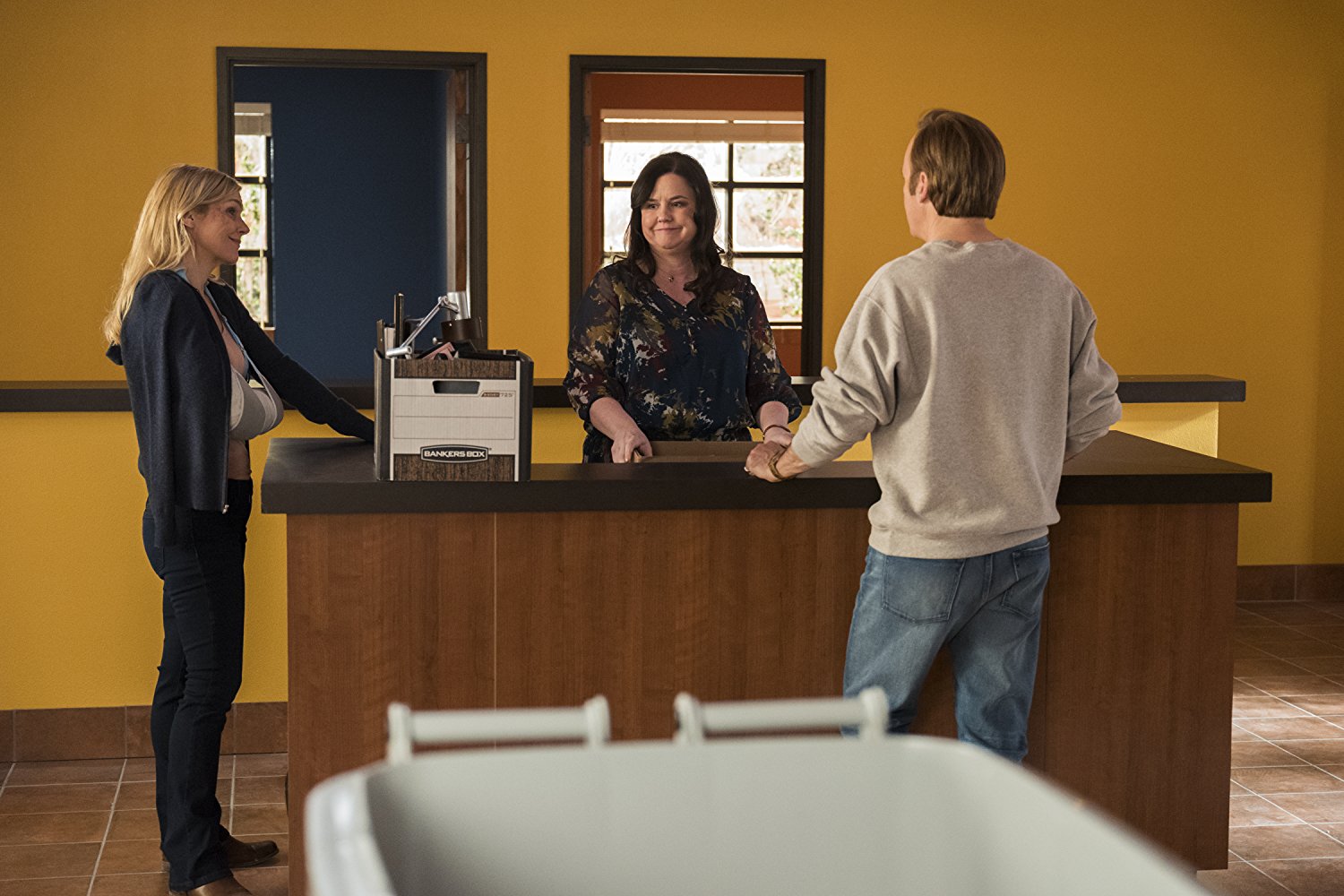
You have been giving a brilliant performance as Francessca Liddy in both of the acclaimed Vince Gilligan shows Breaking Bad and more recently Better Call Saul, along with our old friend Joe DeRosa. What has it been like to work in such an esteemed and brilliantly made world?

Thanks so much for the kind words! In one word – AMAZING. Best gigs of my career thus far, no question. Every day I get to be on those ABQ stages is a gift.  On both shows- no matter what your position, whether you are a show runner, a co-star or a PA, everyone is invested in the show and is willing to do whatever it takes to make the show the best it can be.  Plus, the BrBa/BCS folks are just good, down-to-earth hilarious folks, which makes for a fun set and one conducive to making good work. Land of Enchantment, indeed. 🙂

We are huge fans of the Puppet Master franchise, having spoken close to a dozen folks from the long running series. We are very excited about The Littlest Reich that you will be appearing in! What was it like to dive into the Puppet Master universe? And what can we expect to see you doing in the film? 

Totally insane and totally fun- – and (spoiler alert) I mean who doesn’t want to be chased & killed by one of those reedonkulous evil little bastard puppets?   I play Betsy – a tough biker broad.  Expect laughs and blood. LOTS OF BLOOD. ha.

Last year you also made a great appearance on the wonderful Amazon Original Series, One Mississippi, that features our dear friend Stephanie Allyne. What was it like to jump into a program like this?

Another fun gig -I guess I’m one lucky bastard in that respect. We shot in one of my favorite cities in the world- New Orleans, LA , which was glorious. I’m a huge fan of Tig Notaro so I tried not to fan girl out too much, ha. Tig was as genuine, generous, and hilarious as you would expect her to be from watching her stand-up. So slipping into their world for a one-off shoot, which can sometimes be discombobulating as an actor-  was fun and easy. Plus, I got to eat some delicious food and hear some rad jazz while I was there!

If you were handed the role of any one individual from American history, who would it be? 

I played Margaret Fuller in a play in 2011 (Charm by Kathleen Cahill) and was surprised  that I wasn’t really aware of her or her impact on women’s rights.  I would love to have another crack at her  – and spread the word about this amazing woman.

“You Got Older” coming to the Kitchen Dog Theater in Dallas, Texas.


What does the future hold for you? Anything you would like to plug to our readers? 

I’m pumped for our new season (Season #28!) at Kitchen Dog Theater in Dallas, TX – where I serve as Co-Artistic Director.  It’s an adventurous season chock full of mayhem, magic and premieres. I’ll be directing the Regional Premiere of You Got Older by Clare Barron. Check out the Kitchen Dog season here: www.kitchendogtheater.org. And finished work in March on a cool indie film called To The Stars with Malin Akerman, Jordana Spiro & Liana Liberato –  great script & director (Martha Stephens)  –excited to see how it all comes out.

What was the last thing that made you smile? 

I’m a huge Prince fan and recently made a pilgrimage to Paisley Park in Minneapolis for a weekend. Being surrounded by all things Prince- costumes, guitars, notebooks, etc , seeing video clips of him performing throughout his career, hearing his music — brought forth both the smiles and the tears…

Mark Irwin [Interview]

Welcome to Day 31 of Trainwreck’d Society’s Annual Month of Horror Showcase! We have a fully loaded month of all things horror for you fine folks! October is our favorite month for this very reason, and we are so excited to share 31 full days of film showcases and interviews with some of the finest folks from the world of horror, just as we have been doing for the last 5 years. What started as a simple 5 day showcase, has now blossomed into a full blown month long event. You’re going to love this! Enjoy!

Hot Damn, Folks! We have made it! It is officially Halloween, which puts a wrap on Trainwreck’d Society’s Month of Horror Showcase. 23 interviews and 8 film showcases, every single day in October. I thank you all who came along for the ride, and hope you will come back around next year when we try our hardest to do the same! It always seems like a daunting task to get anywhere near the caliber of folks we had the previous year, but some who we manage to create an equally brilliant group of people.

And as we tend to do, we save Halloween day for an absolute LEGEND in the world of horror and beyond. And we are not about to disappoint you all today. Today, we have some words from the acclaimed cinematographer who has been shooting some of your favorite films for close to 50 years. From horror to comedy to family friendly films, Mark Irwin has been around the entire time. He has worked alongside a plethora of some of the most celebrated filmmakers of all time. From psychological thriller mastermind like David Cronenberg (who he worked with ALOT, and we shall discuss), to traditional horror masterminds like Wes Craven, and modern day comedy legends like Todd Phillips and the Farrelly Brothers. And lest we forget…past TWS guest and former Month of Horror highlight, Tommy Lee Wallace. He has also showcased the brilliant acting skills of friends of ours like Vanessa Angel, and has brought words to life from the likes of a (SPOILER) new friend such as Pat Proft.

Yes, Mark Irwin is an absolutely legendary figure in the world of horror, working in genre defining films from the 1970’s and onward. He has a brilliant eye for lighting and everything that makes a brilliant film just work so damn well. He is the type of artist who imagines the things that us average viewer would never even think about. Yet, if it weren’t for folks like him who pays attention to the meticulous details, we would definitely then be able to tell that something has gone array in the filming process. The director has the vision, and sometimes receives the credit. But as we have discussed with other great cinematographers in the past, it takes a damn fine eye to make that vision even close to possible. And that has been what Mark Irwin has been doing since before most of us were even alive.

I am so excited to share Mark’s story with you all today. It is folks like Mark that are the reason I have continued to do this intentionally stripped-down, free from bullshit, blog. Getting to here the back stories and tales from such creative folks like Mark, especially in the world of Horror that I adore so much, is exactly why I do it. And people like Mark provide hope in the future of the world of film and television, when it starts to feel that mainstream entertainment is beginning to lose its value. Truly original and artistically abled folks are still out there making the business a better place, whether you want to believe it or not. And I believe that Mark Irwin is a prime example of brilliance in the modern era, and we are so honored that he was here to grace our digital pages on the finale of our Month of Horror showcase.

Tune in again next year Folks! Or just, you know, stay tuned throughout the year, as we throw in folks from the world of Horror between December and September as well! Much like the genre itself, our love for the world of Horror can not be contained.

So Folks, please enjoy some wonderful words from the brilliant artist we all know and love, the great Mark Irwin!

What inspired you to get into the world of film and television? What was it about this world that, to you personally, really drew you in?

My introduction to film and television was unique – I watched films  (a.k.a. went to the movies in the 1950’s) like any other kid but I was given a very important job at the tender age of 5 – running the film strip projector in my Sunday School class. The mechanics of the projector, the screen positioning, the optics, the whole inside view allowed me to see those simple images as part of bigger process.

From that point on, with the family twin reflex Kodak to my own Keystone  Double 8 camera to my first Pentax (a new Spotmatic)  to my basement darkroom to the larger duties as the AV guy in school ( grade 1 to 13 and all through university and film school ) my path was paved with pictures. The collaboration with directors started at the same time since I wanted to tell stories with pictures but didn’t really want to direct and find performances with teenage actors.  

Our films from the early 60’s were all learning experiences. My one message to film students is that they are in the perfect place to make the one thing that they cannot make on the job – they can make mistakes and learn from them. I shot a film called Reunion at York University in 1973 and it won Best Film at the very first Student Film Awards in Montreal – a true product of learning by doing and making mistakes along the way.

What was your very first paid gig in the world of cinematography that you can remember working on? And did that first experience manage to teach you any kind of lessons that still apply in your work today?

 My first paid gig in the world of professional cinematography was on a film called Diary of a Sinner. It was a full on hard core porno with a cast of strippers and Toronto’s finest ne’er do wells. I had graduated with a BFA from York University on the preceding Saturday and now, on the following Monday, I found myself in a deconsecrated church, assisting on a giant Mitchell BNC and shooting a Black Mass, complete with robes, goat’s heads, black candles and naked women. The Big Time !

This film was directed by a draft dodger American film maker called Ed Hunt. Little did I know that this was my big break ! I went on to work with every crew member and Ed on many more films ( some legit, some not so much).

My outlook on lighting and more importantly lighting design ( I manufacture all of my own lights and most of my  grip gear ) all came from that gritty beginning with Jock Brandis – the DoP and later my gaffer and inspiration.

You have worked alongside some of the most acclaimed directors in cinematic history, some of which we have even featured on this very site. From a cinematographer perspective, what is it that you are looking for in a director when working on a project? What is it that creates a good sense of team work for you?

 I have worked with some of the greatest directors of my genre and generation – Irvin Kershner, Chuck Russell, Todd Phillips, Wes Craven and  David Cronenberg.

I would look at Wes and David as two extremes that I could compare with regard to partnership and team work.

Both directors are fully prepared, both have collaborated on or fully written the screenplay, both know exactly what they want but my relationship on set is radically different.

Wes has a very exact shot list, a fixed visual view and an extremely precise method of coverage. The shot list is distributed to everyone and the shots are ticked off one by one as Wes sits quietly in a corner doing the New York Times crossword (like a machine, left to right, not hunting and pecking like us mere mortals).

David likes to meet on set with me, the script supervisor and the cast. No one else. No shot list. No storyboards.

Nobody anywhere near. An empty studio. Silence …

Then the work begins. Reading, blocking, re-blocking, finding the angles, the moments, the rhythms … it all comes out of human interaction on set.

So, my job is simple with one approach. Just shoot the shots. With the other approach, I get to be part of telling a story with pictures and to start at the beginning every day. 

If the hero is being scanned, has awakened from a coma or is turning into an insect, my involvement is less of master/servant and more of partner in a visual statement.

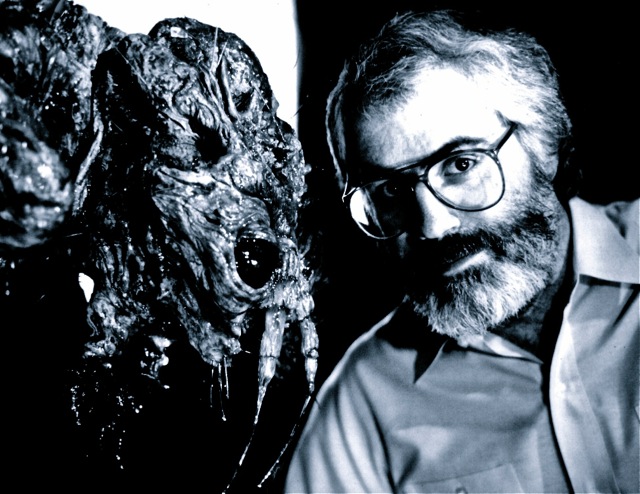
Mark Irwin & David Cronenberg shooting “The Fly”


You have worked extensively in both the world of film and television. And from her perspective and experience, I am curious to know what the pro’s to each line of work may be? And do you have any sort of preferences, for any given reason?

The biggest factor in filmmaking, both for television and film, is the invisible and ever present time factor. Time is money. I call the entire endeavor Art with a Stopwatch.

My role is to save time, spend money wisely and shoot the day’s work before the sun goes down.

 More money = more movie. Less money = less movie. 

Good television is written with the budget, cast and location in mind. An 8 to 10 page day is common and can be easily achieved with the right blocking and planning. The most common flaw in the bridge between television and film is the reluctance to address the difference. A feature script that did not get enough financing is now a low budget indie … but the script and ambitions have not changed. The result is compromise (on my part especially), rushed performances and onerous OT and turnaround.

I enjoy both feature and television work if the scale is respected and measured. Working 16 hour days is not enjoyable and can be literally deadly. In 45 years shooting film and TV, I have lost 3 crew members to traffic accidents after a longer day than was necessary.


While the world of horror is not entirely your mainstay in the world of film and television, you have had some great success in the genre. And this being our Month of Horror showcase and all, I am curious to know what it is you enjoy about working in the more frightening world of suspense and horror? What sets it apart from other projects you have work on?


I was lucky to meet David Cronenberg in 1977 and, even though our first film together was Fast Company  (an AIP inspired drag racing road picture), we  went on to to explore the minds and mishaps of many characters in The Broods, Scanners, The Dead Zone, Videodrome, and The Fly.  I refer to the characters because David’s films are always about people who suffer the consequences of their involvement in a scientific or psychological experiment or procedure. The baseline is always the human action and reaction. The gory details, the latex metamorphosis, the car chase and shootout – they all come later. The fate of Seth Brundle and Johhny Smith and Max Renn and Cameron Vale is what keeps my interest in David’s films. 

I have cut my cinematic teeth on what I call ‘ rubber movies ‘ – lots of latex, smoke and backlight – like Fright Night 2, The Blob  or big action epics like Robocop 2 or I Come in Peace but, to be honest, shooting films in the Horror genre is always fun and always an adventure. Whether it is Freddy Kruger attacking a little kid in a dungeon or Brian O’Blivion appearing on television ONLY on television, horror films are always an easy trip into make believe.


What is your favorite scary movie?

Of all of the films that I have shot, The Fly is my favorite horror film.  (My favorite of all time in The Exorcist, shot by my good friend and personal hero Owen Roizman.)

The Fly was the pinnacle of my work in Toronto with the crew and gear that I started with in the early days of porn.

The demands of lighting and shooting in Seth Brundle’s lab for 12 weeks and making it an essential character in terms of decay and mood ( especially when it turned upside-down ) was a challenge that I have never met since. All of my work was in support of story arc and character decline so it had to remain invisible. That is my job.

What does the future hold for you? Anything you would like to plug to our readers?

I have been shooting every kind of film since 1973 and the most difficult ones have been comedies. Making people laugh is much more difficult than scaring them or thrilling them. There’s Something About Mary and Old School were, for me, the high points in that genre. I have been shooting a lot of musicals lately for Disney and AirBud Entertainment so I guess that the future may hold more of that. I just finished shooting a very big Bollywood action adventure in Thailand and Mumbai ( all about elephants and poachers ) directed by Chuck Russell. It is called Junglee but I am not certain of it’s international release.

 Right now, I am shooting a series in Victoria BC. It is for AirBud Entertainment and it is called Pup Academy. It is a kind of Hogwarts for dogs, puppies and humans. The  old rule in Hollywood is to never combine kids, dogs, and special effects. This series is all of that and more. Definitely a challenge!

What was the last thing that made you smile?

As for smiling, my son Matt’s work in film and digital always makes me happy. He is making his own future but being a proud Papa is always a reason to smile.

Gary J. Tunnicliffe [Interview]

Welcome to Day 30 of Trainwreck’d Society’s Annual Month of Horror Showcase! We have a fully loaded month of all things horror for you fine folks! October is our favorite month for this very reason, and we are so excited to share 31 full days of film showcases and interviews with some of the finest folks from the world of horror, just as we have been doing for the last 5 years. What started as a simple 5 day showcase, has now blossomed into a full blown month long event. You’re going to love this! Enjoy!

When it comes to the world of horror, today’s interview subject is basically a certified expert. Gary J. Tunnicliffe as seen and done just about everything possible within the world of horror, and definitely beyond this specific world as well. Seriously Folks, his credits after 30 years in the business are absolutely insane and so damn impressive. From make up effects, to special effects, to getting right into the director’s chair, there is simply nothing that this man can not do. Whether it’s the X-Men franchise, or Mission Impossible, or just about every horror franchise you can think of, from the Exorcist to the Scary Movie world, Gary has done it ALL.

We get pretty specific with his amazing work in the Hellraiser world, and that is strictly for personal reasons. We LOVE us some Pinhead and the entire lure of that franchise probably more than any other. And that is why we are so damn excited to have Gary grace our digital pages today. He is a brilliant man with some great stories to tell. So let’s get right into it, shall we? Please enjoy some wonderful words from a brilliant artist!

What inspired you to get into the world of film and television? Specifically in the field of visual makeup effects? Was it an early aspiration to do so, or did you just happen to find yourself in this world one day?

Early on I was inspired by film and actors, most notably Peter Cushing and Christopher Lee and the Hammer Horror films, watching them on a Friday in the UK was something of a tradition, after that Jaws had a tremendous impact on me, the build up and rumors, everything about it and then film itself mesmerized me, I was seven at the time and it blew me away, that film started the lofty, ambitious, ‘fairytale’ dreams about wanting to work on a film…and at first as an actor. I pursued drama in and outside of school, performed on radio, but considering at as a realistic career was considered ridiculous by my parents and in the mid 80’s I left school and got a regular job. Obviously my love of film had grown, especially in the video boom of the 80’s and me and my friends were avid horror fans, watching all of the current releases and becoming experts on the film makers and the crews ( The Thing, American Werewolf in London, etc)  I was singing in a rock band when one day a drummer was reading an American magazine called Fangoria, when I read it, it was utterly life changing, not only did it feature the films and the directors but also the guys who did the make up effects and they looked like me! (long hair and metal t shirts) within days I had my buddies whole collection, read from cover to cover, and within weeks I was attempting my first make up’s and sculptures, from there it became obsession and within years I had a reasonable portfolio of work and started reaching out to professional make up FX artists.

What was your very first paid gig you can remember getting in the world offilm or television? And did this job leave any sort of lasting impact on you that still makes its way into your work today?

My first PAYING gig was working at Image Animation at Pinewood studios working on two elaborate robot costumes, I had previously worked for Christopher (The Elephant Man) Tucker but that doesn’t count since you said ‘paying’ gig LOL!  Did that first gig have an impact…TOTALLY!  First of all it lead to a lengthy tenure with Bob Keen and the crew there, to my dream project (the Hellraiser series),  my first serious gf relationship (that lasted 13 years and went from the UK to USA) and the ‘robot’s’ themselves have remained firm friends who I have worked with and continue to work with to this day!

One franchise that you have been heavily involved in from its earliest formation is one of our favorites of them all, the Hellraiser franchise! You began the franchise with our past guest Anthony Hickox, also of the Waxwork series you also worked on. So, with over 25 years working in and out of the Hellraiser franchise, would would you say is special about this particular series? In your obviously professional opinion, what sets this one apart from the others?

Hellraiser is unlike any other horror film I think in that the icon of the series isn’t a regular villain, hunting down his victims. There is a strange other world mythos to the cenobites and the services they offer. YOU have to seek them out and ideally or ordinarily anyone finding themselves at their mercy and has done so somewhat willingly. THAT is what made them fascinating to me, that is what drew me to the films (the faustian nature, etc.) THAT is also what (I think) has made them difficult to ‘shoe horn’ into a franchise alongside Freddy and Jason, etc.

And beyond your brilliant work as a Makeup Effects Designer in this franchise, you have also worked in other capacities in some of the films, including Hellraiser: Judgement in which you seemed to wear about every hat possible! So how did you manage to find yourself working beyond your normal gig with this series? How do you enjoy working in other jobs?

Just like an exec at McDonald’s might start off making fries, I entered the Hellraiser world as part of the make up fx crew making puzzle boxes on Hellraiser 3. After that I suspect my unbridled passion for the first film and Clive’s writing, as well as genuine desire to do anything I could on the films, caught peoples attention and then down through the years the producers saw that and allowed me more and more opportunity

Beyond the world of horror, you also happened to work with our old friend Michael Polish on 1999’s Twin Falls Idaho, which is one of my favorite films of all time. So, I am compelled to ask what it was like to work on a Michael Polish set? Was it an experience that you look back on fondly?

I worked with Michael (and Mark) several times after we met on Hellraiser: Bloodline when they played the Cenobite twin, we became good friends pretty early on, again I think my enthusiasm for the project was infectious. Then I worked with them on Twin Falls Idaho AND again on Northfork, I have more memories of Hellraiser: Bloodline and Northfork more than of Twin Falls since we were out on location with such an amazing cast, (James Woods, Daryl Hannah, Ben Foster, Andrew Edwards etc and the late great (personal friend) Robin Sachs who I actually got hired on the film) and the film had such a dreamlike quality and the pieces we created were so different to most of the films I work on….porcelain hand gloves, wooden hand gloves, angel wings and of course FLACO a very strange creature!

While the world of horror is not the only one you work in, you have a legendary status in this world.  And it is our Month of Horror Showcase after all, so I am inclined to ask you how you enjoy working in this genre? What sets it apart from other genres?

I love horror! Personally I’d rather only do horror films, horror allows (depending on the script of course) for all departments to extend themselves from lighting, wardrobe, music and obviously make up fx and direction. I suspect it’s the most freeing of all the genres. I really am not interested in shooting romantic comedies or dramatic dinner scenes, don’t get me wrong obviously there are those films that I love, but I just couldn’t see myself doing that, I’m at my happiest on a creepy, smoke filled set surrounded by bizarre and horrific images.

What is your favorite scary movie?

Obviously I love the classics – The Exorcist, Texas Chainsaw, etc. I really like Exorcist 3, the first Evil Dead had a huge impact on me when it came out as did Hellraiser but recently I thought Hereditary was incredible, I actually left the cinema in pain since I needed to go to the bathroom and had to hold it for an hour….I just couldn’t leave the theater! If Toni Collette isn’t at the very least nominated for an Oscar something is very wrong.

What are you plans for the upcoming Halloween? Any kind of traditions you try to uphold each year?

Honestly Halloween is pretty low key for me. If I’m in LA I’ll hit Universal Studios or Dark Harbor etc, but having worked on Halloween attractions it’s always kind of a professional curiosity and if I’m in Bucharest, Romania (at my home there) it’s very quiet since Halloween is basically hardly celebrated here….I know weird, huh??…the home of Dracula and they don’t do Halloween!

What does the future hold for you? Anything you would like to plug to our readers?

There’s a possibility I’l be shooting a WW1 horror film called No Man’s Land, the details are being worked out so fingers crossed but it’s a project close to my heart, sort of Private Ryan meets Predator 🙂

What was the last thing that made you smile?

I JUST saw David S. Pumpkins (Tom Hanks) on SNL and that made me laugh!

Gerald Wexler [Interview]


Welcome to Day 29 of Trainwreck’d Society’s Annual Month of Horror Showcase! We have a fully loaded month of all things horror for you fine folks! October is our favorite month for this very reason, and we are so excited to share 31 full days of film showcases and interviews with some of the finest folks from the world of horror, just as we have been doing for the last 5 years. What started as a simple 5 day showcase, has now blossomed into a full blown month long event. You’re going to love this! Enjoy!

As we enter the last few days of our Month of Horror showcase, we are going out with a bang. And today we are featuring a storyteller who impacted me in a major way, around the same time period of my life, yet for very different reasons. But, also similar reasons. Is this making sense? I could try to explain, but it probably won’t matter. Anywhodoesit, Gerald Wexler worked on two television series in the 90’s that I very much enjoyed. One of them was Nickelodeon’s Are You Afraid of the Dark, which I was definitely allowed to watch as a youth in this era. And the other was Showtime’s The Hunger, which I definitely was NOT allowed to watch, but most certainly did. In the end, I learned about David Bowie in my defiance, so I feel like I made the right call. I found that parallel between watching a show geared for younger audience and those geared towards adults. In the end, it’s all great story telling. If the writing is excellent, the art will be excellent, no matter the target audience. And Gerald Wexler is a hell of a storyteller.

And with that, I am so excited to have Gerald Wexler grace our digital pages today, so let us get right into it. Please enjoy some wonderful words from the brilliant man himself. Enjoy!

What inspired you to get into the world of film and television writing? Was it an early aspiration to do so, or did you just happen to find yourself in this world one day?

In my youth I was seriously obsessed with still photography. And in fact the first few short films I made were composed entirely of still photos and live action that would segue into still photos. Somewhere in the back of my mind, though, I knew I wanted to get into film and began absorbing everything I could about that art. I attended McGill University which is not a creative arts school. Everything was highly academic. There were no courses in film, art, photography, or creative writing. But there was a great film society and for four years I feasted on foreign and North American Films.

Despite the fact that McGill was 100% academic at the time, it’s amazing the number of creative people that emerged from there, including a number of Oscar winners and nominees and artists like Leonard Cohen.

So, photography led me into film.

After McGill I did a graduate diploma in film and TV at the Hornsey College of Art, in London, England. (Now part of Middlesex University). We were housed in the same building (a 19th century palace built by Queen Victoria) as a unit of the BBC and most of our instructors were BBC film editors who would walk around the corner to help us out. So I got into film editing after finishing my course and returning to Montreal. I was an assistant editor to Thom Noble who got the Oscar for Witness, was an assistant sound editor on the first Imax film ever made, and a few other productions.

Essentially, I love story telling. There’s a Hassidic parable that Eli Wiesel tells with the credo that God created the world because he likes hearing a good story. And that may very well be true.

I wrote short stories that were being published in literary magazines and anthologies, and also in a collection of my own, The Bequest and Other Stories. Film is really storytelling. It’s as fascinating now as cavemen sitting around a fire relating how their buffalo hunt went that day, and all the complications they encountered.

So, I really wanted to be a story teller and figured I should combine my interest in short story writing and film and become a scriptwriter.

I sent a number of my stories to the executive producer of the new Drama Studio of the National Film Board, building up my meager editing credits. He invited me to meet and in that meeting hired me to write a short film. I did a ten minute film about five men doing the midnight shift in a boiler room, which we shot on the midnight shift in an actual boiler room. The film won an award, and a nascent career was launched.

In the mid-90’s, you wrote for a show that happened to hit the airwaves at the exact time I would have been a target audience member for, and was definitely caught up in. That show as Are You Afraid of the Dark? That appeared on Nickelodeon when I was just a pre-teen boy. One episode I noticed you are credited with happens to be the one that has truly stuck with me, which was The Tale of the Vacant Lot. I thought about this particular during my middle school years that followed. So with that in mind, what was it like to write for a series like this? It’s one that seemed like it was supposed to be a bit scary, yet some lessons to be taught. Was it this the intention all along?

I remember once telling my wife that when it’s time for me to go the great beyond, at least I’ll go knowing I scared little children.

I really enjoyed writing Afraid of the Dark. One reason is because it’s a pure anthology series, like the old Twilight Zone, with every episode being a unique story with unique characters. Anthology writing is one of my most favourite and I had already had a number produced for a variety of networks. (This was the eighties and these kind of series like Tales From the Crypt and Afraid of the Dark were still being made at that time). I love the format where each episode is like a mini, finite feature film and you don’t have to worry about creating complications for the same characters week after week.

The intention of the series was very much to be scary, and also convey a moral message. There was no profanity or violence, yet that didn’t stop the series from being incredibly popular. Which can be a nice lesson for media today.

I had never especially been a fan of the horror genre. But I found in writing Afraid of the Dark that I had a real affinity for it. Again – it’s all storytelling and the same  criteria Aristotle put down two thousand years still apply. The effect, emotions may be different from a romantic drama, but the storytelling still has the same basics.


A few years later you worked extensively on another show I remember catching on Showtime at my grandparents’ house, late at night when they had gone to sleep, and was actually my introduction to David Bowie, known as The Hunger. This was another highly original series, but a whole lot more frightening that AYAOTD?, for obvious reasons. So how was your experience working on such a truly original anthology? Was there anything about it that sets it apart from the plethora of other work you have done?

The Hunger, with David Bowie as host (and actor in one episode) was a nice segue from Afraid of the Dark. Like Afraid of the Dark it was a “pure” anthology series. I was a writer/producer on that, writing 13 of the episodes and being on board as a writer/producer on the entire series.

It’s interesting that at the time I was hired for The Hunger a feature film of mine, Margaret’s Museum, with Helena Bonham Carter had just been completed and was getting rave reviews in Variety, LA Times, Boston Globe, etc. I got the Genie for Best Screenplay and the film won the grand prize at San Sebastian and numerous other awards. Though essentially a drama, it did have a horrific ending. I thought Tony and Ridley Scott, who produced The Hunger, and Showtime would be really impressed, but apparently what really made them want me was my work on Afraid of the Dark, specifically an award-winning episode called “Train Magic”.

Again, The Hunger was a “pure” anthology series. With a rather, unique coda. All serialized drama wants to keep your hero around every episode. In The Hunger, the hero got “what he wished for” and died a horrible death. No need to worry about what adventures or mishaps he’s going to get into in subsequent episodes.

But like Afraid of the Dark, there was a moral lesson, or Coda to it. In Afraid of the Dark, generosity and honesty always trump evil. There is always redemption. In The Hunger, in every episode someone desperately wants something – food, money, fame, sex. And when they get it, it destroys them. Usually in some horrible way.

The ending of every episode generally sets The Hunger apart from virtually any other series I’ve written for and anything else on TV, then, or now, in the fact that our protagonist suffers and dies for what he wants, in every episode. (He or she generally have some good sex along the way, which at least mitigates the journey.)

While the world of horror is far from being your mainstay in the world of film and television, you have had some great success in the genre. And this being our Month of Horror showcase and all, I am curious to know what it is you enjoy about working in the more frightening world of suspense and horror? What sets it apart from other projects you tend to work on?

I honestly don’t know why I found an affinity to horror. Again – it’s all storytelling. The better the storytelling, the more effective the horror. It’s a challenge to tell a story that doesn’t just have scary moments, but that also has characters that engross you, and a journey that is plausible, and human enough, for the viewer to want to be with it every inch of the way. A good scary film is not one you watch to see what frightening bit will come next, but rather to see your characters change, learn on their journey. You want to see a bit of yourself in these heroes. The scary stuff is the icing.

What is your favorite scary movie?

That’s a hard one to answer but one film that really stands out for me is Nicholas Roeg’s 1973 film, Don’t Look Now. The opening 7 minutes of the film are a masterpiece of tension, mystery, humanity and terror – all done with magnificent editing, sound design, and virtually no dialogue. Anybody studying cinema should study that film and particularly the opening.

A more recent film that stands out for me is Under The Skin with Scarlett Johansen. She plays an alien who uses her beauty to kill men in an extraordinarily beautiful and creepy way. But she too is on a journey and despite a trail of bodies (or oozing, disappearing masses) one can’t help feel great empathy for her by the end.

What are you plans for the upcoming Halloween? Any kind of traditions you try to uphold each year?

No plans at all. My kids are grown and flown the coop and I have no real connection except to let my wife hand out candies to trick or treaters.

What does the future hold for you? Anything you would like to plug to our readers?

Right now I’ve been hired to rewrite a feature that in a way could fall into Afraid of the Dark arena – a kid who discovers he has paranormal powers. The powers do nothing but get him into trouble and he desperately wants to get rid of them. Have also been brought in to help develop a new Canada/US/Uk co-pro drama series presenting a unique way into the world of Muhamad Ali. Clement Virgo (The Wire, The Book of Negroes) is the director on that.

What was the last thing that made you smile?

My daughter reminding me of the many plays, films and concerts I’ve taken her too, and despite my many faults, still loves me.

Sunday Bloody Sunday Matinee: Krampus Origins [Film]

Welcome to Day 28 of Trainwreck’d Society’s Annual Month of Horror Showcase! We have a fully loaded month of all things horror for you fine folks! October is our favorite month for this very reason, and we are so excited to share 31 full days of film showcases and interviews with some of the finest folks from the world of horror, just as we have been doing for the last 5 years. What started as a simple 5 day showcase, has now blossomed into a full blown month long event. You’re going to love this! Enjoy!

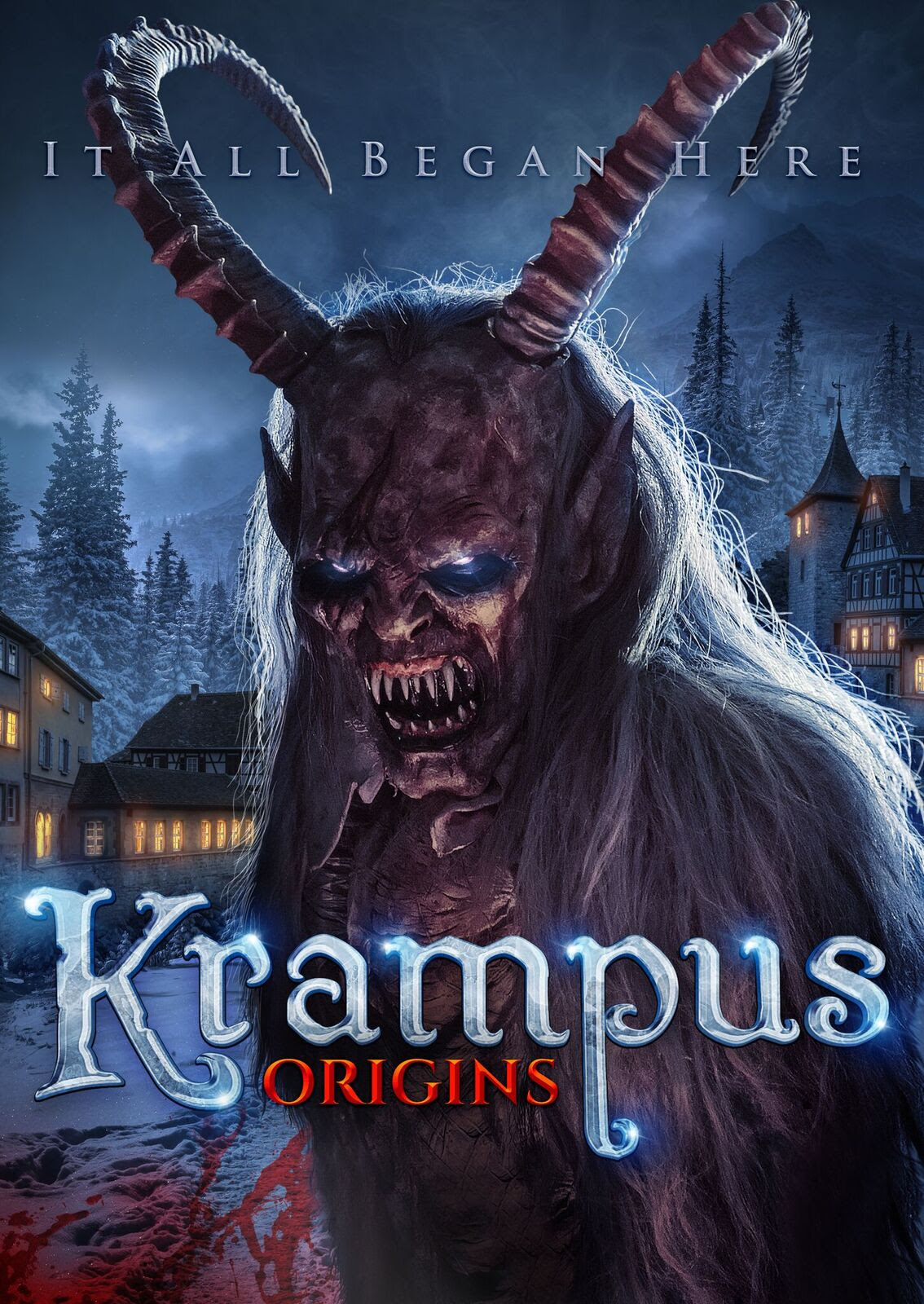
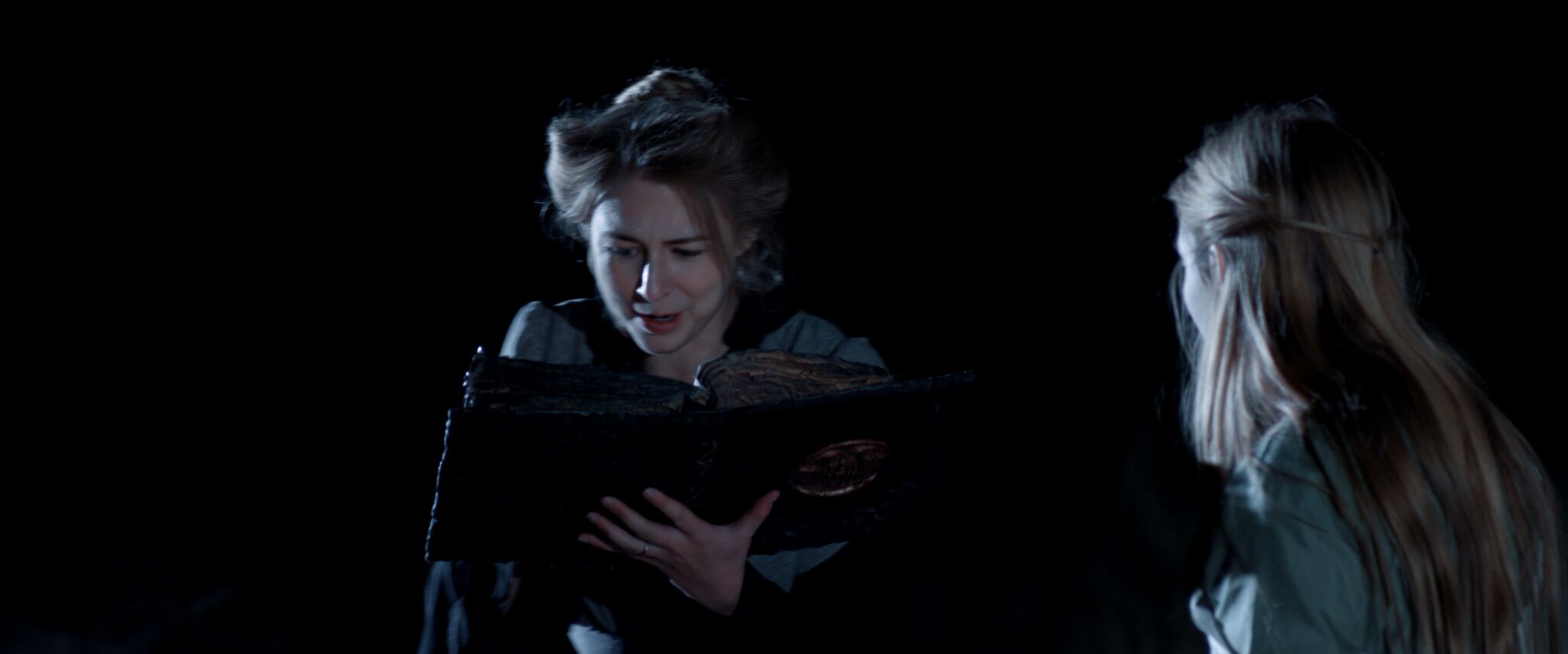
“The first World War rages on when a group of American soldiers find a mysterious artifact that can summon the ancient evil of the Krampus.  After the men are killed in action, the artifact is sent to the commanding officers widow who is a teacher at a small-town orphanage.  The orphans accidentally summon the Krampus and the teacher, and her pupils are forced to battle this ancient evil.” – October Coast PR

Not going to lie to you good people….this is a “review” of a film coming from someone who has never actually watched anything regarding this Krampus figure. Of course I have heard of Krampus, but I just haven’t really leaned into the entire lure of the character. That is until now that I have witnessed Krampus Origins. Even with knowing nothing about the figure that is Krampus, I know a wonderfully done b-horror flick, and this is definitely one of them. The stylization of the film alone is worth its weight in golden medallions. I can’t tell you that I am looking into the world of Krampus, but I am definitely a bit more intrigued than ever before based on this terrifying film. What else could they have in store?

With a wonderful story line and a brilliant young cast, I believe that Krampus Origins is just a damn fine horror flick for all to know and love, whether or not you are a fan of the previous films. With veteran horror performers like Maria Olsen and brilliant newcomers who are moments away from breaking it big like Amelia Haberman, there is just so many great things to visually digest in this film. This is a film that takes itself seriously for all the right reasons, and manages to fill up every second of screen time with brilliant effects and wonderful performances. Check it out!

Krampus Origins is available on VOD and DVD on November 6th. Scary Christmas Everyone!

Splatterday Special: The Heretics [Film]


Welcome to Day 27 of Trainwreck’d Society’s Annual Month of Horror Showcase! We have a fully loaded month of all things horror for you fine folks! October is our favorite month for this very reason, and we are so excited to share 31 full days of film showcases and interviews with some of the finest folks from the world of horror, just as we have been doing for the last 5 years. What started as a simple 5 day showcase, has now blossomed into a full blown month long event. You’re going to love this! Enjoy!

“A young woman is abducted by a strange man who claims that a cult is hunting her. His goal is to protect her until sunrise but while restrained, she falls deathly ill. As her friends and family search for her, the source of her illness becomes more and more apparent. She’s not sick…she’s changing.” – October Coast PR

Holy shit Folks! Do we have an absolutely insane film to share with your fine people today. Today we are talking The Heretics, which is one of the most terrifying films of to be released in the last decade. With brilliant performances & effects that guide a very intense and disturbing plot line, this is the perfect film for anyone looking to lose themselves in terror for a short time. But please, be warned…this film  will stick with you. If you already have a deep-rooted fear of the occult and the awkward feelings that come with it, you’re going to be affected by this film for sure!

I’m not gonna lie Folks, it has been a week as of this writing since I watch actress Nina Kiri fight her way through a proverbial web of confusion, pain, anger, and absolutely fucking terror. And so much respect to Jorja Cadence who is someone we will definitely be watching closely here at Trainwreck’d Society. Filmmaker Chad Archibald has already had a brilliant career in the world of horror, and The Heretics is a brilliant addition to said career and further proof that he is one of the best in the business.

Check out The Heretics, available On Demand on November 6th and on DVD on January 5th from Uncork’d Entertainment.


Kevin Connor [Interview]

Welcome to Day 26 of Trainwreck’d Society’s Annual Month of Horror Showcase! We have a fully loaded month of all things horror for you fine folks! October is our favorite month for this very reason, and we are so excited to share 31 full days of film showcases and interviews with some of the finest folks from the world of horror, just as we have been doing for the last 5 years. What started as a simple 5 day showcase, has now blossomed into a full blown month long event. You’re going to love this! Enjoy!

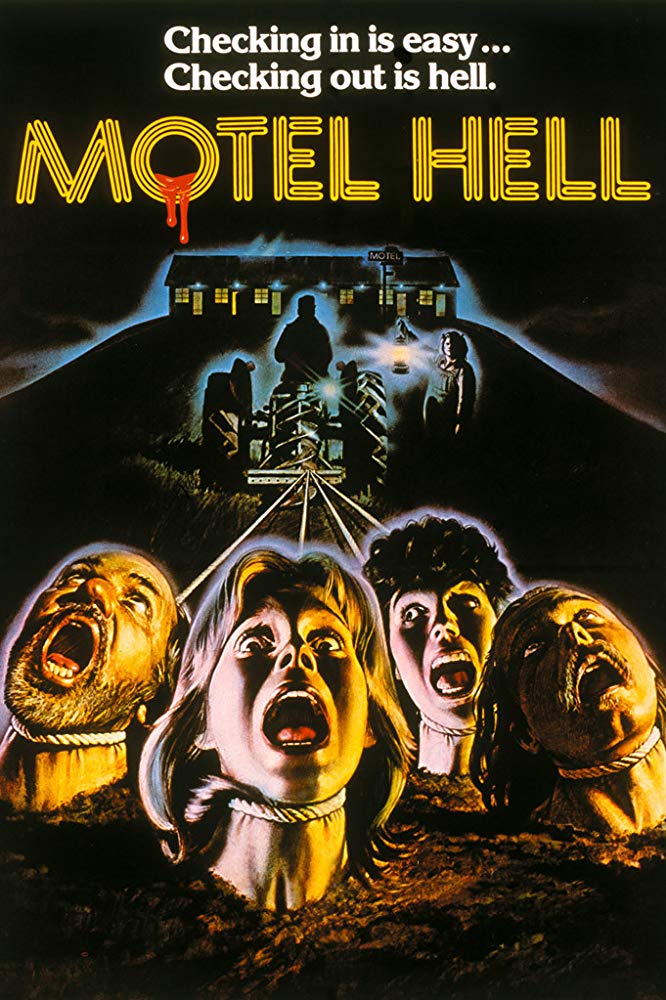
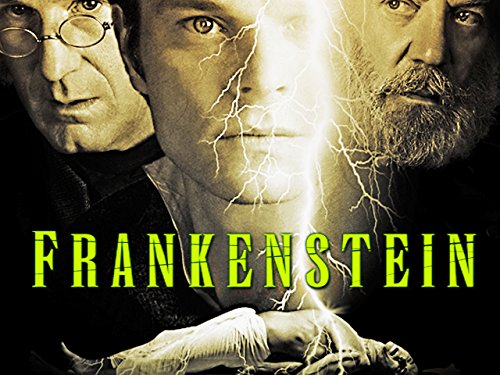
I am very excited to share today’s wonderful interview with you fine folks! Today we are speaking with the legendary filmmaker who brought the world such classics as Motel Hell and the Emmy Award winning Hallmark mini-series Frankenstein, which is one of the finest tellings of Mary Shelley’s famous story to ever hit a screen of any kind. It’s the wonderful British bred artist Kevin Connor! The man has had a career that is 60 years long, and has had no sign of slowing down. This is a true testament to Connor’s legendary status in the world of film and television.

Of course Kevin’s work expands WAY beyond the world of horror, we were very inclined to ask him about some of his wonderful work from the world of horror, from both the past and even what the future holds for his stance in the world of horror. It is a wonderful one Folks, you’re going to love it! Enjoy!

What inspired you to get into the world of film and television? Was it an early aspiration to do so, or did you just happen to find yourself in this world one day?

Like most kids of the fifties I was brought up on films at the local cinemas – the main one being the Ritz in Potters Bar – in England. Films fascinated me but it never occurred to me that one could get a job ‘making’ films – so I made do with a borrowed 9.5 mm camera and filmed the Annual School Sports (mainly to get out of running, jumping races and hurling pointy objects around). This led to finishing school at sixteen and wanting to be in the camera department swinging around on one of those Meccano like camera cranes. Unfortunately, the British film industry was in the doldrums but I wrote to every film company in the London Telephone Directory and managed to land a job in the cutting rooms of a documentary company in Soho, London, as a Trainee Assistant Editor.

So, to answer your question – I guess it was an early aspiration at age 14.

Your 1980 film Motel Hell is an absolute staple in the world of horror, making it a cult classic amongst die hard horror fans. I know on a personal level why I still enjoy the film so much, but I am curious to know your opinion. What do you believe it is about Motel Hell that keeps it so damn entertaining almost 40 years after it came out?

No one is more surprised than me that Motel Hell is still popular! It was my first directing assignment that I landed after arriving in Los Angeles – fresh off the boat – so to speak. I suspect it’s longevity and enjoyment is because there is no ‘slasher’ element on-screen. It all happens off-screen in one’s imagination – real horror. Also, the characters play their roles straight and don’t take the ’piss’ out of the genre and at the same time it’s tongue in cheek. There’s an innocence about it.

In 2014, you directed the amazing Emmy Award winning 2-part TV film Frankenstein for Hallmark, that I absolutely loved! Mary Shelley’s classic story has been told and re-told many times over the years. What I am curious to ask about is what exactly do you as an artist do to put your own personal touch to a well-known tale such as Frankenstein? How much of Kevin Connor can one recognize in your telling of this story should they look hard enough?

Frankenstein is one of my favorite TV Mini Series dramas – one that I’m proud of – (despite some of the bizarre editing that was perpetrated by the producers.) Basically, thanks to a great script and wonderful actors. Not to mention a great DP and Production Designer. As to personal ‘touches’ – I’m not sure that I consciously have them – except to say that any such ‘touches’ come out of the pre-production researches and viewing as many Frankenstein films as possible and trying to find a different angle or take on the story. Through long chats with the Production Designer I was fortunate to find several sketches and designs from the 30’s and 40’s of Frankenstein films that never got made. But at the end of the day it’s always down to a good script. My style (if any) is generally a classic approach to the subject matter – clear story-telling, establishing a photographic mood and no complicated flashy editing.

With 60 years of experience in the world of film and television, working in so many different areas of the process, I am curious to know what it has been like to adapt to the vast changes in the world of film production, marketing, etc.? And what would you say are some staples that haven’t changed in the world of filmmaking since your earliest days in the business?

Before moving to Los Angeles I worked some 40 years in the British Film industry – in all the various wonderful studios, Pinewood, Shepperton, Elstree and Twickenham. I was surrounded by great producers, directors, DP’s, Art Directors (they were called in those days), editors, technicians and actors of that era. Everyone knew everyone and you could rub shoulders and network with the best of the best in the bars and pubs in and around the studios. Today it is impossible to find and enjoy that camaraderie because of the way film making technology has developed. Everyone is behind closed/electronically controlled doors. Very little social contact. So that’s what I lament and miss most of all.  So, one just adapts to the changes and go with the flow – what else are you going to do? I was never into the marketing/producing side of the business – but I guess the staples that haven’t changed are that 90% of people in the world of filmmaking love what they do – are dedicated and hard-working. They are still great craftsman and developing the most amazing cinema magic.

While the world of horror is far from being your mainstay in the world of film and television, you have had some great success in the genre. And this being our Month of Horror showcase and all, I am curious to know what it is you enjoy about working in the more frightening world of suspense and horror? What sets it apart from other projects you tend to work on?

The few horror films I directed I have thoroughly enjoyed – except maybe for ‘The House Where Evil Dwells’. The genre does allow you to go beyond conventional set-ups and manipulate the audience unashamedly. Your characters can be ‘over- the–top’ or underplayed. The lighting, music and set design can be more bizarre than for a ‘normal’ film plot. They are just so much fun to make and one gets left alone to play more than with TV projects.

What is your favorite scary movie?

By scary I guess you mean pure horror genre – but I was scared by Rosemary’s Baby and Clouzot’s Wages of Fear.

But I was really really scared by Tobe Hooper’s The Texas Chain Saw Massacre as I recall. I couldn’t watch it through to the end. It was so vivid and such real horror – but I wouldn’t call it my favorite but it sure worked on me. Otherwise Pyscho and The Exorcist are up there as my favorites.

What are you plans for the upcoming Halloween? Any kind of traditions you try to uphold each year?

Actually, no plans – no traditions. Since my kids are long gone into their own worlds I no longer have the excuse to traipse around the neighborhood. Sometimes I go and look at a few extraordinarily over-the-top spookily decorated houses (by SPFX guys) in Toluca Lake. Otherwise I stay home.                                                                               However, I am working on a Halloween script at the moment.

What does the future hold for you? Anything you would like to plug to our readers?

I have several scripts in hand at various stages of development (like every other director in town) –  my favorite is Connemara Days a delightful script set in Cong, Ireland in the 50’s when John Ford and John Wayne were making The Quiet Man. It’s a parallel story of two local kids who were extras in the film and Ford and Wayne’s activities seen from their point of view. Hopefully shooting next year.

The Halloween script – Mortuary Girl – a revenge tale by a teenager that was accidentally killed by her friends but covered up to look like an accident. She returns in the abstract through her mother – every Halloween –  and extracts justice on the kids that killed her and subsequently their offspring.

An anti-poaching romantic comedy set in Africa called Missionary Position. And it’s not what you think!

What was the last thing that made you smile?

As it happens – a few hours ago – part of Obama’s speech at John McCain’s funeral – who was a true American Hero.

MEAT’S MEAT AND MAN’S GOTTA EAT!!!

David Dubos [Interview]

Welcome to Day 25 of Trainwreck’d Society’s Annual Month of Horror Showcase! We have a fully loaded month of all things horror for you fine folks! October is our favorite month for this very reason, and we are so excited to share 31 full days of film showcases and interviews with some of the finest folks from the world of horror, just as we have been doing for the last 5 years. What started as a simple 5 day showcase, has now blossomed into a full blown month long event. You’re going to love this! Enjoy!

Today we have what may be one of the most intriguing interview we have ever done, at least to me on a personal level. David Dubos is a writer and filmmaker who has done some incredible work in and outside of the world of horror. He is a part of one of my favorite franchises, which would be the Leprechaun franchise. But, what has intrigued me the most was learning that he is currently working on a biopic of John Kennedy Toole, which I am so damn stoked for, and hoping that it comes sooner than later! And learning that he is a NOLA based artist makes that fact even better because Toole was from there, and it is frankly the greatest city in the United States. I firmly believe that. Fight me on it as you will, but you will be wrong.

We are so damn excited to share these amazing answers from a truly talented individual here today. Dubos is a hard working and obviously talented human being that has given the world of film so damn much to be excited about, and we are so happy that he was able to take some time from his busy schedule to share a few words with us here. So, please enjoy some beautiful words from the great David Dubos!

What inspired you to get into the world of film and television? Was it an early aspiration to do so, or did you just decide to try it out one day?

When I was very young, my father let me have this old black & white TV with a coat hanger for an antenna.  The only channel that came in clear was a local PBS station.  I’m not sure who the programmer was but he (or she) was definitely a classic film buff because every night they ran a series of classic black & white films, everything from Citizen Kane and Hitchcock to Billy Wilder and film noir to silents from Chaplin and Keaton. It was my accidental film school.  So I got hooked early on. Then like so many filmmakers from my generation, I saw Jaws and was fascinated by the film on many levels. I bought The Jaws Log by Carl Gottlieb and read it dozens of times. (I later met Carl Gottlieb in person and he’s a great guy!).  My parents bought me a Super 8 camera soon thereafter and I started making little movies.  I was also fortunate that in New Orleans (where I grew up) there was a repertory cinema called The Prytania Theater.  They changed films 4x a week and they would mix in recent foreign films into their classic film showings.  This was before VHS so you might say The Prytania was my Blockbuster Video.  That’s how I got bit by the movie bug.

In 1995 you joined in one of my favorite horror film franchises by penning the script for the frightening, yet also hilarious, film Leprechaun 3. I am always curious to know what it is like to jump into an established franchise? How were you able to put the DuBos personal touch to the third installment of the franchise?

That’s an interesting story.  I had been writing spec scripts and had sold one and optioned a couple of others. One of the scripts that got optioned was by a company called Blue Rider Pictures who made Witchboard and Night of the Demons, both successful films for them.  One of the partners was Jeff Geoffray (also from New Orleans).  He called and told me that Blue Rider had been assigned Leprechaun 3 to produce and would I be interested in throwing my writer’s hat in the ring for it.  I was competing against 6 other writers. Jeff told me to write a short treatment and all he said to me was “Leprechaun in Las Vegas”. That was it.  Well, the timing was fortuitous.  I had just returned from a two-month assignment in Vegas writing a spec script about a Cirque du Soleil performer and the time I spent there gave me a pretty good idea of what Vegas was about, not just the place but the people behind the scenes, the players who really ran it.

Mind you, I had not seen either of the first two Leprechaun films.  So Jeff arranged for me to get VHS copies of them. I think I watched about 30 minutes of the first one and 10 minutes of the second one. To me, they weren’t scary, they were just silly.

So I decided to think outside the box.  Instead of trying to write a horror film, I wrote it as a dark comedy, a Grimm’s fairy tale with a satirical edge about the world of gambling.  The idea of a Leprechaun in Vegas, this disgusting creature, greed personified, and he fits right in.  He’s such a perfect fit, no one gives him a seond glance.

I turned in the treatment and then, surprise, I got the job.  I wrote the script very quickly because the production was being fast tracked and they needed pages.  I was cranking them out every day.  I put in a lot of humor and decided that the characters who ended up as the Leprechaun’s victims would die by their own greedy and selfish desires. Hence the woman who wants to be beautiful via plastic surgery dies from her vanity; the magician that wants to be famous via the best trick/illusion ends up being sawed in half; the pit boss is sex-obsessed and he dies from that, etc.  One of my other little “DuBos touches” ended up in the film and again it was something I saw in Vegas. An elderly woman in a wheelchair hooked up to oxygen is putting endless coins in a machine.  Needless to say, I never gambled after my experience in Vegas.

The movie went on to become the biggest selling Direct-To-VHS of that year.  It was supposed to be the last one in the franchise but it made so much money they made 3 more (or 4?).   I also heard it was Warwick Davis’ favorite one of the franchise so that was nice to hear.

I am intrigued by a film you have in the works, Bayou Tales, not only because it sounds wonderful, but it also features our friend Neil Brown Jr. New Orleans is, in my opinion, the greatest American city, but is also can be scary as hell! So, I am excited to know what we can expect to see in Bayou Tales with your amazing talent behind the proverbial wheel. So can you tell us anything about the film?

Bayou Tales is an anthology film, 3 stories, that take place in and around New Orleans.  They’re all different from each other in terms of content and style.  (The trailer is available to see at bayoutalesfilm.com). It’s more in the tradition of the British anthology films of the 1970’s (House that Dripped Blood, Asylum) than Tales from the Crypt.  What I found when I watched those old Brit horror films was the level of talent they had in them.  I mean, Ralph Richardson is in one of them!  Are you kidding me?  So I thought, why not make one of these anthologies, set it here, mix in a lot of Southern Gothic atmosphere, and get really good actors to be in them.  So we have Lin Shaye (who I’m sure you and your readers are well aware of), Roger Bart, a Tony-winning Broadway actor and Neil Brown Jr who you mentioned.  Neil’s segment is interesting.  We ended up reshooting quite a bit of it because I realized halfway through filming that Neil was really talented and I wanted him to be the focus of the story, so I rewrote the script and elevated Neil’s role.  We have one more story to film still.  We’re hoping to finish that this year.  But I have a lot on my plate now so we’ll see.  It’s turning out really well and I’m taking my time with it because I want it to be really good.

While the world of horror is not the only one you work in, you have done some great work in the genre.  And it is our Month of Horror Showcase after all, so I am inclined to ask you how you enjoy working in the world of horror or thrillers? What sets it apart from other genres?

I like all genres as long as the film is good.  But I think most horror films these days rely way too much on gore and that, for me, is a cheap way to make a horror film.  I think most of the great horror films are more psychological. They stay with you, they disturb you, upset you, but they don’t try and disgust you.  The thing about making thrillers (and I’m working on one right now as we speak) is that you get that audience reaction that can be quite visceral.  They jump, they get anxious, nervous, scared, but for all the right reasons. You’re making them uncomfortable, intentionally so.  Hitchcock understood this better than anybody.  He’s my favorite filmmaker because I return to his films more often than any other Director.    William Friedkin once said people go to the movies for only 3 reasons: To Laugh, to Cry, or to Be Scared.  Because films are by their essence an emotional experience.  Horror films and Thrillers aim for a very primal response from the viewers.  And if you pull it off, it can be quite rewarding.

What is your favorite scary movie?

I can’t name just one so I’ll just start riffing on my favorites.  Jaws scared me when I first saw it.  That goes back to the last question. It strikes at a primal fear of almost every human on the planet. What exactly is in that vast ocean?  The answer is that there are monsters that can kill you in the most horrific way.  I’m not a big fan of “monster movies” per se, though I admired the first Alien film even if at the end, it’s a guy in a suit.  Same thing with Predator. Those films don’t scare me because I know they aren’t real.  But Jaws is very real.  So is Psycho.  And, come to think of it, Deliverance.  That’s an intensely frightening film.  Midnight Express.  Silence of the Lambs.  The Stepfather (the original, not the remake) was terrific.  Donald E. Westlake wrote the script for that one.  Doesn’t get better than him.  What’s another classic one?  Freaks is very shocking still.  Eyes Without a Face.  Diabolique.  The Other, which is kind of forgotten, is still very disturbing after all this time.  And The Changeling with George C. Scott, the ultimate haunted house movie.

One recent film that I thought was brilliantly done was Martyrs, a French film.  It went off in so many interesting directions.  Of course, I have to cite The Exorcist.  It’s an amazing film on many levels but even Friedkin doesn’t call it a horror film which is interesting.  There’s also this little-known Belgian film called Baxter about a pit bull that talks (narrates) his story.  Have you seen that one? It’s wickedly funny and very distubing.  Jacques Audiard (who’s a great filmmaker by the way) wrote the script for that one.

Anything that’s reality based is frightening to me. I’m working on a thriller now that fits into that idea.  It’s a very real type of situation that can happen to anyone if you find yourself in the wrong place at the wrong time.

What are you plans for the upcoming Halloween? Any kind of traditions you try to uphold each year?

Last year, I was in Los Angeles and went with my friend Robin Matthews, an Oscar-winning makeup artist (for Dallas Buyer’s Club) to see The Nightmare Before Christmas.  Believe it or not, she hadn’t seen it. So I went with her and her Mom (they’re from NOLA as well).  This year, a couple of friends who own a local indie cinema here are showing the 40th Anniversary screening of Halloween.  So I’ll probably go see that.  Maybe go to a party or two depending on my schedule. Of course, if I’m in the middle of filming, I won’t have time to do anything fun.

Beyond the world of horror, I understand you are working with our new friend Oley Sassone on a biopic about John Kennedy Toole entitled Butterfly in the Typewriter. I had no idea about this project until Oley mentioned it, and I can not tell you how damn excited I am to see this! For those who may not be aware of Toole or A Confederacy of Dunces and the story behind the book being published, can you tell us a bit about it? And what made you decide to jump in a share this story with the world?

First of all, A Confederacy of Dunces is one of the great modern literary classics.  I can’t tell you how many people all over the world love that book and admire Toole.  Toole himself is a bit of an icon, he embodies the meaning of undiscovered talent.  I’m sure many writers, not just novelists, and other artists look up to him as a symbol of the neglected genius and certainly, many of those same artists and writers have probably projected themselves onto Toole.

To me the story behind the writing of his great book is the ultimate David and Goliath story in the arts.  How about this for a pitch? An elderly lady, destitute and living with her brother, finds her dead son’s unpublished manuscript, one that he toiled on for years, put his heart and soul into it, only to see it get soundly rejected by a famous literary editor and publishing house.  Already suffering from schizophrenia, he descends into madness and commits suicide at a young age (32).  Years later, his mother, after discovering the novel, gets it into the hands of a famous writer who champions it to publication and then it wins the Pulitzer Prize for fiction.  I mean, you couldn’t script a more bittersweet ending to that story than that.

I read Cory MacLauchlin’s book (and found it quite by luck or accident or fate, but that’s another story) and immediately I saw it as a film.  I wrote the script and we assembled a cast of talented actors.  Elijah Wood’s company is co-producing the film with me.  We are in the last stages of financing so we’re hoping to get it into production beginning early next year.

What else does the future hold for you? Anything else you would like to plug to our readers?

As I said before, I have another script I’m trying to make, a psychological thriller that a friend originally wrote and I’ve now rewritten.  We’ll see.  It’s very Hitchcockian but also has Southern Gothic elements to it.

I’ve also written a limited series about New Orleans featuring a bevy of characters who intersect with each other in different ways.  It’s got humor, heart, drama, tragedy, a virtual gumbo pot of emotions.  It’s much like Altman’s Short Cuts but set in New Orleans. It also has a supernatural undertone to it. I’m very proud of it.  I believe it contains some of my best writing.

I’m also finishing a documentary on the late singer/songwriter Bobby Charles who hailed from Abbeville, Louisiana, right in the heart of cajun country.  Bobby had a really interesting career. He started out in the mid-1950’s as a very young (16 years old!) singer during the early years of rock ‘n roll.  He was the first white singer to sign with Chess Records.  They had primarily black singers and musicians, and Bobby was signed to that label because Leonard Chess thought he was a mid-30’s black soul singer when in reality he was a skinny 16-year-old cajun.  He toured with many famous black musicians and thus, became a target of bigots.  He went on to write many songs for the likes of Elvis Presley, Willie Nelson, Fats Domino, Kris Kristofferson, Neil Young and many others. He was part of The Last Waltz, the Band’s final concert that Scorsese made into a great concert film.  Interestingly, Bobby’s on the soundtrack but he’s the only one on there that’s not in the film.  There’s a mystery surrounding that. After that concert, he became a recluse and never performed in public again though he continued to put out records with the assistance of his longtime friend, Dr. John, another NOLA musical icon.  He’s a fascinating story.

What was the last thing that made you smile?

I definitely smile when the Saints win, when I see a great film, and when a beautiful woman smiles at me.