Todd Grimson [Interview]

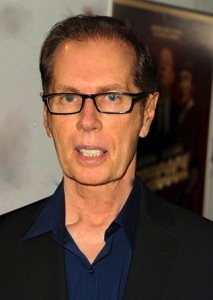
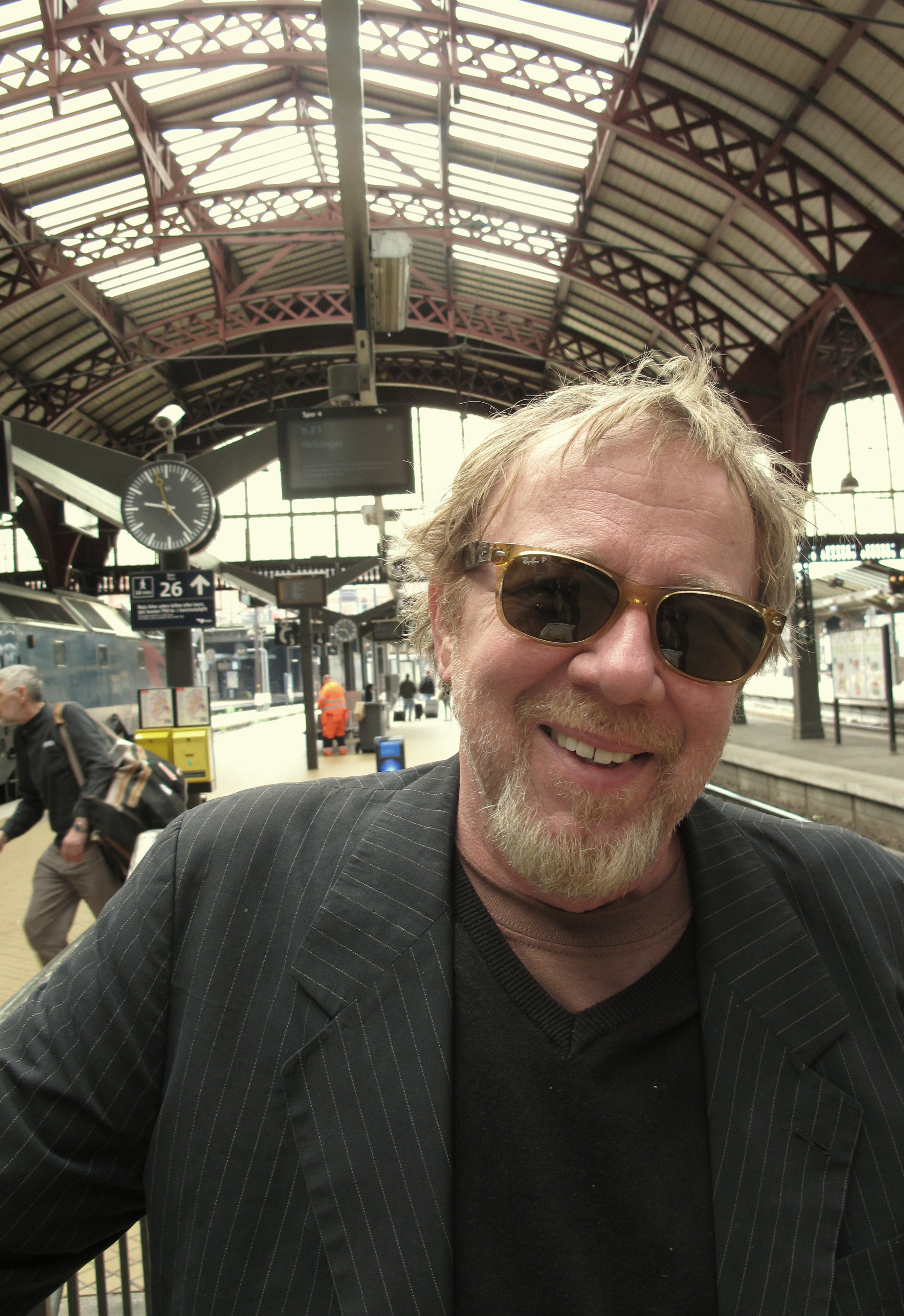
Todd GrimsonIn so many ways, horror novels can be far more frightening and breath taking than films any day of the week.  This is simply because the imagination is a hell of a thing, and the visuals you create in your head can be far more disturbing than anything Wes Craven or John Carpenter could even try to imagine.  And you know you have found a great horror writer when you find yourself taking a moment to pause and ask yourself – what the hell were THEY thinking when the were even creating this frightening stuff.

And with us today is one of the day’s finest horror and occult writers of the modern age, Todd Grimson.  Grimson has produced an abundance of wonderful tales of zombies, vampires, all the stuff that just scares the hell out of most us when done properly.  And properly is exactly how this brilliant mind does it.  In a day and age so obsessed with ruining the ancient tradition of horror, we should be so lucky that this man exists.  And we were fortunate enough to be able to steal few words from the man himself to discuss his latest books,

You started out working in hospitals, which semmingly had a major impact on your writing.  What do you think affected you most about this labor? 

The experiences were different. First came almost 2 years in Surgical Intensive Care Unit, where I overcame squeamishness about blood and seeing people in pain…..and watched, many times, people die. I was 24, 25 yrs old. I held one patient’s hand while he flatlined, tried to see if I could feel the moment When. Meanwhile I was reading medical textbooks and (at home, living downstairs from a cocaine-dealer) playing classical piano with improvisations. Then, after a year of unemployment in between, I worked nights in the Emergency Room, which was much more of a social job, interacting with those who’d had violence done them, or their drunken friends, Friday and Saturday nights, getting to know homicide detectives and uniformed police. It never crossed my mind that I might write about this constant inflow of experience, not until some years had gone by.

Describe your time in Tangier with Paul Bowles? Any similarities between Burroughs and Kerouac in their heyday?

It was funny that I became friends with Bowles. It happened because we argued about Huey Long, and then began laughing about it. Ordinarily Bowles was extremely reserved (albeit polite) with those who talked with him about literary matters. It seemed to me that many at that time were more interested in his dead wife, Jane, than in Paul. Also, he was quite surprised I had actually read all of his novels and stories not just The Sheltering Sky.

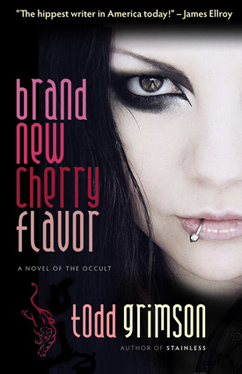
How did it feel to have your strange dreams put to paper in Brand New Cherry Flavor?BNCFsm

This has always been my approach to writing. I never really had much interest in journalism per se, in being a reporter. I wanted instead to discover new landscapes and geographies, mysteries others ignored or could not describe. So much of journalism seems to me to fall into the trap of following conventional psychology in order to “fit in” – which basically means writing about things the reader already knows and accepts before or without really reading the text. Just so, people read reviews rather than approaching material with fresh eyes and making judgments on their own.

Besides the obvious adult oriented content, what sets your writing apart from the likes of, say, Stephanie Meyer or Anne Rice?

Realism. I try to be realistic. Anne Rice, for instance, in Interview With A Vampire, had three characters, vampires, living in early 1800s New Orleans, each killing one victim apiece every night. New Orleans was not that heavily populated then, but even now, the numbers make the scenario ridiculous. What happened to all the bodies? Why did each bite instantly kill rather than wound? I talked a lot with some physicians I knew, trying to make things more realistic – while still basically sticking to the “vampire rules” as established by Bram Stoker, even if I subtracted the supernatural elements.

Which do you find more fascinating in the realm of the undead – zombies or vampires – and why?

Zombies might as well just be a pack of wild dogs. There’s no psychological element, other than” “Oh, my friend’s been bitten! How long should I wait before shooting them in the head?”

Aside from your own, what was your favorite book of 2012?

I really liked Nam Le’s The Boat , whenever that came out. I always enjoy the stories of Deborah Eisenberg, and anything Dennis Cooper does. I’ve recently become interested in Robert Bolano.

Tell us a bit about your most recent release, Stabs At Happiness.

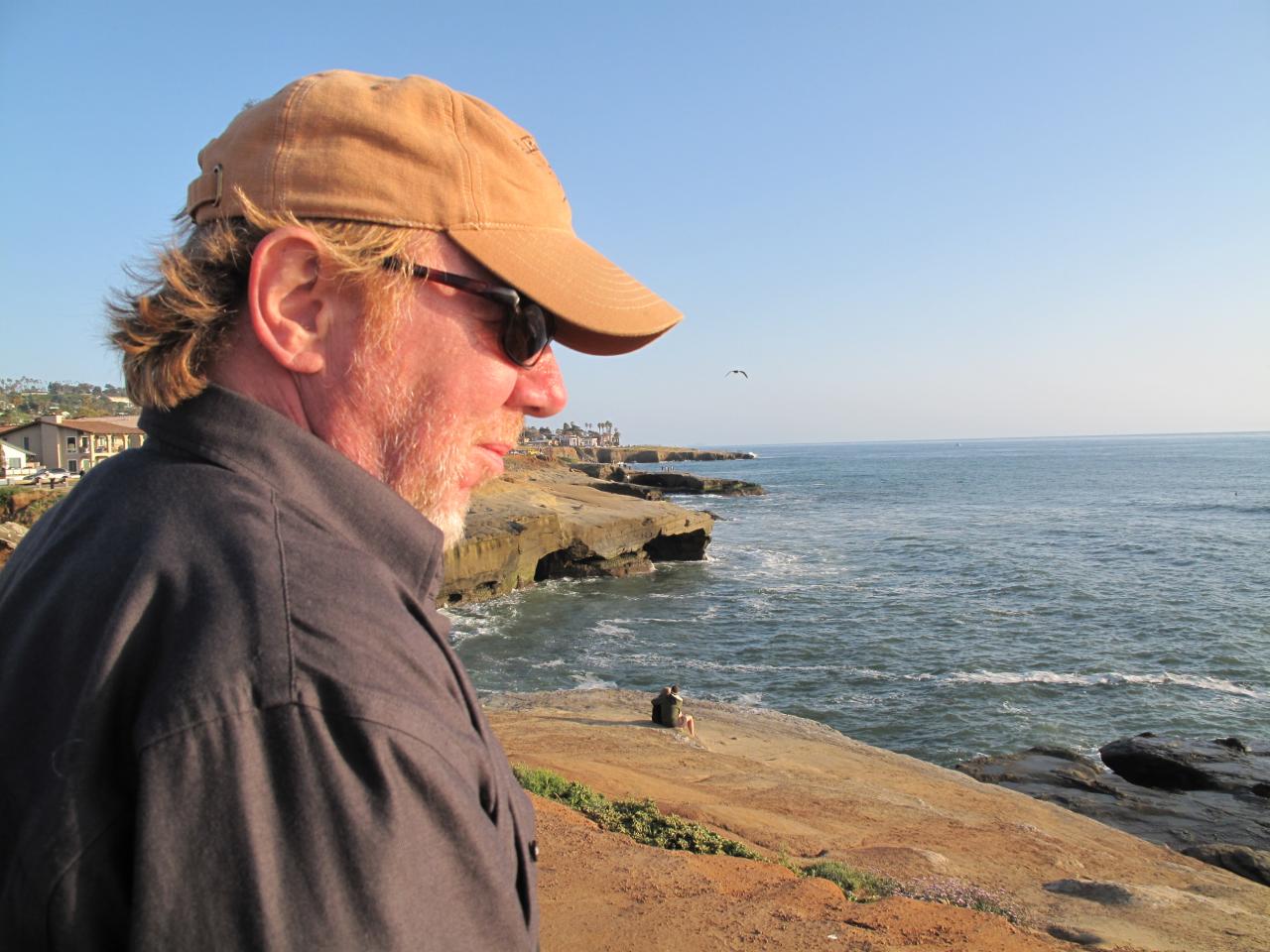
Todd Grimson2It’s a collection of thirteen stories, at least three of which are novella length. The pieces range in setting from Havana in 1958 to unmapped portions of the Amazon to Tangier in the 1980s. You never what world or atmosphere you might find yourself entering within each story. I tried, in writing each piece, to truly experiment, and sometimes this led me into milieux and mindsets unlike anywhere I or the reader have ever been – except perhaps in true dream-worlds… dream-worlds not in the sense of fantasy exactly but maybe finding oneself in the sheer strangeness of San Francisco’s underground nightclubs and secret societies of 1932.

What was the last thing that made you smile?

Watching the Greek film Dogtooth the other night, when one of the daughters of this very isolated, odd family performs a unique, crazed version of Jennifer Beals’ famous dance at the finale of Flashdance. This is really something that has to be seen to be believed.

Vanessa Angel [Interview]

Vanessa AngelOh sweet Vanessa Angel.  How you were the modern day Ginger, but with the kind hearted sprit of Mary Ann for a formative young male when you shot to the screen on the hit television sitcom based on the classic John Hughes film, Weird Science.  And to top it off, you performed in what I still consider to be the finest Farrelly Brothers film to date, Kingpin.  Your beauty is as recognizable as your delightful acting chops.
Okay, I will stop withe fascinations now, just long enough to state that I am super excited that we have been allowed the opportunity to steal a few words from one of the most beautiful and prolific women who has ever graced the stage and screen.  And although she took some time off to play the most important role of her life (mommy, of course) she has never truly faded out, and has had a great career that is definitely booming once again, and she is still just as impressive as she has ever been.  Ladies and gentlemen – please welcom actress, model, fashion designer, mom, genius – the  amazing Vanessa Angel!
Kingpin is by far the most superior of the Farrelly Brothers films, in my personal opinion. How was it making that movie and working under the legendary comedic duo?
Kingpin is definitely one of the highlights of my career. I feel very fortunate that Peter and Bobby Farrelly took a chance on casting me as Claudia and filming was just an incredible experience. They were coming off the success of ‘Dumb and Dumber’ and a lot of actresses were keen to work with them. During the auditioning process, they fought for me, as I was kind of the dark horse. I was on hiatus from ‘Weird Science’, so thankfully my schedule allowed me to be available for the film. I can remember Peter calling me to tell me I got the role and I literally jumped up and down with joy! They are just great guys with a wonderful, close knit family and everyone made me feel welcome and included. They have a lot of family members and old friends come to do cameos in their films, so the atmosphere on the set is very warm. We shot mostly in Pittsburg and surrounding areas, so we were all together, which helps create a bond with the cast and crew. I was a little intimidated to work with Woody at first, as he takes a while to warm up to people, but once we got our first scene completed, I felt a lot more comfortable. I knew Bill Murray a little, as I had met him through Dan Aykroyd and was so excited to get the chance to work with him. He helped me a lot creatively during the shoot and was so supportive. Randy Quaid was great too and it was so fun to watch him transform into Ishmael everyday. The role was written as someone in their early 20’s, hence the reference to him as ‘kid’ but Randy bought such a sweetness to him that it really worked. Peter and Bobby work so well together and really trust each other. They have great instincts and a brilliant sense of humor. Bobby would always be at the monitors and Peter would communicate more directly with the actors. They were always coming up with new ideas for funny scenes, so a lot of moments were added as we filmed and weren’t in the original script. You really have to trust their process and take a leap of faith. I was unsure of the scene in the parking lot when Woody and I fight and he punches my chest. I had to wear these mechanical cups that moved and I wasn’t really into the idea, until they assured me it would work and now I think the scene is hilarious, the way I can stand up to him physically and mentally. It took a while for people to discover the film and it wasn’t a big box office hit initially. I think after the success of ‘There’s something about Mary’, people took a look at the Farrelly’s previous films and discovered ‘Kingpin’. I think it has a lot of heart, as well as cutting edge humor, and audiences respond to the characters as well as the comedy and it’s wonderful that after all these years, it’s become sort of a classic. It was wonderful to work together again with The Farrellys on ‘Hall Pass’. It seemed like no time had passed and the set was fun and warm and I felt like part of the family again.
What was the dynamic like between you and your cast mates on Weird Science? What are your most memorable momements from being on that show?
There was a lengthy auditioning process for ‘Weird Science’. John Asher, Michael Manasseri and Lee Tergesen had already been cast, so when it came to the final few callbacks, I got to read/audition with the guys, which made it a lot easier. I got to know them a little during that process and we could feel that we had good chemistry. I was so excited to get the show, as I hadn’t done much comedy and wanted to see if I could step outside my comfort zone. I thought Lisa was such a fun and sweet character and I approached it as though she was seeing things for the first time, almost like a child, with innocence, yet a little mischievous and fun while she had also been programmed with smarts and wisdom. The show had been picked up for 13 episodes before the pilot was even shot, so we had the luxury of knowing we had some time to find the right dynamic. We actually shot 2 episodes before the pilot episode, so we had time to get the timing and tone right before we filmed ‘She’s Alive’. John was the funny, goofy guy, who worked very spontaneously and Michael was much more serious and worked hard on his craft and timing. Lee Tergesen is one of the funniest people I have ever met and the whole cast and crew were always happy when he was on set, making everyone laugh. I actually met my husband of 16 years through Lee, so I will be forever grateful to him for that! The show was filmed, one camera at Universal Studios. It was fairly new at that time to film comedy without a live audience but it meant the days were long, averaging 13/14 hours. There was quite a lot of special effects and blue/green screen, so it was the only way it could really work. We had a lot of fun together, although you’re always racing the clock on tv, so there’s a sense of urgency to get the day completed on time. The crew was so great too and really helped make the days easier. I would look forward to seeing what stories the writer’s had come up with each episode and what crazy, fantasy situation we were in. I had to sing, dance, play with different accents, so it was challenging at times to quickly hone a new skill. I remember having a quick drum lesson for the rock and roll episode and learning to tango with Michael for ‘Spies R Us’, as well as various other things. I sometimes had very uncomfortable costumes to wear and was always up at the wardrobe department getting fitted for some outfit. I even had the costume designer make my wedding dress, based on a dress I had worn on an episode. It was a wonderful show and it helped me to grow as an actress and also to step out of myself and not take myself too seriously. During the first season, my father was very ill and passed away and I remember feeling so fortunate that I had to go to work every day and step into the fun of the show, which helped keep things in perspective during a difficult time. I think of it now as such a special time in my life and have truly fond memories.Vanessa Angel2
What is your greatest non-entertainment related influence in your career? Why?
I’m not sure about a non-entertainment influence but I grew up just outside London and although my family wasn’t in the entertainment business, my mother loved going to the theater and in school we read classic literature and plays at an early age. I had an older sister who was very smart and popular and I was kind of the awkward, shy, skinny girl, so I think I had an inner desire to be ‘seen’ from an early age. My sister and her friend and I would put on plays/vignettes for our parents and their friends and I would always have to be the ‘character’ role, being the youngest and I often got the laughs and I think it made me feel validated and that may have been an initial seed. I was a part of all the school plays and definitely felt more comfortable in that world. We even performed The Caucasian Chalk Circle when I was around 12 and other weighty material, as well as comedies and musicals. I never thought of pursuing a career in acting but after being discovered as a model and later having the opportunity to be cast in my first film, ‘Spies Like Us’, looking back it all sort of made sense and I think it was my destiny to take this path. I think this life has sort of forced me to face my demons. As an actor, your constantly in the position of being judged and it takes a lot of courage to be rejected so often. I think the need to come to terms with who I am and not needing others to validate me has been a constant learning curve in my life and you have to get to a place where you feel comfortable in your own skin, regardless of what others think of you. That’s been a big life lesson and influence that’s comes from being an actress.
Since I became a mom in 2001, I now take into consideration what my daughter would think when I consider a role. I have done a few films for fun, like Baby Genius 2, that I thought she would enjoy!
Can you tell us a bit about VANE LA? What made you want to get into the world of fashion?
I have always loved clothes and fashion and took ‘needlework’ classes at school and made a lot of my own clothes from age 9 on. Then when I started modeling at 14, I was fortunate enough to work with some of the best designer’s, stylists, photographer’s and fashion editors, who really influenced me. VANE LA kind of happened organically. I started making a few dresses for myself about 3 years ago, simple styles but in great fabrics that I couldn’t find made at reasonable prices in stores. I had a friend who worked at Ron Herman at Fred Segal, which is one of the most popular boutiques in Los Angeles and she put me touch with the buyer, who loved one of the dresses I made and ordered 200 dresses for their 4 stores. I had to figure out very quickly how to make that happen! I’ve had to learn a lot about the fashion business and am still working on growing the line. The initial dress sold really well and from there I started offering different styles, and introduced tops and t-shirts too. I like a simple, casual yet elegant kind of way of dressing and my designs try to capture that essence. I sell at a few boutiques, including Ron Herman and Rona in Studio City. I feel quite proud of it, as I literally do all of it, expect the actual manufacturing, on my own. A lot of people in this business get the chance to collaborate on some kind of fashion line but they are basically just lending their name. Not to knock them but I literally do all of it on my own, including delivery! I have a very basic web page, www.vane-la.com and a VANE LA facebook page to check out.

Can you tell us about Hansel & Gretel: Warriors of Witchcraft in which we will see you in this year? What will you be doing in the film?

Hansel and Gretel is a dark, modern day twist of the fairy tale. BooBoo Stewart from the Twilight films stars, so it’s aimed at more of a tween/teen audience. I play Ms. Keegan, the school guidance councilor, who is not who she appears to be! I enjoy playing characters that are hiding their truth and are deeper and darker than they show on the surface. To be honest, you have to keep in mind that this film was literally shot entirely in less than a week! David DeCoteau was the director, whom I’m really fond of and enjoy working with. It’s actually extraordinary how quickly he can make a film. Not easy to get 20 pages shot in a single day! I always say there are films out there that aren’t great that had several months to shoot, and they have no excuse, so if anyone is critical of this endeavor, keep that in mind! I am happy to have the opportunity to work with people I like and wanted to work with David and Eric Roberts. I think for what it is, its a fun watch.

What does the future hold for Vanessa Angel?
I hope the future holds many more years of feeling fulfilled creatively and a sense of contributing something meaningful. As a mother to an 11 year old daughter, I want to be the best role model I can be and help her to grow and flourish and navigate these next few years. I made a choice to cut back on my work once she was born, and although my career has suffered for it, I feel very glad that I have been able to be there for her in her most formative years. Now I’m ready to work more and I hope the future holds another tv series. I feel I have matured and have a different more experienced voice to share and would celebrate the chance to be a part of a show. I want to continue with my fashion line and get more involved with causes I feel are important. I feel more politically aware and have a sense of greater responsibility and a desire to be part of the solution to the problems facing the world. If I can find even small ways to do that, then I feel I am contributing positively.

Vanessa Angel3What was the last thing that made you smile?

I just saw an unexpected photo of a friend wearing one of my VANE LA dress at a red carpet event today, which made me smile and I was also getting some oranges off a tree outside my kitchen early this morning and a baby bunny hopped away with the cutest white bunny tail. Can’t help but smile at that. We have a rapidly growing family of bunnies living in our yard at the moment, much to our lawn’s dismay!

Stephen Rebello [Interview]

Stephen Rebello2When I heard there was going to be a film about Alfred Hitchcock in the works, to say I was intrigued would be an amateur sentiment. I was freaking ecstatic. Like millions of viewers across the world, I am a huge fan of pretty much anything Alfred Hitchcock did in his illustrious career. But, when I heard that the film was less than a biopic, but more of a period piece, I became even diligently ecstatic. In this day and age, there is a world wide web that could provide several different versions of a man in a biographical sense. But, when we deal with direct periods, such as the making of a film that completely redefined the career of an already acclaimed filmmaker (i.e. Psycho, if you hadn’t caught on yet), we get a more detailed and in-depth look into the emotional stamina of a subject. And if that weren’t enough, I learned that film was based on a book written by a man who I had only known as a fantastic journalist. And after reading Alfred Hitchcock and the Making of Psycho, I knew that between the film, and the as per usual far superior book, I had stumbled upon an in-depth look into something beautiful.

And lo and behold, I managed to be able to steal a few words with the author of Alfred Hitchcock and the Making of Psycho, Stephen Rebello to get an even greater insight into the world of Hitchcock. And while we were at it, we got to showcase the career of a man that has had an abundance of personal and professional achievements in his esteemed career. And through a bit of research, I learned some pretty amazing and/or interesting factoids about the great Mr. Rebello himself. We are very excited to introduce one of the today’s finest writers, journalists, humans of world of words today. Enjoy!

How does one move from the world of social work and therapy…..to journalism in the entertainment world? Are there any similarities?

I’d call it some fantastically weird , cosmic collision of ambition, neurosis, persistence, hard work, and incredible amounts of luck punctuated by occasional flashes of talent. I don’t think I’ve gotten here in ways that are very much different from how people have been doing it for decades – I’m talking about the ones who gravitated to careers in the arts from law, newspaper reporting, fiction writing, film criticism or what have you. I’ve been writing since I was a kid. I’ve been dreaming and imagining from the womb. I sang professionally as a kid, too. I’ve found new ways to sing, I guess. Even while I was happily working as a therapist, I began to write pieces that got the attention of editors and publishers and one thing lead to another. I’m just grateful that, from the beginning, there have been those who seem to like the sound of my ‘voice’ — and continue to, especially as it evolves.

Did you find yourself slipping into some sort of neurotic way of being while researching and writing about a subject that revolved around murder and psychopaths? Did you ever have to stop and analyze yourself?

Not any more neurotic than usual. I’m not a Method writer. I roll up my sleeves and become a relentless, endlessly inquisitive detective, psychologist, worker bee. Doing research, you’re a living camera, a tape recorder, a witness. Doing research for something like this, you become a tape recorder, a witness, a camera, a detective, a psychologist, an interrogator.  Researching Alfred Hitchcock and the Making of Psycho, the murderer and psychopath in question was Ed Gein, whose 1950s crimes and pathological personality somewhat inspired writer Robert Bloch’s creation of the Norman Bates character in his novel, Psycho.

When I was researching, I was up to my neck in original vintage script notes, sketches, casting notes, production schedules, contracts, and screenplay drafts. More than that, I was spending face time on a weekly basis with the people who actually made Psycho – and others films – alongside Hitchcock. That was insanely fun, thrilling and informative. It almost felt as if I were plunged back into the time when Psycho was being made. Years later, when my agent and I sold the screen rights to Alfred Hitchcock and the Making of Psycho to one of several bidders, eventually the film studio hired me to do several rewrites of the existing screenplay adaptation of my book. Shifting from non-fiction to fact-based fiction was an exciting transition. I had already spent months immersing myself in the ‘50s, the era in which Psycho was birthed. I devoured period music, books, magazines, news footage, videos, and the films of the era. The iconography, conservatism, optimism, paranoia, mores, notions of romanticism, the slang and language were absolutely crucial to me – though they were less so to others. It drove me insane whenever people involved in the film version of the book kept trying to have the characters throw around anachronistic, clichéd phrases like “serial killer” or insist on having Hitchcock talk self-consciously to other characters as if he knew Psycho would be a game-changer while he was filming it. Hitchcock was a genius but he wasn’t clairvoyant. Anyway, some battles you win but you lose many others.

Stephen Rebello3

Through all of your research for Alfred Hitchcock and the Making of Psycho, what would you personally say was the most surprising and unique trait of Mr. Hitchcock?

As you mentioned earlier, I was a therapist and I’ve been in therapy, which is an important professional requirement. Aside from that, I’m very present in the world so I have to tell you that very little about human behavior surprises me anymore. I work in Hollywood, remember? The most revealing things about Alfred Hitchcock came from the remembrances of those who worked on films with him, socialized with him, knew him for years and years. I learned how painfully self-conscious he was about his appearance and how that shaped his work and his life. I found out how disdainful he was about collaborators whom he thought were unprepared or giving less than their best. How open he was to actors who were intelligent, engaged and thoughtful, which is why he so enjoyed Anthony Perkins and Janet Leigh, for instance. How emotionally strangled he could be, to the point where he often had to communicate through others. How he would spend time and money surprising someone he liked by sending them a rare, expensive book or an imported delicacy. How he would financially support old coworkers during rough patches in their lives, sometimes for decades. How, to ease his terrible emotional pain, he sometimes fabricated fantasy romances involving women he knew he could never attain. How contradictory and complex he could be. How relaxed and playful he could be on a movie set, knowing he’d already sweated the details for months if not years. We live in a world full of people who somehow seem certain that they know the ‘real’ Hitchcock, have some inside knowledge about what made him tick. They don’t want their Hitchcock messed-with. It’s almost like, “Don’t you dare confuse me by telling me actual facts.” I trusted his collaborators, who graciously and candidly shared so many different insights into the many faces of Hitchcock they knew

In hindsight, were there any segments you would have liked to have seen differently in the film Hitchcock? And what is your overall opinion of the film?

Films based on real events work best for me when they dramatize actual facts in powerful, unexpected ways. So, maybe selfishly, I like Hitchcock when it’s sticks to the kind of movie that I was envisioning, the kind of movie I wanted to see, the kind of film for which I was hired to write dialogue, scenes and characters. For instance, as I mentioned to you before, for the screenplay, I had no interest in the real life murderer Ed Gein because the novel and film Psycho are about the fictional creation Norman Bates, not Gein. Hitchcock could not have cared less about Gein, either. I kept trying to minimize or cut those scenes because they ate up valuable storytelling time without much dramatic payoff. Others liked them, so there you go. I’m all about Hitchcock when it’s focused on him battling hostile studio executives, using any trick in the book to convey his artistic vision to his actors and crew, enlisting his wife Alma’s expertise in “fixing” the movie, orchestrating Psycho’s evolutionary advertising campaign, enjoying the sounds of the audience reacting to seeing Psycho for the first time. What I miss is Hitchcock’s inner life and struggles as a man and a great, complex artist, his revealing, rich relationships with graphic designer Saul Bass, composer Bernard Herrmann, his assistant Peggy Robertson. All that said, though, I’ll never forget that day in 2008 when I finished and sent off to the film’s then-director a speech I’d written for Alma. It’s the one in which she sets Hitchcock straight, really laying into him for his casual cruelties, neglect, monomania. She reminds him exactly who she is as a person, a mate and collaborator. That particular scene, among others, comes from a very deep place in me and in Hitchcock, it’s virtually word for word how I wrote it. Some old friends called to bust me after seeing Hitchcock because when Alma sarcastically tells Hitchcock that Doris Day should do Psycho as a musical, my friends reminded me I’d made that exact wisecrack to him back in Boston, Massachusetts when I tried to lighten the mood as we were leaving a grim, devastating film about the Nazis. Several people contributed to the Hitchcock script but I always saw Hitchcock and Alma’s fascinating relationship as the project’s emotional heartbeat. There were many other strong scenes – with Anthony Perkins, Janet Leigh, Vera Miles — that would have brought the viewer deeper inside Hitchcock’s creativity, his complex relationships with coworkers, his larger-than-life humor, his sadness, his genius. They were never filmed. I miss those.

Quite the opposite of psychopaths, you have written books based of the art of films like Pocahontas and The Hunchback of Notre Dame…the Disney versions. What made you want to start working for Disney?

I’ve loved classic Disney animation from childhood and my storytelling has been influenced by Disney. A fantastic Disney publicist and great friend named Howard Green was a fan of Alfred Hitchcock and the Making of Psycho and kindly brought me in to meet with the studio executives who were interviewing writers to work on their making-of books. I got the OK and had the privilege and challenge of documenting the production of three of Disney’s animated films. That led to my getting hired as a writer doing story development for several Disney animated feature projects, as well as my writing the teleplay for an ABC TV musical based on Sleeping Beauty. Like many other projects, those scripts are locked in towers guarded by dragons but crying out to be filmed.
Stephen RebelloYou have had the opportunity to interview an immense amount of incredibly interesting people. Who, besides Alfred Hitchcock, would you consider to be the most intriguing person you have spoken with?

What a privilege, right? So many. A standout has to be the great illustrator Al Hirschfeld, who held me spellbound for hours in his incredible Manhattan home and studio telling me tales of his art and of people he knew intimately –the Marx brothers, Will Rogers, the Gershwins, Moss Hart, Rodgers and Hart, Rodgers and Hammerstein, Fannie Brice, Fred Astaire, Jack Benny. His intelligence, gusto, the way he bit into life still inspire me. Interviewing Ernest Lehman, one of Hollywood ‘s greatest screenwriters known for North by Northwest, The Sound of Music, Sweet Smell of Success, Sabrina, West Side Story, led to an extraordinary friendship and mentorship that I miss to this day. He was razor-sharp, complicated and so funny. We both have a sardonic, gallows sense of humor, a taste for the macabre, a love of understatement. We nearly collaborated on a book about his hair-raising experiences making Who’s Afraid of Virginia Woolf with Elizabeth Taylor, Richard Burton and Mike Nichols. Unfortunately, Ernie got cold feet about doing the kind of tell-all book he’d originally set out to do, so the publishing deal collapsed. We were also deep in discussions and exciting new ideas for an original screenplay that he’d wanted to do decades before with Hitchcock. The agents were actually working on the deal. One day, I showed up for a story meeting. That morning Ernie had taken a cab to a doctor’s appointment and had just come back. Anyway, he announces that our movie project was off. Why? He’d tried-out the idea on the cab driver and the cabbie hadn’t liked it enough. I was stunned and thought the mood would pass, but the more I tried to reason with him, the more he resisted. We brought each other potential new material, but we could never seem to agree. I think he was frightened of competing with his incredible past successes. Oh, but, if only.

Your book Reel Art: Great Posters From the Golden Age of the Silver Screen was positively revered as a one of the finest books written about Hollywood. And that was 25 years ago. Therefore, if you could add any additional “reel art” from the years since you released the book, what would make the book? What would not? Why?

There’s been continued interest in another Reel Art book but that’s all hot air until someone actually steps up to the production costs involved. Too many posters of the past few decades have just been assemblages of “floating head” photos of the stars. Too many contemporary posters are also too much like the work of Saul Bass. There have been some cool, imaginative ones, though like Brazil, Fargo, The Tree of Life, The Truman Show, American Beauty, Walk the Line, Moon, Batman, 127 Hours, Cloverfield, Moonrise Kingdom.

What was the first book you can remember completing? Did it have any impact on you?

At six or seven I won a supremely cool Schwinn bike in a Peter Pan lookalike contest at a local movie theater, so I read Peter Pan probably to figure out whether winning that contest was a slam or a good thing. Anyway, by the time Barrie described Peter as “clad in skeleton leaves and the juices that flow from trees,” I was just wowed. I loved the adventure of flying over London rooftops, the pirates, the Indians, the Lost Boys, all of it. By the end of it, though, the whole play made me incredibly sad and melancholy which it’s supposed to because that queasy dark underside, those deeper implications are big aspects of Barrie’s genius. It’s interesting that the project Hitchcock most wanted to film throughout his life but never got to make — or was never allowed to make — was Mary Rose, a dark, sentimental ghost story by Barrie. I wish he had done it in the ‘50s at Paramount starring Audrey Hepburn.

What was the last thing that made you smile?

Aside from some of your questions, you mean? I got a completely unexpected message this week from one of our most respected American writers telling me how wonderful and underappreciated he thought Hitchcock was. That was incredibly nice and moving. When he added, “But it would have been even better if it were more like your book,” well, I’m not going to lie. I’m still smiling.

Grayson Capps [Interview]

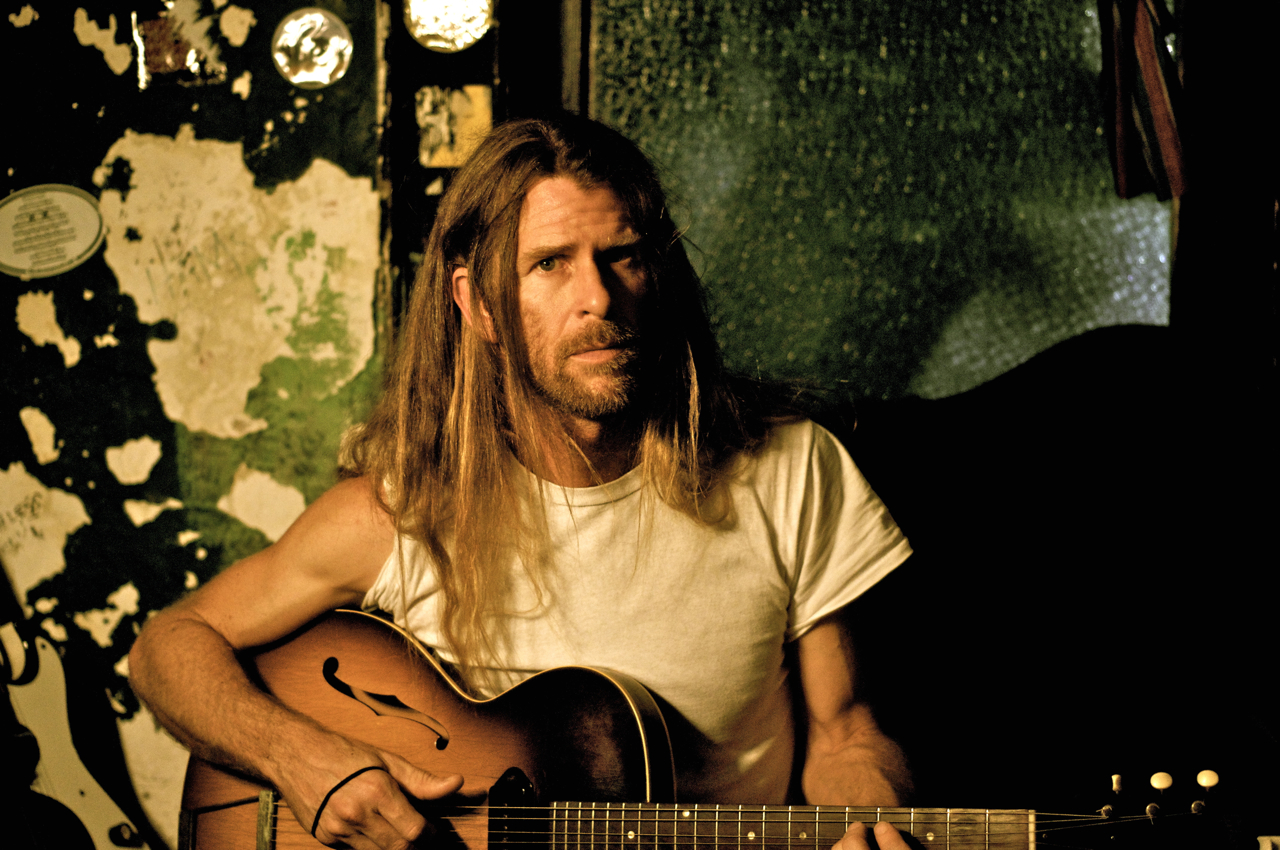
Grayson Capps by Chad Edwards 8
Way back in the summer of 2006, I found myself sweating day and night under the desert sun and/or blackened sky listening to some absolutely beautiful music.  Specifically I was listening to the original motion picture soundtrack for the highly underrated film, A Love Song For Bobby Long.  There were obvious highlights like works from acclaimed groups like Nada Surf and Los Lobos, which were phenomenal.  There was also the inclusion of the absolutely stunning Trespassers William track “Different Stars”, which we have lauded here time and time again.  But, what struck me the finest was one man in particular.  A man with a rusty voice and a powerful sentiment.  The one and only Grayson Capps, who at that point I had never heard of, and who since has become a staple in my musical musings.
Grayson Capps contributed three of the most beautiful songs to the soundtrack, and is actually the largest influence to the book in which the film was based upon (originally titled Off Magazine Street)with his stunning tale of a saddened yet righteous man by the same title of the film.  He lent his scratchy and soulful lyrics the contrasting wholesomely beautiful voice of Theresa Andersson on “Lorraine’s Song”, and absolutely killed it on his own original track “Washboard Lisa”, which still remains as one of the greatest examples of modern Southern blues released to date.  And I have continued to be a fan even up to his latest release, 2011’s The Lost Cause Ministrels, a terrific album that proves that Grayson can stand the test of time.  But, I wanted to learn a little bit more about Mr. Capps, so it was great to have him agree to share a few words with Trainwreck’d and you the fine readers.  Enjoy!
When did you first realize you wanted to be a singer/songwriter for a living? Was music a big part of your upbringing?
I still haven’t realized that yet, it’s just what’s happening.  I don’t have time for much else, but I love what I do.  Music has always been a part of my life.  My old man, had a wide spectrum of vinyl always playing, always available. That was a big influence from an early age.
Your father is the man behind the pen of Off Magazine Street, in which the film A Love Song For Bobby Long is based upon. You have three tracks featured in the film, and you actually appear in the film, as well. Did you develop these songs for the film, or where they inspired by your father’s writing? Either way, what was it like developing tracks for your father’s work?
These songs existed before the film, separate from the book, but talking about the same people and the same subjects. They were key in giving the movie an identity. The movie was named after my song “A Love Song For Bobby Long.”
What was your final opinion of the film adaptation of Off Magazine Street, as well as, what I consider, one of the last great film soundtracks to come out in a very long time?
The film adaptation of the book was very Hollywoodized.  Romance had nothing to do with the original story.  It was rather disappointing watching what goes on with soulless, rich, entertainment folks. But in the end I enjoyed the final film.
 Grayson Capps3
Your fifth release, The Lost Cause Minstrels, is absolutely something special. I can’t truly put my finger on it, so I shall ask, what is the major difference between this album and your works past?
Different songs, different subjects, different movement through time and space. The album was started while I was still living up in Nashville, but completed after I moved back down to South Alabama close to where I was raised. It was also the first record with my current band, also called The Lost Cause Minstrels. They all brought a big part of themselves to the songs, as well.
For those of us who would have absolutely no damn clue whatsoever, can you tell us the difference between New Orleans Mardi Gras and Mobile Mardi Gras, a theme seen displayed in your latest album? 
Mobile’s Baptist; New Orleans is Catholic ….makes all the difference in the world.
What sort of impact has your surroundings in the Southern States had on your work?
Being from the south is what I know, so I guess it’s had a huge impact.  Where you’re from is where you’re from, but finding yourself is the road home.
I spent sometime in the Southern Mississippi area a while ago, and I spent a whole lot of time at the legendary BBQ joint The Shed, in which you have written a track about a strange character who inhibited the joint. Where did you come up with this story? Or at the very least, what inspired you to write a song about The Shed?
The song is about Mr. Jim who you will find down at The Shed. it’s a simple story about a real charming man. I felt he needed to be immortalized in a song.
I noticed you will be doing a few spots in the Netherlands and Germany in 2013. How receptive do you feel audiences are to Southern inspired bluesmanship in other countries, and throughout other regions of the United States?
Grayson Capps2People respond to the truth, no matter what kind of music it is….whether it’s southern, northern, polka-western, raga-eastern.
While The Lost Cause Minstrels is probably still fresh in many listener’s mind, can we expect something new in 2013. I can only imagine you have a plethera of tracks in your songbook. If we will hear something new, what can we expect? 
It’s always something new for me, but I suppose that will determined by the ears of the beholder ultimately. But I’m writing, though no hard plans to record just yet.
What was the last thing that made you smile?
My son this morning, very excited about going to school.

Patricia Richardson [Interview]

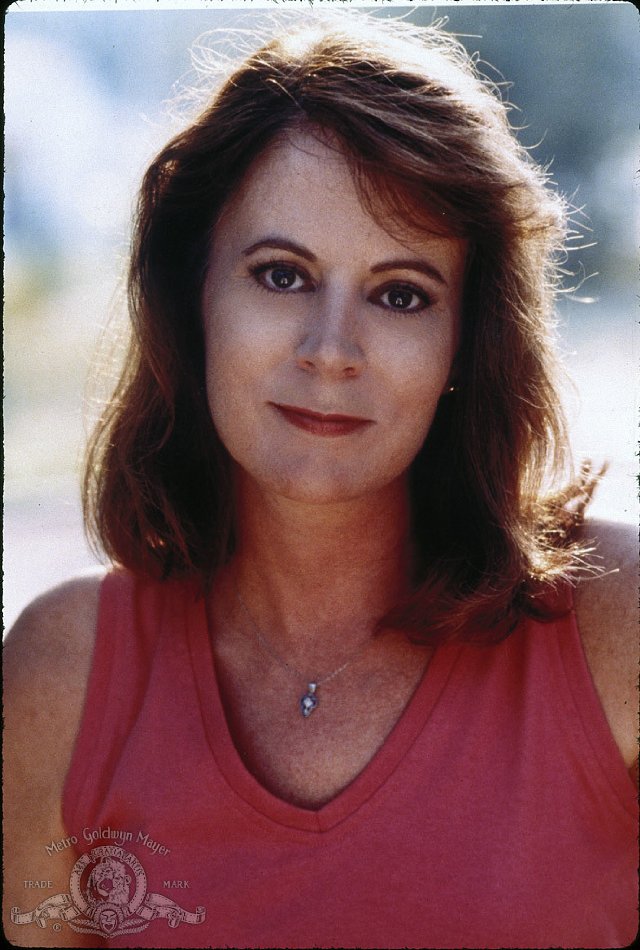
Patricia Richardson

For anyone who spent much of their evenings in the 90’s plopped down (probably on the ground) watching wholesome television sitcoms, the name Jill Taylor is synonymous with the idealisms of a perfect TV mom and wife on the hit sitcom Home Improvement.  It is a role that is still considered viable and extremely important in the world of situational comedy, even after the “boom” of the strong independent working woman (who probably lives in a big city).  But twenty years ago, it was all about Jill Taylor.  The boss woman in charge of the household I always wished actually had four walls, and I lived right next door to one of those walls.

And the power of Jill is owned almost entirely to the brilliant acting chops of the one and only Patricia Richardson.  And while she may be best remembered for being the wife who put up with the dim-witted but loving handyman portrayed by Tim Allen, her skills are undeniable, and she has proven as much even till this day.  But before Home Improvement even saw its last episode, Patricia stunned audiences in her role alongside Peter Fonda in Ulee’s Gold.  And when Home Improvement did indeed see its demise, Patricia jumped into the medical world on the strong running hit show Strong Medicine.  And she is showing no sign of slowing down. This is why we were so honored to get a few (lengthy!) words with the legend herself, Patricia Richardson.  Enjoy!


When playing a television mother for so many years, do you develop a sort of motherly attachment to the kids who play your family?

Yes you do develop an attachment , although they don’t need parental interference from set parents when they have a parent on the set with them at all times. Tim and I worried about appearing to have a “favorite” , or that interference problem, and we tried to avoid those pitfalls. But we did feel protective of them and enjoyed them tremendously as I think you can tell when you watch the outtakes. We tried to go to bat for them when they were renegotiating, when they needed more teachers or a space to play outside, ( my head got in the way of some thrown footballs a few times ).There was no place for them to burn off all of that boy energy except in the street outside the studio dodging the trucks and cars for a while. I don’t think people understand how hard it is for kids and their families who work on these shows. One parent has to be on the set at all times. That means they can’t have a paying job. That leaves the other parent to earn a living and deal with the other kids, if there is another parent. The family can’t live off the working child’s money. It is protected by law which is a really good thing. I once knew an actress whose parents stole all the money she made and ruined her credit while she worked as a child actress. So those laws are important. Anyway, the kids arrive at work way before everyone else and get into school. They might have to leave a test in the middle of it to come out and work/play with us, turn that on and off constantly and instantaneously all day long, and get right back into the school work on command. On the off weeks we have in sitcom land ,which are at least once a month, they go back to regular school where they are regarded the way all famous people are: as enviable Aliens. Yes, they are fortunate in so many ways, but when negotiating their salaries the studios say why should kids make much as journeymen actors? Well, they are not considering how hard they work, what it is costing them in terms of their young and fragile current and future personal lives, and what they contribute to the show. It is sometimes the same contribution if not more than the sometimes equally inexperienced adult actors they are working beside. The studio is also getting the parent at no pay. Anyway, you can tell by my overly long answer here that I did care about those kids, admired them and their families. I was really busy and hanging in there myself trying to work hard and raise my own three kids so there wasn’t time for much else. But they were amazing, fun, talented, smart boys, and have grown up to be wonderful men.

Patricia Richardson2Between Home and Improvement and Strong Medicine, you spent many years working in the same consistent environment. Is this a rewarding experience in a way? Do you prefer new sets, or consistent sets?

A thousand times yes , being on the same set is better. I’ve done long runs on plays too which can get tedious in a way that series work never becomes. But I believe actors do better, freer work when they feel safe and relaxed. Every set in every medium is a family. The longer the family gets to be together the more comfortable that environment becomes. The more relaxed you feel, the easier it is; everything flows. I have found and observed in other actors on my shows that being a guest on someone else’s show is hard. I’ve seen great actors really nervous working as a guest actor and felt the same way myself. Working on a movie only for a few days or a week can feel the same way. You don’t want to feel like the adopted child. Maybe it was a mistake? You should be sent back to the orphanage?

What was really great about Home Improvement and sometimes on Strong Medicine, also on The West Wing, was having the same directors. That is a super great A+ pay the good ones and keep them as long as you can if I were to produce good idea. The other one is this: at least one original co-creating producer should stay on the series until it ends. Look at most of the successful long running series and see how many still had one co-creator at the end. Only the creators care as much as the actors who are there until the end. Subsequent writers tend to come for the money and stay until they can get their own deals on their own babies. Creators care about their baby. If a creator abandons the baby only the actors are left to fight for the original vision of the creator on a daily basis and the baby they all loved . Very difficult position to put the actor in.

What sort of preparation did you do to perform the controversial role as Marilyn Monroe’s mother, Gladys Barker, in the mini series Blonde? What kind of research was involved?

I lived with a psychologist at the time who supplied me with a lot of material on different maladies. The trouble was it was difficult to assess what the diagnosis would be. In the book it appeared to be one thing, history says something else. History is somewhat unreliable as in those days psychiatry was less sophisticated and everyone sort of fell into a few convenient pools. Also do you pay attention to how it seems in the book or what history says? She seems to be low functioning Borderline or Bipolar in the book. By the time she gets hospitalized she would be heavily medicated. Marilyn was sexually molested , was Gladys? I found out about the job while traveling with my oldest son abroad and didn’t have a lot of time to prepare. I flew from Paris, to LA and on to Australia. 

What did you find most interesting about Gladys Barker? What made you want to take on such a role?

All of the above applies to this question and also that I was always interested in Marilyn Monroe and didn’t know about her mother. I also was a fan of Joyce Carol Oates but hadn’t read Blonde. She came to speak at my kid’s school years later, after I did the mini-series. I thought about bringing the book and asking her to sign it. But I chickened out. I felt too shy to approach her.

Can you tell us a bit about the upcoming, and possibly controversy riddled, documentary Acceptable Limits, in which you are an executive producer for? How did you become involved and interested in such a subject?

I was always interested in Nuclear Energy , I have a relative who is a safety consultant in the Industry . So I have heard many stories and we’ve had many discussions about it over the last forty years. I ,in fact , have a charming picture of myself in a hard hat in front of a nuclear containment building being built back in the 70’s . This is clean energy in many respects – cleaner than coal if we can find a place to store it and a safe way to transport it. President Obama’s announcement of billions in federal funds for small, modular nuclear reactors shows us that nuclear- if executed cleanly and safely, can be more than beneficial to our country’s energy source.

I got involved with this film because my friend Cosmo Phiel needed money and I am interested in making more documentary films. I had already produced one with my friend Jodi Long , Long Story Short, which went to many Asian Film Festivals, won awards, is very entertaining and is on Netflix. This one is still a work in progress as time has gone by and the situation is evolving. After 2 years of countless interviews and hours upon hours of research , they have realized that this is a dynamic story that deserves to be told from multiple points of view. That is good storytelling. At this time they don’t feel that they have been able to represent certain key threads that they would like to tell in their story such as : the importance of clean , safe, nuclear for the future of energy production in our country, the role of NFS as the primary employer in Erwin, Tennessee where our story takes place and where a group of residents have been arguing against the 40 year license renewal of this local nuclear plant in operation since the 1960’s , the science of down blending HEU on this line ( It’s recycling basically ), or modern regulation by the NRC; what it is and how it prevents discharge/ contamination/ criticality. There were high levels of illness including cancer, as well as contamination in the food and water supply in Erwin. The activists pointed to tests by a University scientist from Arizona that showed trace amounts of enriched uranium and plutonium. A class action suit ensued and was later dismissed. The plant and its regulatory body point to a clean operating record since major improvements in the 1990’s and 2010. Closer examination shows that Eastern Tennessee has a long record of big industries coming in and releasing dyes and chemicals into the waterways. How can someone point the finger at one single company for releases that poignant if they’re considered to be within acceptable limits? Additional recent testing shows only trace amounts of enriched uranium. What is considered a safe amount of exposure? How are the acceptable limits set by the regulator, and what is the science those decisions are based on? This is what the film is exploring.

If you could star in a remake of any classic film from the golden age of cinema with a strong female lead, what would it be?

This is just a question I can’t answer. First of all , which golden age of cinema? LOL. My oldest son the Film Major and I had a whole discussion about this. He says now? He thinks it’s now. I disagree. I suggested the 70’s . He says oh that’s like 5 films. Then there’s the horror of doing a remake . Ugh. I am not a particularly confident person. Who wants to be compared to some brilliant person from THE GOLDEN AGE OF CINEMA. Whenever that was. And the idea that someone would let me star in any film at this point is so unlikely it makes me want to start whining a little.

CurePSPHow did you become involved with Cure PSP? How important is this organization to you?

My Dad died miserably over a long period of time of PSP, Progressive Supranuclear Palsy. No it’s not a video game system. It is what they call an Atypical Parkinsonian Disease, because it looks like Parkinson’s without the tremor. He had that same frozen face with absolutely no expression, staring eyes, because they can’t look up or down, ( that is unique to PSP ), there are balance problems, they fall backwards a lot (another symptom unique to PSP) , their muscles spasm and become increasingly more frozen. I used to say Dad became “mummified” inside his body. We didn’t know how cognizant he was because he lost the ability to speak . He also had a lot of difficulty swallowing. The only way he could communicate was with a thumbs up or down. He had been a Navy Test Pilot , a fighter pilot who landed planes on aircraft carriers which he referred to as ” postage stamps”. That’s where the thumbs up and down came from . But really most of the time we had no idea what he was thinking or feeling. His laughing and crying sounded the same. He was hurt by a nurse at one point in the really nice, expensive nursing home where we had him despite the fact that we had a sitter in the room with him all day every day. They tried to cover it up, hid the injury even from his doctor , didn’t file an injury report which they have to do by law. We discovered after his death and the autopsy , which is the only way to confirm PSP, that he had been very cognitive , trapped inside of there for a few years, unable to move or communicate. He was misdiagnosed, as many PSP patients are, for many years . He probably had the disease for five years before it was identified correctly. The movie The Diving Bell and the Butterfly nearly killed me; that was his story . I am unable to express how terrible this time was. My sisters and I didn’t know about CurePSP when we were struggling to take care of him long distance for those years. I wish we had it would have helped us so much. I learned about CurePSP towards the end and they asked me to become their National Spokesperson and then I joined the Board of Directors. The organization has grown a lot over the years , has done ground breaking research and really expanded their patient and caregiver outreach. We funded the research that found the gene that established that PSP is a tau protein disease, a ” taupathy “, like Alzheimer’s and Traumatic Brain Injury. These proteins spread in tangles around the brain killing brain cells. Other brain diseases have other kinds of protein spreading infectiously in similar ways. Many scientists are now calling them all “Prion Diseases”. The figures for how many people in this country alone that are dying of brain disease, the trillions of dollars that it will cost in the coming years around the world, are staggering. There are no cures yet. There are beginning to be some treatments that delay symptoms, but there needs to be more attention and resources paid to this. The baby boomer generation is headed toward these diseases and it will be a heartbreaking disaster. It already is. There are people getting PSP in their 50s, even in their 40’s although that is atypical.

A man named Stanley Prusiner at UCSF discovered and named Prions when he discovered the infectious protein that was causing Mad Cow Disease. He won a Nobel Prize back in the 90’s because it was the first time they realized that disease could spread by something other than bacteria or a virus, through DNA. We are now working on trying to find a way to stop tau- clear it, or stop it from growing in the first place. Do we need it? Is it necessary ? There is really exciting and interesting research going on. CurePSP is unique in that as a small organization we can give our investigators money directly, they don’t have to pay a portion of what they get to the institutions that house them, there is no time lapse. Our Scientific Advisors have been really smart about where to put the research money.

Patricia Richardson3What was the last thing that made you smile?

I recently got back to New York and found the Valentine one of my sons had made for me. That was sweet.


Where you as touched by Patricia’s tales of PSP and her part in the fight to cure it?  Find out how you can help out at the link below:

give.psp.org//LaurenceRichardson

David Hogan [Interview]

David Berlin CC

Does anyone remember music videos?  Or to rephrase that, when you could turn on the TV and watch a music video, rather than watching one to the confines of your MacBook?  Chances are that if you were born after 1990, you probably don’t remember that time.  Well dammit, I do!  There was a time when music videos were so exciting, MTV even had a show about making said videos, rather than spilling vile about “guidos” and pregnant teens.  There were amazing videos that earned an abundance of respect.  Video directors reigned king!

And despite even my own pessimism, the still reign as such!  Music videos have actually become even more relevant and true works of art, even if MTV doesn’t care to show them any more.  And few people have mastered the art as well as filmmaker and video producer David Hogan.  David has worked in the arena of music videos for many many years, directing videos for artists like Dave Matthews Band, Carly Simon, Barenaked Ladies, Elton John, Gin Blossoms (one of my personal favorite groups of all time, and the list goes on and on and on.  And his resume in the film world is absolutely impressive as well with credits including action films like film adaptation of the comic book Barb Wire and the Keenan Ivory Wayans fronted hit Most Wanted.  His career is as varied as it is brilliant.  And we are very fortunate enough to steal a few words with David about everything from his historical career, what the future holds, and…..how he knew Elvis?  It’s true!  Check it out, and as always, enjoy!

You have feature film credits for directing the adaptation of the comic book Barb Wire, as well as second unit director for Batman Forever.  Are comic books something you enjoy personally?

Seemed like fun at the time.  And they were.  And the pay wasn’t bad.

davidhogan1You also directed the Keenan Ivory Wayans fronted action film Wanted, and were an Second Unit Director on Alien 3.  Any chance we will see you in the adventure/fantasy world again? 

Unless it was entirely my project, I would prefer other genres. I had very little freedom on that film. Two words: “no fun.”  One word: “misery.”

Would love to do a western, comedy, or fantasy.

You’ve directed music videos for everyone from Shania Twain to Dave Matthews Band and back to Gretchen Wilson.  Is there a particular genre of music you specifically enjoy creating visionary tales for?

I enjoy working with all kinds of music. Blues is my favorite,  but those music videos rarely come along.

I am personally a HUGE fan of Gin Blossoms, and you happen to be the creative mastermind between three of their biggest hit videos.  Can you tell us a bit about what it was like creating these videos?  Any memorable experiences taken from this time?

I really liked their songs. They were nice guys and gave me complete freedom. They didn’t give a shit about music videos – just the music. Great guys.

Is there a genre of music you haven’t gotten into that you would like to?  If so, what genre and why?

Blues, soul, and R&B. Why? I grew  up in Memphis.

Do you fear for the future of music videos in a time where MTV chooses pregnant teens over videos, and YouTube is the only source of viewing?
I think You Tube is a godsend for music videos. It takes all the self-appointed record company experts out of the creative mix.  MTV became a hindrance, with all its arbitrary rules for new artists that didn’t apply to big stars.

What would you say is your most memorable experience in your long and prosperous career?

The opportunity to work with Carly Simon.

 Your incredibly deep and personal documentary Life In A Basket is extremely unique in so many ways.  Even tear-jerking, if you will.  What inspired you to make a film in this manner?

The concept was the late Paul Haggar’s. (Paul and Sheri Sussman were the producers.) Paul worked at Paramount for 54 years, and would see homeless people pushing their carts past the lot day in and day out. His fascination with what was in those baskets, especially items that seemed common to all–long sticks, plastic milk cartons, etc.–was the seed and provided the edifice for the piece. We felt that simply having the subjects explain these items might lead to some insight that might not be garnered by simply asking how they ended up in such harsh circumstances.

According to your website, you are working on a documentary about the King of Rock, Elvis Presley.  Everyone enjoys a good doc about the King.  Tell us, what is going to be particularly interesting about your depiction of Elvis?  Did you have some personal interaction with Elvis himself?

davidhogan2The doc has since evolved into a short.

Yes. My brother and I got to know him when we were kids. We were eight and six when he moved into his first house in Memphis. One day we made the three-mile trek on our bikes and knocked on the door. His mother answered the door, and there sat Elvis, on the couch, shirtless, watching TV. He smiled and pointed at us, “How you boys doin’?” Then his mother said, “You boys leave Elvis alone. He’s tired. He been on the road. Ya’ll go on home.” He always recognized us after that day, always waved or spoke when our paths crossed.

Matthew Mishory [Interview]

Matthew MishoryIn the film industry, there are many folks out there working their asses off for what some people mind consider, nothing.  If a filmmaker isn’t either Woody Allen-esque lo-fi films with huge names attached to it, or 9 figure action/comic book adaptation, so many people are quick to deny them credibility.  Of course most of us know this is crap, but sadly, we probably aren’t most people.  And filmmaker Matthew Mishory is not like most filmmakers.  This is a man who has been compared to Fellini, which is obviously a very bold statement, but one I don’t believe is too far off.  Mishory has developed films that are (as he states) director-driven and actor-centered.  And these are the films that intrigue me the most!

And we were fortunate enough to steal some time with Matthew to discuss his past works, what is next for him, my personal favorite city of Portland, Oregon, and so much more.  Enjoy!

In the early days of your career, you were actually an Assistant Producer on Da Ali G Show, which quite different from your work today.  An chance of seeing you work in the comedy world again?

I would love to direct a comedy, but first I would have to learn to be funny.  Comedy is hard; I am envious of those who do it well.  Of course, nobody does it better than Sascha Baron Cohen.  I was very fortunate to be hired as an assistant on that shoot and to have the opportunity to watch him work.  The “Ali G” set was a masterclass.  I’m a great fan of comedy.  I love the Marx Brothers.  And if I had to take one film along to a desert island it would probably be Woody Allen’s Manhattan.  I would love to make a comedy one day.  I’d like to think I’m waiting for the right script to come along.

How did your rising star of a company, Iconoclastic Features, come about?  How did you come up with the name?

In 2007/2008, an actor friend introduced me to an actor friend, Edward Singletary.  Eddie had just started producing movies, and it turned out we had some of the same ideas about what an independent film could be: director-driven, actor-centered, stylistically bold, and privately financed.  We had matching sets of skills and personal networks and decided to try making some films together, films I would direct featuring Eddie as an actor.  The company was born our of that very simple and humble premise.  The name refers to the sorts of films that matter to us, the ground-breaking films of the European High Art and American Independent film movements.  Those sorts of films had sadly all but disappeared by 2008.  In our own small way, we’re doing our best to revive them.

Have you always been a fan of the legendary actor James Dean?  What inspired you to create Joshua Tree, 1951?

Photo by Ziyan Zang

Photo by Ziyan Zang

Each of my films are very personal.  I grew up haunted by images of James Dean.  Probably the first feature film I ever saw as a very little boy was East of Eden.  My father had come to American as a sixteen-year-old Julliard violin student and learned to speak English by going to the movies.  He saw the Dean films in first run and later showed them to me.  James Dean was quite unlike any other actor who come before (or after).  And while several very traditional biopics had been made about his life, I felt there was room for a non-traditional exploration of the very non-traditional philosophy (and experiences) that made him so extraordinary.

You’re critically acclaimed film Delphinium: A Childhood Portrait of Derek Jarman is a true stylized piece of genius to say the very least.  What was it about Jarman that interested you enough to create a film about him?

I discovered his films as a student, and they have always been very, very special to me.  A few years later, I received Tony Peak’s Jarman biography as a gift.  I had read most of Derek’s published journals, but the Peak biography somehow reiterated to me that there was a fascinating story to tell in Jarman’s childhood.  I have always been interested in the way childhood (and particularly childhood trauma) shapes a life; it has been a theme in each of my films.  With Delphinium, we tried to find the antecedents of Derek’s art, his life, his activism, and his legacy.  That his surviving muse, Keith Collins, gave us permission to shoot at Prospect Cottage in Dungeness made the project all the more special.

I know it’s a bit in the future?  But, can you tell us a bit about Disappear Here?  How did the idea for this project come to life?

The film is a star vehicle for the young actor James Duke Mason, grandson of the great James Mason, star of Lolita.  Duke had seen Joshua Tree and approached me about a collaboration.  He had a sense of what sort of film he wanted for his first project, and this is what we came up with.  The film is a political thriller that deals with notions of privacy in a digital age.  We were inspired by the commercial thrillers of the 1980s and the paranoia films of the 70s.

Can you tell us a bit about your upcoming film Portland?

We’ve been trying to make Portland for years.  Hopefully we’ll get it done in 2013/14.  As you know, the word conveys both a city and an idea.  I thought it might make a simple, evocative title.

Matthew Mishory3So, what else does the future hold Matthew Mishory?  Are there any untouched grounds you are looking to sweep?

Tomorrow I’m off to Istanbul, Belgrade, and Transilvania to direct a promo trailer for the South East European Film Festival.  Filmmaking is a terrible way to earn a living but a great way to see the world.

What was the last thing that made you smile?

The latest Jens Lekman album.  It was playing as I opened this email.

Richard Riehle [Interview]

Richard Riehle

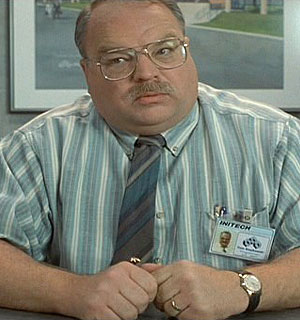
Richard Riehle is one of those actors that you just know.  He is instantly recognizable with a frame and mustache that makes him an obvious choice for a Santa Claus character (which he has done, most recently in A Very Harold & Kumar 3D Christmas) or a cop (The Odd Couple II).  But even with this sort of typecasting in mind, it is the versatility of this fine actor that is so impressive.  Most people are going to remember Richard for his hilarious supporting role in the film that epitomized the hilarity of slackerdom, Office Space, in which almost stole the show with his “Jump to Conclusions” mat, that I wish actually existed.  But on a personal level, Richard Riehle will always be Principal Beasley from one of my favorite films as a kid, Jury Duty with Pauly Shore (don’t judge me hipsters, I was 10 years old!).  This is an actor who is always recognizable in my book, and a great talent with almost 300 television film credits to his name.  His work ethic is amazing, and his talent is the same.  And we were fortunate to steal some time with Mr. Riehle, and grill him about the world of acting, Office Space, and much more.  Enjoy!

You are one of the busiests character players in Hollywood right now.  What motivates you to work just so damn hard?

It doesn’t seem to me that I’m working hard at all. I really enjoy what I’m doing and hardly think of it as work. Every project is a new adventure that I eagerly look forward to.I love working with new people; experiencing new processes and ideas; and exploring new characters stories and situations; and if I’m lucky doing this in new places around the world.”Work” is a blast, and usually more interesting and fun than day to day existence.

We’ve watched your stellar performances in comedy, action, horror, and so on.  What is your favorite genre to work in? 

My favorite genre is the one I’m working in at the moment. And I love shifting from one to another. You learn more about each genre by experiencing it from the prospect of the genre you’ve just been working in, or the one you are preparing to work in.It makes for a more interesting character or project if you can find some comedy while doing horror, some serious underpinning for knockabout farce, or some thoughtful character work in an action/adventure piece.

You are a man of the theatre as will as the screen.  Tell us, have you ever had a truly embarassing moment on stage, or witnessed something extremely embarassing?

How much space do you have for embarrassing theatre moments. I’ve gone up in the middle of a 2 page Shakespearean monologue, when all I could think to do was beat on the only other actor on stage until I remembered the next line. That was in front of 1200 people. Or falling asleep on stage and snoring.

I understand you are fluent in German.  You have been in more films than I could possibly remember, so tell us, has your German fluency help you in the acting world? 

I shot a film this week about the childhood of Charles Bukowski, playing Bukowski’s grandfather, who was meant to be a German emigre, so my background in German allowed me to use a German accent,and throw in a German word or two at the audition and in the filming. The 2nd film I got cast in was as a German speaking Gold Rush bar owner, and we shot a scene in Growth in which I had a phone conversation in German. Neither made the final cut.Richard Riehle3

What was the dynamic like shooting the now cult favorite Office Space Did you get to keep the Jump To Conclusions mat?

Office Space was a great experience from beginning through its still continuing life. Mike Judge took his time casting the film then told us we’d be going to Austin for 25 shooting days, his hometown, where no suits would be looking over our shoulders. We’d have to work hard to get everything, but at the end of the day he’d introduce us to some of his favorite restaurants and music spots. Mike did his role the first day, giving us all a clear sense of what he was going for.

Mike wrote a great screenplay, and was a wonderful director, making the set a fun place to be.

He put together a terrific group of people who enjoyed spending time together both on and off the set. He knew exactly what he wanted, and was clear in describing it. I couldn’t have had a better time working on it, and to this day people still stop me and tell me it’s their favorite movie. And I have no idea what happened to the jump to conclusions mat, I swear.

I’ve noticed that you already have quite a few projects coming out this year?  Can you tell us a bit about what we will be seeing you in this year?  Especially the mysterious modern day thriller Friend Request?

It’s always hard to tell when a film will be released, whether it will be in theaters or on cable or DVD or streaming, or even what it will be called. Friend Request was fun to shoot around Salt Lake City, and evidently went well enough that they’re already in preproduction for Friend Request 2. And one of the producers is putting together a terrific Western that I hope he’ll use me in. I did a Western last year called Dead Man’s Burden starring Clare Bowen who’s now one of he leads in Nashville. It turned out great and was screened at the LA Film Festival. And I did another social network film, Death By Facebook, a dark comedy(aren’t they all?). Did a double/triple cross film with Ray Liotta; Scribbler, based on a graphic novel in which I have a scene with Gena Gershon and a boa constrictor; Obsession with James Duvall about a hedonistic reporter; and Lovesick with Matt LaBlanc about a relationphobe. Any of them could appear in the near or distant future.

Richard Riehle2If you could portray any famous Revolutionary War era figure, who would it be?

Benjamin Franklin would probably be the Revolutionary War figure I would have liked to have been. He got to participate in most of the important events of the day, but never had to be responsible giving him time and opportunity to tinker with things that interested him, inventing, writing newspapers and almanacs, creating the postal service and libraries, even flying a kite. Meanwhile, enjoying all the good things in life, wine, women, and song throughout the new country and Europe.

What was the last thing that made you smile?

The last thing that made me smile was waking up this morning, having made it through the night, with all the possibilities of a new day.

Lisa Loeb [Interview]

LISA_BW7

Lisa Loeb is a woman who really needs no introduction.  She is the brilliant singer/songwriter who is easily recognizable for her black rimmed sunglasses, brilliant song writing capabilities, and her hit song from the 90’s, “Stay”.  And twenty years later, Lisa is just a beautiful and talented as she was when we first laid eyes on her.  Time has had nothing on this brilliant musician.  She continues to put out amazing records on a consistent basis and is widely respected as one of the finest musicians in the folk and indie rock world.  “Stay” has become a staple in the world of music, film, and even karaoke (the latter might be contested, but seriously, doesn’t every one try this song at least once?).

Lisa Loeb came out of nowhere, really.  She was the first artist to ever have a number one single without being signed to a label when her friend Ethan Hawke (who we should be entirely ass kissing for showing us the power of the Loeb) convince Ben Stiller to use “Stay” for the end credits and soundtrack of the 1994 hit indie film Reality Bites.  Like most people, this was about the time I learned who Lisa Loeb was.  Reality Bites is, and will always be, a film that consistently makes my Top 5 films of all time list, varying in order.  I actually have a fond memory of walking into my living room as a child when my father was watching the film.  He told me I probably wouldn’t like it because, you know, I was 9 years old.  But, the challenge was accepted, and I love the hell out of that movie even at such a young age.  And I remember when the film ended, and that beautiful break up/make up song came on, and I was hooked.  I would later beg for a copy of her album Tails, and have been hooked every since.

So, you can imagine how much of an honor it is to have Lisa Loeb agree to share a few words with us and to have her join the Trainwreck’d Society family.  It would behoove me to inform you fine readers that I was incredibly nervous, just getting an e-mail from her publicist.  But, the end result was absolutely fantastic as we discussed what Lisa has been up to, how she likes the life of being a mom, and how such a sweet lady managed to cover Ozzy Osbourne and become a horror film star.  So sit back and enjoy a few words with the absolutely legendary Lisa Loeb!

Can you recall a certain moment when you realized you wanted to be a musician?  Did you ever have dreams to do anything else?

I think the moment I felt like a musician was in acting school abroad in England during a high school summer.  I played guitar in my dorm room, and other kids came by to say hello and hang out.  When someone asked me for a recording of one of my original songs, then I felt like I was a musician.  Although I’d been performing forever and even writing for a few years, all of a sudden my songs existed as things outside of myself.

I have dreams to be a groovy songwriter who sits in a room by the beach, just creating all day and painting, dancing, playing guitar and piano.  I also would like to be a psychologist.  Sometimes I dream that I’ll hang out one day or one week or one month or year and just figure out what I really, really want to do…

You grew up in a world engulfed in the medical world in Texas, but became a literature major/acoustic guitar strumming artist.  Were your parents supportive of your choice to become a musician?  Are they fans of your work?  

My father is a physician, but there was always a lot of music around the house.  My father played piano and all of us kids (my older brother, younger sister, and younger brother, and I) all learned to play instruments.  We often listened to all kinds of records, ranging from Queen to Classical music to musical theater.  My parents were a little nervous about my decision, but luckily I started getting professional interest and opportunities early enough after college for them not to go on for too long… although my mother does still ask sometimes if I want to go back to school do something else.

Your songs are normally sweet, soft, and melodic.  Quite the opposite from Ozzy Osbourne….so, how did you become involved with Bat Head Soup?  What made you want to do this project?

I became involved through Dweezil Zappa, who was doing cover songs on Bruce Kulick’s cover song album projects.  Dweezil thought it would be an interesting, surprising thing for me to sing “Goodbye to Romance,” and Bruce finally agreed.   It was a cool contrast to what you’d normally hear on an Ozzy album!

Also what seemed like quite a leap was your role in a the remake of Tom Holland’s Fright Night and a few other horror films?  Are you a big fan of horror films?  Is there a darker side of Lisa Loeb than we know?

I did see every horror film that came out when I was in High School- my group of friends were on a horror film kick from the gruesome to the kitschy.   I actually get really scared now when I see horror films, but as an actor, I thought it would be fun to play a high school kid’s mom in a film!

LISA_BW8On the topic of films, your songs have had regular appearances in films and television.  What would you say is the silliest or zaniest use of one of your songs in a film or television show?

Recently there was an entire episode of the TV show Workaholics written around my song “Stay”.  It was pretty hilarious, albeit raunchy.  I had to text my mother not to watch that one.

Can you tell us a bit about The Camp Lisa Project?  What inspired you to create this foundation?

I loved summer camp growing up and so when I did my second kids’ album, I decided to share my summer camp experience through music from summer camp as well as new songs I made with Michelle Lewis and Dan Petty inspired by summer camp in the 70’s and 80’s.  Summer camp was where I started really performing with an acoustic guitar, on stage or sing-alongs in the cabin and by the lake.  I thought I could share this feeling through music, but then realized I’d like to help send kids to camp, so I started the Camp Lisa Foundation and now send kids to camp through S.C.O.P.E., an organization based on the East Coast who sends kids to camp who normally wouldn’t have the opportunity to go.  It really enriches a young person’s life, teaches them to be a leader and part of the community and it’s fun!

You developed your first children’s album many years before you were a mother yourself.  What made you want to create Catch The Moon?

Barnes and Noble gave me the opportunity to make an album that was different from my normal records and I’d always wanted to make a kids record like Carol King’s record, Really Rosie.  It was a record for kids that sounded like a grownup record.  I asked Elizabeth Mitchell, my old college roommate/band mate to make the record with me since she was already making amazing kids records and we hadn’t worked together in a long time.

For a mother with two small children, you still manage to be one of the hardest working woman in music/show biz…how do you do it?  Is it a struggle to keep a family life going and continue on with your career?

I am able to do what I do with the help of my husband, the nanny, and my team who keep me organized for the most part.  Often I look back at the day and am amazed at how much I got to do and still spend a lot of important time with my kids and husband. Other days, I look back and wonder when am I going to learn how to really balance it all and use my time wisely.

If you could perform next to any female singer from the early Jazz era, who would it be?

I’d love to perform next to Julie London.  She’s always been a favorite singer in my family.  She’s cool, romantic, has a great sense of humor and also seriousness in her singing.

LISA_BW6What does the future hold for Lisa Loeb?

Today it’s a voice over audition, a walk around the block, kissing my 8 month old son, doing a princess puzzle with my three year old and a night out with my husband.

What was the last thing that made you smile?

 Seeing my daughter at dance class tip-toeing around the room catching bubbles while my son crawled down the hall to welcome the other moms and nannies at the dance school.

Jim Geoghan [Interview]

JIM GEOGHAN
When I was young kid in the early 90’s, television was damn good!  I remember relaxing after a day of play in front of the TV on Friday nights and enjoying the now classic line up known as TGIF.  And there was one show that reigned supreme….Family Matters.  Despite my skin tone, I always felt that I was a part of their family.  Not that there was anything wrong with my family, I just loved the Winslows, and that show still remains my one of favorite sitcoms of all time, and definitely my favorite of the TGIF line up.
That being said, I am very excited to have one of the creators and main currators of not only Family Matters, but so much excellent work as a producer and a writer for well over 30 years.  Currently he is the head man in charge for both of Suite Life of Zach and Cody series, and continuosly working on entertaining us.  Ladies and gentlemen, I introduce to you the legend himself, Mr. Jim Geoghan!
[Note: You may notice that there is an abundance of photos below, more than usual.  These are all photos that Mr. Geoghan himself was nice enough to pass along to us, all taken by himself as well!  Another nice bonus!]
What is it like writing scripts for shows oriented towards kids in the pre-teen years like The Suite Life series?  Do you feel any sort of limitations?  What made you want to shift gears into this arena?
 
Writing scripts oriented toward children keeps you young at first but as the years go by you begin to realize how old you’re getting.  I might need to reference a popular rock group in dialogue and the best I can do is a rock group that was big ten years ago.  I’ll know instantly how out-of-date I am when the younger writers begin laughing at me.  When the writing staff offers names of more current rock groups I won’t recognize any of them.  It’s hideous.  But ultimately half hour programs for children will always deal with issues of trust, friendship, courage, dignity, kindness etc. and those issues will never fade away.
 
CODY MIME #2
Limitations; Orson Welles once said “The greatest threat to the creative mind is the absence of limitations.”  I’d like to think limitations make creative people work just a bit harder.  I’m always mindful that parents have entrusted me to entertain their children for thirty minutes.  I don’t want to betray that trust with things that excede the boundaries of good taste for young people.   As a writer and producer I have to remember the show is not just mine, it’s owned by a production company and a network that pays me.
When I want to write something that has virtually no limitations I write for the theater.  Nothing is more exciting and expressive than writing for the theater.  Sadly, there is only a tiny handful of people who can make a living writing for the theater.
BRENDA & ASHLEY CHRISTMAS #1
You were one of the writers and creative masterminds behind my personal favorite sitcom of all time, Family Matters.  I know why I love it, but please tell us what you believe made that show legendary to so many people and so many different demographics?
  PIRATE #3
Family Matters had a great cast of talented actors, a sensational writing and producing staff and it was part of a Friday night block of sitcoms on ABC that kept families in front of their TV’s for two solid hours.  The chemistry the actors had with each other was something of a miracle.  It’s something you can’t always write.  Urkel was also one of the great misfit figures of the nineties.  I was a neurotic, insecure child and I always loved comedic characters who were misfits.  I think I was relieved to see someone worse than me.  I believe Urkel offered the same relief to kids during the run of the show.  He was a social outcast but he never gave up and he would not accept criticism.  The rest of the cast was masterful in showing their irritation with him.  My years on Family Matters were some of the best years of my career.
URKEL HOT ROD 2
Can you tell us a bit about Divided We Stand?  What are some highlights from that time?
 
Divided We Stand was a comedy trio working out of The Improvisation in New York in the early seventies.  I had been writing for the trio.  They disbanded and when it was put back together I was made a performing member.  Unlike other comedy performers I didn’t have a “break in” period of writing and testing material for months and months.  Divided We Stand had well over an hour of stage tested material.  The lines and the laughs were all there.  I had seen these bits many, many times.  My first time on stage was in front of two hundred people.  We slaughtered the audience that night.  Standing on a stage for the first time, getting huge laughs was like a drug to me.  I’ve been hopelessly addicted ever since.  The trio went on to appear at over four hundred colleges.  We toured with a lot of big names; The Righteous Brothers, Frankie Valley and the Four Seasons, Jimmy Buffet, War, The Commodores… we performed in forty-seven states and in parts of Europe.  Later on the trio became a duo, Geoghan and Fine.   Marc Fine and I gave up the road and only played local clubs in New York.  We were sensational.  Everything I ever learned about performing comedy I learn from Marc.
DUCK HUNTING 3
You co-wrote the screenplay for the 1986 film Stoogemania.  What inspired you to develop this story?  Are you a big Three Stooges fan yourself?
 
I’m a big Three Stooges fan up to a certain point.   I can watch face slapping and eye poking for twenty minutes, not much more than that.  Stoogemania was made because three of the Stooges films had fallen into public domain.  Someone in a studio somewhere forgot to renew the copyright.  Atlantic Releasing had the idea of using clips from those films and weaving them together with new footage.  My good friend Chuck Workman, who later went on to win an Oscar, asked me to write the film with him.   It was great fun and my wife, Annie Gagen, got to play a role.  I also got to meet and work with Sid Caesar my childhood comedy hero.
You went a little bit of a different route in 2002 with your screenplay for the independent horror film Fangs.  Was this as drastic of a change in projects as it seems?  What made you want to get into the horror field?
 
Fangs was my only horror film.  Kelly Sandefur, a good friend, asked me if I would write the next film he was due to direct for Porchlight Pictures.  It turned out to be Fangs.
Can you tell us a bit about one of your latest stage plays UG?  What was this all about?
 UG #7
UG is a satire on theater.  It’s been published by the Dramatist Play Service and has seen a half dozen productions around the United States.   It’s a small cast musical with one set, a cave.   Ug is the leader of a family of cave dwellers one million years ago.  He’s grown tired of telling stories the same way every night.  So he reenacts an event and by doing so accidentally invents the first play ever.   A rival tribe is due to visit in days to come.   Ug and his tribe decide they could be considered trendy if they performed their play for the visiting tribe.   Moments later they’re at each other’s throats with rewrites and bickering during rehearsals.  Rick Rhodes, a multi Emmy winner for composing music wrote the music for UG.   I have the TV and motion picture rights to the popular comic strip B.C.   I’m currently adapting UG as an animated feature for the cast of B.C.   It’s very exciting.
UG #3
What does the future hold for you?  What can we expect to see from you in the future?
 
I’m working on too many projects to mention.  I write every day whether it’s for money or not.  I write for television, motion pictures and the theater.  I have 8 published plays and I’m a member of the Actors Studio Playwrights and Directors Lab.  I have a Drama Desk nomination for a play of mine that ran off-Broadway in New York for two years.  I always like to point these things out because I never got more than a ‘C’ in English in high school and no one at my high school (Christopher Columbus in the Bronx) would let me write on the school paper because of my poor grades.  But my high school did me a favor.  It taught me to trust myself and to have the courage to move ahead even when I didn’t have support from “experts.”
REGGIE FAMILY MATTERS
What was the last thing that amde you smile? 
 
Little kids make me smile.   I have a cat at home that’s hysterical.  My wife and daughter always make me smile.