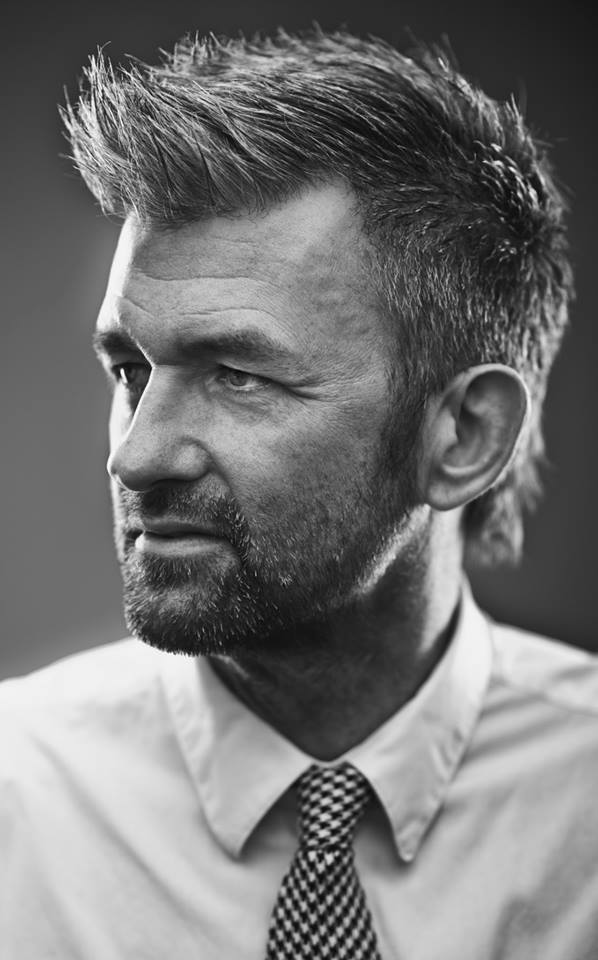
David Blyth [Interview]

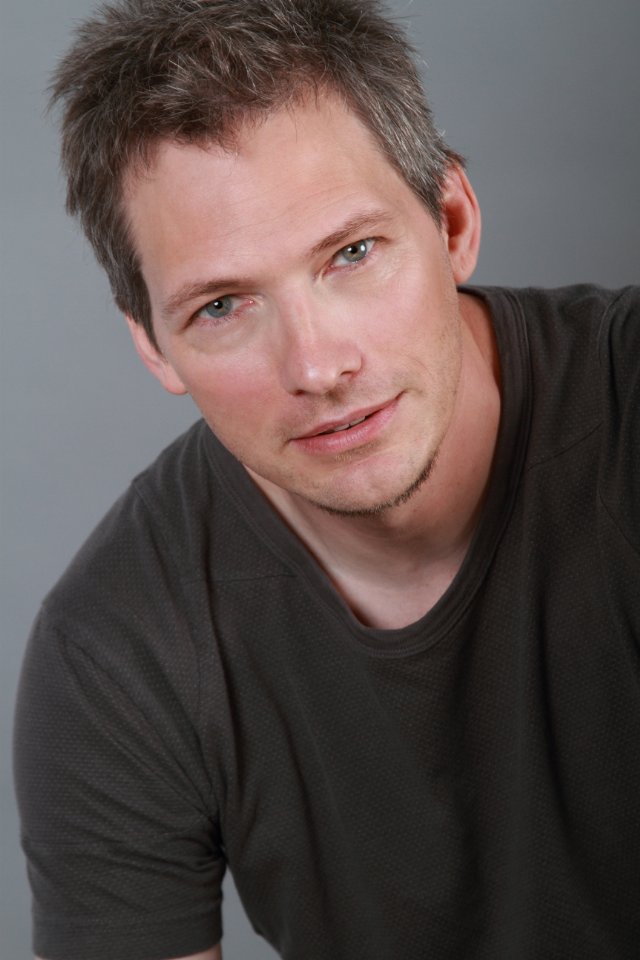
David BlythHello All!  And welcome to Day 2 of Trainwreck’d Society’s 2nd Annual Week of Horror.  We have a special treat, and some special involvement on this interview.  We are very excited to showcase a brilliant horror/thriller filmmaker known as David Blyth.  Our dear friends at the wonderful PR company October Coast  have been constantly updating us with the latest in hottest in horror, suspense, and so much more.  And we couldn’t be any more excited about them turning us on to both the brilliant new film Ghost Bride, but also the films amazing creator David Blyth.

Mr. Blyth has been working as a filmmaker for over 40 years, and has stacked up some very nice credentials on the world of art house style horror that pushes the limits just about as far as they can go.  With films like Wounded, Exposure, and Death Warmed Over.  Not to mention an almost unrelated, but super cool, run of episodes of the original Mighty Morphin Power Rangers.

And from what I can gather, the New Zealand based Mr. Blyth may have created his finest film to date with Ghost Bride, which is “a dark modern fairy tale intertwining modern cross cultural relationships and ancient Chinese superstition.”  And we are being told that “though no less disturbing, Ghost Bride is more of a supernatural thriller than a horror movie like David Blyth’s previous effort Wounded.”  And hey, we are not opposed to breaking the mold every once in a while.  So we are already big fans of this project.  And with being said, please help us give a warm welcome to our next interviewee, Mr. David Blyth!  Enjoy!

Ghost Bride hits DVD in November. Has this been a long time coming for you?

I started working on the script for Ghost Bride in 2011 and we shot the film in 2013.
This was my tenth feature film.

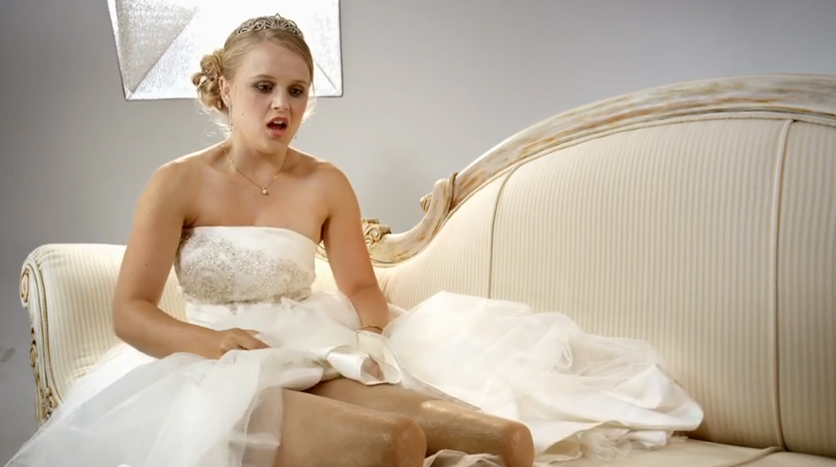
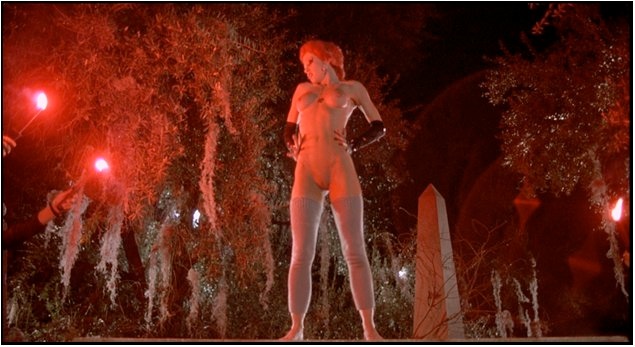
still from Ghost Bride

still from Ghost Bride

Do you find it easy to watch your own work – or are you too critical?

When I watch my films I am aware of my own compromises and mistakes but try to see them as moments in time full of conscious and unconscious story telling.

What makes a good horror film?

Good characters that you can follow in a tight convincing story line with lots of unexpected shocks.

Do you remember the first one you saw and what impression it made on you?

Halloween by John Carpenter was the first major horror film that completely opened my mind to a world of possibilities in horror.

still from Ghost Bride

still from Ghost Bride

Where did the idea come from for the film?

I found a website on the internet dealing with Asian Paranormal investigations and it featured a transcript of a Ghost Bride ceremony, where a young recently deceased male was joined in marriage with another dead female and then placed in a double coffin in the ground. The theory behind this practice is that if the young man’s spirit is married for eternity he won’t come back and annoy the living bringing them bad luck.

Have you discovered you’re a loyal fan base for the film?

Ghost Bride is more a supernatural romance than a hard core splatter film like my last horror film Wound. So Ghost Bride has a much wider audience appeal than Wound.

The film is premiering on DVD in the states; do you think there’ll be a time where we’ll even need – or have – a cinema?

Most films seem to be bypassing the multiplex these days.  There will always be cinemas like we have museums today for watching spectacular storytelling, but for the bulk of people in the digital age the new platforms for viewing cinema are now on personal devices.

ghost2

still from Ghost Bride

The film has been getting some good publicity over the past month or so, is that a testament to how popular the horror genre is?

Ghost Bride has a unique story line that deals with the different concepts around marriage in the West and the East. Where in the West you can only be married when you are alive and in the East where you can be married after death for eternity.


Learn more about Mr. Blyth, his work, and the upcoming Ghost Bride at the following sites:

http://www.ghostbridemovie.com
http://www.woundmovie.com
http://www.davidblyth.com

Linnea Quigley [Interview]

Linnea QuigleyWelcome Everybody to the 2nd Annual Week of Horror here at Trainwreck’d Society!  If you were around last year, you might remember how this works.  We are here to give you a week’s worth of interviews from some of the greatest minds and talents from the world of horror, new or old, indie or mainstream, whatever.  Each of the people we have are featuring is special in their own right, and held a very dear place in the world of horror that we all just can’t get enough of.  So without further ado, let’s begin Day 1!

Scream Queens.  We all know what one is.  In fact, we’ve probably picked out our favorite one at some point or another.  Scream Queens rose to incredible amounts of cult fame in the 80’s, and their legacy has yet to falter.  How it all started, or who started it all, really doesn’t matter (Jamie Lee can’t have everything!).  We love Scream Queens, with their raunchy and delightful spirit.  Their unashamed nudity.  Their overall vast amount of straight badassery!  We love them.  There may never be anyone quite like them in the world of horror.  And one woman who embodies the brilliant overall spirit and charisma of a Scream Queen is without a doubt the legendary Linnea Quigley.

Linnea Quigley rose to fame in the anything goes world of the 80’s horror scene as the premiere Scream Queen of her time, ultimately landing her a brilliant role in Return of the Living Dead, and many more wonderful projects.  And she has been relentlessly working ever since.  With over 150 projects under her belt, she has refused to slow down.  She’s written a couple of books on the matter that have been called some of the most insightful words ever written about the genre, and whenever a documentary about horror and/or the Scream Queen label, you can bet your sweet bare ass that they will come calling for Linnea.

So without even further ado, we are proud to present our interview with the lovely and insanely talented, Linnea Quigley.  Enjoy!

Linnea Quigley2In your own personal and obviously professional opinion, what does it mean to be a “Scream Queen”? And what do you personally believe it is about them that is so fascinating to viewers? 

I think a Scream Queen is someone who has done and also loves horror films and embraces each role and the genre.

You seem to have a relentless work ethic, appearing in multiple films each year. So, how do yo do it? What keeps you motivated to keep working?

I keep motivated from the responses I get from people AND I love the work when you love something its never a chore and it feel like I’ve managed to do something in life its amazing how people remember from all those years I’ve been working.

I’ve also come to learn that you are quite the musician yourself, having been The Skirts. So do you still play and/or perform these days? Is The Skirts reunion in effect?

I was in the band but the bass player Haydee is on the other side of coast from me. Man I would have loved to have kept working and kept doing gigs its so cool that some of the music I wrote and played is in some movies and documentaries its a great feeling. I hope to get together with her soon and play somewhere I miss that a lot.

What do you consider to be your all-time favorite gig over your long and illustrious career?

My best projects were Return of the Living Dead, Night of the Demons, and Sorority Babes. Well, it’s hard to name just one all of them have their memories and hope to do another book about them soon.

And, of course, what would you say is the worst? 

My worst was probably Animals it was filmed at this mosquito filled nudist camp and its very corny. But the people were nice so its hard to say since everything is a learning process.

Linnea Quigley3Can you tell us about some of your upcoming projects, as I noticed you have several in the works?  And what are your plans for Halloween?

Right now I have a lot of things lined up I have cons booked all through October and also films lined up. So I will have a working Halloween! Busy.

What was the last thing that made you smile?

The last thing that made me smile was one of my dogs who took a dip in pool jumped in bed all wet on me they constantly have me smiling.


Darren Burrows [Interview]

Darren BurrowsIf you read our last interview with director/producer Michael Fresco, you should already know that I am currently on an emotional vacation to the remote Alaskan town of Cicely, Alaska.  My feet are still planted in southern Spain at the moment, but my heart is in Cicely as I discover for myself just how beautiful the hit comedy Northern Exposure truly was, and always will be.

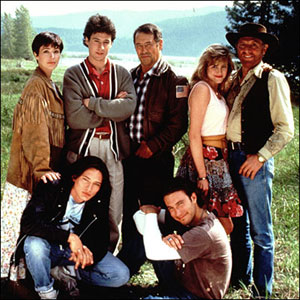
That being said, I have found my favorite Cicelian to easily be the kind hearted and genuinely sweet Ed Chigliak.  There just isn’t anything in him that is NOT meant to be loved.  The half Native American-half white film buff is the sort of person we all hope to have in our lives, and should be eternally grateful when they do enter our lives.  Each time his smile lights up the screen, it is like the sun breaking through the clouds.  In fact, of all the discredits that Northern Exposure received, the fact that Darren Burrows did not take home at least two Best Supporting Actor Primetime Emmy’s, and maybe a Globe as well,  for his role as Ed is shocking and unjust.  But, those are really just statues in the end, although they have been given out to some very deserving folks at times.  But, I digress.  The real point of everything here is…..we got Darren Burrows!  Yes, I have to say that I could probably just close up shop here at Trainwreck’d Society right now!  I have managed to steal a few words from the man who played my favorite character on my favorite television show of all time.  Mission accomplished.

For those of you who have not had the joy of experiencing NoEx for yourself, well there is obviously something wrong with you but that’s okay, Darren should still be no stranger.  May comparisons have been made between this great man and other legendary actor Johnny Depp.  With their chiseled good looks as a youth that have not faded as they reach maturity, it is easy to see that Johnny was the 80’s man, and Darren was the 90’s man.  Which can be truly seen with all its glory as they co-starred with one another in John Water’s lovely bit of weirdness that was Cry Baby .This was until we started to soften up a bit towards the end of the 90’s, but that is a whole other story.  Mr. Burrows even happened to appear in a great little television movie entitled The Siege of Ruby Ridge, which we should all know as the adaptation of our old friend Jess Walter’s book Every Knee Shall Bow.  He has also had great performances in films like The Hi-Lo Country, Speilberg’s Amistad (which if you are a NoEx fan, you will know that is this a BIG deal), and Nonames.  Most recently he brought on a tour-de-force appearance in one of the finest films of 2014, Love is Strange opposite John Lithgow and Alfred Molina.

I am just too damn excited for words to explain how wonderful it is to have Darren Burrows join the Trainwreck’d Society family.  And it’s not only for his work on Northern Exposure, although I have to admit that is a huge deal for me.  Mr. Burrows is an amazing actor that we are so proud to have associated with this site, even if it’s just for a couple of days.  So finally, good folks….Mr. Darren Burrows!

When was it that you knew you wanted to join the world of acting?

I started taking acting classes after I got out to California…. I was 16 years old. I left Kansas to find my dad. I found him and he was an actor, so I signed up for acting classes thinking that would give us something in common to talk about… I’m not sure I ever did make the decision that I was going to “be” an actor, things just sort of ended up that way.

If you can recall, what was your very first paid acting gig? And how did that go for you?

My first paid acting gig was 976-EVIL. It was Robert Englund’s (of Freddy Kruger fame) directorial debut. He cast me for the role of a hoodlum named Jeff and that got me my SAG card. I think I was 19 years old. I learned so much on that job, beyond emotion and dialog; how to hit my marks, fight scenes, special effects. It was a huge thing Robert did for me.

Darren Burrows2How did you first hear about the casting call for Northern Exposure, and what drew you to the role as Ed?

The first I heard of Northern Exposure was a call from my agents about this summer series that was just supposed to be eight episodes up in Washington. One of my agents at the time had got it into his head that because my dad had played Native Americans I should too. He wanted me to audition for the part of this Indian kid in the show. I pointed out to him that I had white skin and light hair. He tried to convince me to put dark skin toner on my face, dye my hair black and go in for the part but I passed. Two or three weeks later my agent called again and said the part had been changed to half Native and half white. He begged me to just put some black temporary dye in my hair and go in. I finally relented but I told him I was going to play the part a little differently, in a less conventional way.

In your own words and opinion, who was Ed Chigliak? How did you go about tackling this delightful character?

At a certain point during the filming of the first episode I made the conscious decision that I would/should play Ed in such a way that made him all that is good and best within each of us as human beings. That Ed having grown up an orphan and being a genius with 150+ I.Q. had recognized the potential within himself of a clean slate. The opportunity to be whomever he chose and he would choose; a consciousness of innocence and love, over the knowledge of good and evil

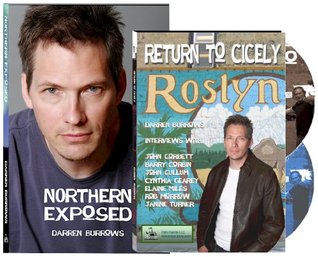
You recently released both a book entitled Northern Exposed and a documentary entitled Return To Cicely that has caused quite the buzz. Can you tell us what fans can expect from both the book and the film? And what inspired you to finally do such a project after all these years?

The inspiration for the book and DVD’s was always the Northern Exposure fans. They wanted it. In fact the entire project was funded in advance by NoEx fans via an Indiegogo crowd funding campaign. So it was never meant to be a stand alone endeavor. It’s strictly for Northern Exposure fans. As to what fans can expect? This, from returntocicely.com site: “This 228-page book is filled with insights into the filming of all your favorite episodes of Northern Exposure. Memories of the cast and the crew and theories about what did happen to ultimately get the show cancelled. The DVDs (there are 2) take you to the locations for all the key episodes to see what they look like today. The surviving cast members give their thoughts on those days and what made the show great. DVD extras include the building of the Trebuchet and Dr. Fleischman’s house, plus a backstage tour of the studio in the final days of the show’s production.”

Darren Burrows4What sort of emotions were rekindled when you were revisiting the past in such a grandiose manner? Was it an overall good experience?

When Northern Exposure ended after five years I sort of packed it all up in a box put it away and moved on… so revisiting it was it was like taking down that huge dusty box that had been sitting for all those years and unpacking it. It turns out there was more than just a television show in the box. There was a whole period of time in my life. It was more than I imagined it would be and I found all sorts of treasures I’d forgotten about.

Had Northern Exposure been given the proper treatment, what do you think would have happened to Ed and the rest of Cicely had the show been able to keep going?

That’s really the million dollar question isn’t it? …I think that Ed and Cicely would have gone on, continuing to grow and evolve much like the characters have done on Cheers, Friends or any other show that strikes a chord with the viewers and people out there. During its height NoEx was syndicated in forty-two countries around the world so it’s not such a stretch to see that continuity.

Hailing from the Northwest, I am very aware of the Roslyn, the very small town that stands as most of what we saw as Cicely. It is quite isolated, but extremely beautiful. How did you enjoy your time out there when the show was filming? How did the local residents respond to the show being shot in their backyard and main streets?

I loved shooting Northern Exposure there in Roslyn and the Cascade Mountains. As you say it’s very beautiful. It was a lot of work and long hours as well. The show caravanned up for 3-5 days out of an 8 working days an episode schedule to shoot all of our exteriors in the winter weather. Sometimes we’d get snowed in and the work days were always more than 12-15 hours long. Shooting Northern Exposure was certainly a disruption on the daily life there. Some of the residents were for it, some were against.

Can you tell us a bit about your latest film, Love is Strange? What will we be seeing you do in this film that so many are raving about?

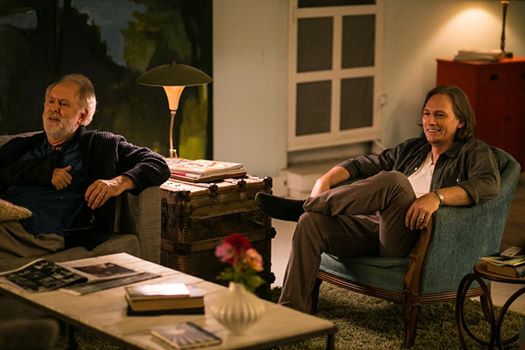
Love Is Strange takes place in New York City. It’s a multi-generational story of love and marriage. As such we have John Lithgow and Alfred Molina as Ben and George as an older gay couple of 39 years finally tying the knot. I play Ben’s nephew Elliot and my wife Kate is played by Marisa Tomei and then we have Joey, Elliot and Kate’s son played by Charlie Tahan. Each of these people are at different times and stages in their love and relationships. All is thrown into turmoil when George loses his job and Uncle Ben must temporarily move in with me and my family until he and George can get their situation sorted out.

Darren Burrows3What else does the future hold for you? Any other projects in the works you would like to tell us about?

What the future holds for me I suppose remains to be seen. As of the answering of these questions I’m getting ready to head up to Wisconsin for a little film festival my friend Nick Langholff and I started a couple of years ago called the Driftless Film Festival. Life is certainly an adventure.

What was the last thing that made you smile?

Why, this question made me smile 🙂

Michael Fresco [Interview]

Michael FrescoSo in the past few week, I have been embarking on an incredible journey.  While I may be in one location the physical sense, my mind has moved on to a more enthralling and albeit more entertaining place.  That place is Cicely, Alaska.  For the shameful few who don’t know such a place, Cicely is the fictional town setting for the greatest American television comedy that ever was, the wonderful Northern Exposure.  Recently I have been marathoning the show quite zealously to say the least.  It has been a truly enlightening experience to finally, after so many years of watching various programs, to find what I now considered to be the greatest television comedy of all time.

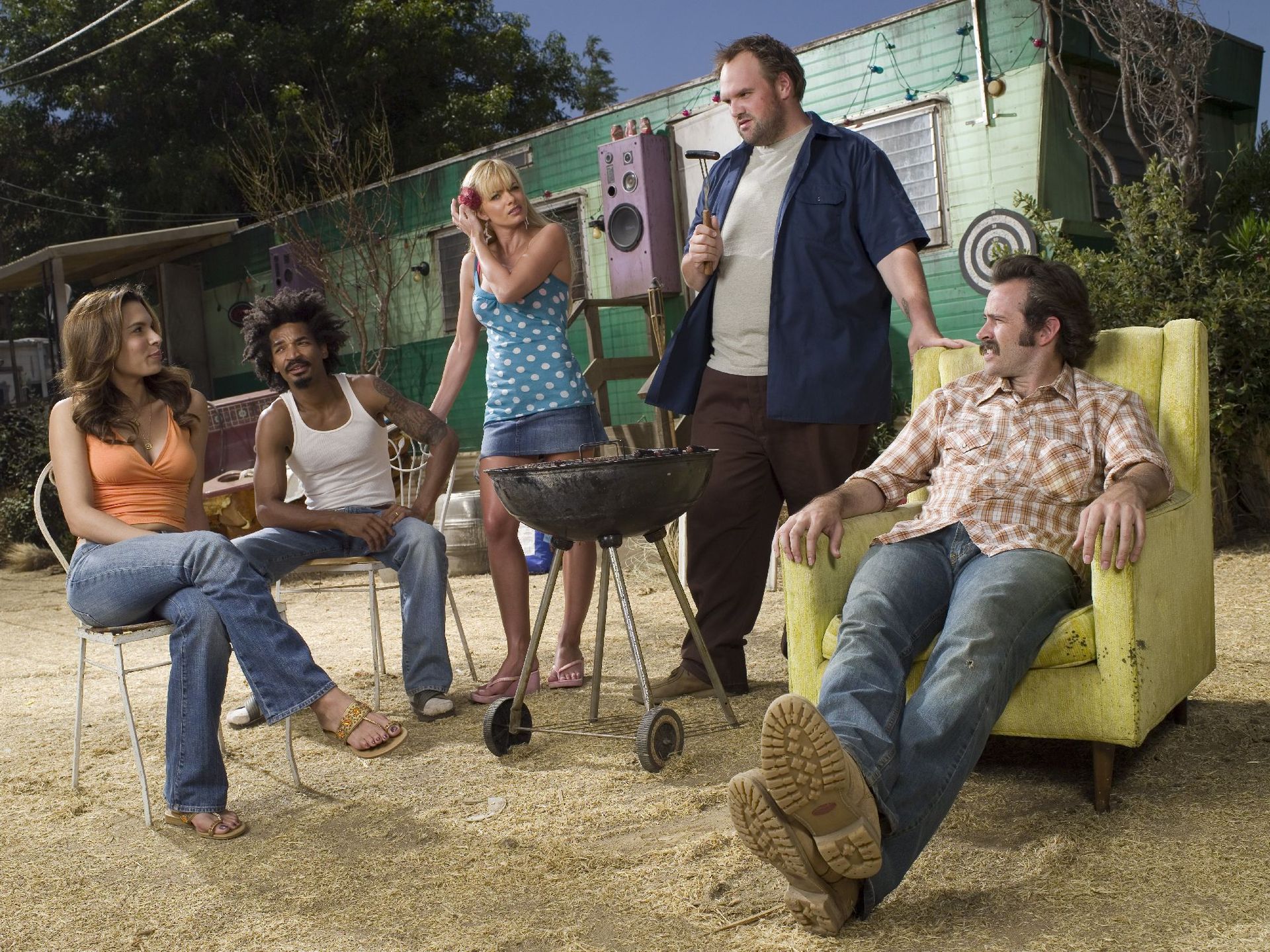
And with that being said, I felt the need, make that desire, to gain a bit of insight about the inner workings of this lovely show.  And just as I expected, there were some very genius folks behind this brilliant show.  One of the finest examples would definitely be the incredibly talented and widely experience director and producer Michael Fresco.  Fresco was one of the great human beings we should be oh-so-thankful for ever having been birthed, if not for the soul reason of bringing us the great Northern Exposure.  Of course Mr. Fresco had been bringing us quality television prior to NoEx, and has definitely continued to do so to this day.  He started off his on the also brilliant show St. Elsewhere, and has since directed or produced several runs of hit shows such as My Name Is Earl, The O.C., Providence, Better of Ted, Raising Hope, Subergatory, and oh so damn many more.

The man is also a bit of a mystery, which is in some ways enlightening.  From the brief e-mail correspondence I have had, the answers to the following questions, it is easy to peg Michael Fresco as a man who simply enjoys his work and what he does, all the while seeking little notoriety or glamour.  I mean, this is a guy who has worked diligently for over 30 years to create some of the finest television in history….and I can’t find a photo in Google Images to use of this mysterious creature? (The above image being the closets thing I could find.)  And the same could be said for a couple of his brothers, who are also renowned television writers and directors in their own rights.  In fact, Mike and his brother Victor collaborated nicely on Better of Ted and My Names Earl, the latter being finding Victor as a consulting producer on the show’s entire run.  (Note:  Victor Fresco was also the genius behind the short lived Sean Saves the World which, while obviously a bit corny and “just missing something”, was a wonderful show I was deeply saddened to see disappear.  This wonderful show would have killed it in the 90’s.  But I digress, it is Mike’s time right now.  Sorry Mike.)

So, it truly makes me wonder why he would even want speak with the likes of Trainwreck’d Society at all!  But, I am damn honored and excited that he did.  So without further ranting, check out a few words with one of the finest television producers/directors the world has and will ever know!

Better Off Ted S01-S02 720p WEB-DL DD5.1 H.264How did you find yourself involved in the world of television?  Was it always your dream to produce and direct fine television programming?

I stumbled my way into the world of television.  Once I was involved, and without a lot of planning…actually mostly due to a series of lucky breaks…I got my chance to direct.  All that was clear when I graduated from UC Santa Cruz was that I wasn’t qualified for many jobs.  I could work at a gas station, or at a fast food place, or be a gopher for a TV production company. OK, a TV production company seemed like fun. Through a family friend I got a job running errands for Laugh In.  While is was a blast to work there, unless I wanted to be a writer (not a possibility for me) there was no real opportunity to “move up” in that world.

After 9 months or so I left Laugh In and became a gopher for a commercial production company.  Commercials proved to be an excellent, excellent training ground.  Each commercial was a complete production in and of itself, but more importantly, I learned the discipline of telling a story in 30 or 60 seconds. Not a frame to waste. I worked in commercials for several years, gradually working my way up to becoming an Assistant Director.   I made a lateral move to television (more work, less money) when I got the chance to be one of the alternating ADs on St. Elsewhere.  Bruce Paltrow and Mark Tinker had the reputation of being really good to their employees, giving first-time directors a shot, and promoting from within the company. During my second season there as an AD, the director I was supposed to work with dropped out and Bruce and Mark gave me my first episode to direct.  It was a tremendously supportive environment, I got lucky and my episode was well received.  They brought me back the next season into the rotation as one of their regular directors.

Because St. Elsewhere was so well respected in the world of quality television, and because I got asked back for multiple episodes, I was able to get directing jobs on other shows.
I still dream of producing and directing fine television programming.

You have done several long running gigs on shows a director, with credits such as the absolutely brilliant Northern Exposure, Providence, My Name Is Earl, and The O.C. just to name few.  But, I was wondering what it is like to step on to the set of a show to director one single episode for a story that has already been established?  How to you tackle these sorts of jobs?

I watch as many episodes as I can, read all the scripts I can, and try to understand the characters I’ll be working with. Then I’ll watch the episodes again to try to “get” the style, the format, and the idiosyncrasies of the show. Once I’m in touch with the emotionality of the show, I’ll re-read the script, alter my consciousness, and try to imagine images that will enhance the emotional content, further the story, and occasionally be arresting (or at least interesting) to see.

Northern ExposureAnd as for your previously mentioned work on Northern Exposure, which you were also a producer on and happens to be the greatest comedy to ever hit the small screen (in my opinion of course, and of course I am right), I just have to know what it was like working on something so truly original and brilliant?  Where you aware of how fresh and original this show was while you were filming, or did it take some time?

It was a blast to work on Northern Exposure. I moved, with my family, to Seattle.  We all loved living there. The scripts were terrific, sometimes transcendent.  The writers were so smart and  successful in creating a reality that was quite different from the one all the rest of us share.  That reality had its own validity and it was so easy to buy into, it could happen in that place and with those characters. Add to that the wonderful, wry comments those shows made regarding the world we live in and what we all do to get along with each other…hard to beat. And yes, it was clear at the time this was a special show with a unique vision.  A treat to be part of.

As many TWS readers know, we absolutely love the Northwest for so many reasons.  And I am particularly fond of the locations in Washington that the Northern Exposure chose to use as an Alaskan background, towns like Roslyn and North Bend.  So as I always want to ask visitors to the area…what did you think?  How was your experience filming in The Great Northwest?  Is there anything that makes it a unique experience?

Loved and still love the Pacific Northwest.  Many of the crew and many of the guest cast were local hires.  They were all pretty terrific.  At that time it seemed like there was a pretty deep pool of talent in all categories.  This was a great job in a great location. After NoEx was over, and we moved back to LA, we bought a place on Orcas Island…just didn’t want to leave Washington we liked it so much up there. Coming from LA, the land of eternal summer, the weather while not necessarily unique was new to my family and me. There was something about going up over HiWay 90, into the Cascade Mountains, in all sorts of inclement (and beautiful) weather that had unifying effect of the cast and crew…were the roads open? would we make it up there? would we make it back? Lots of talk and comparisons regarding foul weather gear.

In your obviously illustrious career thus far, what would you say you are most proud of?  

I’m most proud of what it feels like to work on my sets.  No yelling, no screamers.  Everyone is treated with courtesy and respect.  We’re ALL in it together with the same goal.  The sets become mutually collaborative and everyone has a contribution to make.  It makes for a great ride.

In the years to come, are there any projects you feel you absolutely MUST create that you have not already?

Nothing I feel I MUST create.  I’m refreshingly free of original ideas.

If you could direct a mini-series or film about any historical event in American history, what would it be?

I don’t have a favorite event or epoch in American History.  Tone and characters rule for me.  While the time period will impact on every aspect of any show, it’s secondary.

My Name Is EarlWhat are you up to these days?  Any projects out there you would like to tell our readers about?

I’ve got several interesting and very exciting projects I’m working on with different  collaborators.  They’re all secret.
What was the last thing that made you smile?

Every time I see my pregnant daughter, I smile.  She was just here this last weekend. She is as cute as can be and is going to have her baby in mid-October.

Michael Kostroff [Interview]

Michael Kostroff1

Photo by Leslie Hassler http://lesliehassler.com

So, a few years ago there was this little show on HBO that people seemed to be really crazy about, that I sadly just never got around to watching called, The Wire.  Ever heard of it?  Well, of course you have heard of it, every-damn-body has!  But in this day and age of binge watching television shows at one’s leisure, some shows never seem out of reach, or impossible to appreciate many years later.  And The Wire is absolutely not exception.  When I finally got around to engrossing myself in one of the greatest stories ever told on television, I learned that they hype that the show had earned was entirely justified, for this was a damn great show!  And, hands down, one of the top reasons were well written characters that were performed by just the right actors and actresses.  And of my favorite characters, as I usually seem to enjoy, was a snide little side character who seemed to sneak his pesky little self into scenes more and more as time went on.  His name was Maurice Levy, Attorney at Law.  And he was portrayed by the brilliant Michael Kostroff.

As we are prone to do here at TWS, I decided to look into a bit more about this character I truly enjoyed hating so damn much.  And just as I expected, Mr. Kostroff has turned out to be one of the nicest actors I have spoken with since I began interviewing them at random.  But, really, I find it hard to believe that anyone could be as snake like and despicable as Maurice Levy, but in all honesty I don’t really know that many lawyers so I could be wrong.  Anyway, Mr. Kostroff has turned out to be a brilliant actor of the stage, film, and more television with a career that expands far beyond his stint on The Wire.  So, of course we want to learn more about this brilliant fella, as well as maybe ask a few questions about his time on of the most highly regarded television shows of all time.  So ladies and gentlemen, Michael Kostroff!

Looking back so many years later, what was your personal experience like for you on the set of The Wire? And was there any specific time that you realized you were a major part of something pretty magical? 

The truth is, I think I was just glad to be working. Naturally, I loved the role, and found the writing engaging and intriguing, and I was inspired again and again by the outrageously skilled actors with whom I got to work. But I hadn’t an inkling that I was taking part in TV history. Really, the show’s popularity snuck up on me. Originally, Levy was only going to appear in two episodes. They seemed to like the character, and kept writing him in. Even still, until the final season, the offers came one episode at a time.So I wasn’t even around often enough to get a real sense of the show we were shooting, or its impact.

I think the turning point was when people started recognizing me out in public. I don’t remember when that started, but it continues to this day, and I’ve had many opportunities to hear first-hand how highly regarded the series is. People want to talk about it. And I love that. (I will say, though, that the fact that lawyers seem to particularly love Maury Levy is just a tad troubling.)

How does one prepare to portray a greedy and smug son of a bitch character like Maurice Levy? When you first found out about this part, what were your thoughts on Maurice?

There was one phrase in the script for my first episode that told me a whole lot about Levy. The phrase was “you people.” Now, because I grew up around a lot of black folks, I know all too well what “you people” means. It’s a phrase that leaps out to those of us who hate prejudice. It means the speaker has pre-formed opinions about a whole group and feels qualified to talk about that group right to their faces. In this case, Levy might have meant “you Barksdale gang members,” but I don’t think so. I think he’s a rich, privileged white man who works for an all-black organization, takes their money and advises them, but privately thinks of them as animals. It’s a very ugly thing to know about a character, but one that really clarifies who he is. I fed off that information for the whole five seasons.

The smugness is something that was evident in the writing as well. It’s another trait that makes us really despise the character. But I think it’s realistic. I’ve seen people like this, lawyers and politicos especially, people who don’t just want to win, but who also want to show you how cleverly they’ve done it. Levy loves the chess game. He likes to say, in essence, “See what I did there?” Ooh! What an asshole! It’s kind of making me mad thinking about it.

People who know me in real life know how different I am from Levy. And that was part of the fun. I spent the whole five seasons amazed that I was getting away with convincing viewers I was this horrible bucket of slime. Viewers hate me. And I think that’s an accomplishment.
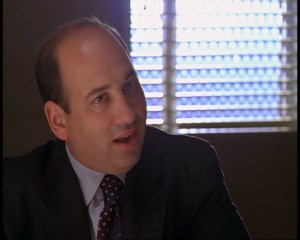
Michael Kostroff3

still from “The Wire”

The show has been off the air for a few years now, and has entered legend status. In your personal and professional opinion, what is it about The Wire that makes it continue to be such a popular show that is surely never to be forgotten?

Well, I think there are a lot of theories on that. For me, in addition to the extraordinarily brilliant writing, there are two things that come to mind:

First, it’s the nuances in the characters. They’re not simply good guys and bad guys, and they aren’t categorized by race, social status or profession. I think, in the past, members of a drug gang were simply portrayed as “the gang,” and the police were “the cops.” On this show, we have a drug dealer who has an interest in business, and another who takes meticulous care of his tropical fish. Some are reckless; some live by strict codes. Others would like to get out of the game. We have a hero who’s an irresponsible parent who drinks too much, but who’s also truly noble in a lot of ways. We have gay characters who aren’t all about being gay. We have cops interested in the status quo, and cops interested in making things better. And we have characters who change and grow. Levy is the only recurring character I can think of who is strictly a bad guy. Most of them are multi-faceted.

The second thing I think accounts for the show’s legendary status is its compelling stories of how broken our systems are. Well-meaning characters are thwarted again and again by red tape, apathy, greed, cynicism and some people’s investments in the failure of others. I’m not sure we’ve seen that story told in that way before. At least, not since Dickens.

You seem to be portraying a whole lot of attorneys since your days on The Wire…. do you ever feel pigeonholed in this respect? How do you do it differently each time, or is a repetitive gig?

Yes and no and yes and no. I’ve certainly played a lot of attorneys since The Wire, and actually, even before The Wire. I look like what viewers think of when they imagine an attorney. While stereotyping is a very bad practice in real life, it can be a very helpful practice in visual storytelling.

Yes, I’ve sometimes been a bit pigeonholed in my TV career. But you know what that means? It means I have a TV career. And that’s a great and very lucky thing. Over the years, I’ve played a dull lawyer (King of Queens), a compassionate lawyer (Law & Order: SVU), a laughing lawyer (Liar, Liar), an upscale lawyer (Studio 60), a lovesick lawyer (Cold Case) and on and on. The stories make each one different. Still, I admit, there have been those occasional times when I felt like I was punching a clock, putting on the suit, and doing what has become for me a no-brainer role.

Two things balance that out. One is that I do theatre, where I don’t think I’ve ever played a lawyer. I’ve been a disgusting tavern owner (Les Misérables), a hapless gambler (Guys and Dolls), an unhappy comedy writer (Laughter on the 23rd Floor), and so forth. The second welcome contrast is that in the past few years, TV casting directors have started putting me in roles that are vastly different from my usual fare. The most amazing one was the Cinemax series, Banshee, in which I played a reckless, longhaired, tattooed, Southern ex-con. I smoked, I drank, I got in a fight, I snorted coke. I have no idea how they thought to cast me in that role, but it was a blast. Overall, I think I have nothing to complain about.

In the theatre world, you starred in the hugely successful hit brought to the world by the legendary Mel Brooks, The Producers. Again, how was this experience for you? Was it frantic playing a dozen different characters?

Well, I have to take issue with the word “starred.” I hardly starred. I was a proud member of the ensemble (or “chorus”), those musical theatre performers who run around changing costumes and continually showing up as different people in the story. I loved playing a dozen characters a night, from a stern judge to a swishy costume designer to a bad tenor to a cruel, demeaning boss to a Bavarian peasant and on and on. We worked, singing and dancing our asses off. I also understudied the huge, exhausting, never-leave-the-stage starring role of Max Bialystock. It’s the role that Nathan Lane won a Tony for, and one I’ve since played in various productions around the country. The job was a dream come true, my first time in a big Broadway show, albeit the touring version, and I treasured the whole adventure. I related my tales of life on the road in my book, Letters from Backstage.

Looking back on your long and extremely impressive career, when the time comes to hang up your hat, what would you say you are most proud of when you do so?

Wow. Am I retiring? Actually, having any success at all started late for me, so it doesn’t feel like it’s been a long career just yet. I feel like I’m just getting going.

So… You want a really honest answer? I’m most proud that I braved what I knew was a daunting and discouraging profession, and did so because to not do so would have been to go against my own DNA, my calling. I’m proud to be an actor. We’re a noble and embattled tribe. And I’m proud of all the tables I waited, all the temp jobs, all the growing pains, all the therapy, all the battles with my own depression and low self esteem, learning to present myself at auditions without panicking, surviving bad productions and unkind directors and somehow, miraculously, getting to the point where someone would want to interview me.

What inspired you to pen your book Letters From Backstage? What was it that you truly wished to accomplish with this book?

As I mentioned earlier, scoring a job in the touring company of The Producers was a dream come true for me. What I really wanted was to take my friends along for the ride. So that was the inspiration. For each tour stop, I wrote kind of a short story about life on the road, sharing what was happening with the show, what the city we were in was like, funny travel mishaps, weird audience encounters and so forth and e-mailed them to all my friends. They started e-mailing them to their friends. Strangers wrote to me asking to be included in the mailing list. These e-mails became the book, Letters from Backstage. My favorite comment I’ve gotten from readers is that they feel like they’re right there out on the road with me, and I couldn’t ask for a better response.

What does the future hold for you? Any other projects in the works you would like to pimp out?

I’m finishing up a book I’m excited about, based on my very popular workshop, Audition Psych. 101, which is all about the mental side of auditioning (www.auditionpsych101.com). I’ve offered the workshop all over the country for almost a decade now and have found that actors derive tremendous benefit. The book will allow me to reach even more of my fellow thespians. I expect to have it published early next year.

Michael Kostroff2

Photo by Leslie Hassler http://lesliehassler.com

But next up, I’ll be doing a much-anticipated revival of Can-Can at one of my favorite theatres, The Paper Mill Playhouse in Millburn, New Jersey, with a Broadway run expected to follow next year. This time, I’m a dry, gay, sarcastic French waiter at a scandalous can-can club. It makes a nice change from the pinstripe suit and the courtroom.

What was the last thing that made you smile?

The other day I was walking in my neighborhood when a woman stopped me. Her: “You’re that lawyer from The Wire!”
Me: “Yes, yes I am.”
Her: “Wow! Are you really a lawyer?”
Me: “No, no. I’m just an actor.”
Her: (Hugely disappointed) “Damn. I really need a lawyer.” (Then, begrudgingly) You were good on the show, though.

I smiled all the way home.

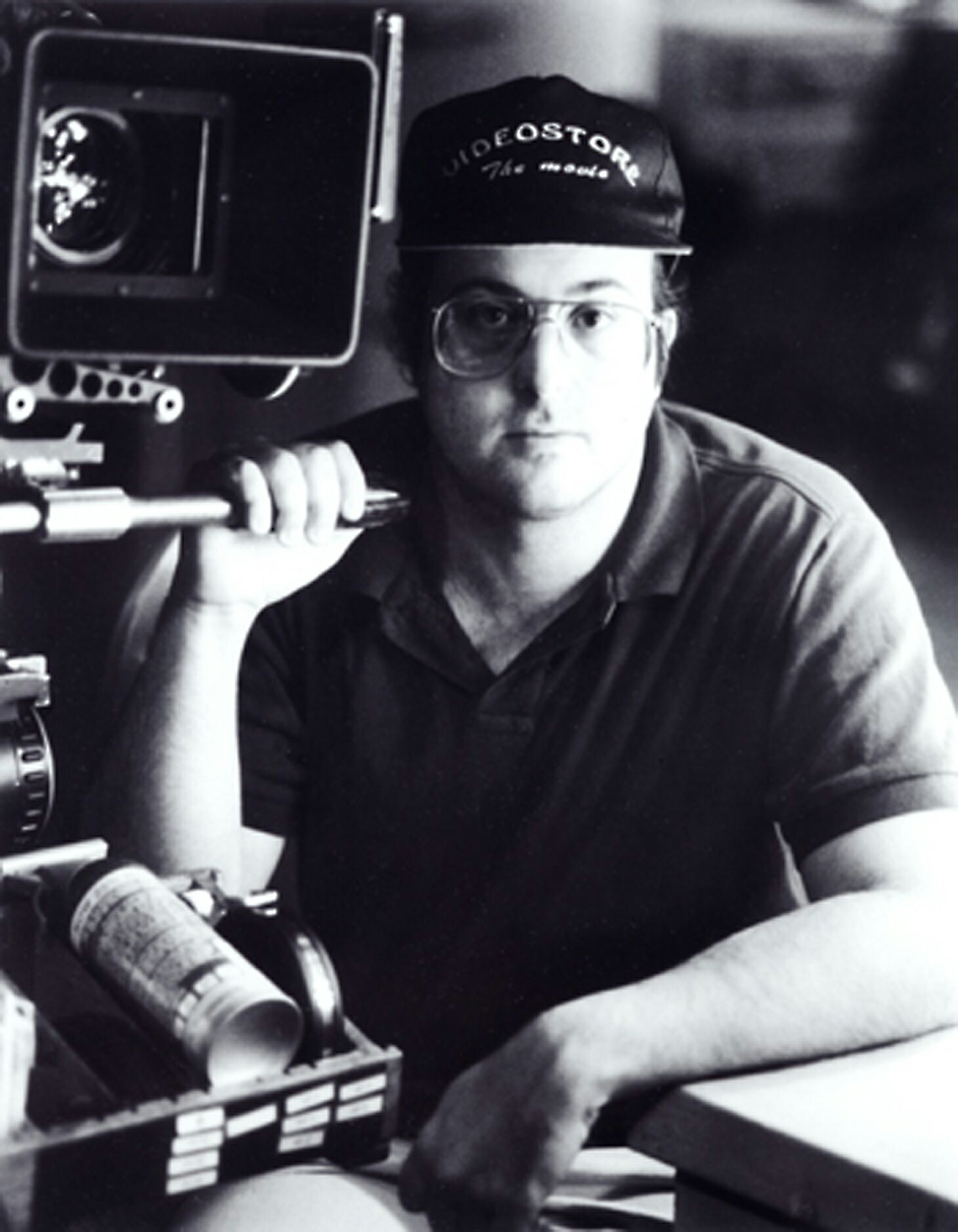
Rolfe Kanefsky [Interview]

rolfe_portrait-2

There are certain people who were simply born to enter the world of movies.  For one reason or another there is a burning sensation in the pit of these folk’s stomachs that tell them they HAVE to be in the business of making movies.  Even as cold and shameless as the world may be, it is just something they obviously have to do.  And even better, there are some folks who simply will not be pigeonholed into making just certain types of movies.  In fact it becomes the versatility in their work that becomes an obvious factor that has been brought by their drive to great cinema.

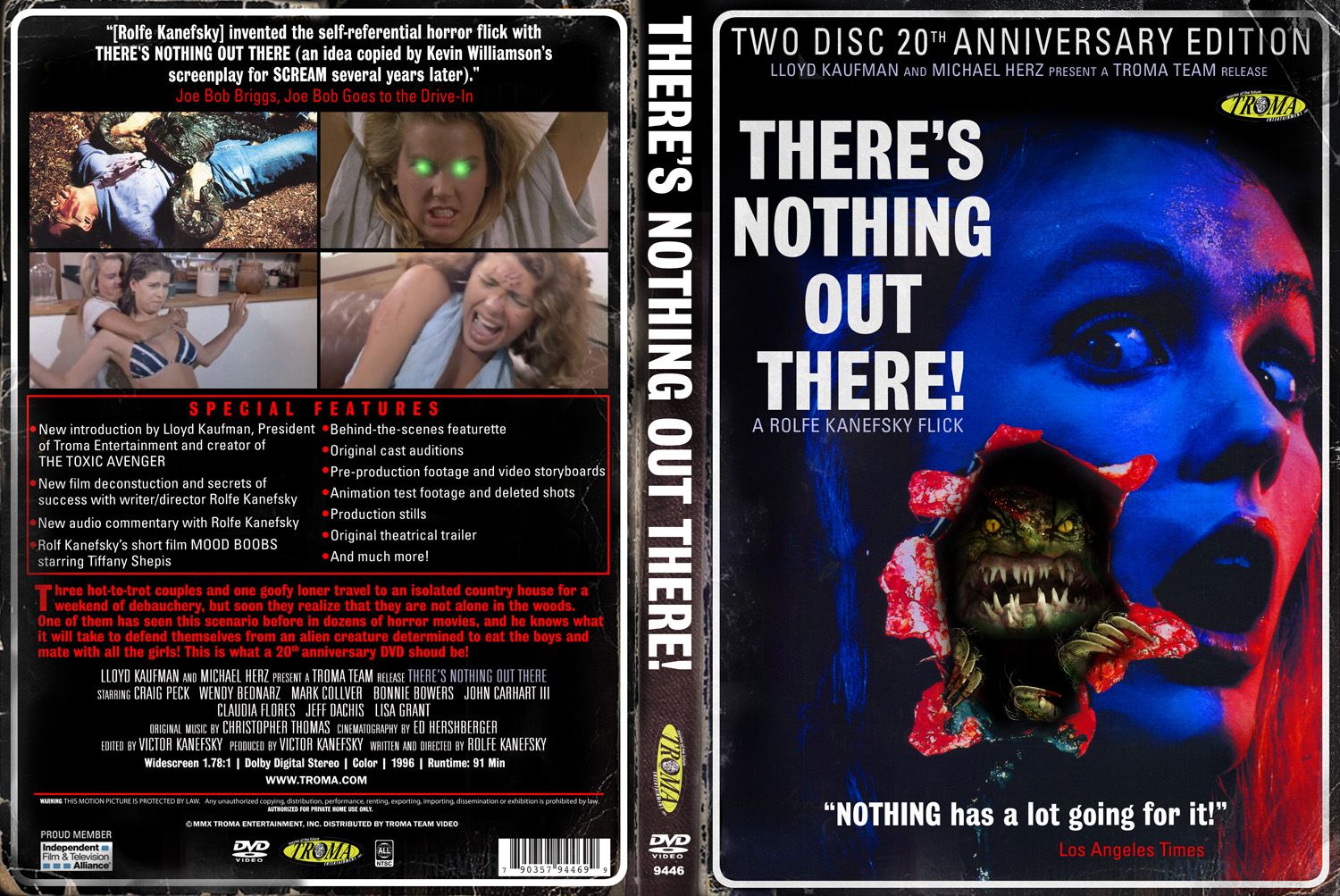
Take for instance the wonderful filmmaker/screenwriter Rolfe Kanefsky.  If you scour the internet for a while, you will most likely find that the horror community has embraced this man as a legend among indie horror filmmakers for his now cult classic first feature, There’s Nothing Out There.  A horror movie that preceded what would become some more well known films like Scream or Cabin in the Woods.  Kanefsky is the man who laid the ground work for the certain sub-genre of an already beloved genre of movies.  The film is great in its own right, and it is no surprise that the horror community (arguably, one of the most loyal communities the internet has ever seen), but there is so much more to this man.  His abilities to transcend through any genre (erotica, western, comedy, alien mommy issues, and on and on) is what makes him a true master of cinema.  Rolfe knew that the best way to break into the business was by using the horror genre to kickstart his career.  And it worked!  Though There’s Nothing Out There might not have been an initial “success” (depending on how you would deem success), time has proven that is the stuff that legends are made of, and also a door to a truly astounding career that has shown no evidence of slowing up anytime soon.

So, with that in mind, we are proud to bring Mr. Kanefsky into the digital pages of Trainwreck’d Society!  We managed to peel him away from his work for a few questions about his career thus far, his amazing versatility, and maybe give some insight into some of this other great works.  So, ladies and gentlemen, Rolfe Kanefsky!


In the early stages of your career, you were working for the legendary Troma Films. How did you land this gig? What were you up to around there, and what films did you happen to work on during this time?

I started working as a P.A. when I was 16 over the summers on a bunch of independent films including a slasher film called Posed For Murder and a still unreleased comedy called Rich Boys. I got involved with Troma the summer before I started college. I believe my father, Victor Kanefsky, a film editor is the one who hooked me up over there. He edited a movie that eventually became one of their most infamous releases, Joel M. Reed’s Bloodsucking Freaks. My father owned and ran a post production company in New York called Valkhn Films and got the assignment to edit some Troma titles. I helped cut one for Sgt. Kabukiman NYPD. But before that I was a P.A. on their biggest production ever, Troma’s War. I worked for them for about two months on that show. I had to leave to start college but that was quite an experience. I actually was interviewed about it on their special anniversary DVD of Troma’s War. There’s a seven minute interview I did about my memories from that set. I’ve stayed in contact with Troma and Lloyd over the years and have put Lloyd in bit parts on some of the later films I directed like Tomorrow By Midnight and Pretty Cool although you now only hear his voice in the films. Troma also ended up releasing our 20th Anniversary DVD for my very first professional feature film, There’s Nothing Out There.

A5701As time marches on, it seems that your now cult classic film There’s Nothing Out There is finally receiving some of the much deserved respect and admiration it has always deserved, even outside of the realm of die hard horror fans. Why do you think this is? What do you believe it is that people see in this film that is so captivating?

I could write a book about There’s Nothing Out There and in fact, have. It’s on my website.  But the shorter story is, at the age of 14, I decided I wanted to be a filmmaker and started to research how to do it. I realized that at that time most first time filmmaker started with horror films so I started renting every horror film on video. I saw some great ones like Evil Dead and Carpenter’s Halloween and a lot of bad ones that were just doing the same old clichés to make a quick buck. I wrote Nothing Out There when I was still in high school as an exercise to see how long it would take me to write a low budget exploitation horror flick. As I wrote it, I couldn’t get myself to write all the same clichés seriously so I added the character of Mike, (basically myself), a horror fan who has seen all the horror films and immediately started to recognize and warn the others of the conventions of the genre. But I was careful not to make fun of the horror genre but of the lazy filmmakers and producers who keep doing the cat scare, the person going into the basement alone, standing in front of an open window, etc… My thought was to send-up all these cliches so horror films would be forced to be smarter for the fans. When we shot the film in 1989, the horror genre was still huge. Unfortunately, it collapsed the following year. My film got a small theatrical release in New York and California, played a bunch of film festivals, got surprisingly good reviews and then hit video through Prism entertainment, laser disc through Image, and played HBO/Cinemax. I thought it was over. A few years later, Wes Craven made a movie called Scream and to my surprise, thanks to a few movie books and the internet, people started talking about Nothing again. It slowly became a cult film. So, I embraced it, started a website for the movie, and let the slow legion of growing fans keep it alive. When DVD came along, IMAGE was willing to do a special 10 year anniversary on DVD and we were finally able to get a good quality version of the film put out. Reviews were great for the DVD. Because of Scream, Nothing Out There was discovered more and more. And for the 20th Anniversary, Troma stepped up to release a 2 disc special edition. There is talk that one day they may put it out on Blu-Ray too.

I think the reason why Nothing Out There has stayed so popular is that it is very honest in its’ intentions and is still funny. The genre hasn’t changed that much. Filmmakers and producers are still doing the same cliches so There’s Nothing Out There is still current. Even after Cabin in the Woods, people came back to write about There’s Nothing Out There. One reviewer said it’s the perfect bookends to the self-reflexive horror genre that started with Nothing moved to Scream and ended with Cabin in the Woods. To be grouped in that company is an honor.

DOC HOLLIDAY new final art-2While you are no stranger to the world of horror, your body of work consists of many different genres, from comedy to erotica, actually pretty scattered to say the least. One film in particular that interests me a whole lot is the film Doc Holliday’s Revenge, which is actually a western you wrote, and was directed by David DeCoteau. So, how did you manage to enter the world of Doc Holliday? What made you want to get involved with this project?

It was simple. David DeCoteau asked me to write a western that he could shoot in three days with about seven characters. I came up with a couple of simple premises, one kind of variation of Straw Dogs that he liked. But then he wanted to add a history western figure into the story. I talked with a good writer friend of mine, C. Courtney Joyner, who is a huge western fan and has written a wonderful book called Shotgun, to help me. Courtney suggested Doc Holliday. So, I started researching Doc Holliday and looked for an event that could fit into my original story idea. I ended up writing a fictional story that consists of all real people from the time around real events that were taking place. During this time, the news with filled with the whole Trevon Martin/Scott Zimmerman trial where they were calling Florida the wild wild west because of the “Stand Your Ground” law. I thought that would be a great title for my western and actually wrote the story very much as an allegory to the Zimmerman trial from the point of view of the judge, who was eventually played by Tom Berenger in my story. David loved it and shot the movie, getting a little more time and money then usual because of the quality of the script. The distributors changed the title from Stand Your Ground to “Doc Holliday’s Revenge and Lions Gate released it. I hear the film has done well and I’m proud of the script I wrote for it.

And even a bit more of a jump is your comedy Blonde and Blonder. That was even more of a stretch compared to your normal body of work? How did you land this gig?

Actually, Blonde and Blonder was not a stretch at all. I fell in love with Abbott and Costello movies when I was four years old. Comedy is actually my forte. No matter what genre I write, there is always a pretty good sense of humor in it. I was working for Alain Siritzky, producer of the famous Emmanuelle series in the 90’s. He has the idea of doing a female version of Dumb and Dumber and asked me to write it.  So, I wrote Blonde and Blonder as almost a female version of Abbott and Costello, although I described more along the lines of a younger, sexier I Love Lucy episode. When I wrote the script, I thought perhaps Pamela Anderson and Jenny McCarthy would be good for the roles. Alain tried to get the script made but couldn’t.

Layout 1:IJ[OneSheet-Keyart]MechIt sat on a shelf unproduced for about 10 years until another producer came to me. He’s a Brazilian producer named “Frederico Lapenda”. He invested some money into my flick, Nightmare Man, and asked what other scripts I had. I gave him Blonde and Blonder. He asked who I saw in the roles? I told him originally, Pamela Anderson. So Frederico got the script the Pamela’s brother, Gerry. He got it to her. She liked it and they set the film up in Canada with Insight Film Studios. Bob Clark was hired to direct and suddenly the film was in production with Pamela Anderson and Denise Richards. I am not very happy with the final results and the worst part was that Bob Clark, director of such films as A Christmas Story, Porky’s, Black Christmas) died in a car accident right after production wrapped and didn’t get any credit on the finished film due to Canadian Content (aka stealing money from the government as a tax rebate if there are enough Canadians working on the film.) I won’t go into all the details and dirty dealings that occurred but it’s a shame that Bob Clark does not have credit for the last film he directed after such an incredible career.

What is your ultimate goal for yourself as a filmmaker/screenwriter? When you look back on your career at a much older age, what are you hoping to see?

Well, it’s a crazy business. To be able to have had a career full time as the writer/director for almost 25 years is amazing in itself. A filmmaker always hope that he leaves behind a film or a body of work that is remembered and appreciated. I am pleased that I have a cult film still talked about after twenty years. I am proud of a film that has never been released in the states called Tomorrow By Midnight which is the most personal film I’ve made. I hope to see that released one day. You’ve probably heard the saying that any film that gets completed should win an award and if it turns out to be good, it’s a miracle. I am pleased to say that I believe a handful of my films have turned out good. I hope to have a handful more before I’m done. I have a lot of scripts ready to go if I could just find the finances. I love film and all genres. I feel fortunate to have been able to work in most genres and not be pigeonholed. I hope to make more thrillers since I’m a big Hitchcock fan. At this point, I have 50 produced scripts that I written of which 23 of them I personally directed. I consider that a career, more better or worse. I hope others consider it to be better.

What would you say has been your greatest experience in the film business thus far?

The response that There’s Nothing Out There received at film festivals around the world. Hearing the crowd react in Florence, Ohio, New York, and California was amazing. That’s a memory you can never lose. I also loved directing Tomorrow By Midnight which is a film that is the closest I’ve gotten to getting my full vision on screen.

Rolfe&cameraNM-2And, of course, what has been your least favorite experience in your career to date?

Working on Corpses for Tanya York’s company. Miserable experience every single day only made slightly better by a good cast consisting of Tiffany Shepis, Jeff Fahey, and Robert Donavan. And meeting my script supervisor turned friend turned producer, Esther Goodstein.

Most important question of all…..you are on set for say 14-16 straight hours.  When you find a chance to sit and eat something, what is your personal “brain food” you use to fuel creativity?
I don’t drink, smoke, or do drugs. My one vice is chocolate. I wouldn’t call it “brain food” but I do find myself eating the junk food. Chocolate chip cookies make me happy.

What was the last thing that made you smile?

Doing this interview. A lot of good memories mixed with the bad but I try to be a positive person. Glass is half full.

Joe Chrest [Interview]

Joe 2288

One of my favorite things about running this site is gaining the ability to at least digitally talk with some folks who have been involved in some major projects that have either influenced or entertained me over the years.  Whether it is with laughs, inspiration, or just pure and non-granulated talent, each individual that has been interviewed on this site has been someone who is very special to me for one reason or another.

And our interviewee today is no exception.  Well, maybe a slight exception, as Joe Chrest has turned out to be one of the funniest and most down to earth people I have had the honor and privilege to have a digital conversation with since, well the last person who was extremely cordial via e-mail (honestly, they’ve all be pretty cool, but Joe has been THE man!).  We also happen to share two very important commonalities.  We’ve both flown desks for the Air Force, and we absolutely LOVE the feel of brand new pair of socks.  How can you not dig a guy like that.  I guess more importantly might be that he is a very talented actor who you should recognize as Schmidt’s dad in both 21 Jump Street & 22 Jump Street.  Along with various other roles in films like Oldboy, One the Road, Lee Daniel’s The Butler, The Blind Side, Jeff Who Lives at Home, and many more.  More notably so, you may recognize him for his reoccurring role on HBO’s hit drama True Detective, that is certainly one of the finest shows on television today.  You can also see him in the upcoming and final(?) installment of The Hunger Games films in 2015.

No matter how you know him, he is a hilarious and talented son of a gun, and we are so honored to welcome him to the Trainwreck’d Society family.  With that being said, ladies and gentlemen…..Joe Chrest!

When did you first decide you wanted to become and actor? 

First got interested in acting during my senior year of high school. I was always heavy into sports (and still am) so I always needed the adrenaline rush and with my skill set, it was becoming obvious I was not going to take it to the next level in sports. I auditioned for a play and it really got the heart pounding — I was hooked, but it wasn’t until I got out of basic training at Lackland Air Force Base and started sitting at a desk every morning, in a uniform that I realized I wasn’t going to be happy unless I went all in with the acting thing and see where it took me. Bummer was that I still owed Uncle Sam 4 more years. I was able to finish out my service and finish undergrad at the same time, so all was not lost, and my theatre degree was fully funded by the U.S. Government!

What were some of your earliest influences?

My early influences were all about comedy. I loved Monty Python and British humor since I was around twelve years old and I couldn’t get enough of the Cheech and Chong LP’s — my buddies and I would recite them in the locker room even though I didn’t understand half the shit — they still made me laugh (at twelve I couldn’t understand why the effeminate pirate would say “yes!” when they beat him with cat o nine tails on the yardarm, but it still broke me up). Of all the famous people I ever worked with, meeting Cheech on Nash Bridges was a true highlight. He still liked to talk about the old stuff and signed my buddy’s Los Cochinos album, “snack bar’s closed, fool…” referencing the prime parking spot from Pedro and The Man at the Drive-in.

What was your first paying gig as an actor?

My first paying gig was the same as Andy Griffith — The Lost Colony summer theatre in North Carolina. He found a wife there as well, but I quit after the first week and left wife-less (and soundly convinced by the producer that I would be black-balled forever in the industry if he didn’t see me at rehearsal that evening). Maybe that’s why I never got a Matlock gig?? I had never quit anything before, nor have I since, but suffice to say without going into detail that I felt justified enough with the circumstances to walk — even with Mr. Knowles’ black ball (balls??) hanging over my head.

Can you tell us a bit about Swine Palace?  How did this come to life?

After graduating Marshall University in my home state of West Virginia, I needed a good reason to procrastinate the big move to New York, and LSU came through with an offer of an assistantship and a full ride, so I figured what the hell and headed down to this mysterious land called Louisiana. Great move. There I met the three artists who have been the most influential on my life…John Dennis (my mentor), Steven Soderbergh (who gave me my breakout film role as Ben in King of the Hill in 1993), and Barry Kyle (Royal Shakespeare Company Director Emeritus) who after guest directing at LSU decided Louisiana was the perfect place for his new American acting company. He asked me to come down and found the company with him. It was to be called Swine Palace. Despite the odd name, I didn’t hesitate. Barry Kyle was a brilliant director, a visionary, and this was an artist’s dream…an artistic home. We had no theatre space, just a vision and a dream to turn the abandoned pig viewing pavilion (thus the name Swine Palace) on the LSU campus into the most state of the art, innovative performance space in the world. Eight years later, the doors were opened on our new multimillion dollar facility, The Reilly Theater, the dream having become a reality. The irony is that not long after the ribbon cutting, Barry Kyle was run out of town on a rail. Amazing. The man had directed a who’s who list of British super stars and it would be very difficult to argue that he was not a genius, but he could be… shall we say, “difficult.” Tough loss for Baton Rouge. The coda here is that the theatre is finally back in good hands with a great guy, Kennedy Center Fellow, George Judy.

True Detective Group

On the set of HBO’s True Detective.

In the span of your career, you seem to have portrayed several cops, or at least some form of law enforcement. Why do you think you tend to land so many of these gigs, including your reoccurring role on the hit HBO series True Detective?

Possibly the only thing longer than the arm of “Johnny Law” is my list of law enforcement roles. It’s kind of funny, but I spent the first half of my career on the other side of the law, playing just about every type of criminal found on line at Hedley Lamar’s card table in Blazing Saddles, and now all I’m pulling in are the cops, FBI, ATF, SWAT…you name it. To be honest, I really believe the reason is because when I would go to an audition in Los Angeles, I was always one of the weirdest looking guys in the room, but when I go to an audition in New Orleans, I’m always one of the most normal looking people in the room. I long for those days on the wrong side of the law — in film it’s far more interesting. Problem is, every time I get a good beard going, or a makings of a decent mullet, I get cast as a cop or lawyer or military officer and I have to break out the razor.

I noticed that you will be appearing in the next in line of the Hunger Games films.  I also noticed that you have some kids.  Are they fans of the movies, and stoked about seeing their dad in one of these films?  How about yourself?  Are you a fan as well?

5. I was a huge fan of The Hunger Games so I was stoked to find myself right there in the world with Katniss, Peeta, and Finnick going to take down Panem. The great part was that I was sucked into the world by the first two movies and the cliff hanger at the end of Catching Fire sent me running out to get my hands on Mockingjay, which I read in a day. What made it surreal was that I was so angered by President Snow at the end of Mockingjay, and then I get a call to audition to be in the “Star Squad” “Squad 451” who goes in to kick that son of a bitch’s ass! It was like being an arm chair quarterback and then waking up to find myself in the real Super Bowl. My kid’s are still a little young for The Hunger Games, but by the time MJ2 comes out, it’ll be a cool thing at school. It’s already on my 10 year old’s friends’ radar for sure. Spending the hot summer months shooting in Paris and Berlin made the whole thing about the coolest thing I’ve done in my 20 years in the business.

You have appeared as Jonah Hills father in both 21 Jump Street and 22 Jump Street, and were involved with some of the most hilarious scenes of both films.  How is the set life like films like these?  Is it as fun and full of laughs as it appears to be on the screen?

Everything about 21 Jump Street, AND 22JS has been a blast. Directors Phil Lord and Chris Miller are laid back, fun to be around, and FUNNY dudes. Their attitude trickles down on the entire company as it always does with the best directors. Soderbergh’s sets are fun sets, and Francis Lawrence creates the same happy space. What makes their stuff great is that they trust their actors, and welcome anything you bring to the table. On the Jump Street sets improv was the order of the day and the only sad part about it is that so much funny stuff has to get left out. A great comedy director has to have the discipline to cut out the stuff that is hilarious, but not really needed to advance the movie. On something like that, the only hope is that the audience has as much fun watching it as you had making it.

What is your preferred genre of film to work in?

Comedy is the best. I love it all, dumb stuff like Stripes, and The Animal to high brow Oscar Wilde and Noel Coward plays to the corny stuff like Andy Griffith and Don Knotts movies. In junior high and high school, before ever wanting to act I was always voted class clown and stuff like that. I’ve always enjoyed laughing and I love making people laugh. One of the most important lessons I hope to teach my kids is to learn to laugh at themselves. Humility is a virtue. We need to lighten up as a society — laugh when it hurts! Cliches are cliches for a reason.

Dead Man Walking

On the set of Dead Man Walking, for being re-casted by Clancy Brown due to scheduling conflicts

What is the most embarrassing moment you have had on set, whether in the theatre or on a shoot?

Most embarrassing moment on set? Wow, there have been so many. We always laugh at the stuff Barry Kyle used to yell at me, like the time he stopped rehearsal when I grabbed an actress by the arm (not too roughly or anything) but we both kind of stumbled making it look worse…he yelled in front of the entire company, “Joe you and your bullshit method acting have been holding the American theatre back for years!!” I was young and green and this coming from someone I held in such high esteem was humiliating and devastating. Now it is one of my favorite laughs…man, to shoulder the blame for the entire American Theatre’s backward ways??

What was the last thing that made you smile?

9. Ha ha. I’m smiling now thinking about all those embarrassing Barry Kyle outbursts, “Joe! Cut the bit with the jacket!! It’s a TERRIBLE BORE!!!” I can hear it like it was yesterday.

Herschell Gordon Lewis [Interview]

HGLAnd off we go again here at Trainwreck’d Society with another round with the world of horror.  But this time, we have something exceptionally wonderful for you fine readers.  True admirers of the world of horror should know exactly what I mean when you catch the name of who we are honored enough to have featured in our digital pages today.

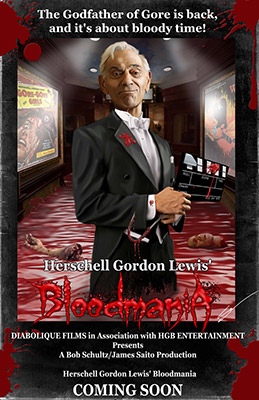
Back in 1963 a little film called Blood Feast was released that truly shook the world.  Horror films had ben existence for decades before, but not quite like this.  The pure shock value of this film would lead independent filmmaker Herschel Gordon Lewis to be deemed “The Godfather of Gore”, a nickname he truly deserves as set forth with other great films like Two Thousand Maniacs and Color Me Blood Red.  Whether through splatter horror films or sexplotation romps, Herschel Gordon Lewis has had a long and historical career of creating films that simply entertain.  Nothing more, nothing less.  Just good old fashion sex, violence, and hilarity.  And what more do we really need, sometimes?  Mr. Lewis took a bit of a hiatus from the film world, but returned in 2002 to direct the anticipated sequel to Blood Feast, and actually has a grand new project that is beginning production this summer entitled BloodMania, an anthology consisting of four parts.  One segment was co-written by HGB, and he is slated to direct two of them.  It is so exciting to see The Godfather back in his element, and this damn project has success written all over it.  Learn more HERE!

After such a long hiatus, how did it feel in 2002 when you got back into the director’s chair to make the sequel to Blood Feast you had always wanted to do?  Did it feel natural or nerve-racking? 

I had phantom-directed just about every film I viewed during that hiatus. The mind-set was ready and natural.

What do you believe it is about the exploitation genre that continues to have a large cult following among film buffs?  What makes them different from more mainstream films from the 60’s and 70’s, and even beyond?

Exploitation films grab attention, roughly and mercilessly, to the action rather than to the actors. Viewers feel they’re in a back-alley, sharing a primitive creative experience.

What sorts of things were going through your head when you decided to release Living Venus, which was extremely risqué for its time.  Where you ever nervous about how the public was going to take it?  Where you targeting an audience at all?

I had determined that for a production whose values couldn’t compete with polish, we could compete by showing a limited number of brave theatergoers the kind of visual experience in which they could envision themselves being immersed. That formula still exists.

HGB2What do you think it is that keeps your hit film Blood Feast a relevant work of horror art that his hailed and praised to this very day?

Blood Feast has been criticized for every facet of production from lack of acting talent to shoddy camera work. But no other film can match its place in motion picture history: it was the first of its kind. Those who see it today sometimes say what they don’t say after viewing a hundred-million-dollar product: they got their money’s worth.

If you were given $5 million dollars in 60’s to make a film, do you think you would have gone a different route with your work?  

You bet I would. But I wouldn’t be regarded as a pioneer.

In your personal opinion, what is an “independent film”?  And do you think there is any hope in revitalizing a fearfully dead way of making films?

An independent film is produced outside the sacred gates guarded by Screen Actors Guild and the Directors Guild and controlled distribution. Regrettably, since fewer and fewer theatres will book this type of product, the independent has to compete in the semi-closed world of DVDs. That means aping what the major companies do.

If you were to attempt to modernize any of your films from the past, which would you like to see done?  Furthermore would you even really want to do so?

I’d rather move forward. I have scripts that haven’t been produced yet, so why should I remake movies whose history is firm enough to resist re-making?

HGB1After several decades in the horror business, how do you feel about the obvious changes that have occurred in the world of film?  Are things better?  Worse?

Production is light-years easier. Distribution is light-years more difficult.

What was the last thing that made you smile?

Opening a package of Gummi-Bears.


Be sure to stay up to date with Bloodmania at the film’s WEBSITE.  You can also film’s page on Facebook.

Diane Franklin [Interview]

DF_070The 80’s were obviously a sort of silly time in history when it comes to the world of film and pop culture.  Of course, in retrospect doesn’t every decade have some hilarious little quips that we make fun of once time has passed?  Each decade has that band or that film or what-have-you that probably wouldn’t work in any other decade.  One great thing that the 80’s had, was some pretty stellar babes in the acting world!  And I like to think that a beautiful and talented actress is timeless!

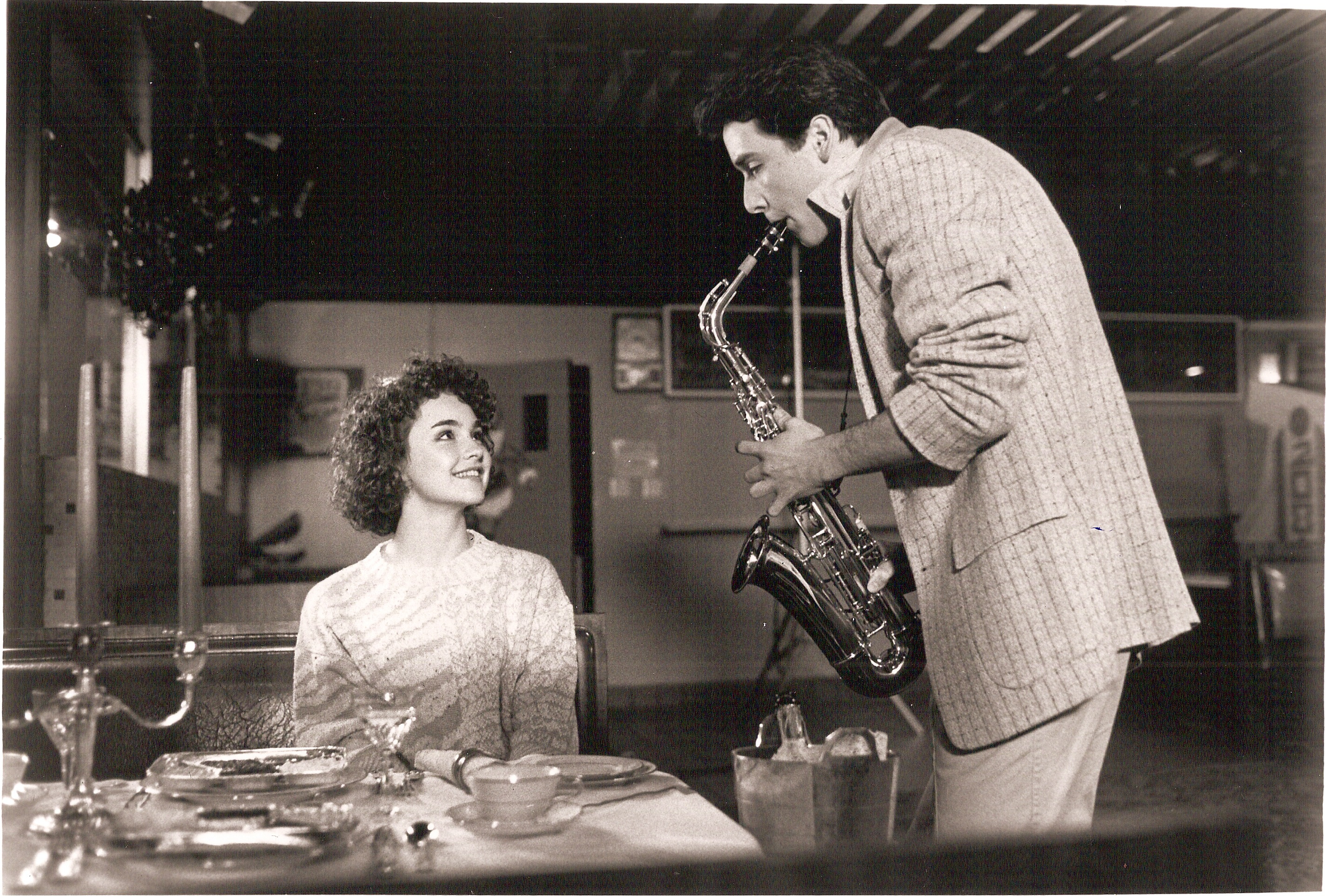
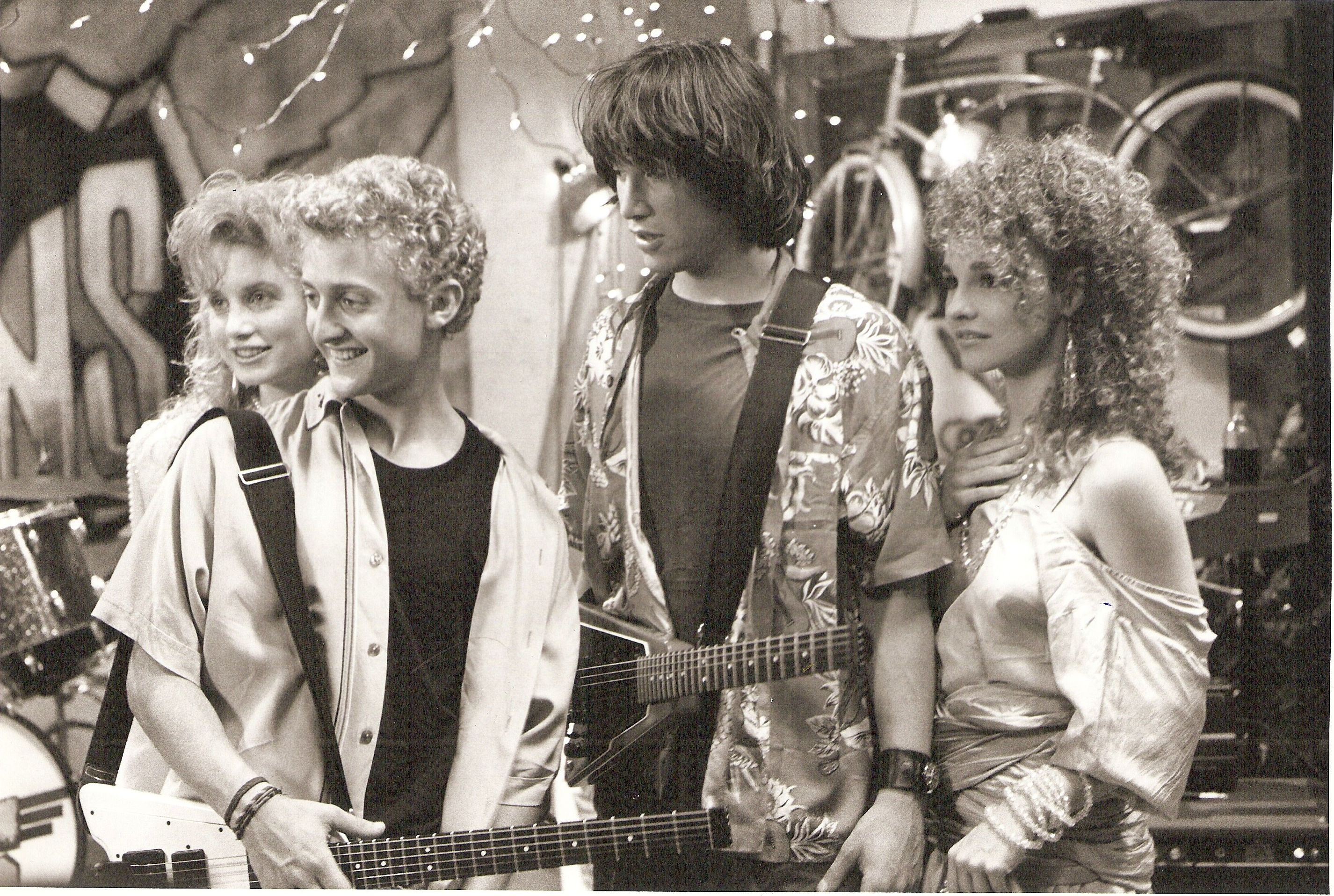
And few actress embody this spirit as the wonderful actress Diane Franklin!  As the star of such classic 80’s films as The Last American Virgin, Better Off Dead, and Bill & Ted’s Excellent Adventure, she is on par with the likes of other 80’s babes like Molly Ringwald, Jennifer Jason Lee, etc.  And even more so to me personally, as I absolutely loved this woman (well, in the 90’s, while I was watching 80’s movies) more than all the rest after I saw her in Better Off Dead.  Now that was timeless smoking hotness!!  And I am pleased to see that Diane has continued to work in one way or another, even with a bit of down time in between gigs. I was very interested in seeing what exactly she had going on these days, so I am so pleased to announce that this brilliant actress agreed to have some fun with us and answer a few questions.  So Ladies and Gentlemen….Diane Franklin!


I have come to understand that besides acting, you have also studied biochemistry, which is definitely a very cool and different thing to hear of an actress doing.  Tell us, what draws you to the world of biochemistry?  Do you find any similarities to the world of acting?

If you had asked me in college if there were similarities between my interest in science and acting, I probably would have said none except for the fact that one day I may play the role of a doctor. But, today? Yes! I see so many connections that, as you know at Trainwrecked, it has taken me a while to get back to you. In essence, my approach to acting has always been somewhat scientific.
When I started acting at the age of ten, industry professionals frowned upon drama training. It was thought to make kids stiff and unnatural. I still, however, had to figure out a way to memorize lines and connect. So, the first thing I needed to do was find a method (or process). Adult actors were trained at the time to work from the “inside-out.” I, of course, didn’t know this. I had to figure out something on my own. Something that made sense to me, and that I could connect with. My own method. I worked from the “outside-in”. I would look for a real person who I thought represented the role.
Which brings me to my next scientific/acting love: analysis. I have always enjoyed breaking characters. What makes this character the way she is? What does the she do? What doesn’t she do? The funny thing is, I remember thinking like this since I was little. Maybe 5. It found it fun! I would watch TV without the sound and think, ”Is this person believable? Why? Or why not?”
Then comes the actual practice or experimentation, which involves hard work, creativity and spontaneity, all of which, I really enjoy. I just love the feeling of when I am in the moment so much, that I don’t remember acting at all. That’s when I know it’s right. And of course, with every experiment, (or scene) there is the potential of a discovery. It’s so cool to bring written words to life, and then push further to perhaps create a role that goes beyond words.
Yet, with all these scientific tools, I still am drawn to human nature. My personal passion is to express human emotion, heart, energy, instincts, and share it with others. So, I guess looking back I didn’t changed my scientific interest or give up on my acting dreams. I just found a way to make them work together.

In your own recollections and opinions, what do you believe it is about pop culture in the 80’s that has kept it a relevant metaphorical being to this day and age?

Every generation gets its time to be the role model for a younger generation. Today, the 80s generation is middle-aged and now in the limelight. What does this mean?! 80s music is back! 80s celebrities are being celebrated! 80s fashion is back in style! But perhaps, the most interesting callback is the VALUE of 80s culture!! Yes, TOTALLY!! The 80s was a time of freedom, self-expression and well…fun! There was an excitement to growing up. Not panic. There were work opportunities, so you could move out of the house at 18 and support yourself. Being different was in, and holding your own was important. Assertively sexy women were admired. (OK, maybe not when they were wearing power suits and sneakers) And there was an open, (and yes tolerant attitude) towards drugs, sex and abortion, (which ironically were areas one had to be a real adult to navigate.) Today, to my surprise, things are not the same. I think economics have a lot to do with it. The 80s adult generation looks back and thinks, “What happened? Where did all the freedom go?” Well luckily, we at least have totally excellent 80s films to remind us to keep having fun;)

LAV 25What do believe it is that keeps so many of the films (i.e. The Last American Virgin, Better Off Dead, etc.)  you did during that time so relevant to this very day, as they have proven to be?

The Last American Virgin was made in the early 80s. It is the perfect example 80’s fashion, 80’s fun and 80’s realism. If you watch the film and it makes you feel uncomfortable, it should. It was not made for entertainment. It was made to speak to speak the truth of teen heartbreak. That truth is the cake of 80’s films and is what grips us today. The upbeat, colorful, fun style of 80s films is the icing. Put a candle on it and you’ll see the passion and fire that went into the filmmaking;) Better Off Dead was mid 80s, breaking the sexist mold and suddenly giving the audience an option to watch a teen film without sex in it. This word of mouth iconic hit eventually brought it’s style to television, with Danny and Savage at Nickelodeon, producing The Amanda Show, iCarly, Drake and Josh and Zoey 101. Entertainment could now make live action staged as cartoons, using double entandres that were used in all the classic cartoons. Finally, Bill and Ted’s Excellent Adventure. Now in 1989, here is a film that not only homage’s the 80s, while being made in the 80’s! Bill and Ted bring the Spicoli character from Fast Times at Ridgemont High back. Teen films in the 80’s were about friends and Bill and Ted where friends you wanted to hang with. I totally get that!

You released an autobiography in 2012 entitled The Excellent Adventures of The Last American, French-Exchange Babe of the 80’s.  What compelled you to write this book?  Can you give us a bit of a preview if you would?

I decided to write this book off several realizations. One, Paul Newman. Famous actor or salad dressing? It all depends on the generation you grow up in. I know him as both. I realized that fame is relative to the people that know you, so I thought I better put this book out fast! Second, I originally was going to save all my memorabilla for my kids, but then I realized I will always be mom to them (as I should be!), so then I thought “OK, I better write all this down before I forget!”. Third, I wanted to make a book I could be proud of, that told the truth about my life and my experiences. I wanted it to be the kind of book a college student could use as a primary source on the 80s, and it didn’t have to be boring. And I wanted to make sure it was written in my cadence, like I was taking to you at a coffee house after having an espresso, AND that the book expressed my upbeat personality and point of view.

Another interesting venture you have gotten into is broadcasting.  Can you tell us a bit about your show Babes of the 80’s?  How did the idea for this show come around (besides being a total babe from the 80’s)?

One day I was contacted by Cult Radio A Go-Go to do an interview, and it went so well they asked me if I ever thought of hosting a show. I think they probably thought that I would only want to do one, but I had this really cool idea and I think they were kind of surprised. In the 80’s there were so many beautiful and talented teen actresses. I would generally see the same girls at each audition, but never get to know them because we would be competing for the same role. Yet, I have always had such respect for my peers because in order to be a teen actress you had to be a combination of smart, vulnerable, dedicated and hard working. There is not one actress from the 80s that did not work really hard to stay in it, and these young actresses each made very cool contributions to film and television. So I pitched them Diane Franklin: Babes of the 80s, wrote a sample script and they totally got it! I wound up doing 4 shows including such 80’s babes as Heather Langenkamp, Amanda Wyss, E.G. Daily, Betsy Russel, Claudia Wells, Jennifer Runyon, Laura Leigh Hughes and Mary Wornov and Kimmy Robertson. I even did a dude special with Curtis Armstrong, Christopher Atkins and Rex Smith. My next vision is to bring from radio to live action, but for now the shows can be heard on Sound Cloud under CRAGG.

BOD 11When you look at back on your career as an actress, what do you believe to be your overall greatest accomplishment?

There are moments as an actress, when you do something that is beyond what you think you can do. Some of the greatest acting I ever did was in screen test. I think this is because a lot was on the line and I really had to give my all. There is no better feeling as an actress to memorize your lines, know your character inside and out, and then just be in the moment. When I don’t even remember performing, because I was just being, that is the best. Reading for network executives and producers for SummerGirl was like that. I came out of the audition feeling like I knew my character so much more than anyone else in the room. It was cathartic. That feeling also happened with getting the role of Monique Junet in Better Off Dead. I knew the character of Monique so well; I could improvise being her in any situation. Of course, that still does not get you the role. You get the role when the director, producers, financiers all agree that you are what they want. So that said, I would have to say my accomplishment was GETTING the role of Monique, because convincing that many people that the role I want is what they should want is an accomplishment!

Your daughter has begun making her own way in the film world, in front of and behind the camera.  What is some advice you have given her to help guide her in her own direction?

The one thing I have always told my daughter is “trust your gut.” You know when something is right and when it is not. This goes for career, relationships, school, and friends.

What is one portrayal you have yet to do, but would absolutely love to?

For drama, I’d love to play a leader. This could be in the form of a doctor, teacher, investigator, commander, or even mom. Someone faces their fears and deals with problems using bravery and insight. I know I would bring great depth to this kind of role on the comedic side; I’d also love to play a “Mrs. Robinson” type character. Someone who brings sexuality and fun into being an older woman! AND if possible, as a celebrity, I would LOVE to host Saturday Night Live!

B&THjpegSo what does the future hold for you?  Any new projects in the work you would like to talk about?

I presently completed a role in my daughter’s newest film project, Devon Bright and the Sensitive Boys. It is a boy band parody and I play a crazy stage mom! VERY fun and she wrote a hilarious script. Olivia (DeLaurentis) writes, directs, acts and edits her films. She just turned 18 and the one to look out for! She is just…amazing. We will be submitting this film to film festivals, but in the meantime you can catch some comedy sketches she is doing with a friend on Funny or Die under Barely Legal Comedy. Other shorts and trailers she has done (and some of which I am in also) are on You Tube: Agouraphobia, My Better Half, Humanized, Lovechild, Recruiting Violations Olivia, Royal Effups, and Dad (llama), which has a baby llama in it;)

What was the last thing that made you smile?

Squished in bed with my family, cat and dog, watching Ghost Adventures. 😉

Brian Vander Ark [Interview]

brianvanderarkAs a kid growing up in the 90’s, there were some very important folks in the world of music that entirely embodied what it meant to be a rockstar and an artist all at the same time.  I’m sure every generation has this feeling, but this one is mine dammit, and it is all I know.  I have actually grown into adulthood during a strange time when I still clearly remember the joy of rushing off the mall each Tuesday for New Release day, but have grown into the digital age where “streaming” and “downloading” is real and undeniably convenient. It has been a rather strange and savage ride to this point, but there are some obvious perks.  One of them being that I still get to hear wonderful groups from my childhood days rocking out, and being thoroughly loved by the next generation.  And one group that completely embodies this wonderful spirit is definitely The Verve Pipe, including the diligently hard working frontman Brian Vander Ark.

Brian Vander Ark may very well be one of the last great lead singers of our time.  If you have ever had the chance to see him and his equally talented and entertaining crew perform, you should know what I am talking about.  When you see The Verve Pipe, you are seeing a SHOW!  Watching Brian and crew perform is as far from simply watching a few dudes play songs you heard on the radio as it can possible get.  It is electrifying, to throw out some good old fashion cliques, and a phenomenal experience.  If you haven’t had the chance to catch a viewing, you are definitely in luck!  The Verve Pipe recently released their first adult-oriented album in 13 years, and will definitely be touring the hell out of this album!  That is not to say that they haven’t already been performing all over the world for so many years past.  But now we have even more tunes to love and enjoy!

So, we are extremely proud to announce that Brian Vander Ark agreed to chat with us a bit about his experiences as a musician, the upcoming album, and why he REALLY needs some damn sleep!  Check it out!

When did you first realize that you wanted to be a musician? 

3rd grade – I got my first guitar and learned “By The Time I Get To Phoenix” by Glenn Campbell.

What were some inspirations that led you to this world?

My older brother played guitar, which was very inspirational.

With you being a long time musician, and an obvious professional, I have to ask – How do you feel the music industry has changed since entering the digital world?  Is it better or worse, would you say?

Much better in most ways.  I enjoy the immediacy of the digital delivery.  I also think that file sharing has helped spread the word on my music for years.  It’s helped me grow my fan base immensely.  Although I do still buy and enjoy vinyl.

The Verve Pipe’s live performances are absolutely stellar, some of the most fun I have personally watched happen.  Tell us, what makes a great show for you?  

The audience is usually the key to a great show, but some times the crowd is light.  And when that happens we always try to rise above it.  Those people took time out, paid a babysitter, and chose to spend the evening with us.  I take that very seriously.  As long as everyone in the band keeps that in focus, and stresses that we are there to ‘entertain’, we will rock.  What sort of ingredients goes in the mix of a successful gig?    Honestly?  A couple of drinks loosens things up.  People play a little more relaxed, in the pocket of the beat.  There’s less urgency to it, and that can be a good thing.  Having a great setlist helps as well.  And not eating at least 3 hours prior to the gig.

TVP_2014_BandPhoto_HRZ_1920pxWhat was it like having a track like “Freshman” hit number one?  Where you surprise by how insanely popular it became?

I don’t remember being all that ‘surprised’, though it was a good feeling.  Actually it only felt good for about a minute or two.  I immediately started worrying about the follow-up.

How did you manage to get involved with the 2001 film Rock Star?  What made you want to get into the world of acting on top of being a prized musician? 

I was asked to write something ‘Seattle-esque”.  I read the script and wrote 2 songs.  One was supposed to have a lot of gay innuendo, since the lead singer was coming out in the movie.  That song was called “Mother Load”.  It was really awful, and it was clear that EMI was not into it at all.  But Colorful followed that one on the demo tape, and they were very excited about it.  As far as acting, it seemed like it would be fun.  I spent so much time in my trailer, however, that it was very boring.  Although I did write most of the songs from Underneath during that down time.

It has been 13 years since The Verve Pipe’s last adult oriented release.  But, How did it feel to get back in the studio in such a manner?  And what can fans expect to hear on the new release?  

It felt really good to be working with the band again.  I was interested in producing this time out, and having that control was odd at first, but very liberating as well.  Once everyone was on board with it, things started to flow nicely.  Fans seem to really love the record, which surprised me a bit, because I was under the impression that everyone wanted Villains 2.

How did you manage to hook up with actor Jeff Daniels to work on the title track for Overboard?  

Jeff and I met a few years ago.  We share an admiration for each other’s work.  He’s another Michigan guy.  Very accessible, helluva work ethic, like me.  He’s a tremendous story teller, or at least knows a good one.  I imagine that’s how he chooses the work he gets involved in.  So when I sent him the idea, I was looking for his opinion of the story, which he seemed to really like.  He had a lot of great suggestions and wrote come terrific lyrics for it.  Most of all, he helped me with the ending.  It just didn’t make sense the way that I had it.  It was unfocused, unfinished and he helped finish it.

The Verve Pipe - OverboardWe always have to ask this one:  Where do you keep your platinum record?  

Our piano/bar/music room.  Very manly in there, with books and cigars and bourbon.  My favorite room in the house – I love it.

So what else does the future hold for you personally, as well as The Verve Pipe?

I’m hoping sleep!  Trying to get on the road with the band as much as possible.

What was the last thing that made you smile?    

Thinking about that answer I just gave you about getting some sleep.