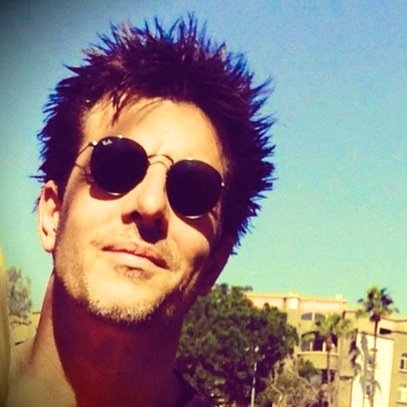
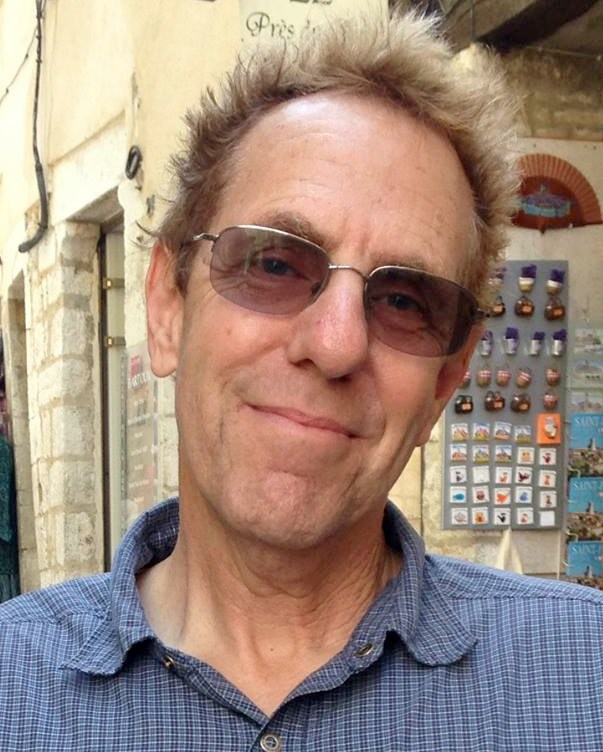
Mitch Rouse [Interview]


Today’s interview subject is a man who can be considered one of the founding fathers of modern day hilarity. He has been involved with so many amazing projects as both a writer, director, actor, and more. Just over 20 years ago, he was a co-founder of the brilliant sketch comedy series Exit 57 that appeared in the pre-South Park days of Comedy Central, and then helped bring the legendary series Strangers with Candy into the post-South Park era of our beloved Comedy Central. With the help of a few of his friends from the world of sketch that you may have heard of before, Paul Dinello, Amy Sedaris, and Stephen Colbert, he was a crucial member in bringing the hilarity to the world of television in the mid to late 90’s. And folks, his career was only getting started.

In fact, in 2004 alone, Mitch Rouse brought us two amazing films that will forever live in my movie memory. We are going to get into those in the questions below, but I just had to take a moment to point out that much like some of the other fine writers and funny people we have showcased here at Trainwreck’d Society, Mr. Rouse is one of the greats. He has made a fine living by being hilarious, which is a worthy accomplishment in itself. Mitch has some amazing stories to tell, and we are so happy that he was kind enough to share them with us today. So Ladies and Gentlemen, please enjoy some great words from the legendary Mitch Rouse!

What is your story, Sir? When does a kid growing up in Tennessee decide he wants to move out of town and become a master of improvisation? Had you always aspired to write and act? Or was it sort of on a whim? Basically, what made you want to become a part of the world you are in now?

I had no idea the world that I’m in even existed. I’m the youngest of 3. We were blessed with really cool parents that encouraged us to “follow your happiness”. If we heard a different drummer, they told us to turn it up. Loud. I knew my folks loved me and they made it very clear that if shit ever got crazy, out in the world, I always had a place to go home to.

When I was a kid my dad built a little recording studio out in the garage. My brother and sister and I, would sit out there listening to my dad sing and play his guitar. At times he would pretend to be a radio DJ or local news reporter, and he’d interview us like we were huge Hollywood stars that had flown into town for a big movie premiere or some big charity event. Some nights my mom would come out there with dinner. And the 5 of us would eat, sing songs and just hang out together. It was great. – And they were always taking us to see live shows too. Chet Atkins, Doc Watson, Floyd Cramer, David Cassidy, Boots Randolph. We even saw Elvis and Steve Martin live.

My dad turned me on to Jonathan Winters, George Carlin, Richard Pryor, Robert Klein, Woody Allen, Ray Stevens, and Saturday Night Live.

I have A.D.D. and I’m dyslexic, so the business side of going to school? No thank you. I’ll just have a salad and a nice piece of fish. I liked the social aspect of it – but yeah. No.

Making people laugh made the school days go faster and made some of my teachers go easier on me. Key word here is “some”. I had one chronically tense, highly reactive teacher call me out in front of the entire class, during one of my impromptu “matinees.” She said: “Mr. Rouse there is no job that will pay you to goof off.” She was wrong.

The clouds parted for me one day when I was in high school, in detention with a guy named Richard. He said:

“Rouse for the kind of trouble you get into, you should go to Second City.”

“What kind of trouble do I get into?”

“You don’t go around breaking stuff, picking fights, or stealing shit. You’re not an ass-hole or disrespectful to teachers. You just like attention and making people laugh.”

“What’s Second City?”

“It’s a theatre. A comedy theatre. It’s where Belushi, Dan Aykroyd and Bill Murray got their start.”

Insert angels singing here.

Those guys were my heroes. From that moment on my focus was to find out exactly what and where Second City was, and figure out how was I going to get there.

Specifically in the world of film and television, when was the first time you can remember seeing your name appear in credits for a project you were involved in, no matter how small the role? Do you remember where you were when you first saw it?

I actually found Second City and I was performing there in Chicago, the first time I saw my name in credits. It was a TV movie called In The Shadow Of A Killer starring Scott Bakula. A New York police detective is ostracized by his fellow officers when he opposes the death penalty for an accused cop killer.

Yeah Ron, that’s right. You heard me. A cop that stood for something. He wore the badge, he didn’t hide behind it. Part-time flatfoot, full-time dreamer.

I played the cop that got killed. It took place in the 70’s. I remember Bakula chasing after the bad guys, in his orange bell bottom jumpsuit and packing heat in his ankle holster. Hell yeah. Side Note: Scott Bakula is one of the nicest coolest guys ever. We shot in a prison in Chicago. I think it was the Stateville “roundhouse” Prison, which was still being used at the time. The warden gave Bakula a tour, and he was cool enough to invite me to go along.

That place was creepy with a capital “scary.” Filled to the brim with top shelf douche bags like Richard Speck. “Hi, I’m a mass murderer. Is there a hospital around here? I’m looking for a nurse.” And I think John Wayne Gacy was executed there.

In 2004 you released the film Employee of the Month which you wrote and directed, which I feel is one of those films that will continue to be appreciated for decades to come because of its originality and wonderfully written perspective of a life lived strangely. And I’m always wanting to get into the writer’s head and ask the simple question: Where did this story come from? What made you decide that this was a story you wanted to breath life into?

Where did Employee come from? Ron, I wish I had some big amazing horribly graphic story for you, one that had me fighting back tears because it was so painful to tell. One of those stories that as I re-tell it, I can’t help but re- live it. My hands start to sweat… my voice begins to tremble. And you, being the gracious host that you are; You offer me some water, but I don’t hear you. You get spooked. You lock eyes with Marty, your sister’s kid, as he works the tape deck that’s recording my story – or better yet “capturing” this nightmare, as it escapes from my mouth, in a voice that no one recognizes including myself…

Yeah, I wish I had that story to tell, but I don’t.

I was driving to an audition in a really bad rain storm listening to Green Day. After about 45 minutes of yelling and negotiating my way through the obstacle course of “shitty drivers” I decided no audition was worth this. So I pulled over to wait for the rain to stop. I was sitting there with Green Day and I thought “Wow, you sure don’t plan a shitty day like today.” – Then I thought, but what if you did? What would it look like? And why would you do it? I pulled out a notebook and started writing. A year later it premiered at Sundance.


2004 was a big year for you! That same year the commercially successful Seth Green fronted comedy Without A Paddle was released, which features the GREATEST use of an R. Kelly song the world will ever know, by the way. So, how did you become involved in this project? And when you look back on it all of these years later, what are your thoughts on the final product?

First let me say, I love the film Deliverance. John Boorman’s backwoods, feel good masterpiece. For me parts of it are like home movies.

Okay, so I had a movie pitch about 4 college best friends. One night as they’re playing poker, drinking beer and watching their favorite movie Deliverance – they start referring to each other as the characters from the film – Ed, Lewis, Bobby and Drew. With spring break coming up, they make a pact to take the same canoe trip that Burt Reynolds and his buddies took in the movie. They load up their jeep, rent canoes, drive up into the woods, and blah, blah, blah, river canoe, banjo-banjo, toothless mountain men, blah, blah, blah, you got a pretty mouth, comedy ensues, and Bob’s your uncle.

We went to Paramount and pitched it to Donald De Line and Wendy Japhet. They liked it but wanted something younger and more mainstream. We talked story lines, tone, and character stuff. We took off, came back a week later with a new pitch. They liked it and that’s it. That’s basically how we ended up writing the script for Without A Paddle.

I watched it like a week ago with my son Strummer, he’s 8. He loved it. He really loved the 2 tree-hugger girls that lived up in the trees. And looking back on it now I’m like “Burt Reynolds is in a movie I wrote. Saying words that I typed on my computer.” Burt was one of my childhood heroes. After the movie came out, we had dinner together in the Polo Lounge at the Beverly Hills Hotel. That was a huge moment for me. Sitting in a iconic place like that and listening to “The Bandit” telling Hollywood stories. It was one of life’s perfect moments.

And of course, I couldn’t do a Mitch Rouse interview without bringing up that you brought to life one of the greatest pieces of comedy genius to ever grace the screen, the cult classic program Strangers with Candy. The following and love for this show is definitely well deserved, because it is just that damn funny and smart and brilliant. How did the idea to adapt Florrie Fisher’s story for the recently flourishing Comedy Central come to life? What made you and 3 more of the greatest minds of comedy decide that this was something the world needed?

After EXIT 57 we all went different ways. I was in LA doing auditions and stuff. Colbert was doing The Daily Show I think. Dinello was writing copy for VH1 or something like that. Amy was making cheese balls and selling them to a local grocery store. CUT TO:

I woke up one day wanting to “get the band back together” – I just wasn’t sure what we would do. I always loved the sappy over-dramatic tragedies played out in Afterschool Specials. I thought it might be cool to do like “MTV’s Afterschool Special” I told Amy I thought it was time for us to do our next thing – I explained my rough idea and that was basically the seed that grew into Strangers.

We (Rouse, Colbert, and Dinello) went to the Museum Of Television in NYC which is a big library of every TV show and Movie you can think of. When you check something out, you can’t leave with it, you had to watch it there at the library and then return it. One thing you gotta remember; These weren’t DVDs or even VHS. We were watching the big 3 quarter inch tapes in the top loader decks. And anything over an hour equaled 2 tapes. Part One & Part Two.

We tripped up on the Scott Baio Adolescent Goldmine which included The Boy Who Drank Too Much, All The Kids Do It, The Truth About Alex, and Run Don’t Walk. And yes, they’re all exactly what you think they are except for Run Don’t Walk. (Teenage girl. Paralyzed. Car accident. In denial and a wheelchair at the same time. She changes when she meets a boy in the same situation.) See? Not what I expected.

The 3 of us sat and watched all of’em ending with Stoned. Baio is a high school track star. Mister popular. Ladies love him. Teachers adore him. He’s kicking ass and taking names until… Oops he starts smoking pot. Then of course his grades drop, everyone thinks he’s a bad news loser and he’s kicked off the track team or swim team, I can’t remember which, until he cleans up his act.

On TAPE #1 we watch Chachi’s life go from everything is fucking fantastic, to oops smokes pot, entire life spirals out of control and turns to shit.

Now we know once we pop in TAPE #2 Baio is going to see the light, learn his lesson, and do a complete 180 to full redemption and probably a first place gold medal. Lesson learned thank you and good night.

Right then that we decided “fuck tape #2” full redemption can kiss our ass. On our show the characters won’t see the errors of their ways and if they do they don’t give a shit. Their lives will go from kind of great to awful, to shitty, to all is lost, to bottom of the barrel, to closing credits.

Boom. Okay that’s the show. Amy and I went to MTV, and pitched Strangers to a friend of mine that worked there. She loved it, but told us MTV would never go for show like that. So we went to Comedy Central and TA-DAAA!

Strangers With Candy was a combination of: Aileen Wuornos: The Selling of a Serial Killer, Florrie Fisher: The Trip Back, Frederick Wiseman’s Titicut Follies, and Scott Baio’s catalogue of Afterschool Specials – all rolled up together.

Wow, really long answer to that question.

I need to take it back a bit further to a very specific project you appeared in that I feel is one of the most understated films of all time, the wrongfully categorized “rom com” known as Truth About Cats and Dogs. For my own personal nostalgic purposes, and my childhood crush on Janeane Garafalo, I have to ask, do you have any fond memories of working on this film, or was it just another gig you hardly remember?

Janeane was always getting/giving her friends small roles in the movies she was doing. She called and asked; and I said of course. My role was this; Janeane and Uma Thurman are sitting in a coffee shop. A bee starts buzzing around them. Uma starts to freak. I’m at the next table, I hop up and save the day by swatting at the bee in the most over the top way while trying to be cool.

ODD FACT: I had a stunt double, dressed and ready for me, if I needed it. Still not sure why.

Janeane Garofalo is one of the greatest, sweetest, funniest, people I’ve ever met. I would do just about anything for that girl.

After all of these years in the world of comedic acting, writing, and directing, what would say is the key factor that keeps you in the business? Could you even imagine yourself doing anything else? If so, what would you do?

I truly, fully love 97% of this business. I can’t imagine doing anything else. I’ve been extremely fortunate to get to do what I do, and even more fortunate when it comes to some of the people I’ve gotten to work with. I get hired to sit in front of my computer and write what I think is funny. I get to perform on stage with the funniest people I know, and they’re my friends. I get hired to act in front of a camera. I get hired to create and direct projects. These are the things I dreamed about my when I was a kid.

So what is next for you? Anything you would like to plug to our readers?

What’s next? I’m directing a film I wrote with my buddy Chris Nelson. He’s a Special FX make-up guy and he’s good. He’s really good. He’s “Hey look, I won an OSCAR” good. He’s also hilarious. The script A Baby Shower In San Dimas is about a teenage girl. Paralyzed. Car accident. In denial and a wheelchair at the same time. She changes when she meets a boy in the same situation. We’re talking to Scott Baio. – No we’re not. That’s Run, Don’t Walk.

I was lying.

Baby Shower In San Dimas is about Kate and Norman. They’re crazy in love. To avoid the clichés of marriage & romantic comedies, they’ve agreed they don’t need a piece paper to validate their commitment to each other.

Norman’s up for a big job in NYC. If he gets it, they move away from L.A., family, & Kate’s best friend Steph. Norman wakes up in a panic remembering his sister’s obligatory Baby Shower. After a hot dog, 2 beers and some intense road rage… They arrive to the huge house for the Baby Shower. A ridiculously beautiful hostess invites them in for cake & an extremely graphic birthing video.

I’m also in the process of selling a pilot I created with my good friend David Pasquesi. It’s about a privately owned prison. It’s called Merkin Penal. It’s like HBO’s OZ… but even funnier.

What was the last thing that made you smile?

The last thing that made me smile? That’s tough coz I’m smiling 80% of the time. But if pressed I’d say my kids. They’re always trying to make me laugh. Whether I end up laughing or not, they still get me smiling.

Will Rothhaar [Interview]


Today’s interview subject is with a cat that has appeared in just too many specific projects that I have loved over the years that I couldn’t reach out and try to have him on the site. We will go through most of them in the questions below, but in synopsis: he was a child in one of my favorite comedies of all time, he appeared in a production that stemmed from the View Askewinverse that we have covered so extensively in the past, and he is a newly acclaimed R&B singer. When considering these things alone, how could we not have him on the site?

Will Rothaar would rightfully be considered a natural born star, as he was practically born into the world of entertainment. It seemed only apparent and obvious that he would become a part of the creative world. And in his time, he has put out some amazing work that is definitely worthy of an immense amount of respect and praise. And that is what we would like to do here today as we share some amazing words with the brilliant actor & musician himself. So ladies and gentlemen, please enjoy some amazing words from the great Will Rothaar!

You have been acting since you were just a child. In fact, one of my first memories of your work would have to be when you portrayed a young Woody Harrelson in one of my favorite comedies of all time known as Kingpin. So what made you decide to get in this business? And when did you realize that you wanted to play pretend for a living?

Hey! First off, thank you for having me in for an interview! I appreciate you. 🙂

So actually, both of my parents are actors and directors. I grew up in the theatre in a small town in Pennsylvania. My Pop directed most of the shows and my Mother performed in most of them. When I was 4, my Pop was directing a production of Cat On A Hot Tin Roof. He told me he had a role for me and asked if I wanted to do it. It was “Sonny” one of the No Neck Monsters. At this point, I was already changing costumes 6 times a day and dying upstage, so I jumped at the opportunity.

My parents then decided they wanted to do film and TV, so we all moved to LA. After they were set up, the opportunity presented itself for me to possibly pursue acting professionally. What I love about my parents, is that from day one, this career, this life, it was never forced on me. They were always kinda like:

“This is what Mom and Dad do, if you want to try it out, you can, but the second you stop having fun, at auditions or work, just run the other way. It’s not worth it if you don’t love it, and it’s okay if you don’t.”

In fact, they were so hell bent on me being a kid and growing up at my own pace that they implemented some pretty strict rules for me and my representation:

1. Go to public school all my life, education.
2. Be a kid. Be in a band, scrape my knees, climb some trees, fall in love, act a fool, be myself.
3. No being a series regular until I was out of high school. I could leave for 3 months to shoot a film or a couple weeks for a TV show, but they didn’t want me growing up on a set.
4. Don’t be a dick. (Everyone should implement this lesson for their kids. :-))

And I think because it was never forced on me, I still truly do love it.

… And whenever I encounter fellow actors who are taking themselves too seriously, I say to them:

“We get paid to play pretend and dress-up… Stop taking yourself so seriously.”

In 2002 you appeared in the directorial debut of actor Jeff Anderson that was also hilarious entitled Now You Know. How was your experience on a project of this nature? Do you recall any fond memories whilst working under the guise of Jeff?

Haha, WOW! This is a throwback question! You know, I worked one day on that project and it was a whirlwind. Had a BLAST though. Jeff was fantastic, and hilarious on set. He also employed quite a few people from the Clerks universe, which was so much fun for me as I was a big fan of the movies from that universe growing up.

You had a nice run on the hit series Grimm a while ago, a show that I am always intrigued about as it is filmed in my home region of the Pacific Northwest, specifically Portland, Oregon. So how was your experience working on this set? Did you enjoy your time in the PNW?

Oh MAN!!! This was one of the most incredible experiences I’ve had in a set and on location. Everyone that worked on that show is a GEM. It’s always a pleasure stepping onto a set that has been running for a while. It’s like a well oiled machine.

No bullshit, no time wasted, and the vibe between everyone was so sweet.

I think my favorite part of that was when my Mom booked a big guest star on Grimm a few months later and I was able to tell the crew to take care of her, and all the various amazing things to eat/drink/do around PDX.

Which brings me to THAT!

Whew… Portland man… I fell in LOVE hard with that city. I just loved the vibe in every respect. I love how environmentally conscious everything is. I mean from the kind and quality of the food you buy, to every restaurant having a compost in addition to trash and recycling. I loved all of the options and range of food that there was. I’m a huge foodie, so I was in heaven. Sometimes, I’d just walk out of my hotel and pick a direction. Then I’d come across some bright, pretty lights outside some spot, and I’d just grab a bite. Never disappointed.
I’m also a huge beerhead, so obviously that was a fantastic journey as well. Love a place that takes pride and meticulous care with their beer. And the biggest thing I fell in love with in PDX…? THE PEOPLE.
I literally never met one rude, abrasive, “too in a hurry to talk to you”, person. Everyone is so sweet and helpful.

If I asked where one restaurant was, they’d ask me to get my phone out so they could give me 10 other things to do whilst in town. I couldn’t get enough of that. I’d just ask questions on the street so I could get the lovely response.

And of course I have to ask about your work on Battle:L.A. Damn that looked like it would have been quite a thrill ride and a whole lot of work to do. So how was that experience for you? What was the set life like on a film of this magnitude?

Oh Man, that was one of the wildest experiences I’ve had on set.
We shot that film for almost 5 months. 3 weeks of boot camp with some of the most talented and respected Marine Corps Sergeants in the film industry. They got us in shape and on point very quickly and made sure we were trying our best to do the Corps proud. And I think we handled it.

I made some friends and family ties on that film that still remain strongly in place today, and I’m extremely proud to call them all my brothers/sisters.

In your personal opinion, how does stage work compare to working on the set of a film or television series? What sort of things do you prefer about working in the theatre as opposed to other works?

Ahhhh, tough question.

They are two different animals honestly. They share the same DNA, but yield a different experience and reward. You do a play, you are gunning for 6 weeks of rehearsal, and then you get out there, in front of X amount of audience members, and you can’t mess it up. You lose a line? You keep pushing and figure it out up there. And know that your fellow actors have your back and y’all are gonna look after each other, no matter what.

You do a movie? You may travel somewhere you’ve never been. You get to work with a bunch of amazing new people. You form a family. And not to say this doesn’t happen in the theatre, it absolutely does… But something about making friends when you’re shooting at 4:30am after you’ve been working all night. Everyone getting slap happy, walls coming down, everyone joined together in the push for this product y’all are making together. It’s pretty special.

If you were given free range to perform any historical figure in American history, alive or dead, who would it be?

Well, I’ve already had the lovely fortune of getting to play Lee Harvey Oswald in Killing Kennedy for National Geographic Channel, so that kinda tops the charts for me at this point. I had so much fun running with that opportunity, and so grateful I was given the shot.
If there was anyone else I would like to play, it would be Eminem. I know he’s not exactly a historical figure in the conventional sense, but he certainly is a historical figure for many of my generation. As a kid who grew up listening to all kinds of music, hip hop at the forefront, Em changed the way the landscape looked for lyricism, and commentary, and unabashed directness. I like that. He added to the fire that makes me proud to be a poet.

What does the future hold for you? Anything you would like to plug to our readers?

Man, I wish I knew! The past few years have been slow for me acting-wise.

The most recent project I have coming down the pipeline is that I’m playing the villain in the reboot of Benji…. You remember Benji the dog from back in the day? Yea, they’re rebooting that, and it’s gonna be a blast.

Not your Grandmother’s Benji.  Definitely darker and more grimy whilst maintaining a PG rating. Blumhouse really allowed Brandon Camp, (our director and the son of Joe Camp who created the franchise back in the day) to have free reign and run with exactly the movie he wanted to make.

I respect that. In this day and age when Hollywood is so hands-on as far as the money people go, it’s nice to work for people that allow you to create without muddying the water too much.

I’m also a fledgling singer! I released my first album last September under the stage name Willy Lamar. The album is titled “That Good Love EP” and is available on Spotify/iTunes/Amazon. I’m playing one show a month until the end of the year, and starting work on my second album as we speak.

For more info on show dates and news, check out WillyLamar.com .

What was the last thing that made you smile?

Lunch with my Mama today…

She’s a helluva woman. 🙂

Check out this video of Will performing at The Study in Hollywood on August 2nd, 2016, and head to willylamar.com to pick up his new EP:


<p><a href=”https://vimeo.com/181855565″>Willy Lamar sings &quot;Good Love&quot; @ The Study, Hollywood on 8/2/16</a> from <a href=”https://vimeo.com/user56391948″>Will Rothhaar</a> on <a href=”https://vimeo.com”>Vimeo</a&gt;.</p>

Marc Zicree [Interview]

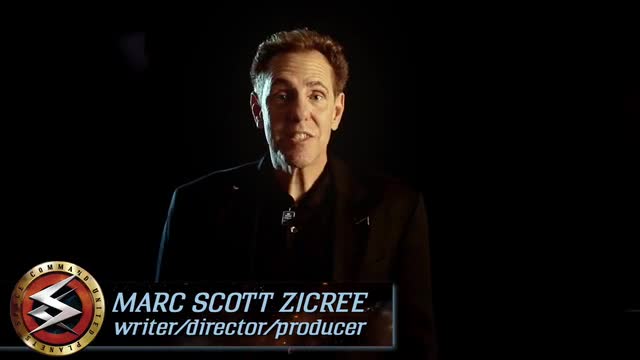
Today’s interview subject is a writer who has had such varied and successful career, it almost seems made up. Is it truly possible that one man can be the voice behind everything from a legendary children’s cartoon series, to a cult classic horror television series, right down to a new age epic science fiction saga? Well, I am here today to say YES! Yes it is possible. And Marc Zicree is the man who can make all of this possible.

Marc Zicree’s early days were spent penning stories for the world renowned and now legendary cartoon series The Smurfs which is forever engrained in my mind as the best animated series of my youth, and the youth of so many of us out there, for generations in fact. He is also another part of the creative force behind a series that we have mentioned here at Trainwreck’d Society at lengths, the legendary Friday The 13th: The Series, a brilliant yet short lived series that was related to the film series in name only and was a truly unique experience in the world of television. Yes, the same guy who made us laugh our smurfing asses off as children was also responsible for scaring the shit out of us years later.

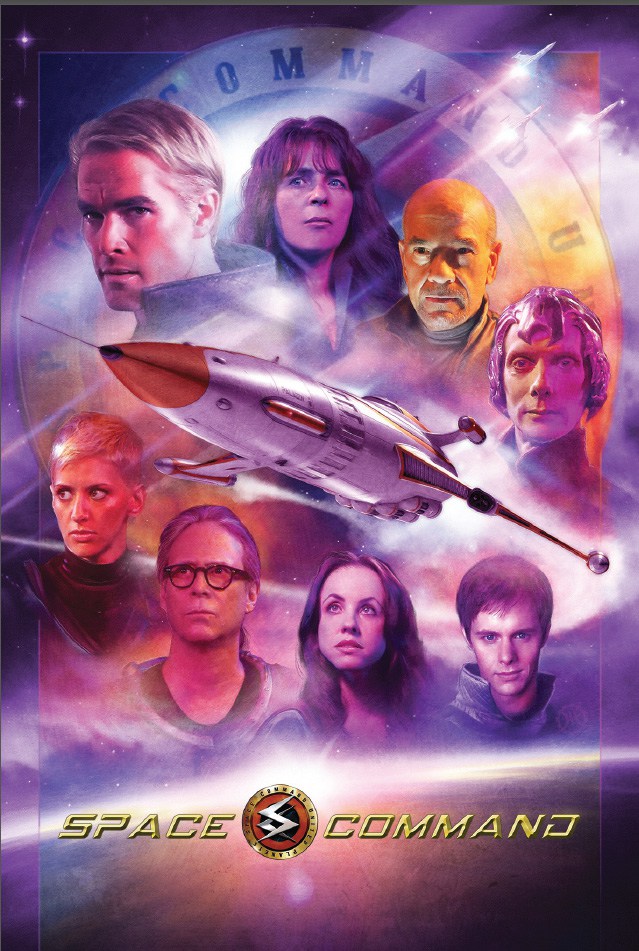
And recently, Marc is part of the guiding force behind Space Command, a science fiction that is gaining momentum and a hardcore following after and extremely successful Kickstarter campaign, which we will discuss in the words below. Basically, this is a guy who has done it all, and was kind enough to share some stories and words of wisdom with you fine readers here today. So ladies and gentlemen, please enjoy some great words from legendary writer Marc Zicree!

What was the first bit of your writing that you can remember seeing performed on screen? Can you recall how you felt in that moment?

I can’t remember the first thing I saw on screen, but television and movies were a big influence as long as I can remember. I watched all the major shows on television as a kid and the original versions of Star Trek, Twilight Zone and Outer Limits were a huge influence.

Additionally this was a great time for science-fiction and fantasy in movies and I love the films of George Pal and Ray Harryhausen. Also 2001: A Space Odyssey came out when I was a kid and that was just astonishing.

At the same time, I was reading science fiction novels and comic books voraciously. It was a great era for both of those, the silver age comics with Marvel and DC and gold key etc. In terms of novels I was reading Ray Bradbury, Arthur C Clarke, Heinlein and all the other major writers.

Smurfs was hands down my favorite cartoon when I was a kid. And I have recently become aware that you were a major factor in those early days of the show. What was it like to write for a show like this? And what are some of your favorite moments that you manage to write into the show?

I broke into television writing animation in my early 20’s and Smurfs was the second show I wrote for (the first was Space Ghost).

At that point, none of the animation had yet been done by Hanna-Barbera and none of us had heard of the Smurfs. We were told it was a huge sensation in Europe and were shown some of the graphic novels. Peyo and Delaport, the creators of the Smurfs, flew in from Belgium to meet with us writers and explain to us what the Smurfs were.

Then we started coming up with stories and writing scripts. It was great fun, because the characters were so very distinctive and the look was unique. They were also really funny and it was fun writing comedy. Plus Gargamel was voiced by Paul Winschel, who had a television show in Los Angeles as a ventriloquist when I was a kid and was one of my idols.

Of the Smurfs scripts I wrote, my favorite was “It Came From Outer Smurf,” because that was a science-fiction story about an alien landing in a flying saucer in the Smurf Village and disguising himself as a Smurf. Very much in my ballpark.

You did a great amount of work on the highly underrated and now cult favorite show Friday The 13th: The Series. The horror genre seems a bit of a stretch from the stuff you were doing previous to the shows release, so what made you want to become a part of the Friday franchise? Were you a fan of the films prior to working on the show?

Friday the 13th: The Series was my first job as a story editor and I enjoyed it greatly. I had an office on the Paramount lot and it was the same time they were shooting Star Trek: The Next Generation, so it was all very exciting.

The show had nothing in common with the movies, which I found sadistic, other than the title, which is what helped sell the show. In fact, the show had what I found to be a moral core, as it was about two young people and a friend helping to undo the wrongs their late uncle had done. I had grown up with horror movies such as Frankenstein and The Haunting and it was a genre I loved, when it was done well.

I’m very proud of the work I did on that show, and I enjoyed finding the balance between writing a story that would have meaning and writing something that would be scary. I’m most proud of an episode I wrote called “Pipe Dream,” which was about Ryan and his father and their very troubled relationship, which was a very autobiographical piece.

I also think it’s amusing that I’m the only writer who wrote for both Smurfs and Friday the 13th: The Series. I often tell people that they were very similar in that the phrase most often said by the characters in both was, “Oh, no!”.

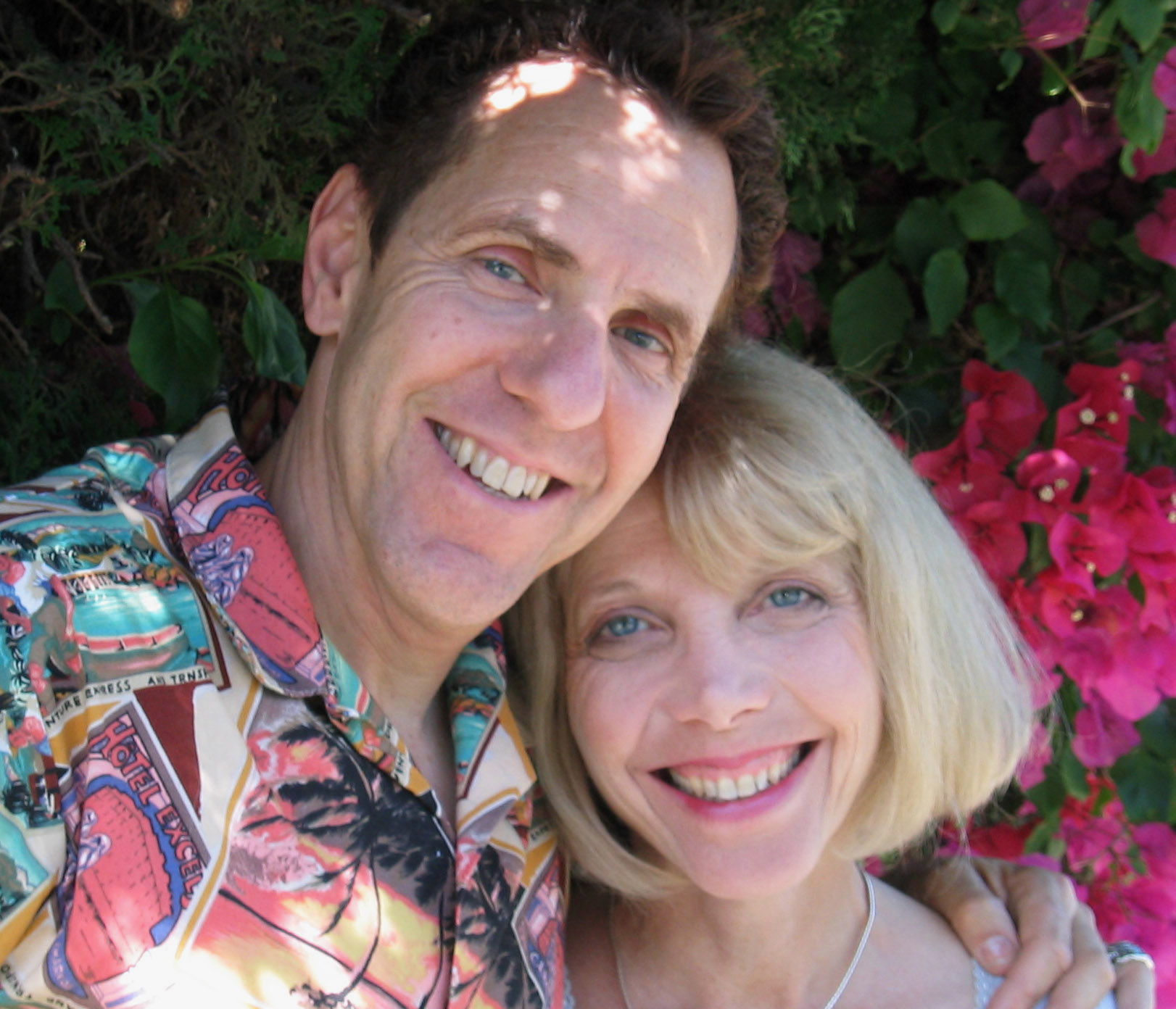
Marc and his writing/life partner Elaine.

While you have worked in so many different genres, it seems as though you have quite the preference for the science fiction world. What is it that has made you work so much in the science fiction genre?

The shows that made me want to be a writer  were the original Outer Limits, the original Star Trek and the original Twilight Zone.

I also was avidly reading science fiction, including the works of Ray Bradbury, Arthur C. Clarke, Robert Heinlein and Theodore Sturgeon.  So it was only natural that would be the genre I would gravitate toward.

One of the things I love about science fiction  is that it allows you to look deeply within yourself and comment profoundly on life and the world around us. Taking it one step away from the current moment and events of the day allows you to be both more specific and more universal.

I also love world building, projecting a possible future and also offering a tantalizing possibility of going beyond the specific story or characters and out into a much wider universe that I’ve created.this allows for the man’s number of storylines and also collaboration with others to expand that fictional world.

And yes, while I have written westerns and horror and comedy and other genres, my heart belongs mostly in science fiction.

Additionally, my mentors have all been in the genre, in one way or another,  including Ray Bradbury. So again I was learning from the best and then striving to create high-quality work of my own.

How great did it feel when your Kickstarter campaign for Space Command absolutely CRUSHED its goal? Had you anticipated such a turn out?

I was very gratified when we raised over $221,000 on our original Kickstarter campaign. Since then, I’ve sold  investment shares in Space Command and raised over half a million more. In fact, we’re still selling shares until we sell the series itself, so it’s a great opportunity for investors.

I’ve always felt I’ve shared the same enthusiasms and aesthetic as my audience, so it was a pleasant surprise but not wholly unexpected.

What is the latest news in the world of Space Command? What should fans be expecting next?

We’ve shot the first two-hour story and are now in post production on that, have also shot 35 minutes of the second two hour story, and the opening scene of the third two-hour story — essentially a good representative sample of what will be a first season representing twelve one-hour episodes.

Our VFX team is now working full-time on the 1,900 VFX shots in the first two hour story — essentially our Space Command pilot.  I’ve written the first eight hours of the twelve-hour first season, and have outlined hours nine through twelve, plus a prequel.

I’m now actively pitching the show to major networks and platforms, both here and in England and France.  So hopefully Space Command will be available soon.  I can’t wait to share it with the world.

I’m thrilled with what we’ve produced so far.  You can check out our trailers and more at http://www.spacecommandseries.com and also my YouTube Channel Mr. Sci-Fi at:

https://www.youtube.com/channel/UCkKt7gHnZpcY0nreBdPhwmQ

And of course there’s my Facebook and Twitter posts, and also http://www.marczicree.com

What else do you have going on? Anything else coming up that you would like to plug to our readers?

The new Twilight Zone Companion comes out at Christmas, with tons of new material, including links to audio and video rarities, plus new interviews with Rod’s daughter Jodi and George Takei.

Beyond this, we’ve founded a new company called Better Angels Productions, with our studio here in LA, an Executive VP of Business Affairs in Dallas and a presence in London.  We’ll be doing three features in the next two years, and have a slate of nine movie and TV projects.  So lots of exciting times ahead.

I’ve also just finished a memoir about my mom and am writing three new books:

My Ray Bradbury, about my friendship with Ray Bradbury; My Televised Life, about growing up watching TV and then making television, in all its past and current permutations; and The Making of Space Command.

Star Wars novelist Maya Bohnhoff has also written the first Space Command novel, which will be coming out soon.

Oh, and Elaine and I also mentor writers, directors, actors and producers.  You can find out all about that at http://www.marczicree.com too.

What was the last thing that made you smile?

When the money came through a few days ago for my wife Elaine to be hired to write the feature Subversive, based on current member of Parliament Lord Peter Hain’s memoir about this apartheid-era activist parents in South Africa.  We’re aboard that movie as producers, along with two producers in the UK, and we’ll be leaving in a couple weeks for England, Wales and South Africa to research the film so Elaine can jump in writing the script.  I can’t wait.

Jermaine Hopkins [Interview]


Today I have an amazing interview with a man I have been trying to get into the TWS universe for quite some time. In fact, when I originally came up with the idea for this site, and I was considering all of the folks I would love to ask some questions with, Jermaine Hopkins was right up there at the top of the list. I will admit, the original reason was simply for his hilarious role in a film that helped guide me from adolescence into becoming a man, the great Def Jam’s How To Be A Player. I know, I know. It may not seem like a film that is most appropriate for such a thing as human growth, but I truly took in the message at the end of the film. And of course Jermaine was the highlight of the film, even in those post-pubescent years, and he was what made it so enjoyable to me.

And beyond just this one film, Jermaine Hopkins has appeared, and is appearing, in some of the greatest works of our modern times since he was a very young man himself. He really brought attention to himself with brilliant roles in the films Lean On Me and Juice, which truly kickstarted his career in a major way, and the man hasn’t looked back since!

So how about I stop babbling and let the genius speak for himself. Ladies and gentlemen, please enjoy some great words from the brilliant Jermaine Hopkins!

When did you first realize that you wanted to join the world of acting? I know you started at a pretty young age, did your passion go back that far as well, or did you just sort of fall into it?

Lean on Me was my first film, I got the role by attending a casting call; I thought I was lucky. Then I landed a role in Juice but I still thought it was a fluke. After Juice I realized that people really thought I could act and that’s when I decided I wanted to make acting my career.

Jermaine Hopkins as Samms in Lean On Me.

When I was a teenager, Def Jam’s How To Be A Player was in regular rotation of my viewing habits. I absolutely loved it, and still do. And one of the main reasons I loved the film so much was the brilliant paring of yourself and Anthony Johnson. So with that, what was it like to make this film? Was it as much fun to create as it was for fans like me to watch?

Making How To Be A Player was a blast, we had a great cast with great chemistry. It was also my second opportunity to work with Russel Simmons (I’d previously worked with Russel on Rhyme & Reason), when we began filming he told me to bring the fun and that’s what I tried to do with my character.

You also appeared in another film that is still a classic in my mind, and millions of others I am sure, featuring the dearly departed poet Tupac Shakur, known as Juice. What was it like for you to work on such a dark tale at such a young age, and under the guise of a legend like Ernest Dickerson?

Juice was my second feature film role, and to be working with such talented individuals so early in my career was a blessing. Tupac was just starting his acting career, Ernest Dickerson who had previously been Spike Lee’s camera-man was making his name. To name all of the talented people involved in Juice would take forever. The great thing about filming Juice was with all the talent involved, it was still an even playing field; the best of both worlds.

Jermaine Hopkins with Juice director Ernest Dickerson.

I am also a huge fan of the largely underrated, and also featuring the belated Tupac Shakur, know as Bullet. Again, what was it like to work on this brilliant and dark project?

The filming of Bullet was a unique experience; the whole project definitely had that dark brilliancy that you mentioned. It was cool to work with Tupac again, even though by this time his life was in a different place, he had become outspoken on social issues and had gained a good bit of notoriety. Bullet was being filmed while Tupac was facing sexual assault charges, with everything going on in his life, I admired him for his professionalism; being able to keep it altogether while on set.

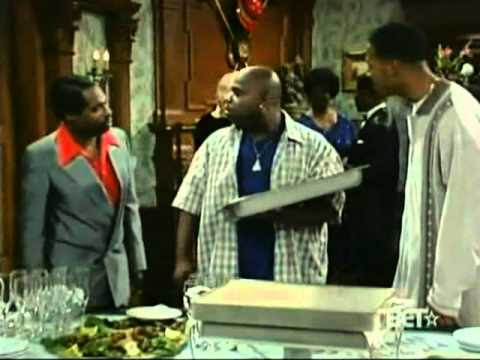
Jermaine Hopkins as Dupree on the seminal classic sitcom The Wayans Brothers.

What does the future hold for you? Anything you would like to plug to our readers?

I recently relaunched my film company J Hop Films. We are developing quality content for television and the big screen, our motto is good projects done right; look for us in 2018! Hit me @ Jermaine Hopkins on Facebook, Twitter and Instagram or check out our website http://www.jhopfilms.com (under construction)!

What was the last thing that made smile?

I smiled when I woke up this morning. I’m always smiling!

Nicholas Meyer [Interview]


Oh do we have a hell of an interview for you fine folks today! We’ve featured several writers on these digital pages that have been in a class all of their own to say the least. And today is no exception. Today we have a lovely collection of answers from Academy Award nominated, and 3 time Emmy Award nominated, writer and director Nicholas Meyer.

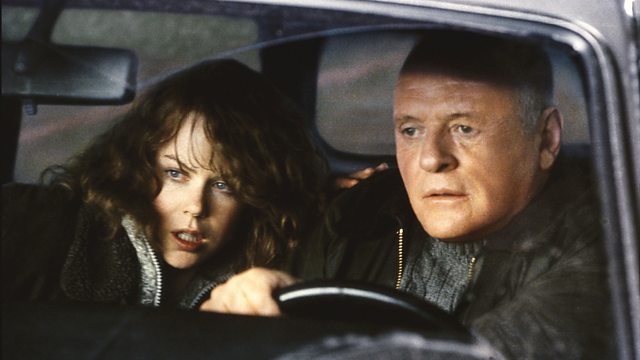
I first fell in love with Meyer’s work on the 2003 film starring Anthony Hopkins and Nicole Kidman known as The Human Stain. So I reached out. Unfortunately, I would learn a thing or two about the film business when asking him about this film that I have long since admired. Which happens, quite frequently really. When you take everything at face value, your naive ways are eventually going to be exposed. Nonetheless, I am very happy that he was willing to go a bit more in detail on his dealings with a film I so enjoyed.

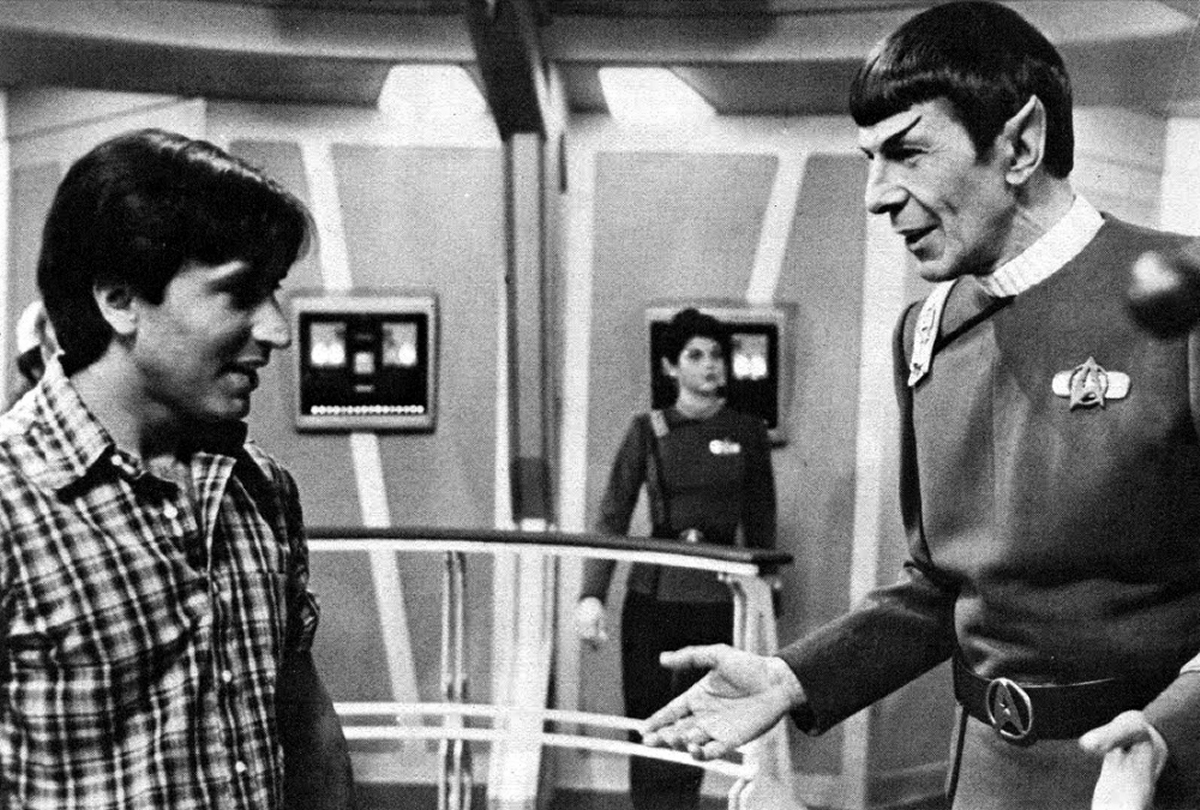
Of course, the reason I may have some new readers here today would be because Nicholas Meyer has been heavily engrossed in the world of Star Trek. We have featured several writers, producers, and directors from the Trek world in the past, but this is a big get, guys. Meyer penned what is widely considered to be the best story in the Star Trek franchise, by the people who truly know/care about the franchise, known as Star Trek II: The Wrath of Khan. He would continue to work steadily in the film franchise, but his work on Khan has given this man royalty status in the legion of Trekkies out there.

So, ladies and gentlemen, lest we continue the babbling, and get right into some amazing words from legendary writer and director Nicholas Meyer!

When did you first discover that you had a talent for the written word? Was it a passion that was always there, or did you just sort of fall into the idea of writing for a living?

I began writing – or rather dictating – stories to my father, who wrote them down, when I was five.  How our dog, Lempi, carried the newspaper in her mouth home from the grocery store; that sort of thing.  I was read or told bedtimes stories as a child and I expect this prompted my imitations.  After a year or so (I’m guessing here), my father claimed to be tired of being my stenographer (already he knew my affection for big words, thanks to Kipling’s Just So Stories), and told me I must write my own stories from then on.  And so I did.
It was never my conscious intention to become a writer; writing was simply a reflexive action I performed. I think, among other things, writing was a palliative for my intermittent bouts of anxiety.  Words became my familiars.  When confused, I reached for a pencil.  Later, a typewriter… then an electric typewriter… now a computer.  Ultimately, a camera.

My conscious goal was to be an actor, but I learned – with some surprise – that I had not the gift.  It was around this time that I discovered directing as a job and changed my ambition to that.  The writing, as I’ve indicated, just sort of tagged along.  One day I looked up and found I’d written quite a bit and was making a living at it.  Quelle Suprise.

Your legendary novel The Seven-Per-Cent Solution is hands down the greatest Sherlock Holmes story every told, in my opinion. A damn fine clever one! So, where did the idea of a cocaine addicted Sherlock Holmes meeting Freud come from in your mind? How did you manage to rationalize this idea to be something that could work in the Holmes universe?
When one runs out of Doyle’s Holmes stories, the impulse to write more has inspired many before me.  As my father was a psychoanalyst, it wasn’t long before I found myself wondering how much Doyle knew of the life and work of Sigmund Freud, whose methods, to my impressionable mind, were so reminiscent of Holmes’s.  I was startled to learn they were both doctors, had died in the same city, within nine years of one another.  Holmes was a cocaine user; so was Freud.  From there, plot ideas began to occur to me.  The thing gestated for years but took off during a Writers Guild strike during the early 1970’s. My screenwriting-filmmaking career was just getting underway and suddenly we weren’t allowed to write scripts.  My girlfriend pointed out that now was the perfect time to write that Holmes-Freud novel I’d always been on about. And with nothing better to do, she was right.  Incidentally, I wasn’t the first person to perceive a resemblance between Holmes and Freud (even Freud reluctantly conceded it!); I was merely the first person to attempt a novel derived from the idea.

I absolutely loved 2003’s The Human Stain. A film you adapted from a Philip Roth novel. That feels like such a difficult world to have to live in for any amount of time. Can you tell us a bit about what it was like to attempt (and ultimately succeed) in bringing this story to the screen?

The Human Stain was a bittersweet experience for me.  Robert Benton is a wonderful director and a marvelous human being, but ultimately we disagreed on how to interpret Philip Roth. Ultimately I was “locked” out of the film and Benton re-wrote, simplified and toned down my script, which had been much more faithful to Roth’s novel.  I didn’t think the actors were miscast (as many alleged), so much as misdirected.  Why did Hopkins have to play Coleman Silk as an Englishman? (For that matter why is David Kepesh in Elegy – aka The Dying Animal, also by Roth – played as and by another Englishman, the very gifted Ben Kingsley?)  Why didn’t Nicole Kidman have Faunia’s blue collar Boston accent?  She could certainly have done it.   So much of Roth’s specificity was flattened, as was the entire socio-cultural critique of the Clinton’s impeachment proceedings leeched out of the story, which was meant to reflect those peculiar times.  Some folks – such as yourself – are fond of the film, but to me it feels an unsuccessful translation of Roth.  I find Elegy, directed (and photographed!) by Isabel Coixet far superior.
I have no doubt in my mind that many people may be tuning into this interview because you are one of the creators of arguably the most beloved addition to the Star Trek world, the great Wrath of Khan. After 35 years, Trekkies are still gushing over this film, for good reason. I am curious to know when this sort of fandom started? Was there a certain hysteria around the films from the very beginning? In those pre-internet days, what was the buzz like when people found out there was going to be a second Star Trek movie?

I never knew where the fans came from as I was not a watcher of the original show, which – at the time – meant nothing to me.  While working on the film, I was astonished, as you may conceive, to receive a letter, “If Spock dies, you die…” It did not give me a very positive view of the fans.  Notwithstanding this, I understand clearly that without the presence and persistent enthusiasm of the fans, there would have been no films, no resurrection of the show, no sequels and spinoffs.  I’ve no idea how they learned what’s happening before the internet.  I was flabbergasted on the opening day of Wrath of Khan when they showed up in the newly designed uniforms, specifically created for this (as yet) unreleased movie.   Fans may not know what they want – or like – until they get it, but there’s no denying that absent their passion, the show, its spinoffs and cinematic variants, would never have occurred.

And what is it about Khan specifically that you think makes it the classic that it is considered today?
This is one of the questions I’m most often asked and am least able to answer.  Artists are far from being the most objective judges or evaluators of their own work.  When Georges Bizet wrote the Toreador song for Carmen, the most popular baritone aria in all opera, his comment was, “Ah, well, the public want shit. There it is.”  I cannot explain the enduring popularity of The Wrath of Khan; I can merely observe and recount with wonder – and gratitude! – the fact that after thirty-five years, the film continues to exert its mysterious, alchemical, appeal.  I note with curiosity that the film seems to have special meaning for fathers and sons and also for those celebrating birthdays.  Among other things, it is, after all, a story of aging and coming to terms with aging…
And when you went on to work on further installments like The Voyage Home and The Undiscovered Country, was there still an immense amount of pressure to please the audiences? Or was there a generally feeling of trust after your success with Khan?

On the Star Trek movies I worked on, I was never aware of “pressure” to please audiences. I have always distrusted work that attempts to second guess what people want when I don’t believe they know themselves.  I work from a different assumption, namely, if I like it, I think I’ve a reasonable expectation others will, too.  This has not always proved to be the case, but it’s the only way I know how to work. I would never dream of telling you a joke I myself didn’t find funny.  On the off chance you might like it? No way.  If I’m not laughing, no one else will laugh either.  For these reasons, when I write (or direct, for that matter), I’m working to please myself.  And to be as truthful as my memory permits, it is not my recollection that on any of my Star Trek movies, anybody ever mentioned the preferences of the fans.

What are your thoughts on the modern world of film, considering all the technological advancements that have been made you since you first found your way into this business?
This is a complex question and merits a thoughtful – if lengthy – response.   Certainly the technological advances achieved by film border on the miraculous.  We can now depict ANYTHING.   Is that a good thing?   It is my belief that art thrives on restrictions.  It is when we choose or find ourselves unable to show things, either because of censorship (where would we be without censorship?) or (previous) technological limitations, that we employ imaginative, creative solutions to artistic problems.   Paintings do not move.   Music – certainly symphonic music – has no intellectual content.  Words are just code on the page, waiting to be deciphered by the brain.  In each case, it is the contribution of the viewer, auditor, audience, that completes the work of art.  The painting moves when it meets your eye.  Beethoven’s 5th becomes profound when it enters your ear.  Minus that interaction, it is merely catgut and tubing.  Art with limitations imposed upon it, resorts to symbols.  Analogies.   Allegories.  Metaphors.
 
But art with NO LIMITATIONS?
Movies with their capacious bag of special FX tricks now have the hideous capacity to do everything for one.  The result of all this technological progress, is the proliferation of what we term “eye candy”.  Candy, it is well to remember, is not good for you.  Movies increasingly employing all these alleged advances, increasingly render audiences passive.  Where Shakespeare once urged audiences, “On your imaginary forces, work!” now we don’t have to.   We sit in plush theatre seats or on our own couches and CGI makes literally anything at all.  The result in many cases, is a stultifying boredom, to counter or compete with which (along with the temptations of our ubiquitous smart phones), theatres endlessly pump up the volume.
The end result I find not particularly edifying.  Naturally, we want special FX in film to be as good as we can get them.  No one wants to be bounced out of the story when distracted by a Roman centurion wearing sneakers or a wrist watch.  FX can enhance a story, make the narrative more believable.   But total reliance on those FX in the end, I believe, proves destructive.  No, not destructive – perhaps distracting is the more precise word.
When you look back on your illustriously successful career as a writer, director, and more…what would you say you are most proud of?
I am arguably most proud of three accomplishments in my professional life.  First, my novel, The Seven-Per-Cent Solution, in which I may claim to having revived interest in and enthusiasm for Sherlock Holmes, the deathless creation of Sir Arthur Conan Doyle, bringing the Great Detective back to the best-seller list for forty weeks in the New York Times – the first time he appeared there since Doyle invented him.  I’m relatively pleased with the film version, as well, for which I received my sole (to date!) Oscar nomination.
Secondly, I am proud of my contributions to the Star Trek series, having written and/or directed feature films, II (The Wrath of Khan), IV (The Voyage Home) and VI (The Undiscovered Country).  I’m particularly tickled by the enduring favor The Wrath of Khan has found over more than 35 years with audiences young and old, around the world.
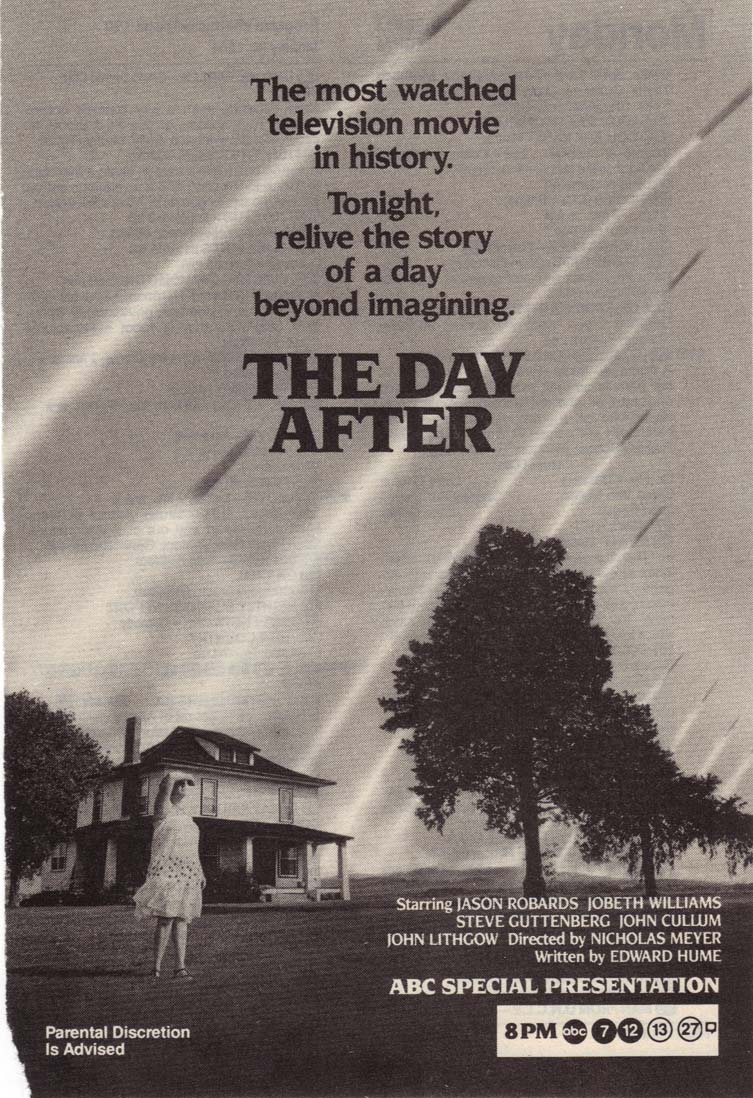
But I think I am most proud of having directed the television movie dealing with nuclear war between The United States and the (then) Soviet Union.  The Day After remains the most watched film ever made for television with one hundred million viewers in a single night.  More importantly, the film changed the mind of President Ronald Reagan who came to power believing in the notion of a “winnable” nuclear war.  After seeing and being shaken by the film, (an event he documented in his diary and memoir), he wound up going to Iceland, meeting Premier Gorbachev, and signing the intermediate range missile treaty – an event, incidentally, the formed the core of Star Trek VI: The Undiscovered Country.  Of all the things I’ve done to date, I’d have to count The Day After as the most worthwhile use of my life.

What does the future hold for you? Anything you would like to plug to our readers?

 
I’m not good at plugging things that a not yet realities.  That said, I’m pleased that my series,  MEDICI – Masters of Florence, is going into its second season.   Waiting to hear if my other series, Star Trek: Discovery will do the same.  I also am happy to recommend my memoir, The View From The Bridge: Memories of Star Trek and a Life in Hollywood, published in hardcover by the Viking Press and in paper by Penguin.
What was the last thing that made you smile?
When Donald Trump was impeached.  Oh, wait – that hasn’t happened yet.

Spencer Garrett [Interview]


Spencer Garrett is one of the hardest working people in the world of acting today. As versatile as he can be hilarious, he currently has re-occuring roles in no less than 4 of today’s hottest television shows including HBO’s Insecure and the Amazon Original Show, Bosch. More specifically catered to avid Trainwreck’d Society readers, you will love him in HBO’s stand up comedy vehicle Dice, as well as Room 104 from the beloved Duplass Brothers.

And for over 30 years, this has been Spencer Garrett’s life. He was born into the world of acting, and he has been making it his passion since he began. If you have only managed to turn on a TV or pop into a cinema over the last few decades, it is extremely possible that you have caught Mr. Garrett in action. And his career is showing no sign of slowing down, it’s quite the opposite, really. He has some pretty great irons in the fire right now that I am very excited to see come to live, including some work with the great Kevin Pollack, who we have fawned over numerous time over the years. And because of that and more, we are so fortunate that he was able to stop and share a few words with us here. So ladies and gentlemen, please enjoy some words from the brilliant Spencer Garrett!

I understand you grew up around the world of entertainment, so it almost seems inevitable that you would join the ranks as well. But, when did YOU personally realize that you also wanted to play pretend for a living? When did you make the decision that this was what you wanted to do as a career?

I’m pretty sure I was a bit of a ham coming right out of the gate. Being an only child  – and the son and grandson of performers – I imagine the acting gene was ingrained in me at birth.That desire to be noticed, to stand out somehow. I grew up being taken to the theatre and musicals in New York City from a very early age.Seeing Sir Peter Hall’s A Midsummer Night’s Dream with The Royal Shakespeare Company at around age 8 or so was a mind boggling and eye opening experience for a little kid and I remember being entranced by it. Heavy drama or the most frothy musical, it didn’t matter. I just loved being a part of that experience. I was always keen to do plays for as long as I can recall from elementary school all the way through high school in Maine, which had a very strong performing arts curriculum. And at holiday parties I was the kid who organized all the other kids to put on an impromptu ‘Christmas sketch’. At The Hyde School in tiny Bath, Maine, whether it was fighting for the solo number in a particular song or being the first one to raise my hand to audition for the lead in the play, performing and expressing myself onstage was where I found a kind of comfort zone. Whether I was any good or not remained to be seen. But I was always game. When I got to Duke University I auditioned for a role in Peter Shaffer’s Equus, amongst other shows. I was a horse. Small parts, larger roles, didn’t matter. I just wanted to know if I was any good. But I was hooked. From that point on I was off to the races. My ‘Aha!’ moment probably came when I was out of university and living in NYC in the early 80’s. Seeing, in the course of a few years, John Malkovich and Gary Sinise in Sam Shepard’s True West, ‘Lanford Wilson’s Balm in Gilead by The Steppenwolf Company with Bruce Springsteen and Tom Waits blaring over the loudspeakers as I entered the theatre, and Kenneth Branagh, Emma Thompson and Derek Jacobi doing Much Ado Handout Nothing one day then Cyrano de Bergerac the next, blew my mind. It was probably around that time, along with my deep and abiding love of the movies, that I said ‘alright’ let’s give this a shot. Here I am, some thirty years in, still grinding away.


I have learned that you will be appearing the upcoming film The Front Runner, in which you will be portraying the legendary journalist Bob Woodward. I am always curious as to what type of preparation goes into a portrayal of a real person who also happens to still be alive. So how has that process been for you? Did you meet with Bob to learn a thing or to?


I’ve had the experience of playing a few real life characters while they were still alive, so it’s tricky ground. You want to put your own stamp on it while honoring the director’s vision. A fine balance. Tom DeLay, In Casino Jack comes to mind. That was a straight up satire so I had a little wiggle room to make it mine, but DeLay was such an outsized character that I didn’t have to work for it too hard. That was just delicious to play. I remember going to see him on ‘Dancing with the Stars’,watching him flail around the dance floor in brown spandex. Sometimes the characters just do the work for you. With Bob Woodward in Jason Reitman’s The Frontrunner I wanted to get the accent right. It’s VERY specific. The world didn’t know Woodward, really, or what he sounded like when All the President’s Men came out but he’s been a huge media presence in the last decades so I wanted to try to capture his essence as best I could. I had the opportunity to meet him before I started filming but was working on another project and couldn’t get the timing right. Jason had actually preferred that I just ‘come in clean’ with no preconceptions about him, so it actually worked out. It’s not a Woodward impersonation. It’s me, trying to channel a bit of him from 1984 if that makes any sense. I’ll meet him after I wrap. And of course I hope he likes the film and my work, as his career has had a great impact on me.

You have also been appearing regularly on the brilliant new HBO series Insecure. Can you tell us a bit about your experience working on this project? What has been unique about this experience?


I wasn’t hip to Insecure when I was offered the role, to be honest. Theres just SO much television out there – GREAT television – it just hadn’t crossed my radar yet. I watched the entire first season in one day. Not just as research – but because it was so f*****g good. Issa Rae and Yvonne Orji are a great comic duo and the writing and editing is kind of amazing. I had a blast working on that show. It taps into the zeitgeist in a very unique way and, being a native Angeleno, films in places familiar to me but not necessarily to the audience outside LA. It captures another side of my city in ways other ‘urban’ shows based in L.A never have.  Probably the thing that made the biggest impression on me was how diverse the crew was. All of my directors were women of color and the crew, for the most part, are largely women and minorities. It was refreshing to see and a blast to walk onto that set each time they asked me to come back and play.


On credits alone, it appears as though you may be one of the hardest working people in Hollywood! You’ve appeared in just so many of the finest television programs out there right now, and that isn’t all you’ve done! So what keeps you motivated to work so much? Where does this drive to succeed stem from for you?


Something like 200 credits on IMDB. Bananas, right? Where has the time gone? I still LOVE what I do (flying to Kuala Lumpur with Viola Davis to work on a Michael Mann film, a Lynn Nottage play at The Geffen, a week with Owen Wilson and Pierce Brosnan in Chiangmai, Thailand – this can be a hell of a fun job, sometimes) and, more importantly, I feel like I’m just hitting my sweet spot as an actor. I think I’m finally getting the hang of it. And I’m not kidding.


From an actor’s perspective, and someone who has been in the game for a quite a while, what are your thoughts on the modern world of film and television? With digital platforms making their way into the industry, as well as more and more cable options, is world becoming over saturated? Or is simply just more opportunities? Your thoughts?


I think we really are in a golden age of television. For the movies, not so much, alas. It’s tentpoles and action figures and occasionally something wonderful will break through.But I have hope that audiences will tire of the explosions and drivel and faint their way back to embracing more character driven stories. I’m finding the most interesting work as an actor  – and a viewer – on the small screen. Yes, there seem to be more and more opportunities for actors on multiple platforms, meaning more competition. But that doesn’t mean the glut of work has made it any easier to sustain oneself as an actor. You are always struggling to make a living, to stay ahead of the curve when the guy who’s #1 on the call sheet is getting all the dough and the supporting cast has to negotiate for the privilege of working for union scale. It’s always a battle.


What does the future hold for you? Anything you would like to plug to our readers?


The most exciting thing I’m working on these days is a podcast called “America 2.0″ by a wonderful young writer with an amazing voice named J.S Mayank. Several months ago I was asked to do a table read of his pilot script and just fell in love with the writing. Frustrated by Hollywood’s insistence that ‘political dramas are kind of radioactive right now” given our current, um, situation – J.S decided to split the pilot up into six segments as a narrative arc. We have put together a dream cast: Laurence Fishburne, Mary Louise Parker, Patrick Adams, Ming-Na, Jack Coleman, Katherine Castro, Steven Weber, Iqbal Theba, Shanola Hampton, and CNN’s Chief Political Correspondent, Dana Bash. We started recording this dream cast about two weeks ago and are already blown away by the work. We are hoping to get it out there by January.


What was the last thing that made you smile?


The last thing that made me smile was watching my girlfriend receive a prestigious award from her George Washington U. Alumni association in D.C. last night for her outstanding achievements in political journalism. Nobody works harder than she does at sifting the spin and fiction from the cold facts. She does ‘real news’ like nobody’s business and is the best in the biz. I’m very proud of her and she inspires me every day to get off my ass and do something good.

David Steven Simon [Interview]


Oh man, do we have a damn good interview for you fine folks today! We have showcased some pretty amazing people from the world of television over the years, and today is absolutely no exception and very well be one of the finest we have had the pleasure of showcasing to date. His name is David Steven Simon, and he is very likely a creative force behind one of your favorite television series.

For me personally, I did not realize that I was a huge fan of David’s work when I was watching two of my favorite sitcoms, The Wayans Brothers and The Fresh Prince of Bel-Air, yet there he was! I was also no stranger to one some of his other projects that we all know and love like My Two Dads and Mad About You. And those last two coincidently happen to feature a man who David is currently teaming up with again to create some new television magic, the great Paul Reiser. You all know that guy, I’m sure of it.

David’s latest project, There’s Johnny, is already proving to be one of the most stellar television series to come out in these most recent golden years of television. The show not only chronicles the days behind the legendary days when the Tonight Show ran supreme, but gives a very clear and somewhat disturbing view of America in the 1970’s. I dare say that this project is unlike anything Mr. Simon and Reiser have worked on in the past. It’s something new, and it’s something brilliant.

So ladies and gentlemen, please enjoy some amazing words from the brilliant producer, writer, and more, Mr. David Steven Simon!

How did you find yourself in the world of television as a writer and producer? Was the world of television always something you aspired to get into?

I was in acting class at 4. I went to the “Fame” school, the High School of the Performing Arts. I had a four-year drama scholarship to college and then I became a publicist for United Artists (who were still based in NY) where I worked on three Oscar winners (Rocky, Network, Cuckoo’s Nest), the Bond films, Woody Allen films, Carrie and on and on. During those years is when I realized the effect that my writing could have. Moved to LA with no plan. Partnered up with another writer and right out the gate we had great luck. I wound up being under contract to the studios for years: Disney, Universal and Columbia. While I was at Universal that’s when I started meeting all the TV people there and little by little I started to gravitate towards their shows: Steve Martin’s The George Burns Comedy Week, Charles In Charge, and I wrote on shows like Knightrider (giving them comedy stuff) and I was everyone’s back up if they had a pilot. I wrote pilots too.

When was the first time you can remember seeing your name appear on screen in the credits? Do you remember where you were when first saw it, and did you feel a certain way about it?

First credit I think was for the movie In The Mood which Bob Kosberg and I got a story by credit (we wrote the first draft).I saw the film at screening in Westwood and I was floored. Wait. That’s me! First TV credit was actually Fernwood Tonight for Norman Lear. Everyone who owned a hand wrote on that so the credits went on forever: but there I was! First sitcom was Charles in Charge. My son had just been born so I put his name in the show.


I have to say, I absolutely adored The Wayans Brothers during its reign. I know that the Wayans family was already well-established in the world of film and television, so it could have been a factor, but besides that, what inspired you make that show happen?

We got a call from Warren Littlefield who was then the president of NBC. He said he wanted us to create a blue collar Fresh Prince with them. Marlon was off the charts hilarious. Sean was more smooth and relaxed. To me they were a black Martin and Lewis. But their casting especially of John Witherspoon did not go over well there. They felt John was too much of a cartoon. So from there: The WB! We had three shows in a row: Fresh Prince, Sister, Sister, The Wayans.

We were fortunate enough to speak with Karyn Parsons about her love for The Fresh Prince of Bel Air, but what was your experience like in creating this fine program? And in your opinion, what made Fresh Prince unique in its own right?

I didn’t create it. The Borowitz team did: Susan and Andy. I came on after being on what was about to be that season’s hottest new comedy: The Royal Family with Redd Foxx…until Redd suddenly died on the set! Overnight we were cooked. Over. The show went on but by then we were on Fresh Prince. The show was a delight because everyone was so full of gratitude and appreciation. Will was a young genius. I had never seen anything like it. He was barely 19 when we came on. A kid. His mind was on fire. Karen was a willing clown. SWEET. They all were. Other than the original mom: and she got wished into the Cornfield because life was too short and she was making eveyrone but mostly Will VERY unhappy.

You have recently joined back up with your old My Two Dads and Mad About You pal, Paul Reiser with There’s… Johnny. How has it been to get back into writing with Paul? Is it like old times for you?

I met Paul 32 years ago and we have been laughing ever since. I have worked with two people who were exactly the way you hoped they’d be like: Paul and John Ritter (I did Hearts Afire with him). Paul is a genius and working with him on this, some 19 years after Mad About You was a revelation. I always felt that Paul was underappreciated. Helen got all the awards and attention, but behind the scenes it all began with Paul. I mean they were equal in weight and “ran” the ship together….but the world needs to know how great Paul is and this show is going to blow people away. It is NOT what people expect. It’s not a comedy. It’s not That 70’s Show with whacky Tonight Show clips. It’s about the seventies which were very powerful and VERY dark times. Jane Levy’s performance is breathtaking and Ian Nelson, the star, is going to melt a lot of hearts. We use the Tonight Show clips as a kind of Greek Chorus which shows how American felt…and acted at the time. No one plays Johnny, Ed or Doc. Or anyone famous. The illusion, like Larry Sanders, that it’s happening right then and there. David Gordon Green, another genius in my opinion, KILLED on this. It looks like a movie—and we had a barely one million an ep budget!

When you look back on your very successful career in the world of television writing and producing, what would you say you are most proud of?

That my kids are proud of me. That means the most. I am writing more now than I have in my entire life. I shoot comedy shorts every year for film festivals. Looking back every show was a life lesson: great people. I have a new play that is getting a full production in 2018. I’ve roped in Tony Danza who blew my mind in our show. What a talent and what a sweetheart! I tend to look back at my career and think: Wow: I got a weekly paycheck in Hollywood for 21 years! That’s a miracle.

What else does the future hold for you? Anything you would like to plug to our readers?

Like I said: next up: my play Grave Doubts: A new Comedy full of Plot Holes. Stay tuned for that. We have plans for casting that are really exciting. The TV director/wizard/theater director Assad Kelada is the guru behind the scenes.

HULU premiered our new show, There’s Johnny on November 14th. Seven episodes. It is going to shock people. It’s not a light, fluffy look back at the era. It comes packed with a genuine emotional wallop. Plus you get to see George Carlin, Don Rickles, Jack Benny, Jerry Lewis, Albert Brooks and on and on and on.

I also write every day on Huffington Post. Search David S. Simon and you can read my scathing pieces on Trump.

What was the last thing to make you smile?

Groundhog Day, the musical. Landing back in New York after being in LA for 8 months. Watching the Yankees without having to pay for MLB. Seeing my peeps. Every dog that I pass on the street. Thought: why don’t women come with tails? Then we’d know what they really feel about everything.

Check out the teaser trailer for There’s Johnny, available now on Hulu:

Nick Hexum [Interview]


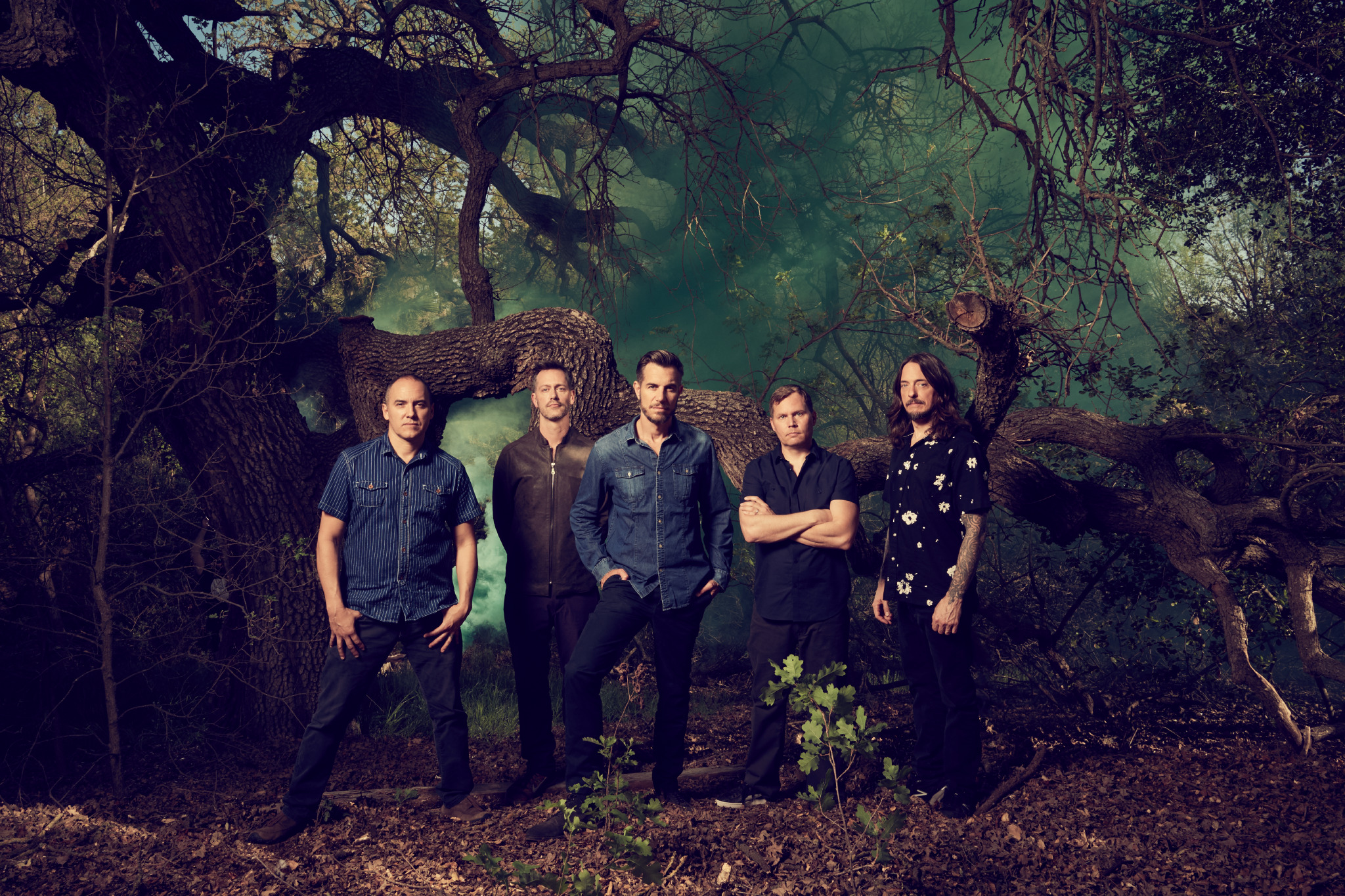
So, this is another very special interview. It has a lot of personal meaning for this former 90’s kid, but it really doesn’t have to be that specific. Nick Hexum is a founding member of a band that has truly stood the time, who came from a time when it was almost never expected of a band to truly make it that long to begin with. The 90’s was a tried and true time for the “one hit wonders” of the world. But, Mr. Hexum and his band 311 have tirelessly proven that they are as far removed from that sort of title as possible.

In fact, 311 has arguably developed one of the most devoted fanbases of the modern ages. They have been the same band (literally, the same people!) for 25 years, and have been creating some of the same magic that everyone has come to know and love over the years. Nick and the gang have found a formula for success that has worked, and continue to amaze audiences across the land (and sea!) to this very day. He is a truly impressive artist, and a damn fine human being at that. And we are so happy that he was able to take a few moments out of his busy touring schedule to share a few words with us here today. So ladies and gentlemen, please enjoy so absolutely lovely words from the great Nick Hexum!

When did you first discover your passion for music? Was there an “Aha!” moment when you realized you wanted to be a performer for a living? Or did it evolve naturally? 

My parents tell me I was already set on a career in rock’n roll by the time I was in first grade. My first musical love was 50’s rock’n roll. Elvis, Chuck Berry, etc. I used to put on little performances for the family and jumped at any chance I got to be on a stage.

With an abundance of brilliant tracks in the 311 arsenal, I am curious to know what are your favorite tracks to perform live? What songs really get the crowd moving?

There’s a certain magic about playing an oldie for a crowd. We have all lived with every note for so long, it really gets the crowd moving. I find an extra thrill in getting the crowd moving to the same extent but when it’s a new song.

You have one of the most admirably loyal fan followings I have ever heard of, and that is being modest. So, to allow you to toot your own horn a bit…why do you think that is? What do you believe 311 does differently that keeps your fans so very loyal?

I guess we just struck a chord with our music and message.  It was something that was missing in our culture. It’s an honor to be a part of. People now see 311 as a way of looking at the world and the community that has developed is truly special.

I have heard some wonderful tales from the 311 Cruise, which seems like a very unique and exciting experience. Where did this idea stem from? What made you decide to take 311 to the open seas? And how has the experience been thus far?

Well after 311 Day involved into an event that people travelled from all over to be a part of, having a travel experience like the cruise was an obvious fit.  We work really hard with the cruise company to make it the ultimate vacation for 311 fans.  It’s a total blast.

After all of these years in the game, and 311 being the 4th longest running group with all original members, what is it that keeps your drive going? What compels you to continue to perform for audiences around the globe?

We still feel a hunger to explore music and spread our message further.  Music is a never ending journey.  There’s always new styles to be influenced by and new people to reach.  We still have lots of energy.

When you are out on your massive and consistently occurring tours, what does a tour diet consist of? Is it simply an endless cycling of late night diners and truck stop buffets?

We used to eat junk food in the early days.  Now we know where all the good sushi is.  Mercury be damned!

What does the future hold for you and 311? Anything you would like to plug to our readers?

I think we’ve discovered some new styles on Mosaic and we plan to get back into the studio soon and take those styles further.  Stay tuned for 311 Uplifter CBD vape products coming soon!

What  was the last thing that made you smile?

Soulcycle class today on our day off in Chicago was a lot of fun.  Nothing like a good sweat with loud pounding music.

Luz Mendoza [Interview]


Today’s interviewee is a person who I have long admired, and have been wanting to have featured on the site since the inception of Trainwreck’d Society. Luz Mendoza is an absolute genius in the world of indie folk that I have held to such a high accord for so long, and have been covering since my early days as a lowly music blogger, all the way up until now during my days as a lowly music and film blogger. She has a perfectly apt and brilliant ability to sincerely write the fuck out of a song. That is without a doubt her strongest trait. Throw on top of that a brilliant set of vocals and a being a powerhouse musician, she is the real deal people.

As I said before, I have been watching this amazing musician grow so much over the years, and have been lucky enough to indulge in every amazing Y La Bamba project she has given to the world. Each and every completed work that Luz has consistently been the best work of that given year. The singular track “Fasting In San Francisco”, now several years old at this point, is still registered as a classic in my personal listening songbook. I seriously cannot say enough great things about this amazing artist.

So, I will simply just shut up, and let you enjoy some amazing words from the great Luz Mendoza! Enjoy!

When did you decide you wanted to join the world of artistic expression? And has music always been your focus when it comes to creating your art?

My expression has never felt like a desicion I made, but rather a decision to embrace the fact that I have been in the world of artistic expression, aka sharing vulnerability. Music has been a large focus on how I create and move energy, as well as other things that extend from that such as my visual and performance art projects and social activism.

And when did Y La Bamba come into play? If you are so kind, can you give us a little background on this amazing band/project that you have been curating for all of these years?

The band started as myself in 2006. I brought a band together and since then its been a on going colaboration with friends and other talented musicians that I have had the honor of playing with as I keep growing in my expression.

As a mastermind behind the craft of beautiful songwriting, I am curious to know some things about your process. Mainly: how do you know when you a song is complete? Is there an exact moment or feeling you are looking to experience to know that a song is complete?

Songs are conversations that change and evolve as we go that or nor complete or limited. I like to encourage creative freedom with others.
I expierence that feeling of freedom when I let go of the pre conceived pressure around finishing a song.

Speaking of beautiful songs, you wrote a song that has remained at the top of my hypothetical “single’s list” since I first heard it, entitled “Fasting In San Francisco”. I still have it in rotation to this day. Would you be able to give us a little insight into this track? Where did the idea for this lovely track come from?

What a flash back! that song was written when I was so sick  10 years ago in my room learning how to record myself for the first time as I was listening to Laura Gibson, and Coco Rosie and Violeta Parra.

I was in a place of surrender, and that song is the documentation of my growth. That reflection is so important to me. It was about love and war the innocence behind my healing.

You have been working with our old friends at Tender Loving Empire for quite some time as well, releasing 5 wonderful records, including your latest entitled Ojos del Sol. So how did you manage to team up with Jared & Co. to create such amazing art together? And what keeps you working with TLE after all of these years?

Tender Loving Empire have been my Rock through out the years.
I love them dearly and support them.

Y La Bamba live @ Picakthon 2012, photographed terribly by yours truly, this is Luz and my OG blogging inspiration Ben Meyercord, a.k.a. half of Y La Bamba in 2012.

It has been 5 years since I last saw Y La Bamba, live at Pickathon in Happy Valley, Oregon. I understand you were just there again this last summer? So how did it go? And what is it about Pickathon that keeps you coming back?

I have always loved Picathon they are good to there people and the environment. I love going back and sharing those moments with friends. We played a couple of shows. There were definitely some moments where i felt ex seen and heard in my cultural identity as a latina female in this day in age then before it was however still a reminder of how out numbered women of color are in the music industry over all and often mis interpreted or un heard. It was nice to have productive conversations about things that have made me feel marginalized for years.

Pickathon tends to be a large scale event.  But, you have also done some more low key and intimate shows. Do you enjoy the large scale with packed audiences, or the intimate showings? 

I am sensitive to any crowd.

What does the future hold for you? Anything you would like to plug to our readers? 

My future as an artist is using my medium to connect and grow and heal because we really really really need eahother right now and not get into the petty overly self righteous culture that isolates us from compassion and understading.

I will hopefully record a new something something soon.

I am on a journey this year to also tour with Hijos De La Montaña in Europe.

I anticipate a lot more un expected but predictable social changes and I am trying to stay strong for myself and my community. I recorded an EP on cassettes called Red Earth in which all proceeds go to Adelante Mujeres a non profit that provides holistic education and empowerment oppurtunities to low income latina women. Below are some links and would love to encourage everyone in donating to this organization! Its so key to reach out to your community and arriving with support because help is needed.

http://adelantemujeres.org

https://tenderlovingempire.com/pages/generous

What was the last thing that made you smile?

Awe I smiled at this amazing white fluffy dog this morning! that looked like  it came from another planet. As it was crossing the street it seemed like it was floating right by. Like that moment in that movie where everything slows down when the most beautiful angelic thing you have ever seen is passing right by you.

It reminded me of life.

Tony Stevens [Interview]


When I think about what has now been deemed as “classic rock”, a lot of different feelings and images are conjured up. But the number one imagine is always going to be that of a few burn out dudes riding around in a cool car in Richard Linklater’s legendary film Dazed and Confused. For myself, and I’m sure a lot of other kids growning up in the 90’s, this was how we learned about what “classic rock” music real was. I know I’m not the only guy who would watch this film with their father and ask a zillion questions about the music we were hearing. This film alone introduced me to so much of the amazing work that came around in the 1960’s and 1970’s. This is also when I learned that some of the best music in America at that time, was actually coming from across the pond from a country that I had no idea as a nine year old kid that I would eventually call home. I am of course talking about the nation of Great Britain. England. You know.

And when you think about “classic rock”, or Dazed and Confused, or the “British invasion”….one brilliant band really fits into all of these sectors, and I don’t know how you couldn’t have already figured out who I am talking about. I am talking about Foghat. This is a band that holds not only a special place in my heart, but a special place in Dazed & Confused, with their single “Slow Ride” being a stand out feature of the film. No matter what happens in life, I know that Foghat is always going to be one of those pure, original, and absolutely amazing bands that will continue to stand the test of time. And ladies and gentlemen, we are fortunate enough to have one of their founding members with us here today at Trainwreck’d Society.

Tony Stevens was there from the very beginning of Foghat. He spent years in their earliest renditions of the band, would eventually leave only to return a couple of decades later, and leave again to form a different and far more complex version of the band under a new name. But, we will obviously discuss all of that in the conversation below. Just let it be known that Tony Stevens very much IS rock and roll. He has been on the road for over 50 years, delighting audiences across the globe. When it comes to the world of rock and roll, there is very little this man hasn’t already conquered and lived to tell about.

So with that, how about I stop rambling, and share these amazing words from the brilliant musician, Mr. Tony Stevens!

What were those early days of Savoy Brown and Foghat blowing up to be the legend that it has become today? I am always fascinated about the times prior to gaining such success. So how was that?

Long and arduous. Travelling up and down the motorways with Savoy playing small clubs and blues bars. We did festivals in Germany with the Moody Blues and  The Nice, then over to the States for our first American tour playing small clubs and blues bars De ja vu.
It culminated with three of us leaving Savoy at the end of 1970 and formed Foghat. For a year and a half the three of us funded the band with our new guitarist, Rod Price, being paid a wage. When we got our record deal with Bearsville Records it was manner from heaven.

I’ve heard through biographies and stories about the explosion and love for American blues that occurred in England during the 1960’s, and the ways you were able to collect certain sounds in those pre-internet times. But, I’v never had the chance to ask about it directly to someone. So how about it? How did you become interested in not only listening to American blues music, but wanting to perform it as well?

Well I was playing the Blues, albeit on lead guitar, when I was 13. I had a band called the Down and Outs and the singer/ harmonica player had an amazing record collection We were playing stuff by Howling Wolf, Muddy Waters,Joe Turner and Josh white to name but a minimal few of our repertoire.

I think I can say that the Americans boycott of great Black artists drove their sound to England, on the radio, to the likes of John Mayall, Alexis Corner,The Stones and Beatles and Long John Baldry and many, many more of Blues Rock bands..ala..Savoy Brown. We took the American sound and turned it round, gave it power and sent it back to you through the Stones and Beatles. All of a sudden, America was listening and wanted to know the roots of those groups music. It still was a hard task for the black artists to be accepted but England seemed to pave a way. Chuck berry being the most copied of his music by us Brits.

I understand you also worked on the legendary project from The Who known as Tommy. This production still remains as a classic in my heart, as well as with the millions who watched and heard it. I am wondering if you wouldn’t mind telling us a bit about this project? What were some specific details you put into it, and what makes you most proud to have been a part of it?

Tommy. Just to clarify, it was the film Tommy soundtrack that I played on, not the original opus by Pete. It was great fun. Three days in the Who’s studio, Ramport, with an open bar with the likes of Ronny Wood, Kenny Jones, the Who’s new drummer, Chris Stainton, Eric Clapton, and Ken Russell, the films director. The soundtrack was produced by a friend of mine, Ronny Nevison Of Course, all the Who were there plus different guitarists and bass players. It was great
Also, I was involved with Andrew Lloyd Weber on the original album( Cast and Stage show )of Evita. Julie Covington and David Essex to name but a few of the star studded cast. Great Fun and Lord Weber, as he is known now, was a true gentleman.

After all the time that has past, what compelled you to return to the Foghat world by forming your latest band, Slow Ride? And what has it been like to get back into this world?

You might have heard many stories of what happened between me going from Foghat in 1975 and then rejoining the band in 1993 and leaving again in 2005 to form Slow Ride. Phone me Ron and I will give you the undiluted facts. In basic: Trust and Ego were the biggest problems.

In your obviously professional opinion after decades in this business, what would you say is the most pivotal moment in a live performance? Is there a single element that is absolutely necessary to exist when you are performing? Or a collection of several different smaller elements perhaps? Basically, what makes for a perfect live show for you?

Really Ron, I think it is not the size of the gig or stadium ( we played to 250,000 fans in Evansville Indiana in the early 70s ) For me, after 50 years of touring this year, has to be the fun you have with you fellow musicians on stage. Slow Ride is my pinnacle of musicianship mixed with high jinks. It really was not their for the latter part of my stint in 1974/5. It was there, always, with Dave Peverett. He was a gem but, after he died in 2000, the band lost it’s sparkle and Egos took over. One of many reasons to form Slow Ride.

Recently you performed in my hometown of Longview, Washington at their highly anticipated annual event known as Squirrel Fest. Was there anything exceptional about this event, or was it simply another gig?

Ron, The weekend that we spent in Longview was great, great great. From the time we got off the plane and Don, our man of the moment, took us to Saltys’ for dinner. Then to the Montecello hotel. A great 30s/40s hotel that is being revamped back to its former glory. Then, with no more that a 100 yards to walk to the stage for a sound check Then, off to a pot farm and shop…the rest is censored. Lunch, and back for the old men to take a nap before treating the 7,000 fans to some ” Gut ole Rock n Blues. Next day, breakfast then a fantastic trip to Mount St. Helens. What a trip. Back to the airport and waving bye bye to Washington State.

Again, I must thank Don and Peter for their time and unending kindliness. I loved the Squirrel Bridges.

What does the future hold for you? Anything coming up that you would like to plug to our readers?

Always with Slow Ride it is a ” Watch this Space “situation. Unfortunately, our agent was diagnosed with Lukemia and had to undergo Chemo. Our heart is with him.

What was the last thing that made you smile?

Okay. Last year I had a major operation on my Prostate. I was told that after the Op my libido would wane and erections would be few and far between. Two weeks ago I woke up from a naughty dream and found that I had a boner. I laughed all day. In the words of Malcolm McDowell in A Clockwork Orange: ” I was cured my Droogies “