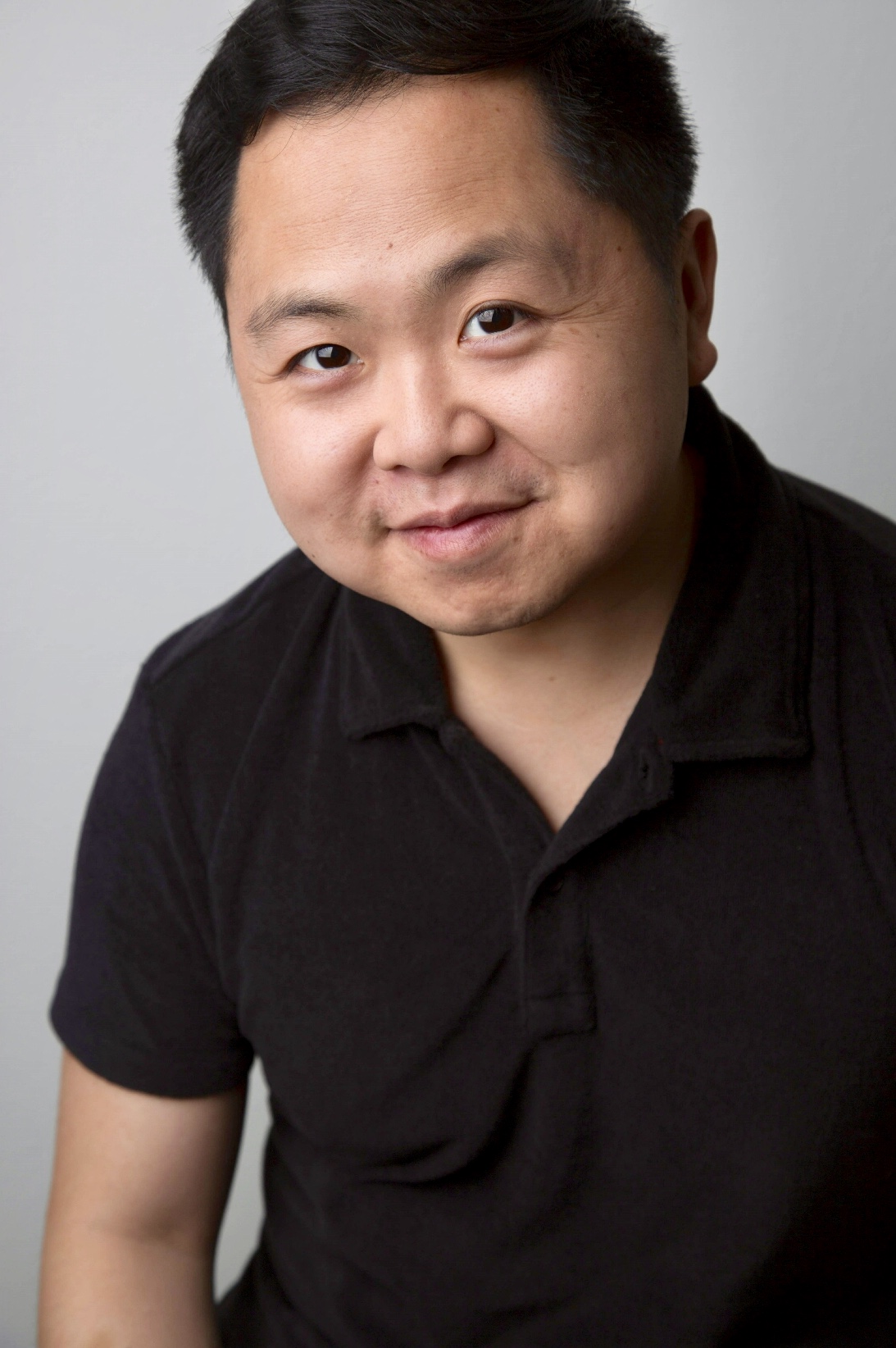
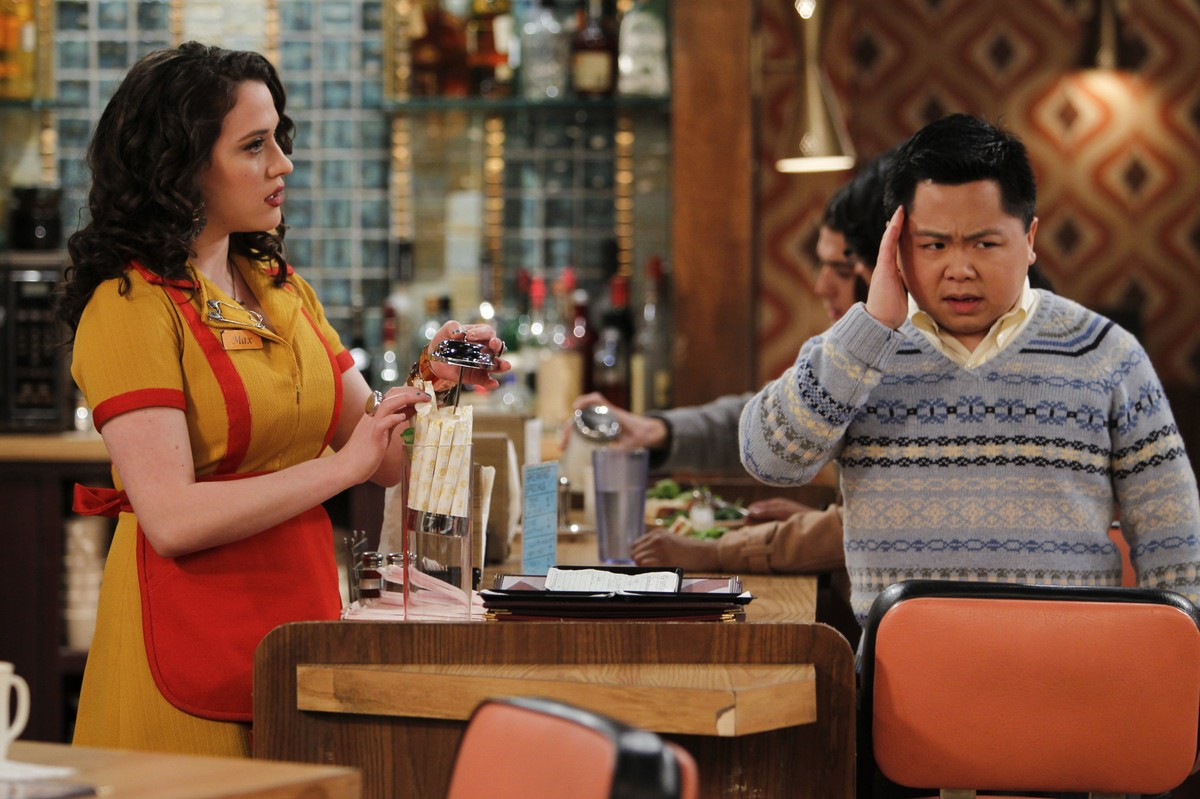
Oley Sassone [Interview]


I first came to learn about filmmaker Oley Sassone from a very informative documentary that was somewhat about a guy who has been the creative force behind some pretty amazing work….but apparently did something extremely shady, and pretty upsetting. That man was the great Roger Corman. And while I cannot say that I condone his actions showcased in Doomed: The Untold Story of Roger Corman’s The Fantastic Four, I’d be lying if I said I wasn’t going to continue to watch Corman classics on the regular. And as a matter of fact, it was because of him that I learned about the genius that is Oley Sassone!

Oley is another prime example of a man who has created some amazing art in his career, and also happened to turn out to be an incredibly nice person, who gave us some wonderful and lengthy answers to a few of our questions. This is a guy who has brought us some pretty amazing work in a career that is as expansive as it is impressive. When I learned that he directed the amazing video for Mr. Mister’s “Broken Wings”. Hailing from the finest city that America has to offer, New Orleans of course, he is also a legend in the NOLA film community that we have managed to cover quite extensively over the years. Mostly because they are some of the nicest people working in film today!

So, Ladies and Gentlemen, please enjoy some amazing words from the brilliant Oley Sassone!

When did you decide you wanted to join the world of filmmaking? Was it an early passion, or did you just find yourself in this world?

It was shortly after I saw the Beatles movie, A Hard Day’s Night. I was already playing guitar and of course, I wanted to be a rock star, but the movie itself was something I couldn’t stop thinking about. So I went to see it a second time and I was hooked. There was something about the quality of the film in the way it captured not only what the Beatles were all about, their characters, mannerisms, personalties and their music, but it transported me to London and the atmosphere of it all and captured the style and time of what was happening in 1960’s English pop culture. And of course, I was influenced by the girls hysterically screaming at a movie screen! I started talking with a bloody English accent at 12 years old! I was then eager to watch every English black & white film I could find. At that time there was no VHS, DVD or YOU TUBE. There was however a really cool art house theater, The Prytania Theater that is still here in New Orleans that showed a lot of those films, including French and Italian New Wave. And the Public Broadcasting Station started showing the British “Kitchen Sink” dramas, a different one every Saturday morning.Look Back In Anger was the first that is credited for starting this genre, but it was, Saturday Night and Sunday Morning, Billy Liar, and The Leather Boys  that I loved.

I would sit in front of the TV and transport myself into those worlds hanging on every line of dialogue, street scene, bar scene, the grubby apartments. These films dominated the way I started thinking and I started imagining, what it would it be like to do this… make movies like these. My parents didn’t hesitate when I asked them to buy me a Super 8 movie camera and projector. Of course the films that I shot certainly don’t compare, but I did shoot some black and white Super 8 film, which was not easy to find or get processed. That’s how it started. 

What as the very first gig you can remember getting in this business? And did that experience help shape you into the filmmaker you would eventually become? 

My first gig in the film business was working as a Production Assistant on a Sergio Leone spaghetti western, My Name is Nobody, that was partially filmed in New Orleans. I walked onto a set on a street in the French Quarter and asked some guy for a job and he handed me a shovel and told me to start spreading dirt in the street! I nearly turned and walked until I discovered it was for a gunfight scene with Henry Fonda. So I proudly spread dirt. Good thing I hung around. I was asked to come back the next day and they assigned me to be Fonda’s assistant. That was cool. I brought Henry Fonda water and tea, carried his saddle for resetting a shot, carried his chair… and I loved it! I was always right on the edge of the set when they were shooting scenes with him, including the gun fight on Royal Street. The whole experience of watching a film being made on this level definitely shaped who I was to become as a filmmaker. Another thing that happened that was important to figuring out how to shoot film. I was sent to get something (I can’t remember what) out of Sergio Leone’s trailer for him and when I went in, there were comic books tossed all over the place, opened to certain pages, marked and scribbled on. After watching Leone films, I realized that he was inspired by the dramatic comic book images within those frames, extreme angles and such. That was a real revelation for me. I thought, this doesn’t have to be a difficult process. It tore away the unknown for me. I realized how to approach filmmaking — create interesting images within that frame! I had a 35MM Pentax, a good compliment of lenses and some old fresnel studio lights and I started lighting people, my girlfriend at the time, and I got into George Hurrell – the master of Hollywood glamour photos – different angles, extreme contrast lighting, black and white, color slides, creating little scenes with set dressing. I created a rear screen projection with this roll of opaque material hanging off a c-stand in my dining room, with the slide projector set up in the kitchen to get the depth, with scenes of the interiors of European churches and putting my girl friend in front it and matching the lighting and manipulating the exposure so the rear screen image would really “pop”. It was a great time, a great learning experience. 

You have worn several different proverbial hats in the film business. From writing and directing, to producing and cinematography and beyond. With that being said, what would you say is the gig that you enjoy doing the most? 

The question is not “Why?”, but — Why not!? It really comes down to making a living. Staying in the business I love until I’m ready to quit. I took the jobs as they came, however, I always wanted to write and direct my own films. And I did a couple, but they were never to the level of what I had hoped for. They were good films, good entertainment, but not groundbreaking. I always liked cinematography and shot and directed at least 50 of the 100 music videos I did, along with a lot of commercials, but when it came to film, I was hired as a director and that was that. And I was happy to do it. Figuring out how to make a movie and then see it actually take shape in an editing room was and still is a thrill. Then came the opportunity to write and direct. To labor through the writing process, sell the script and then get to direct it…nothing better. But the extra pressure is on too, it’s all on you! Producing now gives me an opportunity to work with other talented filmmakers and get involved with projects that would not come my way as a director. I enjoy the process of producing, not raising money although absolutely necessary, but getting a film into production, sold and distributed. Producing has been an eye-opener and has really made me appreciate the fact that we are in the FILM BUSINESS.

You kicked off your career working in the world of music video direction, showcasing artists like Styx and Eric Clapton (as well as a personal favorite, Mr. Mister). The music video was a relatively new concept back then, so what was it like jumping into this new scene? It seems like it would be quite the wild ride. Is this the case? 

Freedom to create! That was the best thing about doing music videos. When I started, I think MTV was on the air for only a year and its popularity shot off like a rocket. There were no music video execs at the record companies yet. In fact, I remember a guy who came to set who was doing album cover art. It was a wild ride. I started in New Orleans where I produced, directed and shot a video for friends of mine that were signed to CBS Records — The Red Rockers. I knew them from my days of playing in a punk/rock band. CBS refused to give me any money and the band was going up to NY to shoot. I convinced CBS that I could deliver a video within the month. They said go ahead, but still no money. I thought, “Oh shit.” So I pulled it together with a credit card and a loan from a guy who owned a record store and we shot it. The song is called, “China” and the exec jumped on a plane to see a cut of it, mind you this is 16mm film, she saw it, loved it, bought it. CBS started sending me all over the country to shoot videos for their artists and I ended up in L.A. doing a video for The Romantics. A good friend of mine who was an advertising copywriter and who gave me my first commercial, had connections at a production company in L.A. who sent a rep to the set.

The rep sat quietly and watched, handed me his card and asked me to meet with them before I left town. They offered me a job, paid my moving expenses and put me on a retainer. Being in L.A. in the mid 80’s in the midst of this exploding art form of music and film was really exciting and energizing. It created a shift in attitudes at the studios in what eventually became a stepping stone for a new generation of filmmakers such as David Fincher and Michael Bay, both of whom launched their film careers from music videos.

At the height of my career as video director, I was doing about four videos a month and in various cities around the world. Eric Clapton in London, Bruce Hornsby in Austin, Gloria Estefan in Chicago; we would go wherever the artists had their longest break on their tour. I would have to say Mr. Mister’s “Broken Wings” was one of my best, but the thing about doing videos is, you need great songs to make a good video and that was an exceptionally good song. And the trip continues thanks to YOUTUBE. I can watch nearly every video I directed, including my very first one, “China” by The Red Rockers. What a trip.

For those who may be out of the loop on the scandal of your 1994 film adaptation of The Fantastic Four, would you care to give a brief synopsis of what exactly went down. And with that, how accurate was Marty Langford’s Doomed: The Untold Story of Roger Corman’s The Fantastic Four? 

A “scandal”, I like that, but how about scandalous and a huge deception pulled on me, the cast and crew. I was hired by Roger Corman to direct the movie after I had directed two good movies for him. I knew there was no money, but it was The Fantastic Four and I was a Marvel comic fan as a kid, so I jumped in. We all thought as we busted our asses, that we were making a film to be released and hopefully make enough money to convince the powers that be to hire us to do bigger and better films. That’s how it’s supposed to work! But that wasn’t their plan. It was all a ruse for Constantin Film to keep the film rights to the F4 franchise. It was strictly a contractual obligation for a film to be made before the end of that year or Constantin would relinquish the rights. So we finished the film in spite of the fact that no one seemed to be in any hurry to complete it. But once the film was finished, Roger thought it was good enough to release, so he decided to do just that. Marvel had a fit and apparently it was not in any contract that barred Roger from releasing it. So they paid him again, NOT to release the film. They confiscated the negative and the one print of the film and rumor has it that it was burned! Thankfully some guy at a dubbing house in L.A. bootlegged it and the entire film can be seen on You Tube. The only regret about that is, it’s a copy of VHS, to VHS, to VHS. We never got the opportunity of giving the film a good telecine — where the negative is transferred to video. All the gruesome details can be seen in the exceptional documentary which is a very accurate account of the ugly side of Hollywood.

We have managed to go pretty in depth with several folks involved in the NOLA film scene. I understand that you have origins in the area, and have worked extensively in the film community. So with that, in your own personal opinion, what do you believe it is about this film scene that sets it apart from other largely known markets? 

As you have gathered, I’m from New Orleans. As much as I love the city and its people, it’s the Louisiana State Tax Credits that has brought the industry here. However, the local film community has exploded, resulting in a great infrastructure of sound stages, equipment companies and damn good film crews. The one thing I believe that sets the film scene here apart from other markets is the city itself. Who doesn’t want to come to New Orleans? As I have mentioned, I have worked in wonderful cities around the world and have had great experiences, but New Orleans is truly a unique place to visit and to work. And the place looks great on film! Look at Elia Kazan’s Panic in the Street, shot entirely on location in New Orleans in 1950 or Alan Parker’s Angel Heart. These locations, the streets, the buildings are all still here.
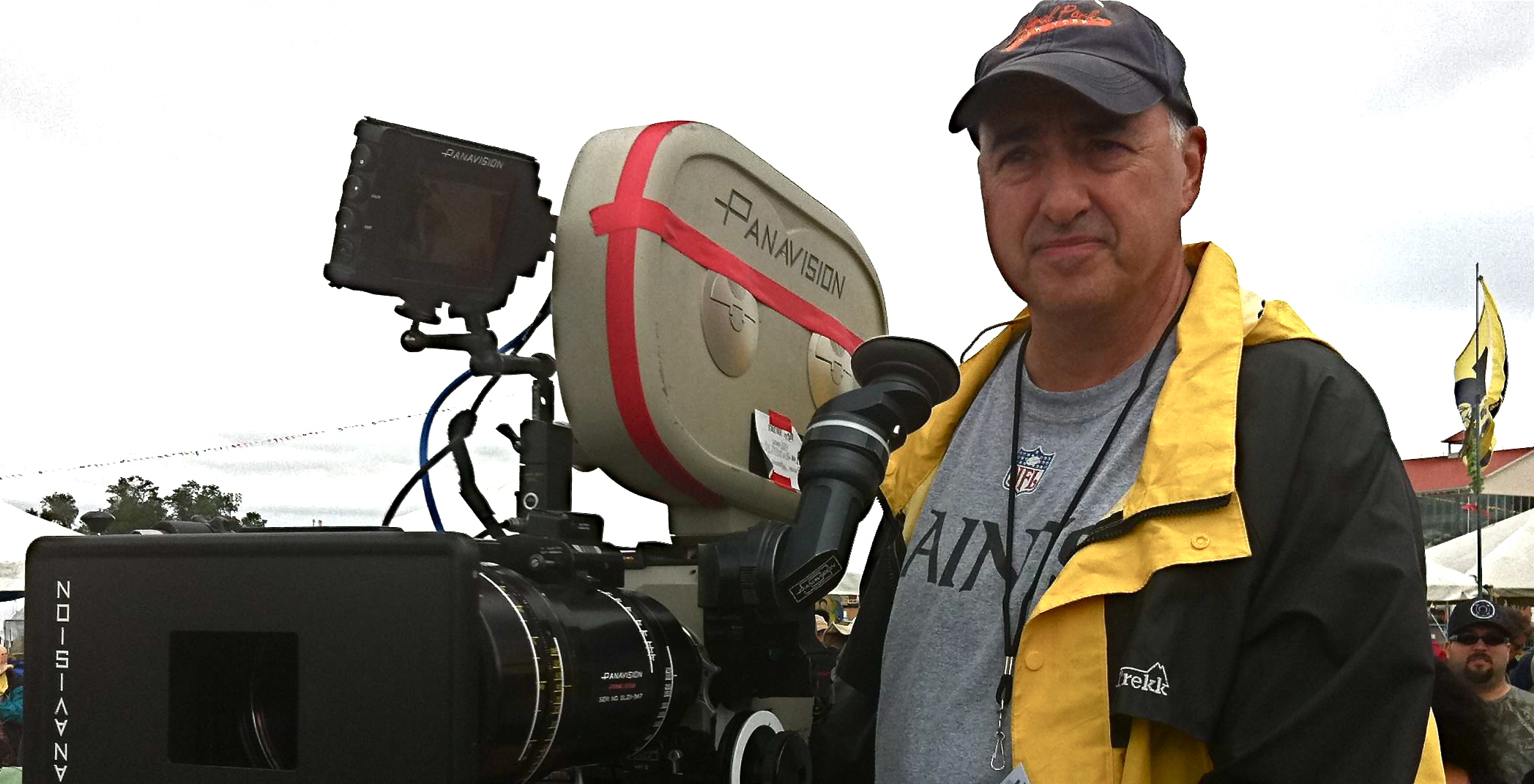
What does the future hold for you? Anything you would like to share with our readers? 

As I mentioned, being a producer has opened a lot of doors. I’m working with a number of other producers and filmmakers on multiple projects. One to be shot in Scotland and the U.S., another in London and Paris and of course a couple to be shot in New Orleans. One is called, Butterfly in the Typewriter, a biopic about the author John Kennedy Toole, who wrote the iconic book, A Confederacy of Dunces and a limited series on the young life of Louis Armstrong. 

What was the last thing that made you smile? 

I have to say unabashedly, every morning when I wake up and kiss my wife. Second to that, is hitting a great chord or a guitar lick on stage with the punk/rock band, Sexdog, that regrouped in the last few years and has been playing gigs here in New Orleans.

And because we love it so much, check out this amazing video for Mr. Mister’s “Broken Wings” directed by Oley Sassone:

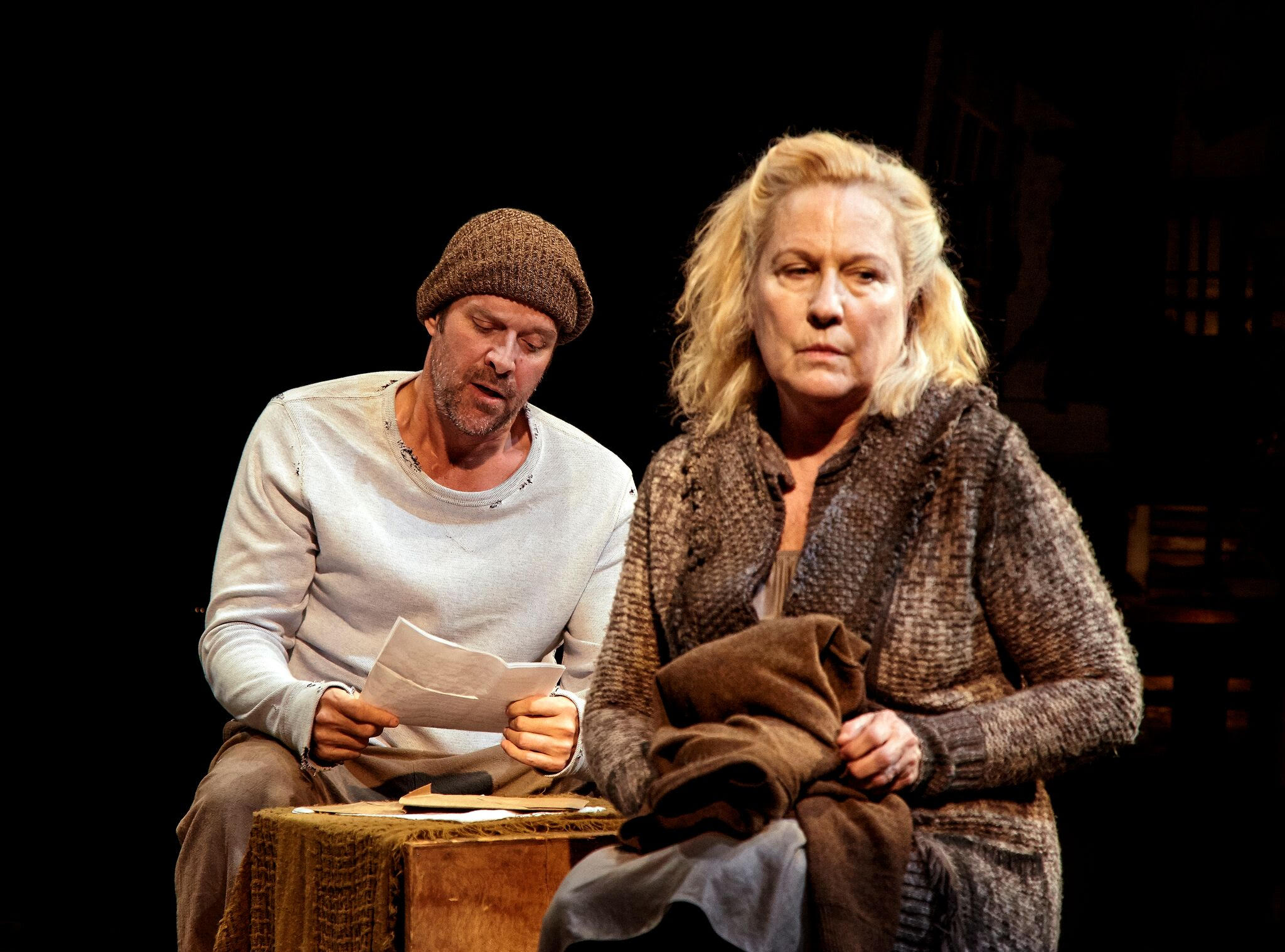
Ford Austin [Interview]


Ford Austin is a man that I have been becoming more and more familiar with over the last few years. His name just always seem to show during long nights of research and traveling down that the worm hole that IMDb can sometimes be. And over some time, I have realized that I have actually been enjoying his work for quite some time. Scrolling through everything he has done in his career, it is absolutely mind-blowing to say the least. He is without a doubt one of the hardest working folks in the film world today.

Whether he is acting, producing, writing, directing….or all of the above, For Austin is a guy who has an extremely impressive versatility and work ethic that goes unrivaled. And as we will learn in the interview below, he is also a very kind person who is willing to step in and help a friend when in need, as he did for a dear old friend of ours here at Trainwreck’d Society!

And even beyond just some amazing words, he has shared some amazing photographs and stills, some of which you can check out beyond the text. So without further rambling, please enjoy some amazing words from the brilliant artist, Ford Austin!

What inspired you to get into the worlds of performance and filmmaking? Was it a passion you developed at an early age?

As for acting, my parents put me in a movie they produced when I was 1 or 2 years old. I stole the entire movie as you can imagine.

After that, they put me in a talent service for child actors that got us involved in supporting roles in shows and commercials.  Later on, I decided to make it my career and went to college and grad school for theatre film, tv production and acting.  That got me heavily involved in New York theatre.  About that time I got the idea I could write and direct movies. So, I relocated to Hollywood and taught myself filmmaking.  I arrived just in time to start shootings the last of the movies made on actual film.  My friends and I saw the writing in the wall and bought digital film cameras.  In 1999 I became one of the first digital filmmakers in the business while all the big players bragged about how they would never shoot on video and that you weren’t a real filmmaker if you didn’t shoot in film.  Boy, we’re they wrong. Lightning struck and my friends and I became the lightning rods for the biggest Hollywood revolution since sound.  I got my movies made faster and was able to shoot 10 features a year from 2001 till today. After making over 100 features and more shorts than I can count, film Is dead and I still make movies. Ha!

In 2011, you starred and produced with our dear friend Rena Riffel the hit sequel Showgirls 2: Penny’s From Heaven. How did you manage to become involved with this project? And what drew you to working on the film?

Ah, Rena!  I think it was 2009. I got a call from my friend Rena Riffell telling me she needed help getting her movie done. I told her, “Sure.  Where are you?” She told me she was in a park in the Hollywood hills.  As I was driving over Laurel Canyon in West Hollywood and looked out to the park on Mulholland drive, I saw Rena sweating heavily and exasperated as hell in a parking lot with a single person camera crew at her side. I knew right then and there she couldn’t get the sequel done without my help and probably about 10 or 12 other people too. She asked me to play one of her lead characters in the movie while I produce.  How could I turn down such a gorgeous Hollywood starlet?  Showgirls 2 took us about three months to shoot and we also had a great producing partner Josh Eisenstadt join us.  Together, the three of us turned the potential disaster into s beautifully odd feature film which caught the adoration of Mr. David Lynch himself.  To this day, I will always love Rena Riffell for getting me involved in her project.

You’ve worn a whole lot of metaphorical hats in the world of film. From writing, directing, producing, acting, and beyond….you’ve done it all! So in your obvious expert opinion, what would you say is your favorite profession in this business?

Out of everything I do in the business, I would say the easiest is producing. All it takes is an iPhone.  For my soul, I love acting the best.  It’s where it all began for me. Everything else was born out of my desire to act in movies.  I taught myself to do all the jobs so I could set the stage for myself and my friends.

The ego in me loves directing most of all. When I direct, I have the final say on everything. Who gets which credit, whose lines stay in the movie, what the tone of the film is or even what time of day we have to start work.

Ford Austin & Francis Ford Coppola


You’ve been in the game for quite some time, and have put out some legendary work. With all of the technological advances and changes in the way the common person takes in media, I am curious to know your opinion on whether or not we are more fortunate to receive more content? Or has everything become so oversaturated that quality has become lost?

Gaining more content options is always a good thing.  When I started making movies, it was VHS & DVDs at Blockbuster and Best Buy.  The internet wasn’t streaming yet.  Even from pm festivals hadn’t grown up to what they are today until just 10 years ago.

I had one of the first movies on Netflix in 2005. My horror feature The Curse of Lizzie Borden.  Loved it!  While I was directing on set one day, I turned to my producer who was a real veteran in Hollywood and said, “Le s district hire this on Netflix.”  “What’s Netflix?” He scoffed.   We soon learned that Netflix would not be a great return for indie films since you basically get $.05 per view.  Ridiculous.  But your ego says “Hey!  I’m on Netflix bitch!”

I mean, when I started, iPhones didn’t exist:  now I’m watching feature films on my iPhone X.  It’s freaking perfect!

Ford Austin & his friend and mentor, Martin Landau


What does the future hold for you? Anything you would like to share with our readers?

I have three new feature films coming out this year: Heels, Inhumanity, and What’s Buried in the Backyard?  I star as an actor in each one of them. And these are my first movies I have made since being mentored by the legendary actor Martin Landau at The Actors Studio.  I am very excited to see how fans and audiences alike take to my new acting skills.

Also, I  planning my return to directing soon.  I haven’t directed a feature since Dahmer Vs Gacy in 2010 which came out in 2012.  I have three great projects I’m planning in the Midwest where I think I will focus my stories and production for the next ten years.  Yeehaw!

What was the last thing that made you smile?

The new digital series Cobra Kai.  I’m episode 3 or 4, Johnny paints a dick on Daniel Larusso’s face on his billboard.  While Daniel is bitching about it to his wife, he says, “now what’ll I do?” She replies, “you’ll blow the competition away!”

That’s funny.

Check out this wonderful gallery of stills of performances that Ford Austin has been so kind to share with you all:

Ford Austin in the Netflix pilot “Scorpion Girl”


Ford Austin in “Inhumanity”


Ford Austin in “Dahmer vs. Gacy”


Ford Austin in “Pastis”


Guinevere Turner [Interview]

Today’s interview is about 5 years in the making, folks! Actually, it might be more reasonable to say about 20 years in the making. I first new about Guinevere Turner when I was just a young teenage lad who was obsessed with independent films in the 90’s and was DEFINITELY going to go to film school. I studied the works of Kevin Smith, Richard Linklater, and more during these internet free days, in the hopes of discovering more of these indie gems. And I found one in Turner. Her 1994 film Go Fish is still hands down one of the finest films to come from this period, and one of the finest period.

And in the decades to follow, Guinevere has proven herself to be one of the best in the game. Whether she is on screen, behind the camera, or penning the next great screen story, she is a mesmerizing figure in the world of cinema and beyond. I learned in this interview that it took 6 attempts to get the now classic 2000 film American Psycho a workable adaptation, and I dare say that the landing was perfectly stuck with Turner and her reoccurring working partner Mary Holland penning this amazing story.

I had reached out to Turner about 5 years ago to have the honor of having her on the site, but schedules conflicted and it just hadn’t happened. But, being the persistent and adoring fan that I am first, I never wanted to give up. And it almost seems fateful that we were able to talk to her now, after quite a bit has “changed” in the world of women in the film world. I parenthesis change because, I’m not certain that real change has occurred, and that more needs to be done. But nevertheless, I have known since my youth that Guinevere Turner was a strong woman working in the man’s world that is filmmaking. Although, I never though of her work in such a way, as I believe I was simply ignorant to the facts and entirely unaware of what was happening. But, what I do know is that Guinevere Turner was and is an amazingly talented individual who has been empowering and showcasing women in film for the last three decades. It’s not new to her. This is and has been what she does. And she does it damn well.

So after all this time, I finally got to get some words from the amazing Guinevere Turner. We discuss a lot of the things I’ve already mentioned, but obviously far more eloquently and in depth than I can really explain. We are so proud and fortunate to have this amazing filmmaker with us today, in an interview that will always be a highlight not only in the TWS world, but in my own as well.

So Ladies and Gentlemen, please enjoy some amazing words from the brilliant Guinevere Turner!

When did you first realize that you had a passion for the world of film, both behind and in front of the camera? Did it come from an early age, or did you just sort of find yourself in this world one day?

I’ve always loved film – grew up watching a lot of old movies from the 40’s and 50’s and fell in love with soft focus close ups of divas like Bette Davis and Lauren Bacall. But I didn’t think I would make films, I just wanted to be a movie star. When we made my first film Go Fish, it was out of a need for representation rather than an urge to make film (or to act).  I just recognized it as a medium people pay attention to. And then… I was off and running in a world I never thought I’d be in. I thought I was going to write novels! (I still will, just you wait.)

Your project with frequent collaborator and fellow genius of the cinema, Mary Harron, American Psycho, is absolutely one of my all time favorite films of all time. It has been 18 years since the film was released, and it is absolutely insane how relevant it remains to this very day. When you were working on adapting Bret Easton Ellis’s novel for the screen, what would you say was your biggest concern? What did you feel you absolutely needed to accomplish to turn this story into a visual medium?

Mary and I were the 6th writers to tackle the adaptation of the book and as such we felt immense pressure to be the ones who got it right. Our concerns/challenges were that the book is so internal, and he doesn’t ever really tell anyone what’s going on in his head. We fought against the use of voice over for a while, and then gave in (I think it works!), and we loved the music chapters in the book but couldn’t figure out how to get them into the movie. (In the book they function more as straight music reviews and are devoid of any plot). It was a good day when we figured out that we’d have him start to go on a tear about a particular record when he was in a killing mood. By the time you get to the scene where he kills my character (Whitney Houston is his subject), you should be thinking “OH shit, they are going to die.”

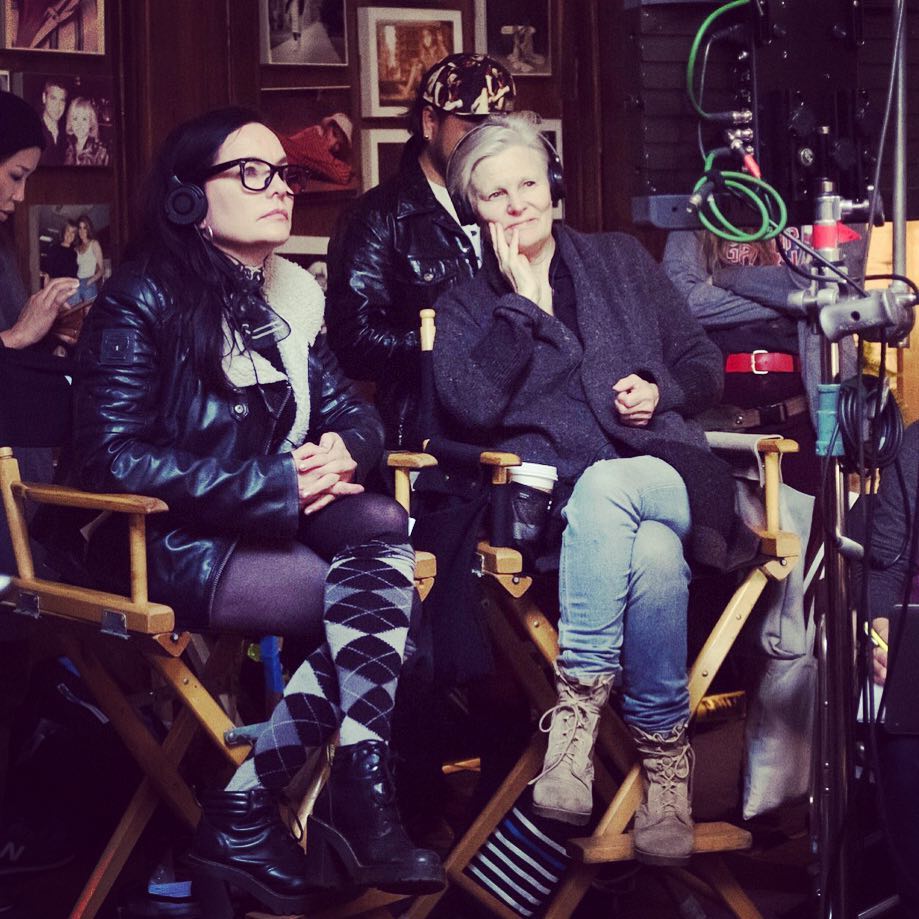
Guinevere Turner & Mary Holland on the set of Charlie Says…coming soon!

Regular readers here at TWS know that we are obsessed with the world that filmmaker Kevin Smith has created, known as the View Askewinverse. And true fans know that you have had a MAJOR influence on the that world. For those who are un aware, can you tell us about your involvement in such works like Chasing Amy and Dogma? How did this come about?

I met Kevin and his producer Scott Mosier at Sundance in 1994 – they were there with Clerks and I was there with Go Fish. We had the same film rep, John Pierson, and we had weirdly similar movies – black and white super talky movies with their own little universe. We became fast friends and Kevin being Kevin he asked a lot of bold and direct questions about lesbians. Rumor has it that Scott had a crush on me and Kevin thought that would make a great movie. I read his first draft of Chasing Amy and I laughed but I said Oh Boy lesbians are going to hate this. I was wrong! Chasing Amy was a hit with lesbians and non-lesbians a like, and Dogma was his next up so he put me in it. That was when Matt and Ben had just skyrocketed to fame – it was a trip to see hordes of screaming fans behind barriers on the set.

Throughout your extremely impressive career, you have manage to wear a plethora of proverbial hats in the world of film and television. So, in your personal opinion, what do you find to be your favorite duty in your chosen profession?

Well here’s the thing: I’m best at writing (so far). It’s the thing I am most confident about my abilities in. So that comes naturally, and I don’t get nervous. But I do get bored with the solitary life, and so its great that I get to act now and then. I am less confident about my acting, and I do get nervous (though less so as I get older), but I love it, and I love being on sets, and learning from other actors, and just being challenged in that way in general. As for directing, I am learning! The intensity and pressure of it I also adore. It’s exciting, energizing, high stakes in the sense that you have to keep making decisions and problem solving non stop. I live for that shit!

There has been a lot of focus on women in the world of filmmaking, with a push to get more women behind the camera, in writing rooms, etc. And for an outsider looking in, I really have no way of knowing if the movement has been working, or are the main predatory like players in the game just lying low for the moment and putting out a feel good story in the news every once in a while? I’ve honestly been wondering what your take on the entire situation has been since things really got kicked into gear?

“Judge” Guinevere Turner on the set of Charlie Says, setting up shop in the Judge’s Chambers.

It’s intense! I mean I am so happy that people are coming forward, that consequences are being felt, that women like Ava Duvernay are giving all kinds of women a chance, that Asia Argento is not afraid to talk openly at Cannes about being raped. I can’t say that “happy” is the right word. There are a lot of painful truths coming out, and things that can’t be undone, lives that can’t be un-ruined. As much as its a good moment for women, it can be exhaustingly sad to witness on a daily basis. Especially knowing that this avalanche means there is so much more. (I always knew that.) Its funny to me when people say about me and Mary “Oh its a really smart move for you two to be making [Charlie Says] right now. A woman writer and a woman director, a story about women…” and I’m thinking “WTF?! We’ve always been women making stories about women or relevant to women – this isn’t some strategic move. Listen to this:  we actually care.”

When you look back on your brilliant career in both independent and mainstream cinema and television, what would you say you are most proud of? What would you want people to look back and think about your body of work, say, 100 years from now?

Oh shit I don’t know. I’m proud of it all and I’m not even halfway done! This new one, Charlie Says, outta be one for the books! Ask me this again when I’m 80.

I am intrigued by a web series you are currently involved in that sounds very compelling, called “Fuck, Yes”. What can you tell us about this series, and how can our readers find it?

You can watch it, and the other films in the series, here:

http://www.weareo.tv/presents/fckyes

It’s a great little series about consent in a sexual context, and playful and sexy about different scenarios in which we ask for consent, and how we ask. Mine is me with a a much younger girlfriend who has a “sexual bucket list”. Its funny.

What else does the future hold for you? Anything you would like to share with our readers?

The future holds:  Charlie Says, a film about the women who killed for Charles Manson and their time in prison:
https://www.imdb.com/title/tt1759744/?ref_=nv_sr_1

Should be done by end of summer.  (I wrote it, Mary Harron directed it)

I wrote a comedic horror script called “Don’t Come Over with me as a romance novelist with writer’s block going nuts in her apartment. We are looking for financing (anyone out there?).

I have several TV show ideas I’d like to see happen – I’m honing those ideas, deciding what I think will work. The plan: create TV show, run TV show, direct on TV show, have cred as more than a short film director, direct features, live happily ever after.

What was the last thing that made you smile?

This morning I was thinking about how I love the word ruminate, and the act of rumination, but that when I learned the word origin, from this, a “ruminant” animal:

“an even-toed ungulate mammal that chews the cud regurgitated from its rumen. The ruminants comprise the cattle, sheep, antelopes, deer, giraffes, and their relatives.”

I felt disappointed because chewing regurgitated cud is just kind of gross. I thought to myself, “Why does this bother me?” and then I thought “I guess it’s because cows aren’t known as sexy thinkers.” This made me laugh out loud for some reason. Yes, I live alone, and this is why – so my uninterrupted thoughts can be free to wander to such places.

Zackary Adler [Interview]


Today’s interview subject is a man who I was quite pleasantly surprised to get to know. I knew of Zackary Adler as the man who brought us the delightful indie gem of a film that I once saw on Netflix and decided quickly that it was amazing. That film was the 2006 indie romcom I’m Reed Fish, starring Jay Baruchel and Alex Bledel and a plethora of other brilliant actors. The film is one of the most endearing works of indie art I have ever seen, and thoroughly enjoyed it to a great extent.

But, who exactly is this Zackary Adler? In just a few minutes of research, you may realize that he has a body of work that will definitely surprise you. While one would expect a catalog with the same sort of sensibilities as the likes of a darling little film like I’m Reed Fish, one would be absolutely and entirely wrong! Adler is a filmmaker who has had a career that defies genres and moves in whatever direction he wants in order to tell a compelling tale! He has made waves in the world of Britain’s crime cinema, with the Ray franchise, and pulls no punches (will, a lot of punches are given, actually) in one of his latest releases, Rise of the Foot Soldier 3: The Pat Tate Story.

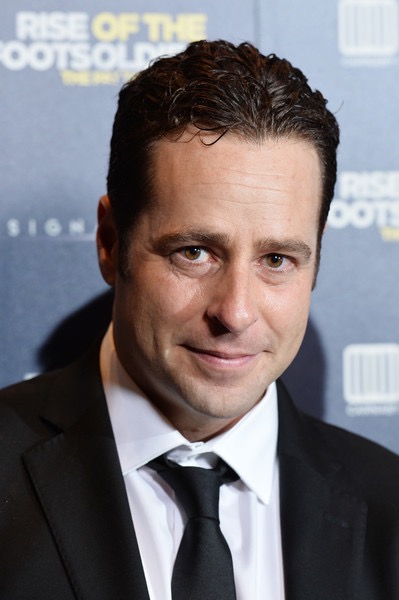
Yes, Zackary Adler did not quite turn out to be as we thought he would be. He turned out to be even better! He is a versatile filmmaker with so much to share with the world, and we are so damn fortunate that he was willing to share a few words with us today. So Ladies and Gentlemen, it is my pleasure to share with you all some amazing words from one of today’s finest filmmakers, the great Zackary Adler!

When did you decide that you wanted to join the world of filmmaking? Was it an early passion that you can always remember having? Or was it a later in life discovery?

Oh it was early.  I was maybe thirteen or fourteen.  I had read a script that a family member had written and it was made into a movie and I remember thinking that the script was much better then the film.  I was so disappointed in the movie and it was a pivotal moment for me.

What was the very first gig you can remember having in the film industry? And did that experience help shape who you would become as a filmmaker? 

My first gig was in Camden town working for a music video company.  It made me want to be a director.  It was a small production company that was doing these amazing videos for Sinead O’Conner and U2 and other great bands.  It was the 90’s so it was really fun and hedonistic.  The director would listen to a song and come up with an idea and then we would all work to actualize it.  I was hooked.  Completely hooked on the process of bringing an idea to life on screen.  And then I fell in love with film as an art and as a medium.  I have never done anything else since really.

Your 2006 film I’m Reed Fish is an absolutely wonderful film that I continue to hold at a very high regard. I’m curious as to what the origins of this tale might have been? And how was it decided for the likes of Jay Baruchel to play the titular character?

Thank you! That’s kind of you to say.  There was a real guy named Reed Fish who wrote it as his life story.  Jay Baruchel had done a lot of TV in Canada and he just had done this brilliant turn with a small role in Clint Eastwood’s Million Dollar Baby and we met via our agents and I immediately loved him for the role.  He was great in it and has gone on from strength to strength.

You’ve had some great success not only in the world of comedy and drama, but also in the action/thriller genres as well. I’m always curious to ask filmmakers this question: What do you find to be the commonality in when shifting from one genre to the other? In your own work, what would you say every good film should have, regardless of its categorization?

I love all genres of film. For me it is mostly about whether or not it’s a good story told in the right way.  Is it authentic? Is it interesting? Entertaining?  Does it look at something in a new way?  These are the things I ask in my own work and when I am watching and exploring the work of others.

What does the future hold for you? Anything you would like to share with our readers?

I really don’t know what the future will hold for me.  My twenties were pretty rocky and about ten years ago I made a paradigm shift.  Basically my life had been really crazy and dark and my film work was really light so I decided to flip it… and I did! My life since has been far brighter and my work has been mostly dark and violent.  It’s been brilliant but this last month something happened.  My 9 year old daughter had a heart problem and we spent about a month in hospital. She is totally fine now but she was critical for a while and that experience changed me.  My time with her in the pediatric ICU and the pediatric transplant wing changed me.  The things I saw and heard and felt gave me a new appreciation for courage and love and a newfound awe of our capacity as humans to survive and fight, to meet challenges and to come together.  The old dark to light flip won’t really cut it anymore for me so I need to develop some projects that reflect that creatively.

What was the last thing that made you smile? 

Stanley.  Stanley is now how I refer to my wife and my daughter when I am addressing both of them.  As in “I love you Stanley” or “Please be quiet Stanley”.   Stanley always makes me smile…. That and this really fantastic hamster video I saw on Instagram this morning.

Check out this trailer for one of Zackary’s latest films, Rise of the Foot Soldier 3: The Pat Tate Story:

Jim Kouf [Interview]

Today we have another appearance of an absolute LEGEND here today for you fine readers! We have some pretty amazing words from the brilliant writer, director, and producer Jim Kouf. Jim has had a career spanning 40 years that has brought us so much joy in so many different ways. No matter what you would consider to be your preferred form of art and/or entertainment, Jim has been there throughout the years to help bring it to the world.

Whether it is writing blockbuster films you know and love like Rush Hour, National Treasure, Stakeout & it’s subsequent sequel Another Stakeout, or producing one of the most popular television series of recent years, the incredible Grimm, this man has a creative mind that the world has been so fortunate to have had even the slightest insight to over the years. And as we are so happy to regularly find out amongst our interview subjects…he’s a hell of a nice guy! Jim was kind enough to tell us how he started in the world of show business, and help us dissect some of his greatest successes in the world of film and television.

In this wonderful interview, we will speak with Jim about everything from chemistry, to fairytales, to his work with the legendary hip hop artist and poet Tupac Shakur, and just so much more. So, without further rambling, please allow me to introduce the brilliant Jim Kouf!

When did you first realize that you wanted to join the world of filmmaking and storytelling? Was it a passion you have always had? Or did you just find yourself in this business one day?

I had a camera in my hand from about the time I was six or seven.  I always loved taking photographs.  I transitioned to bigger and better cameras over the years.  Then to an 8mm camera.  Then started making films in High School.  My first film was for my chemistry class.   I convinced my teacher to let me do a term film instead of a term paper.  I think he was tired of reading term papers so he agreed.  My film was about the day in the life of three brothers and all the chemistry they encountered  which included hunting (which was my girlfriend dressed as a big dog), surfing and going to a party where the drug of choice was a large quantity of lettuce juice, which I discovered through some research, was a mild narcotic.  This was 1968.  The film included live action and animation.  I didn’t know how to do animation, but I figured it out well enough to animate a few sequences; like the chemical reactions of a bullet coming out of a rifle barrel when the gunfire ignites, wax and water on a surfboard while surfing, and the strange chemical composition of lettuce juice.  The soundtrack had to be created on a reel to reel tape, then lined up with the film so both the projector and tape player could be turned on at the same time for the sound to sync.  It always seemed to be off by about a half a second, like a badly dubbed foreign film.  Anyway, the film received great acclaim (because not many students were making films in high school back in the sixties) and I showed it to all the chemistry classes, then all the English classes.

And this was at Burbank High School, in Burbank, CA where Disney, Warner Brothers, Universal Studios are all located.  But did any of my high school councilors suggest that I go into the movie business?  No.  Never mentioned.  I think the only film schools at the time were at USC, UCLA and NYU.  So I didn’t even realize you could get a degree in film making.

But the film making idea really hit me when I was a senior in high school.  I took a date to see The Wild Bunch.  The film was almost sold out so we had to sit in the front row.  And it was not like any movie I’d ever seen.  It was mind-blowing at the time because of the violence.  It was 1969 if I remember correctly.   And I was jolted.  I remember leaving the theater and saying to myself, “That’s what I want to do for a living.”

But I had no idea how to go about doing that that or what it even meant to be a film maker.  So I tried my hand at another 8mm film, then a 16mm.  But I never wrote anything down.  The stories were all in my head.  I didn’t know that films were scripted.  I had never seen a script.

Anyway, I headed north to Cal Poly San Luis Obispo and I got an English degree with a minor in History.  Actually that was probably a better choice for becoming a writer.  As part of my English major, I had a playwriting class and discovered that I loved it and pretty much got straight A’s for the plays I wrote.  They were not great plays, but they were good enough for college.  And it gave me the idea that I could possibly be a writer.  So after graduation, I headed back to Burbank with the intention of breaking into the film business.  I really had no idea what I was doing or how I was going to do it.  I was just determined that I would.  And I guess I figured it out.  I was making a living at it within about two years.

In 1997 you wrote, directed, and got an absolutely amazing performance out of the late hip hop icon Tupac Shakur with the film Gang Related. This film has been a staple to me in the world of cop dramas, and is one I can always go back to no matter how much time may go by. Where did this story come from? What inspired you to tell this very dark story?

Before I answer this I’d like to say Tupac was great to work with.  He really wanted acting to be his way out of the music world, which was controlling his life at the time.  He was also going to score the movie, but was killed 10 days after we finished shooting.  He was a great guy.  We had a lot of fun on set.  And Gang Related had one of the best casts I’ve ever worked with.

I had done a few cop movies, like Stakeout and The Hidden.  And the cops were the good guys.  I was toying with the idea of reality and memory and how they can be manipulated.  And crime is where reality and memory are always tested.  I think of Gang Related as grim farce.  It’s about a couple cops who think they have a handle on how to clean up the streets by taking down drug dealers, making a little profit on the side, and blaming it on a “gang related” murder.  At the time “gang related” was the explanation for a lot of killing on the streets.  No one ever expects a gang related murder to be solved.  After all, it’s just gangbangers killing gangbangers.  And everyone seemed to accept that as an unsolvable explanation of murder on the streets.

So anyway, when they kill a DEA undercover cop instead of a drug dealer their world is turned upside down.  Now they need a “real” killer, someone to take the fall for their killing because the DEA is all over it.  So they grab a drunk and start to recreate the killing in the mind of an innocent.  This is where I wanted to explore how memory could be manipulated.  Given enough information, photographs and recreated participation, the memory will log everything as reality. And the innocent guy believes he actually did the crime and he confesses.  Which surprises everyone.  No one expected someone to plead guilty.  And this eventually leads to his salvation.


In more recent years, you have managed to put out one of the most original and captivating television series of modern times, with the incredible series Grimm. Hailing from the Northwest, just about every actor and filmmaker I know in the Portland area has had some involvement with this program. With that being said, I am curious to know what exactly was the decision point behind making the City of Roses the location to tell these modern Grimm tales? Is there any significance to choosing Portland as a setting?

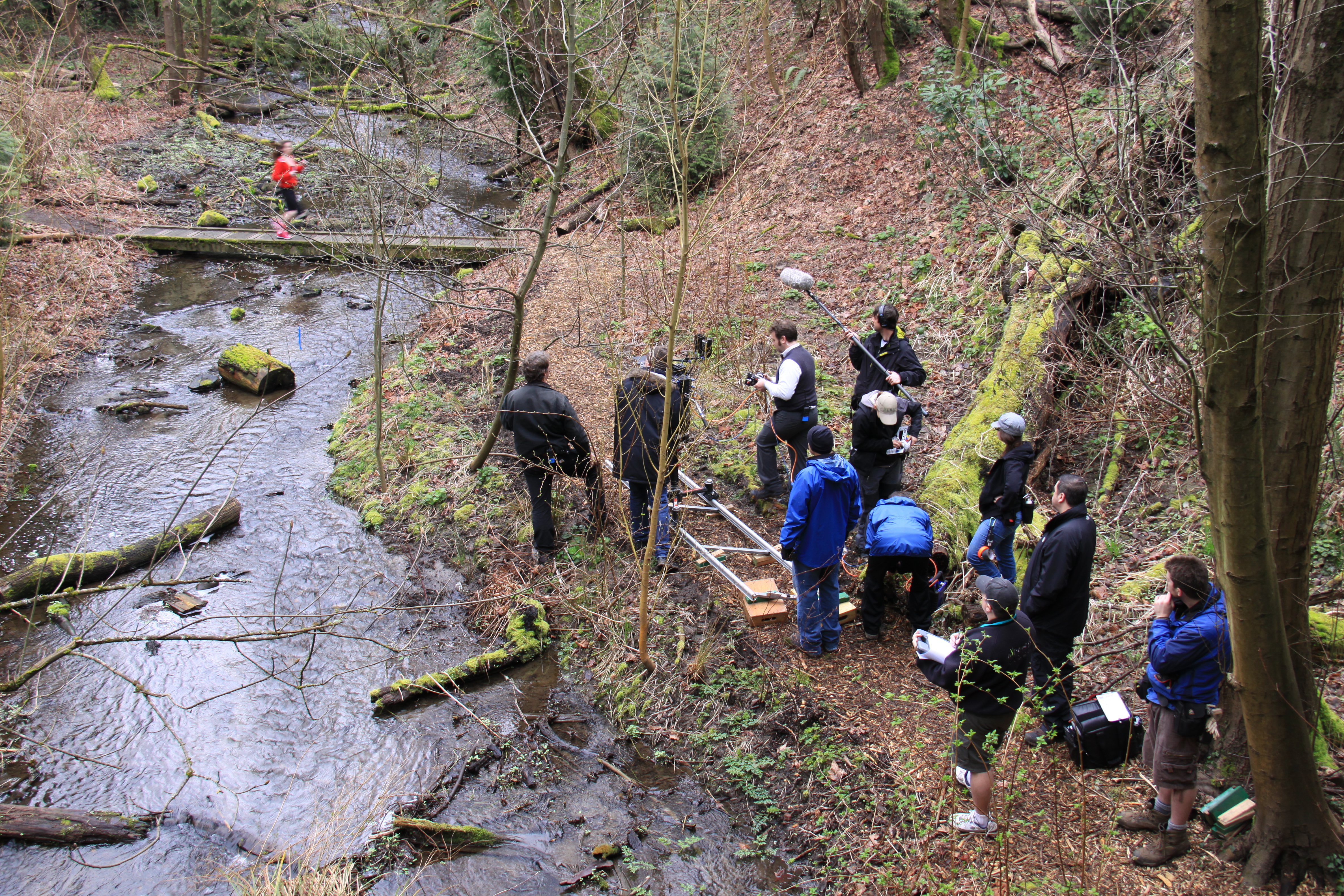
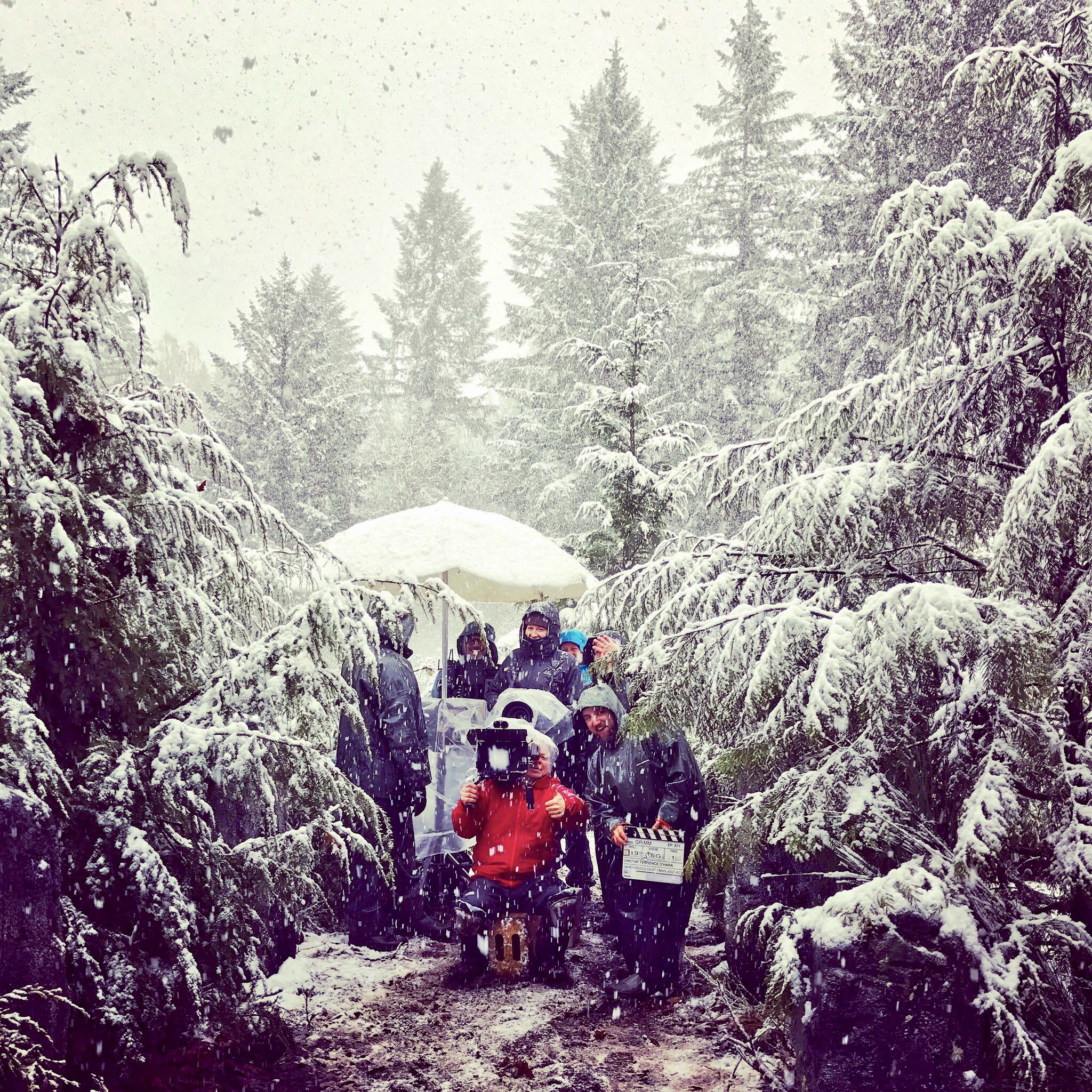
The Grimm series is based on fairy tales.  And the Grimm fairy tales are dark and brooding and scary and violent.  And a lot of them take place in dark, dank forests.  And for the Grimm Brothers that forest would have been the Black Forest of Germany.  So I knew the area around Portland and realized it would be the perfect place to set the series.  It had a city, mountains, rivers, and forests.  And rain.  We loved the rain.  We actually set the pilot script in Portland.  And they had a tax credit so NBC was all in from the beginning.

Your range has a writer is incredibly impressive. Whether it’s an action/adventure blockbuster like National Treasure, or the more family friendly films like Snow Dogs and Operation Dumbo Drop, to an action comedy like Rush Hour, your knack for storytelling is absolutely phenomenal. In your obvious professional opinion, what are some similar traits amongst the stories that you like to tell? While they are obviously different in context, is there anything you find to be true in and out of each project you work on?

I approach every story through the characters, what they want, how they get it, what happens when they do and how it changes their lives.  To me, whether it’s comedy, drama, action, science fiction or horror, it’s still about character.  I really don’t think in terms of genre.  It’s just a different set of rules for the reality of that particular story.    But you have to make sure you know what the rules are and stick to them.   And all the characters have to be grounded in a reality they believe in.  And I always try to have some comedy in even the darkest stories.  Comedy helps connect an audience to a character.

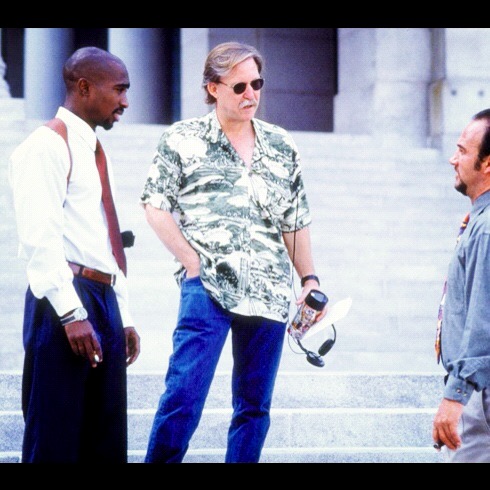
On the set of Disorganized Crime (1989)


And when it comes to your own enjoyment, what genre of a story do you find the most interesting to tell? If so compelled to pick only one, what would you consider to be your favorite genre to write for?

It’s all about the characters.  And the world they have to survive in.  And I don’t want to bore anybody.  So I try to keep things moving.  I like writing motivated people, good or bad.  And I like pressure cooker plots.  They’re fun to write.

When you look back on your incredibly successful career thus far, what would you say you the most proud of as an artist?

I was able to survive for forty years as a writer.   And I got to produce and direct as well.  And I met my wife and Producing partner, Lynn, and we had a bunch of great kids.  And we had a lot of fun along the way.  It’s been a great adventure.

What does the future hold for you? Anything you would like to plug to our readers?

I’m still working on a bunch of projects.  Either as writer or Producer or both.

What was the last thing that made you smile?

You asking me to do this.

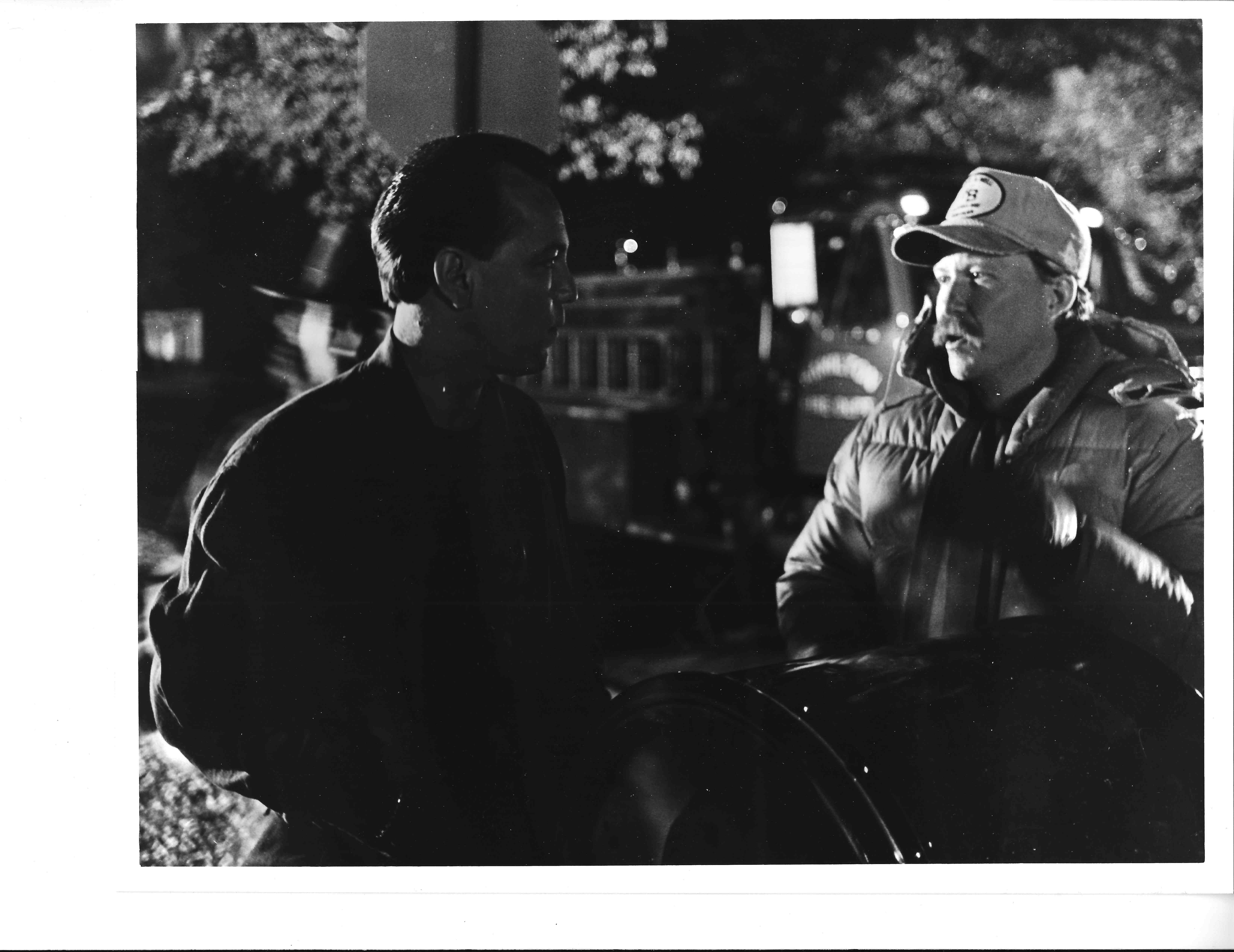
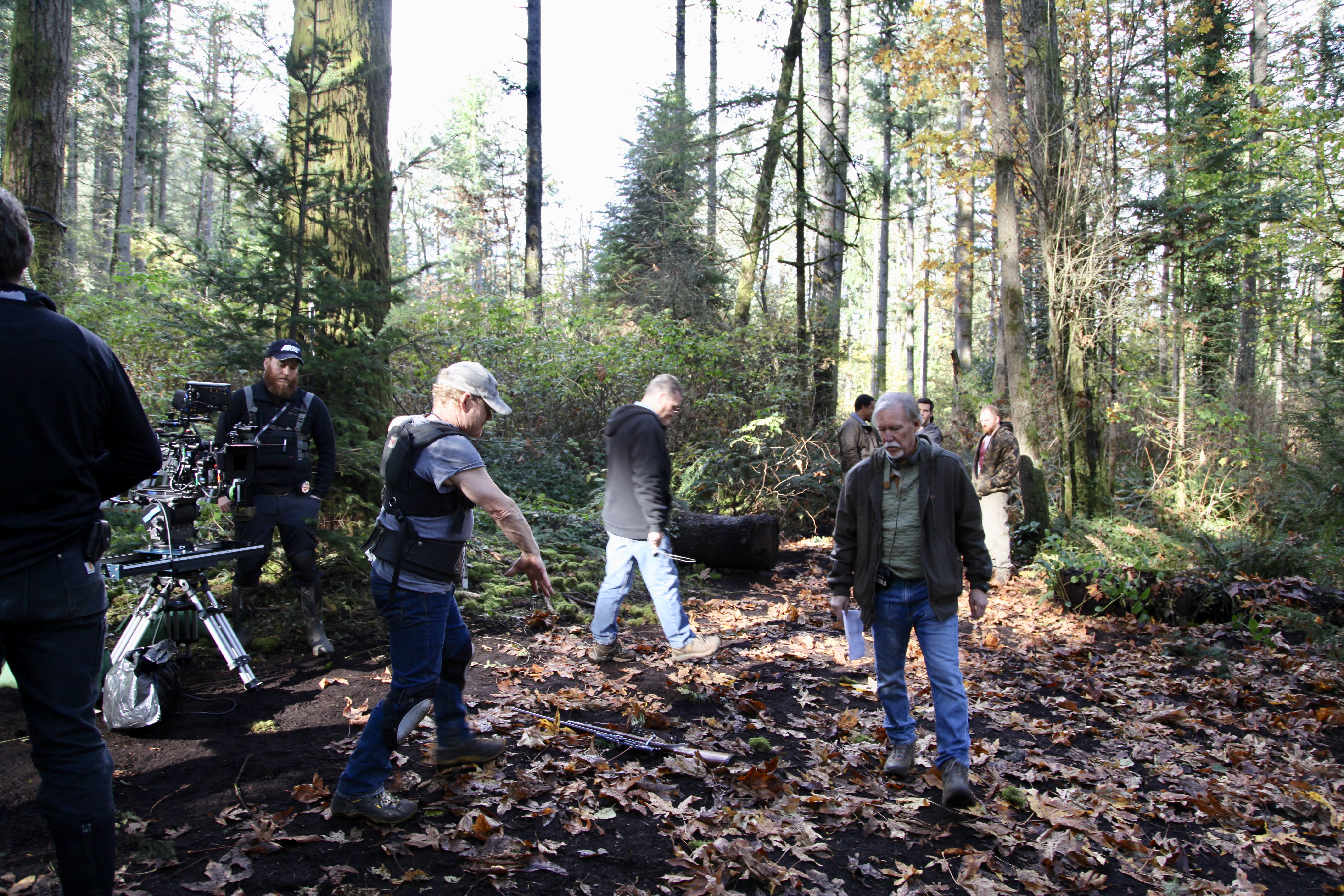
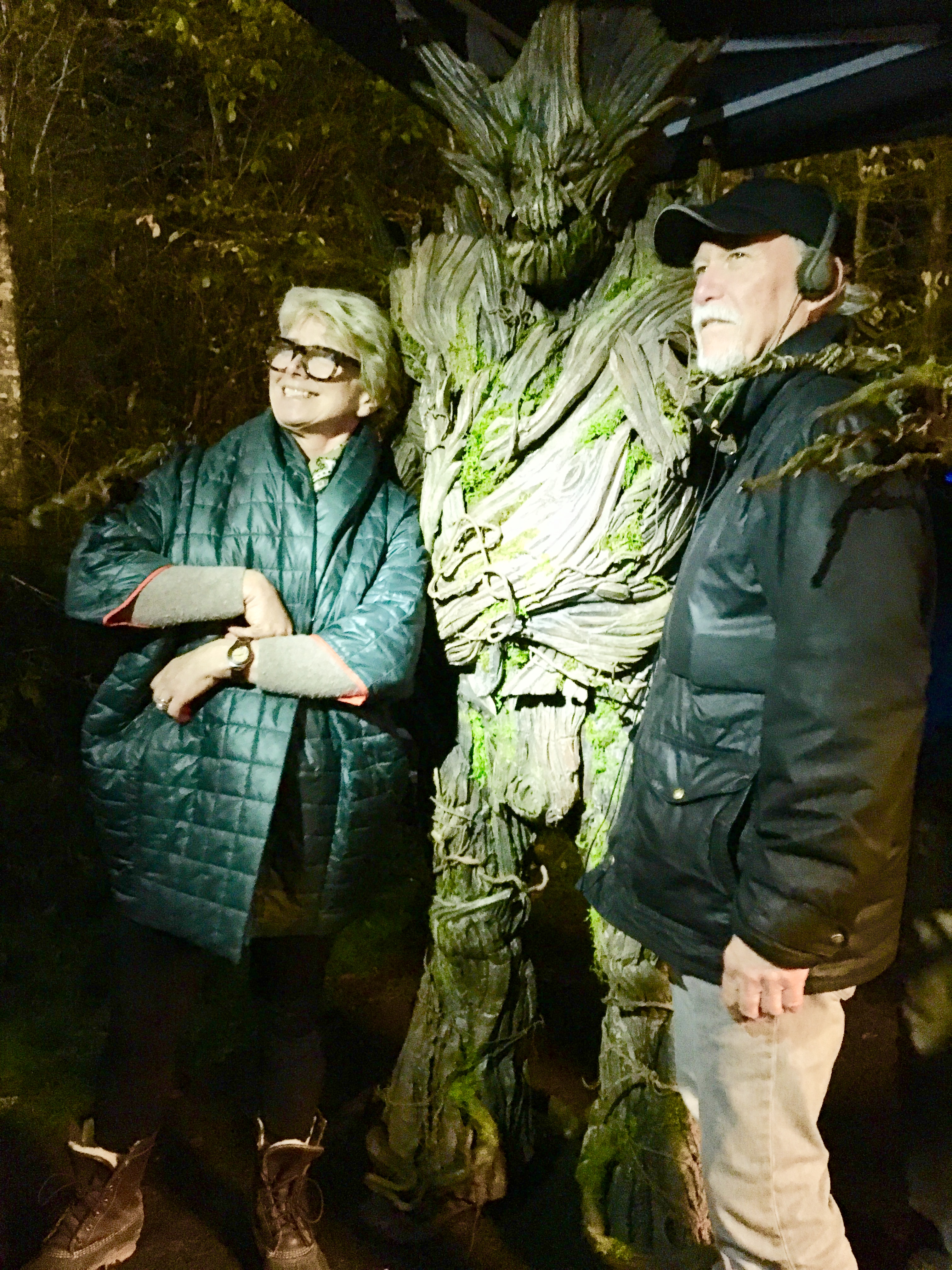
As avid readers know sometimes are guests are so kind to provide in wonderful inside access to behind the scenes photographs from their amazing career. Jim was kind enough to be one of these folks. He provided the photos from Disorganized Crime and Gang Related which are above, and as well as these gems from the set of Grimm set in our beloved Pacific Northwest below. Enjoy!


Candi Brooks [Interview]

Happy Friday All! Today we are sharing some words from a woman that I thought could be “pretty cool” to hear from, who happened to turn out to be an absolutely incredible person who we are so honored to have featured on the site! I love, love, love, when it works out like this! Yes, Candi Brooks is an amazing and inspirational actress, dancer, former casting director, and overall wonderful human being!

I first recognized Candi in one of the finest comedic films of the last ten years, a little film called 21 Jump Street (featuring our old pal Johnny Pemberton!). She was the young woman who was gently removed from your light pink VW bug during one of the most hilarious car chase scenes in cinematic history. She in turned actually helped save the day by stashing heat in her glove compartment. It was a hilarious scene, and I was excited to ask Candi all about it. And as it turned out, there happened to be so much to know and love about her!

Candi is also a long time resident of my favorite American city, which is obviously New Orleans. She joins the ranks of so many different folks we have featured on the site who call NOLA their home. Candi was kind enough to give us just a bit more insight into what it is like to work in the world of casting directing and acting in one of the greatest cities on the planet. And we are so damn grateful that she did!

So Ladies and Gentlemen, please allow me to shut my digital mouth, and introduce to you all the brilliant Candi Brooks!

When did first discover your passion for the world of performance? Was it something you grew up dreaming about, or did you just sort of find your way into it one day?

I began dancing at a young age (around 3 years old).  Tap, Jazz, Ballet, until later years I also took on Hip Hop, Pom Pom, Musical Theatre, Lyrical, Ethnic, & traditional Native American Jingle.  I adored being on the stage with the lights, sequins, makeup, and a captive audience!!  My years of dance continued until my early teen years where I auditioned for a Performing Arts High School in Georgia called Pebblebrook.  It was here I made the choice to begin studying drama instead of dance and the love has never stopped growing.  After High School I went on to earn a BFA in Musical Theatre from an amazing 4 year program at Brenau Womens College (shout out!) & Gainesville Theatre Alliance.  I then did summer stock under the direction of Broadway’s legendary Terrence Mann at The Lost Colony.  I took an internship at Actor’s Express and worked locally in Atlanta market until joining a National Tour of Peter Buffet’s all Native American cast as the lead female singer/dancer titled Spirit The Seventh Fire.  Once we lost funding on tour I wound up in Louisiana with zero ideas of what to do next.  I signed with a talent agent and began the transition of becoming a film/television actor.  In 2009 I took a 2 week job as a reader for Liz Coulon of Coulon Casting and 7 years later retired with dozens of shows under my belt as a Casting Asst & Associate having worked with some of the best!

Beyond the world of acting, you are also quite the acclaimed casting director in your neck of the proverbial and actual woods down in NOLA, along with our friends and your fellow performers  Laura Cayoutte, Joe Chrest, Ted Alderman, L. Michelle DeVito, and others. I am always curious to learn about film communities in areas that aren’t L.A. or NY. So in your experience, what is the film community like where you reside? What do you believe sets it apart from other communities?

Wow! *blushes* Thank you for such kindness.  Star studded list of folks you just rattled off there! 🙂  The film community here is deep rooted in folks that have been here since the beginning navigating every growth spurt our community has experienced (both in front of and behind the camera), as well as transplants (like myself) whom have moved here for work or otherwise and chosen to stay; and fairweather folks whom come in for the job and then are on to the next!  We are a melting pot of cultures, ethnicities, accents, & styles from street to street and neighborhood to neighborhood.  There is something for EVERYONE here and I think there is atleast one person whom represents all of these different vibes as well.  The majority of the actors here are hustlers, but this is not their entire being.  They are book readers, adventure seekers, parents, pet owners, travelers, & lovers of life!  We make great story tellers because we are living lives outside of the stories we’re telling on the screen & stage.  Other communities I’ve experienced only live for those experiences and so when they’re not acting they’re not fulfilled.

Candi Brooks as “50’s Hair” on the hit AMC series, Preacher.

You worked as a casting director and had a brief but hilarious bit of screen time in one of the greatest comedies in recent years, which would be 21 Jump Street. You were involved in the very intense car chase scene that is an absolute highlight of the film. So I am just curious what it was like to work on a set like this one? Was it as fun to work on as it was to watch?

One of the reasons I retired from casting was due to the conflict of interest.  SAG can fine a film a hefty chunk of change for putting a crew member  in a film.  In this circumstance I was the casting assistant on 21JS.  The hilarious & brilliantly talented Phil Lord & Chris Miller were directing.  I had the honor of being the reader opposite of all the actors both in their audition and callback.  Mid production they called Liz Coulon, C.S.A (local CD on the show) and said “we need a girl-We’re adding a scene on the bridge.  She should be attractive, great with improv, and not starstruck by Channing Tatum or Jonah Hill.  It works tomorrow”  Liz called in a handful of gals for and put them on tape to submit.  She asked me if I wanted to do it as well as a wild card and I said YES! of course!  She submitted the tapes to the guys and they called back with a resounding unanimous vote for me! 🙂  We’d worked together closely in the room for the callbacks so they knew the improv wouldn’t be an issue and I was delighted to take on the role.  We were quite literally “boxed in” on the Crescent City Connection with zero access to move about much once on the bridge.  Our staging area for the day was like a party bus where Channing, Jonah, & myself would wait when weren’t rolling.  I had an incredible time laughing and swapping stories with each of them off camera as well as creating/playing on camera as 90% of each take was improv.  I had no idea what (if anything) they’d keep in the film.

You worked on another project that is among one of my favorite films of all time, a darling sad tale known as Jeff Who Lives at Home. How was your experience working on this amazing film?

Woooooooow!  Excellent taste in films friend!  The Duplass Brothers (from Louisiana) are dynamite!  They were equally as amazing to work with as Phil & Chris.  These guys are incredible film makers and hands on directors!  I love that they share their vision but allow you to dream with them to make their vision a reality.


If you were handed the role of any famous woman in American history, who would you want it to be?

WHAT?!  How can I limit myself to telling only ONE story?!  That’s absolutely unfair; great question but absolutely unfair. *grumbles* No Pressure buuuuuuuuuut — Keely Smith; R.I.P.  Keely led an incredible life of passion and performance in her 89 years.  She was well known for her marriage to Louis Prima but theres an amazing story to be told there that I don’t feel anyone has highlighted.  She was less well known for her thoughts on feminism in the 50s and decades after, she was Native American, she was a victim of Domestic Violence but got out in a time when divorce was unheard of/unaccepted, and to a famous man nonetheless.  She took her joy of singing and performance to the next level developing a solo career and starring in multiple films, variety shows, & talk shows.  She was absolutely relevant up to the end and remains a powerful woman in my eyes.

What does the future hold for you? Anything you would like to plug to our readers?

Freedom & Fulfillment!  I wear a myriad of hats but am always in search of these two things!  In addition to being an actor, I own my own business taping, coaching, & teaching actors at Brave Arrow Productions.  I am a Health Coach promoting Optimal Wellness in a healthy Body, Mind, Spirit, & Finances.  I’m also a wife, mom, and human!  I’d love for some love on all the social media LOL

IG, Twitter, FB : @thecandibrooks  @BraveArrowProductions or @Brave_Arrow_Productions

What was the last thing that made you smile?

My sweaty 6 year old son running into the dugout after his second ever game to give me a hug and thank me for helping him win!

Andy Cowan [Interview]


Today’s interview subject is a man who obviously knows what is hilarious. Andy Cowan has been in the business of comedy for over 40 years, and has been one of the creative minds behind so many projects that you know and love. He joins the ranks of several other folks we have had the pleasure of sharing some words from here at Trainwreck’d Society who also happened to write for one of the most beloved sitcoms all time known as Seinfeld. But Andy has had an immense amount of success behind just this one series as well. He is also one of the brilliant minds that brought us the irreverent and absolutely original series, 3rd Rock From The Sun. He also wrote for Cheers! The Merv Griffin Show! Seriously, the credits can go on and on!

And now Mr. Cowan has an absolutely incredible new book to share with you all. What lucky bastards you all are. It’s called Banging My Head Agains The Wall: A Comedy Writer’s Guide To Seeing Stars. It is an absolutely brilliant look into the world of comedy writing and show business in general. If you are somebody who even remotely considers yourself a fan of comedy in any form, you owe it to yourself to check out this amazing work of art.

So Ladies and Gentlemen, please enjoy some amazing words from the comedic legend himself, Mr. Andy Cowan!

When did you first decide that you wanted to work in the world of comedy? What initially drew you to this world?

Aside from very early influences as a kid like Laurel and Hardy, Jack Benny, Johnny Carson… and later Woody Allen and Albert Brooks, I was drawn to the MTM sitcoms during the ’70s… The Mary Tyler Moore Show, The Bob Newhart Show… and a later offshoot of the MTM shows, Taxi, produced by some who’d written for MTM. I wrote several spec Taxi scripts that were well received. Another dip into the comedy pool was when I started doing standup in Philadelphia in ’76 during the early stages of the comedy club boom, before later moving to L.A. in ’78 and continuing to perform.

We have been fortunate enough to get some words from some of your fellow Seinfeld alum like Peter Mehlman, Steve Skrovan, and Marc Jaffe, because this is obviously a legendary program. That being said, in your own personal and obviously experienced opinion, what do you believe it is about Seinfeld that has continued to make it a staple in the world of comedic television?

As I say in my book… “The chemistry among the principles and natural rhythms…of the show were electrifying to me. You felt like you were palling around with living and breathing, organically funny characters.” Seinfeld was refreshingly devoid of the set-up, punch of so many sitcoms that continue to this day. The stories were most important. Also the show was brilliantly cast across the board, down to the guest stars and smaller parts. They had a naturally funny and slightly off feel to them, refreshingly different from the cookie cutter casting among a lot of network shows.

Another damn fine program you worked on was the truly unique hit series 3rd Rock From The Sun. I have to admit, when the show first aired, I never thought it would last. But it seems as though with some damn fine storytelling and character development, it has become a historic program as well! So again, in your personal opinion, what do you believe it is about 3rd Rock that set itself apart from other niche type sitcoms? What do you believe worked so well for this show to be such a hit?

John Lithgow was the big reason. He was such a great actor, so committed to the role and extremely likable. French Stewart, Kristen Johnston and Joseph-Gordon-Levitt (professional beyond his young age at the time) also went the extra mile. As I say in the book, I was drawn to shining a light on life through the fresh eyes of newly arrived extraterrestrials posing as humans. Everything would be brand new to them, and the actors helped the audience buy into the hook.

I understand you have a new book coming out soon that probably answers the questions I’ve already asked in much greater details. Can you tell us a bit about it? What made you decide it was time to get your story out into the world?

Banging My Head Against the Wall: A Comedy Writer’s Guide to Seeing Stars represents four years of writing about forty years of writing, performing and creating comedy from the ground up. Along with being the only writer associated with Cheers, Seinfeld and 3rd Rock from the Sun, I’m very proud of the myriad original creative projects… stand-up, half-hour comedies, sketch, talk, web/radio shows, comedy docuseries, single panel cartoons and comic strips that I get to share with readers. They’ll have a bird’s eye view of what it feels like to perform comedy on national television, take in industry pitching strategies and reactions back. Not to mention personal reflections from over fifty iconic celebrities I pre-interviewed during my first Hollywood job in the ’80s as a talent coordinator, writer and recurring performer on The Merv Griffin Show, including from Orson Welles’ pre-interview for his final appearance on the show, the day before he died. I structured the book to help the readers feel as if they go on the journey with me. The ups, the downs, persistence rising above daunting odds, and the uplifting message of hope I leave in the epilogue.

Speaking of “the opposite” of giving up, and still creatively flourishing after wandering the Southern California desert’s peaks and valleys all these years, I was happy to further drill down in my book on George Costanza’s opposite-winning method to the madness. I’d first reflected on doing everything the opposite in my own life before helping George grab onto the brass ring on Seinfeld in “The Opposite.” (Larry David, after whom George was reportedly patterned, once told me, “You are George.”)  As I illustrate in the book, to this day George’s epiphany is championed in art, economics and politics, and “the opposite” is also a recurring theme throughout the book in terms of comedy, as well as the twists and turns of show biz. It was a thrill to get to work with Jason Alexander many years after Seinfeld as a guest on my talk show pilot, in which we reenacted scenes from my first draft of “The Opposite.” That is just one of many creative project links readers can also visit within the book.

Because we love suspense and surprises around here, I feel compelled to ask: What do you feel will be the most surprising thing that readers are going to discover about the world of comedy writing from the book?

That when your creative juices are overflowing even though your resumé isn’t yet, you can muster up the audacity to hop a train to New York and arrange a phony meeting with Lorne Michaels at SNL. And in this era of classic TV reboots, readers will also get a kick out of discovering dozens of “new” Seinfeld stories I pitched on the show that never made it to air.

What else does the future hold for you? Anything else you would like to plug to our readers?

The book’s final chapter points to a new half-hour comedy docuseries project I co-created with Rich Ross and star in, the logical creative project Banging’s over 400 page journey leads to,The Lost Sessions with Andy Cowan. We worked hard on it, an inventive entry into the world of therapy with an accent on honest humor, a hint of pathos, and eking out therapy both in session and out in the 21st century world. Comedy veteran David Steinberg, an early champion of the show as mentioned in the book, will be meeting with me again to strategize about where we take it.


What was the last thing that made you smile?

Vocalizing and playing hand percussion with my jazz group in Los Angeles venues, a musical mission that’s been ongoing for over thirty years. And being dragged into an Arthur Murray Dance Studio (that happens to be in my building) two days ago by a lovely female instructor who noticed me walking by before teaching me a few quick Foxtrot steps. I hate dancing. I did the opposite!

Andy Cowan’s book Banging My Head Against The Wall: A Comedy Writer’s Guide To Seeing Stars will be available on June 28th. Find out more details HERE. And put in your pre-order on Amazon today!

Wanna reach out to the legend Andy Cowan himself? Well, he will allow you to do just that! Shoot him an e-mail at contact@andycowan.net today!

Robert R. Shafer [Interview]


Hello Dear Readers! For our first interview in a few weeks, I wanted to share some words from a seriously amazing dude, that have been a long time in the sharing. And it’s 100% my fault. The great Robert R. Shafer had been kind enough to share some words with us quite a while ago, but there I was to drop the proverbial ball and lose track of such amazing responses. But, we are here now to make amends, and share with you fine folks this amazing interview.

Robert R. Shafer can easily be identified as one of the finest characters of our time! In the same vain as our old friends Richard Riehl or John Carrol Lynch, Shafter is a multi-faceted actor with a god damned heart of gold, apparently. Whether you immediately recognize him as the solid man’s man and husband to Phylis on the successful NBC series The Office, a.k.a. Bob Vance of Vance Refrigeration, or you are a fan of the amazing genre series with a well deserved cult following known as Psycho Cop, your just a fan of great art in general…Robert Shafer should very well be one of your favorite actors. Hell, he is in EVERYTHING. Well, everything that matters anyway.

Yes, Robert Shafer is a man who consistently working either in front of or behind the camera, creating some of the best art today. He has a film, The Want Dick Dickster, that will soon be released on Lions Gate, and we can not wait for the world to get a taste of Dick (sorry, childish, I know). We discuss this and so much for in this incredible interview.

So Ladies and Gentlemen, please enjoy some amazing words from the brilliant Robert R. Shafer!

How did you find yourself immersed in the world of acting? What made you want to get into this world?

I fell in love with a beautiful, famous actress and after watching her work, I decided it was something that I might be able to do. So I began to study the craft with the legendary teacher Peggy Fuery, and among my classmates were: Meg Ryan, Nick Cage, Eric Stoltz, and Sean Penn, and it was a very competitive environment and I really embraced the challenge. I think an advantage I had was that acting was not something I had ever considered up until the time that I was in it; so I was not seeking fame and/or fortune, I was learning how to be the best actor that I could be; which, of course, turns out to be a lifelong pursuit.

In 1989 you starred in the cult classic horror film Psycho Cop, that is absolutely amazing, as well as Psycho Cop Returns in 1993. Two questions: What drew you to such a strange, and very original, project? And what has the fanfare been like since the films have been released? Do you find die hard projects of the films?

What drew me to it was that it was the title-role in a possible franchise. When I read for the part, the material used for the audition was Sam Shepard’s play, True West, which I had been working on in class. So I absolutely crushed the audition and they offered me the role. I got to go to Cannes and promote the film and I learned a lot about the business of show business; especially as it relates to distribution and financing. The films have achieved a great cult status, especially with recent Blu-ray release of PCR and the fans of the franchise are die-hard and now there is a whole new generation of them.

I am very intrigued by the 2015 film They Want Dick Dickster, which you actually co-wrote and produced as well as playing the lead. How did the idea of this film come to you? What made you want to tell this tale?

I was working on a script for a pilot about John Wayne and while researching that I learned about Wayne’s relationship with Director John Ford, which was incredibly complex. And of course, I have a lot of friends that are B-movie directors and they are all convinced of their own greatness even in the face of underwhelming results. Being an Indie director in Hollywood is one of the great roller coaster rides in career choices and so the picture incorporates behaviors about such legendary bad-boy mavericks like Ford, Alfred Hitchcock, Sam Peckinpah, Woody Allen and Roman Polanski. I think of Dickster as my love letter to Hollywood:“On Dick’s movie sets — He’s the Monster!” In the film, Dick is forced to remake his only hit horror film into porn and hi-jinksensue. It’s being distributed by Indican Pictures and coming out soon, hard, fast and often!

In 2014, you appeared in a In film written by our friend Al Kaplan known as Zombeavers, that I thought was hilariously great. As an actor, what was it that drew you to this project? Was it the title alone?

The casting director on that film was Chadwick Struck and I said yes to that cameo role to stay on his good side. Also, I always ike working with new directors. And going in, I knew that that title was going to get a lot of internet attention and that’s something that actors have to constantly be aware of these days.

We have spoken with a lot of actors who have worked in the realm of SyFy films, as they are very intriguing to us. You are definitely no stranger to this world, with your roles in Super Shark and Mega Shark Vs. Crocasaurus. I’m always curious, what is it like to work on a project like this? And how does it differ from other projects you have worked on?

The first film I did was Mega Python Vs. Gatoroid, starring Debbie Gibson and Tiffany, directed by Mary Lambert, and it was a real hoot. The trick is not to know that you are in a ridiculous movie, but that the situation is real to your character. The straighter you can play it, the better it is. The challenge is that you have to manufacture reactions to green screen monsters: “OK, Bobby, look! there’s the snake! Here he comes!”

You are of course, the man behind the legendary Bob Vance of Vance Refrigeration on the brilliant show the world knows and loves, The Office. I absolutely must ask, what was set life like on a show like this? Was it as fun to work on as a it was for us to watch?

It was amazing to be a part of it. What a cast! I think we had more fun doing it and the show only continues to grow in popularity. Life on the set was great, it truly was a team effort and the catering and craft services were the best ever.

What does the future hold for you? Anything you would like to tell our readers about?

Look for Awaken The Shadowman, The S.H.U. (which also stars Melora Hardin (Jan) from The Office), and I’m very excited about a new series I did called A Girl is a Gun starring Denise Richards, directed by French director Mattieu Tonetti.

What was the last thing that made you smile?

The deliveryman just arrived with my Philly cheese-steak. Delicious! And thanks for asking!

Craig B. Warmsley [Interview]


Today’s interview subject is a one of a kind class act type of gentlemen, that I have to admit…I wasn’t entirely aware of until recently. Or maybe I was, but hadn’t really put the pieces together to truly figure it out. I was simply scrolling around and trying to find the end of IMDb one day when I stumbled across a man who had worked in some capacity on a couple of classic Sega released video game adaptations of two of my favorite films from the early 90’s, which would be Aladdin and Demolition Man, and a guy who also happens to be a star in a little indie-gem of a film that had crossed my radar in the last year or so entitled Stronghold. The latter is a film that I am very intrigued to get to check out and eventually share with you fine folks. The first two, well, wade your way through the sea of nostalgia and check that shit out!

That man is Craig B. Warmsley, and I will be damned if he didn’t turn out to be an extremely intriguing individual with some pretty incredible stories to tell. He has been in and around the world of show business in one capacity or another, and is a prime example of the type of person we are so fortunate to get featured on TWS. So Ladies and Gentlemen, please gear up for some pretty amazing words from the insanely multi-talented individual, Craig B. Warmsley!

In doing a bit of research, I have noticed that you were involved in the world of Sega Genesis in the 90’s, including one of my favorite games from the time, the video game adaptation of Demolition Man. So, what were you doing with Sega at the time?

Great question! Actually, I was working for Virgin Interactive Entertainment (VIE) as an Assistant Producer, VIE was a subsidiary of Virgin Enterprises. VIE functioned as an in-house video game Developer and Publisher, Demolition Man was developed and published by VIE for the 3DO video game system, but was released on several platforms including the Sega Genesis under a different Publisher. In 1993, I had a video game idea Bionic Diva which I pitched to several developers in Southern California, I left a copy of Bionic Diva with a Producer at VIE and received a call from the Executive Producer later that night. The Executive Producer said during our conversation (I’m paraphrasing) “I think your game idea is shit, but I like your initiative and knowledge of the gaming industry. We have an opening for an Assistant Producer. Would you like the job?” And the rest is history. I was 19 y/o at the time and remember having trouble renting a car to present games at Comic Con, so the Accounting department had to act as my “Guardian”, it was hilarious. As you can imagine, this was a dream job for me, and I had to grow up fast and learn how the business world functioned.  My creativity really blossomed during my time at Quicksilver Software in the mid-nineties. Quicksilver was a Computer Game developer and didn’t have the financial prowess of VIE, so they gave their employees freedom and autonomy to learn many different things in regard to game development. Quicksilver is where I learned Sound Design and Multimedia.

When did you first discover that you had a passion for the world of the arts? What made you want to join this world?

I’ve always been a creative person since I was young. In Junior High School, I played the Trumpet and had an interest in Music. The contrast is that I am a very large and physical guy, so my interest in the Arts always was in conflict with my physical interest, for example; (Music / Football) and (Multimedia / Security). At the moment, the same contrast exists as I am ending my career as a Protection Specialist / Bodyguard of 17 years and going back into the Arts as an Actor. The Security industry is the antithesis of creativity; so the Arts called me back! I have a mind that is filled with ideas and concepts, and the Arts / Entertainment industry is the perfect vehicle to express myself.

I’ve noticed that you have recently appeared in some music videos for artists like Chris Brown and Justin Bieber. I don’t believe we have spoken with anyone who has worked in the world of music videos, in front of the camera anyway. So, how is this experience as an actor? How does it differ from working on a film? Considering the time constraints and what not?

In my experience, the energy on a Music Video set is more intense due to the time constraints that you’ve mentioned. The sense of urgency is much greater and the budgets are a lot smaller, so I have a responsibility as an Actor to understand my role and stay focused since there aren’t a lot of takes. I really enjoy the diversity on Music Video sets! Because the Music Video has to tell a story in a short period of time, you get Actors and Actresses from different scenes crammed into a single area. I’ve met people from all over the globe and had some interesting conversations.

Can you tell us a bit about one of your recent projects, Stronghold, that recently appeared at the Las Vegas Black Film Festival. What can we expect to see you doing in this film? What is the film about overall? What was the on set life like on a project like this?

In Stronghold, I am playing the role of “OG (Original Gangster) Fat Rat” who is in an opposing gang to “Rooster”, the protagonist of the story. Rooster has done something against my gang that requires retaliation, and as an “OG” of my gang, I must test a younger member “heart” by giving him an order he cannot turn his back on. Stronghold is the story about Rooster, a gang affiliated young man from Compton who is a major money maker for his gang set. Rooster will come to a crossroad in his life after he meets “Tisha” a beautiful witty lady who introduces him to a new lifestyle as a Christian. Now Rooster has to make a decision to follow God or the Hood. What impressed me most about Stronghold is the realistic portrayal of gang life from the fast money and women to the hardcore daily violence and stress. Some “religious” based movies take a puritan approach to making movies where the language and content is censored to reflect their allegiance to a new found faith. Stronghold doesn’t take the puritan approach and instead tell the hardcore truth about the realities of gang life. I believe this movie will change a lot of lives because those involved in gangs will respect the sincerity of the movie and be willing to change for the better.

What does the future hold for you? Anything you would like to share with our readers?

The future is looking pretty bright for me at moment. I was recently cast as Eric Garner in a politically charged music video for a major Hip Hop Group. And I’ve been busy putting together a trailer for an animated short I’m creating called Desires of the Fallen™. My name is getting out there, and I’m excited about the opportunities coming my way.

What was the last thing that made you smile?

I’m sure it was a meme on Instagram. I’m officially addicted to it.

Matthew Moy [Interview]

I am very excited to share this interview with you fine folks, and not only because it may be the last one we get to share with you all for a short while. I’m very excited about it as this turned out to be one of those amazingly sweet surprises to enter the TWS world. I have always thought Matthew Moy was a funny guy as I watched him on the hit TV show 2 Broke Girls. But I was generally unaware of what the rest of his career has had to offer us. And since getting to know a bit more about Matt, I have become increasingly more impressed with what he has given to the world and even more excited about what he will give in the future.

Matthew Moy is an extremely sweet human being and we are so excited to share some amazing words from this extremely cool dude. So lest we forget that this is all about Matthew, I shall end my rambling, and let Matthew speak for himself. With that, please enjoy some amazing words from the brilliant Matthew Moy!

When did you first discover your passion for the world of acting? Was it something that started at an early age? Or did you just sort of land into this world?

I discovered acting when I was a sophomore in high school. I noticed a lot of my friends were in the theater program, and I wanted to do a fun extracurricular activity with them. But after high school, I didn’t do much acting at all. I majored in Japanese and minored in Linguistics in college. Eventually, however, I became unhappy in my Japanese major and decided it wasn’t for me. I finished the major, but in my senior year of college, I asked my mom for her advice on my next career path. She recommended voice acting because I loved animation and had previously liked acting and had been good at it. I followed her advice and fell in love with voice acting and studied intensely. I worked for a year at a pet hospital and saved all the money I could. Money in tow, I moved to LA in 2008 with the intent of being just a voice actor, but I wasn’t making enough money to sustain myself as a voice actor even with the money saved (LA will eat you alive if you’re broke), so I decided to diversify myself with my remaining funds and learn on-camera as well. I’m glad I did!

What was it like the very first time you saw yourself on screen? Was it a surreal experience? Do you remember what you were doing the first time you saw something you worked on go live?
The first time I expected to see myself on screen was in a skit on a show called Mind of Mencia. My roommate I were on the couch, giddy and excited to see my first performance on television. Then the skit came on, and I was nowhere to be found. My roommate and I thought, “Maybe I’m at the end of the skit!” But then the skit ended and cut to the title sequence of the show. I was so disappointed (mainly at myself), and that’s when I decided I needed to take on-camera acting classes. My actual first time on TV was on a game show called Cha$e. It was like a game of tag where “agents” have to “catch you,” and you could win up to $50,000. I said I would buy a hypo-allergenic cat if I won, and I got tagged out first. It was such a silly show. Good times.


You had a long run in an absolutely brilliant role on the sitcom 2 Broke Girls. I am curious to know what the atmosphere was like while you were on set as a part of a very talented group of individuals? Was it as fun to work on as it was for so many of us to watch?

2 Broke Girls was such a big part of my life, and will always be. I learned so much since it was my first sitcom and series regular role, and I had so much fun, and all the cast mates and crew and writers are like family to me. Kat Dennings is a genius and sometimes I’m convinced she has a near photographic memory. Her ability to memorize changes on the spot was insane. Beth Behrs is so adaptable in any situation.  Jennifer Coolidge is a magical being that would make me break in laughter almost every time I had a scene with her. Garrett Morris is electric and has so many jokes and stories. Jonathan Kite is an amazing impressionist and comedian and one of my best friends. Every single person was so talented in different ways—I always compared us to being like a great football team, where every person had their specific part to play and was damn good at it. I just had lunch with Garrett last week and am flying to New York to see Jonathan in a play. We keep in touch a lot.


You have worked quite a bit in the world of voice over gigs as well as on screen work. We’ve spoken to several folks who have worked in this world, especially when it comes to video games. And I am always curious to know how an actor enjoys this gig over on screen work? What would you say are the pro’s to voice over work to being on screen?

Well, I moved to LA with the intent of just doing voice over work! That is what I was trained to do and had gone to school for. I love voice over work, and I love on-camera work—both for different reasons. Voice over work can stress out your voice occasionally if you’re doing a lot of video game gigs that have you screaming, but normally it is the most laid back job ever where you can finish recording within four hours. Then you get to go home and have nachos, you know? Don’t get me wrong, though, you still have to be prepped and disciplined at any job you do—so I’m saying it’s laid back if you are reliable and a disciplined hard worker! On-camera work can have you working 12 hour days and then you have to do the same routine the next day, but the people you meet, the experiences, and the pace you work at is fast and fun. Both careers have stretched my mind so far now that I love doing both! And it’s a great feeling that I’m able to do what I moved to LA to accomplish!


What does a guy like Matthew Moy do for fun? When you find yourself not hard at work, what would one find you doing for a little “me time”?

Most of the time I am fixing stuff around my house, but I like to draw, go to painting class, cook, work out, go to spin class, hang out with friends and eat sushi…occasionally I’ll travel, but most of the time I like to be at home! Me time is the best!


What does the future hold for you? Anything you would like to share with our readers?

Well, I’m filming a guest spot for The Guest Book on TBS soon, and you can still hear me as the voice of Lars on the animated show Steven Universe. I am part of a new Marvel show called New Warriors that is still in production. It’s Marvel’s first half hour TV comedy! I play Zach Smith aka Microbe on it who has the powers to talk to bacteria and germs. It’s always fun being a super hero. I hope to produce and write more in the future, but we’ll see!

What was the last thing that made you smile?

Seeing and talking to my friend whom I hadn’t seen in a long time. We had the best time chatting! Also we were having coffee, and coffee always makes me smile!