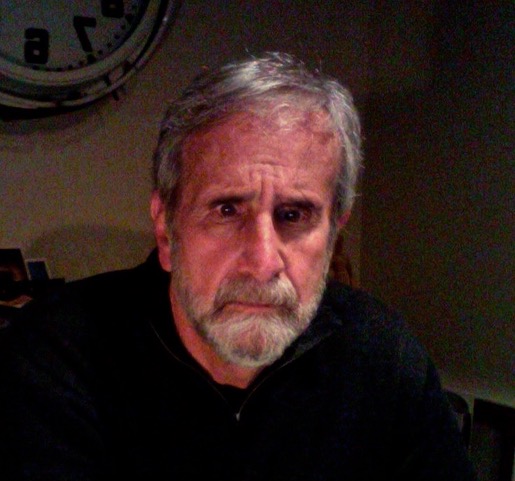
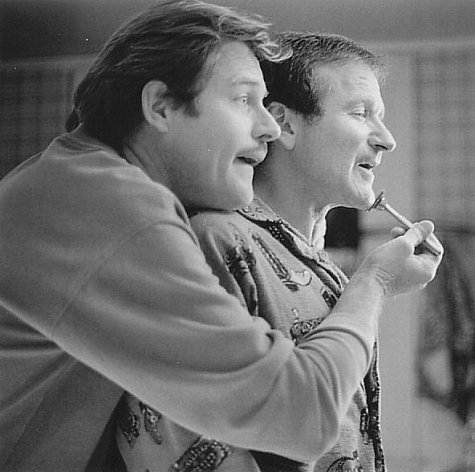
Dave Hackel [Interview]


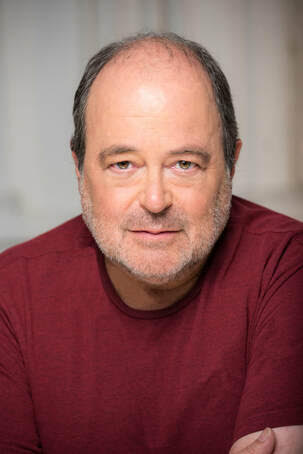
Well Folks! What a wonderful week we have had here! I almost feel as though we have celebrated the show pretty well since last Sunday. But, it would be remiss of us to not throw in one more wonderful feature for you al….with THE GODDAMNED CREATOR OF BECKER!!!! That’s right Folks, Today’s interview subject is the one and only Dave Hackel, the man who wrote and developed our dear hero, Mr. John Becker into existence! This is pretty damn huge for us Everyone. The idea of one day having Dave featured on Trainwreck’d Society was but a pipe dream I had when I created this little site almost 9 years ago. And wouldn’t you know it, some dreams do come true!

And as we were so glad to learn, Mr. Hackel is a hell of a nice person! And, as we already knew prior to going into this interview, he has been responsible for some of the greatest television ever put out, even beyond what we consider the best show of all time. He has worked on other classic programs like Webster, Wings, Frasier, and so much more. It was such a delight to get to know a bit more about one of the people who inspired me at such a young age, and created a project that has continued to have a real impact on my life.

On a conclusive note here, I want to thank everyone for coming along on this journey in celebrating Becker as a show, and as a movement. I have never understood how some television programs have received legendary status based on almost zero merit. And some shows have a successful run, but seem to be left in a vault somewhere, adored (even moderately I suppose) at its time, yet almost forgotten over time. Becker is and will always be my favorite sitcom of all time. And with that, I am so glad that we got to have this week. And again, thank you all for coming along on this journey. And thank you to Ian Gurvitz, Michael Markowitz, Russ Woody, and today’s incredible interview subject Dave Hackel for gracing our digital pages throughout this week!.

So Folks, please enjoy some incredible words from the even more incredible Dave Hackel!


******


When did you first decide you want to join the world of television? Was it something you had wanted to do since your youth? Or did you just happen to find yourself in this world one day?

I was addicted to television as a child.  The choices were few in those days, but I watched as much as I possibly could.  I found it utterly fascinating…almost magical.  During high school and college I worked in radio, but as soon as I got my degree I accepted a job at a small cable outlet in Columbus, Ohio.  At that time, the legal requirement for cable companies was that a certain number of hours of local programming had to air each day, and my job was to come up with those shows.   Our small crew wrote, directed and even ran camera for all the shows.  Occasionally, we also served as on-camera talent.  It was a great learning experience.

When I moved to Los Angeles, my goal was to work in television in some capacity.  Eventually, I found a job working for a company that provided prizes and promotional consideration on various game and talk shows.  The best thing about it was that I got to spend most of my time working at the studios where I met a lot of people who were generous with their knowledge of production.

Eventually, I met people who were producing scripted shows for the networks and was invited to submit ideas to them. I worked on both comedies and dramas and eventually found my niche writing and producing sitcoms.

What was your very first paid gig in the world of television? And where there any sort of lessons learned from this experience that continued to affect your work in the years to come?

My very first paid writing job was on a sitcom spun off from Barney Miller, called Fish.  It starred Abe Vigoda.  At the time I was writing with a partner, Steve Hattman, and that episode of Fish was our first network sale.  The producers of the show were seasoned veterans and seeing the way they constructed their stories and hearing the types of notes they gave us throughout the process was very instructive.  I believe that the lessons learned from them served both of us well throughout our careers.

Over the years here at TWS, we have had many folks who have worked on the incredible series you created entitled Becker, which has become a staple around here. From writers who were there the entire run, to actors who only appeared in one single episode – they all say the same thing…this show was special. I know that I felt that way as a viewer in my formative years, as well. So, as the man who created it all, I am curious to know what your thoughts are on the run that was the incredible series Becker. What set this project apart from all of the projects you had worked on prior to it? 

First of all, thank you.  Your compliments are humbling.  It’s always nice to hear that the hard work we all did to make Becker was appreciated.  What made the series special to me was that Paramount, CBS and the audience allowed us to make a show that was…at the time…a little different.

By today’s standards, the character of John Becker would likely seem tame, but twenty years ago that was not the case.  He was not the type of “feel good” character that inhabited most television comedies at that time.  He was brutally honest, not very politically correct and – bottom line – a damaged soul.   Believe me, a flawed character like that is fun to write for.  The whole staff got to use Dr. Becker to work out issues of our own.   If someone cut in front of one of us in line, rather than get into a public altercation, we let Becker yell at them instead.  If one of us had an argument with our wife or girlfriend, we let Becker plead our case.  If we saw a public figure traffic in untruths, we let Becker call them out.  It was a very cathartic experience.

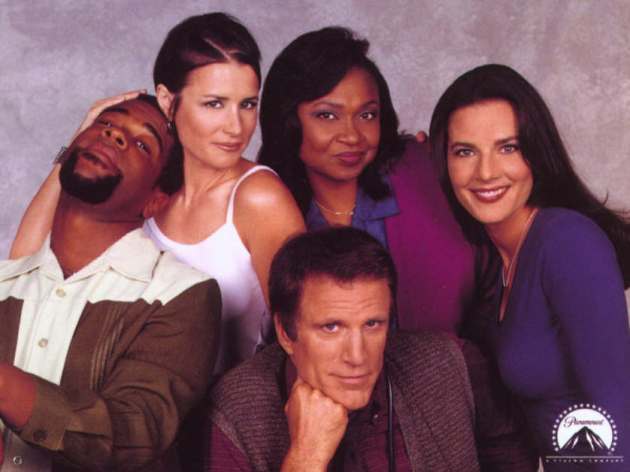
And while I give the entire cast and all of the writers and directors a great deal of credit, none of it would have been possible without Ted Danson playing the title role.   He brought his exceptional acting skills to the part, of course.  But Ted also gave a underlying likability to the character that kept Becker’s sometimes harsh words and attitudes from going too far.  Yes, Dr. Becker was angry…but I believe that our audience sensed that, down deep, that he was also caring.  That, I believe, was key to the show’s success.
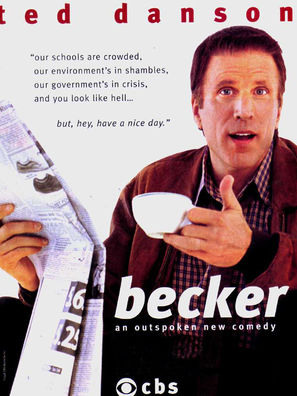


Also, as the man who created this show that we know and love so damn much, I am curious to know what you think Dr. John Becker would be doing right now, 15 years since the last new episode of Becker aired? Same for any other character from the show you might like to elaborate on? What is the amazing team of characters that formed Becker doing these days?

Interesting question.  I’ve never really thought about what the characters might be doing today, but it was a fun exercise.

I honestly think that John Becker would still be practicing medicine in that same small office in the Bronx.  Over the course of the series he had a number of opportunities to leave for greener pastures, but I believe he was, in his own way, happy there.  So I think that he would still be a part of that community.  A thorn in its side, perhaps, but I doubt he’d ever have voluntarily left his patients in someone else’s care.  As for his personal life, as sad as it sounds, I think he’d still be alone.  As much as I believe he might want to be in a relationship, I’m not sure he would be capable of either the compromise or commitment that would be needed.

As people do in real life, characters pass through each other’s lives, so I’d guess that the others would have all moved on by now. Margaret would have retired by this time and would be spending her time happily volunteering at her church.  Reggie and Chris would have successful careers and personal relationships.  Jake would be married and definitely would have moved on from the newsstand – perhaps becoming a writer telling stories of all he’d “seen” in the neighborhood.  I think Bob might have taken over the diner where he’d hold court daily and spend his spare time searching Tinder.  And, Linda?  I’d like to think that she would have found a way to capitalize on her questionable work ethic – perhaps inventing some sort of time wasting smartphone app that would net her billions.

One last Becker related question, and I will keep it simple- Do you have a singular favorite episode of Becker that you are particularly fond of? Is there one that will always consider the master achievement of the series? Why or why not?

This is like asking me to choose my favorite child.  Impossible.  I liked different episodes for different reasons, but I was most proud when I believed we’d told a story in a way no other show on TV at that time could or would have.  Here are a few that come to mind.

“Man Plans, God Laughs” because it allowed John to debate religion with a priest and discuss his own faith…or lack thereof.  “P.C. World” because it gave Becker the opportunity to brilliantly and successfully take on an unfair critic in a public forum as only he could.  “Talking Points,” an episode about a patient of Becker’s who suffered from A.L.S.  (It was written by Russ Woody, and inspired by his own father’s story.)  All of our Christmas episodes because each one was more twisted than the last.  And “Subway Story” – an episode that told the story of Becker helping a woman who’d lost her son on 9/11.  “Becker” was, I believe, the only sitcom that dealt with the events of that tragic day.

I am curious to know what you are most proud of when you look back on your incredible career in the world of television? Not necessarily one particular show (although it could be, if you so choose), but looking back at your career as a whole, what are you the most pleased to know you accomplished?

When I was a child, I used to fantasize about being a part of show business.  From where my journey began, it was a goal that seemed completely unattainable.  So what pleases me the most is that, with hard work and twice as much luck, it eventually happened.   And I’d be remiss if I didn’t mention how proud I am of my friends and colleagues with whom, even on the most difficult days, made me laugh out loud.

What does the future hold for you? Anything you would like to plug to our readers?

I retired from day-to-day television production almost fifteen years ago, so I have no new shows to promote.  But I’ve heard it said that being a writer is like having homework every day for the rest of your life, so I plan to keep writing.  Currently I’m working on a new screenplay.

What was the last thing that made you smile?

Neal Brennan’s special on Netflix entitled “Three Mics.”  It’s very funny and quite thoughtful, too.
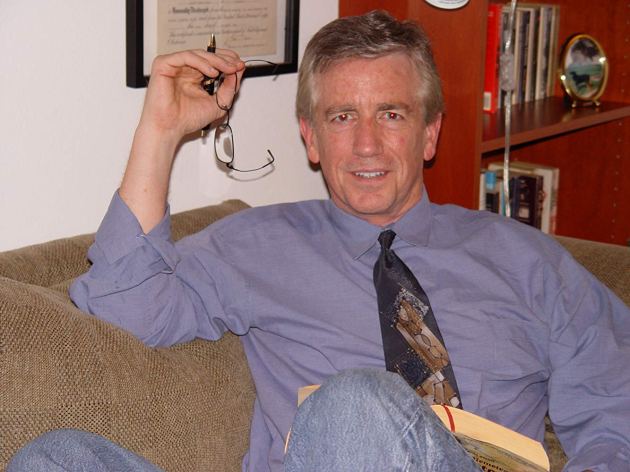


Russ Woody [Interview]


Hello Folks! Welcome back to another wonderful edition to our “Week of Becker” coming to you live on the unusual Thursday. Usually we leave this day blank (a day of rest, if you will) but how the hell could we do that when we have such an incredible week with some incredible writers and producers to share with you all? Today we are hearing from the absolutely brilliant man himself, Mr. Russ Woody!

Just as our previous guests had, Russ was around for the vast majority of the run of this program that we love so very much. He was a major contributing factor to the show as well, and we are delighted that he wanted to share some words with us. Russ also brought an entirely new element into the story behind my favorite sitcom of all time, one that would literally bring tears of joy as well as sadness to my eyes. And that element would be in the form of Russ’s father. Honestly Folks, when I was reaching out to the idea of making a Becker themed week happen, or just to talk with anyone who happened to worked on the series at all, I wasn’t planning on being just so damn moved by some behind the scenes stories that occurred during the making of Becker. I honestly can not thank Mr. Woody enough for sharing his and his amazing father’s story here with us today. What is the story? Well, keep reading you (albeit beautiful) animals!

Beyond the world of Becker, Russ Woody is an Emmy and Golden Globe winning writer and producer who has worked on other incredible shows like Murphy Brown, The Drew Carey Show (the one that took him away, haha. Also happens to feature our dear friend John Carrol Lynch!), a new favorite of mine known as Haters Back Off, Mad About You, and so many more. He has done some absolutely incredible work, and also happens to give one hell of a great interview. He’s an absolutely hilarious human being by nature, and we are so excited that he is here!

So Folks, please enjoy some incredible words from the amazing Russ Woody!


******


What inspired you to get into the world of writing? Was the idea of being a  writer something you had aspired to be since you were a child, or did you  just find yourself in this world one day? 

I’ve always admired writers, always looked at them with awe, always assumed they were the smartest people on earth. Though I’ve since found that to be untrue – in some instances, laughingly so – the epithet has always inspired me. That my efforts as a writer tend to dribble out as comedy (or at least attempts at), was inevitable from the 5th grade. On my way to school in Red Bluff, California, I used to sit at the back of the bus with a bunch of 7th graders who were wildly funny and sharp and sarcastic and caustic and I wanted desperately to be one of them. So I struggled valiantly to hone my humor skills, which then started a life- long quest to figure out this whole comedy/humor thing. I came to realize, many years later that the concept of “figuring comedy out” is a fools errand (both the medieval one and the modern day fool). What I have found was that any time I think I’ve got the rules figured out, they change. Comedy is a complex and vaporous miasma that denies formula. It is (to me) so much more interesting than drama or informational writing, as they can be ultimately “figured out.” If you write that someone’s dog died, you can pretty much get to “why” it is a sad story. But try to turn the same story into something funny (it can be done), and it’s much more complicated. 

Anyway, I did my share of getting in classroom trouble for things said/done, etc. In college I was drafted from a public speaking class into the debate team, where I competed in After Dinner Speaking (humorous speeches). I did well, but was forever disappointed to find there were never any “dinners” before the “after dinner” speeches. After college, I moved to Los Angeles and managed to get a couple of production assistant jobs on sitcoms: Benson, Bosom Buddies and Family Ties. It was a wonderful experience that I highly recommend for any neophyte (though the jobs are hard hard to get) because you can often sit in on the comedy-writing process and see that it’s not magic. In fact, it’s so much not magic that, after 35 years of it, I began to ease my way out of it. 

Do you remember the first time you saw your name appear in the credits of a series? Do you remember where you were when you first saw it? 

Yeah. It was a nightmare. (I’ve never liked watching my own stuff anyway.) It was an episode of Benson. It came on the air while I was in Oregon with my then- girlfriend and her family. So everyone gathered around the TV, all very excited. The episode had been totally rewritten and (like everyone just talked to everyone else throughout the whole thing). I just sat there and ate my liver. But the rewriting thing happens all the time in television. After a while you get used to it, or you try to get used to it, or you don’t get used to it, but you get used to eating your liver. 

No, now that I think of it, the very first time I saw my name in credits was when I was a production assistant on Bosom Buddies (Tom Hanks/Peter Scolari). THAT thrilled me. Another cool experience was many years later, when I was writing Murphy Brown (the original). I’d gone up to Chico, California (my alma mater) and dropped into the restaurant where I used to work. I was sitting at the bar, drinking, bullshitting with a couple of friends. There was an attractive woman that I didn’t know sitting nearby. Murphy came on the overhead TV, and one of my friends turned to the woman and pointed out my name in the opening sequence. He said, that’s this guy right here. She thought he was full of shit, and producing my driver’s license would’ve made me look like an asshole. But still, it was cool. 

You have worked on so many of the most iconic television series of all time for nearly 40 years. I have loved so many of them, but regular readers here at TWS know that my favorite sitcom of all time is one you spent quite a bit of time on, which was Becker. We have spoken with a few people about their time on the show. With that, I am curious to know how you enjoyed your time working on this project? Was there anything about this specific project that set itself apart from the plethora of other projects you have worked on? 

Actually, I’m surprised to hear it was your favorite show. Becker always seemed to fly so far under the general public’s radar. I was there for 5 of its 5 1⁄2 years (I left when we didn’t know if the show would be renewed and Drew Carey sent a money-filled truck to my house—yes, okay, that’s essentially prostitution, but let’s not think TV is above that classification). Mostly, I suppose, I was there for so long because Ted (Danson) was such a great guy to work with. And Dave Hackel, the show runner, though he could be a little gruff at times, ran a well- organized show and reasonable schedule—often an anomaly in sitcoms. 

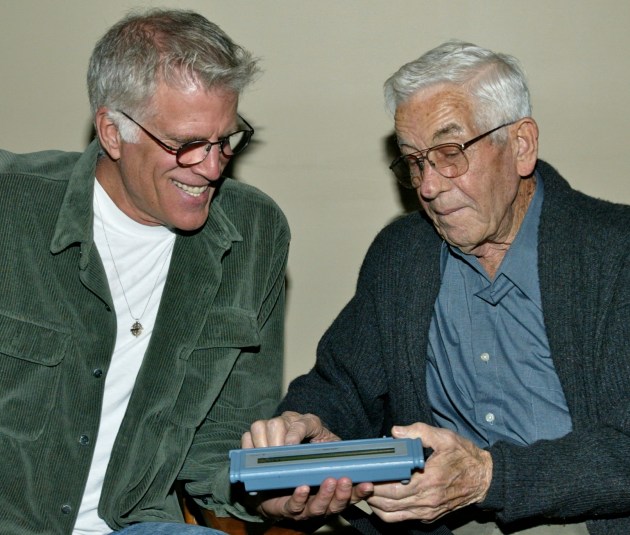
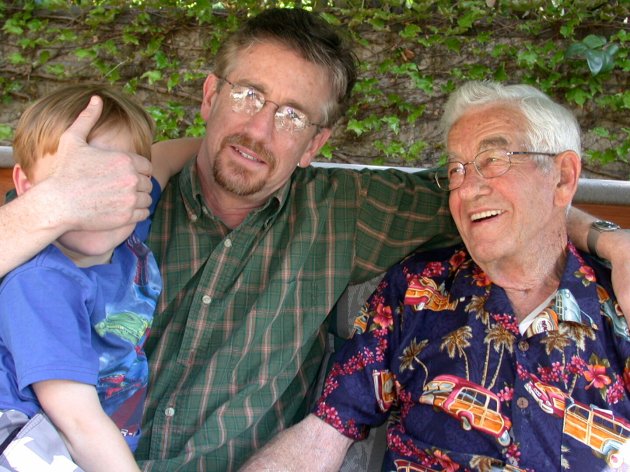
But what made the show so uniquely endearing to me was the part in the middle of my tenure, the year-and-a-half that followed one particular week when my mother died suddenly and my dad was diagnosed with ALS. I got him a house in Studio City (L.A.) and he began coming to filmings of the show every Tuesday night. In the months to follow, I was astonished to see how much, and how wholeheartedly, the writers, the crew, the cast, especially Ted Danson, adopted him. We ended up doing an episode of Becker about him, with Tom Poston playing “an old man with ALS, who could no longer speak,” so Dr. Becker gets him a small computer that will speak for him. The episode was given an award by the Muscular Dystrophy Association at the Beverly Hilton in Beverly Hills at a black tie event with the Becker producers and the cast. My dad wore a tux for the first time, rode in a limousine for the first time and found himself sitting in the audience of 800 supporters as Ted Danson stood on the stage and told him how special he’d made the year for everyone at Becker, and how my dad made him (Ted) “miss my daddy.” As well, he ended up becoming friends with my friends, half of whom are gay—an eye-opening experience for an older man (a Republican [when they were reasonable]) and a former marine who fought in the Second World War. He ended up becoming pro-gay, to the point I told him he’ll be sitting atop a float in the West Hollywood Gay Pride Parade. 


So much happened that, yes heartbreaking but fulfilling, year and a half. (If you’ll indulge me.) He had Thanksgiving dinner at my friend’s house in New Mexico with Shirley MacLaine and Marsha Mason. All of which paled in comparison to the time he was able to spend with his two young grandsons Henry and Joe (6 and 4 respectively). After he bought bunk beds for the spare room of his house, the boys spent most weekends over there, where they woke to the smell of bacon and pancakes wafting in from the kitchen. While he still had strength in his arms and legs, he built the boys a huge fort in the backyard. It sat on of 4×4 stilts, with a ladder leading up to its trapdoor entrance. It had a shingled roof and, after a trip to the junkyard where we picked up some used bucket seats and a steering wheel, it became an intergalactic spaceship. Then one day he called me into his living room and said we had to move or get rid of the furniture. Odd. Then he showed me two huge plywood tables he’d built, that we moved into the living room. After a trip to the miniature train store where he bought slot cars and a few hundred dollars worth of slot car track that was installed on the tables along with artificial grass, mountains made from insulation foam and lakes made from mirrors, his living room had been transformed into a giant race track. The boys were thrilled, and as they raced and mostly blasted the cars into the back wall, I turned to my dad and said, “You never built anything like this for me.” He took his talking computer out and typed: “TOUGH.” 

In August of this year (2019) Wyatt-MacKenzie is publishing my book about that amazing year and a half. It’ll be called Tuesdays with Ted (a tongue-in-cheek salute to Mitch Albom’sTuesdays with Morrie). It was a book I had to write, mostly for my sons. They were too young at the time to really understand what was going on with their dad and grandpa, so I hope this will be something they can refer to for a full perspective. As well, I wrote the book because that year and  a half was the most meaningful of my life. To spend cherished, though limited time, with my dad, to see the generosity and kindness of my friends and co- workers at Becker, Even if I wasn’t in it, I’d think it was an amazing story. 


Another amazing project you worked on was the classic known as Murphy Brown. You actually worked on the original run of the series, and then came back to it during its reincarnation 20 years after it went off the air. I’m always curious to know what that must be like. So, what was it like to jump back into a world 20 years after you leave it? And with everything that has changed in the world since Murphy Brown went off the air, what was it like to dive back into that world after so much time has passed? 

It was a little surreal. Actually it was almost 30 years ago. I was there the first couple of years of the original run. Could be I was younger then. The amazing part of the show was how the original group of writers all stayed very close over the years. Korby Siamis, Gary Dontzig, Steve Peterman, Norm Gunzenhauser, Tom Seeley, Tom Palmer… we never lost contact with each other and see each other frequently. That made it a wonderful experience and a bonus. It was, as well, fun to see the show originally becoming successful. Candice was a blast to work with, bottom of the barrel sense of humor. Grant Shaud (Miles Silverberg) and I are still close. 


Russ Woody & Diane English (1980’s)


Going back after all that time was kind of fun, especially since I didn’t have to take it seriously. It was great to sit in that room with those guys. Diane (English) too. I didn’t move back to New York with them though, which, this time, is where they shot the show. Burbank, in the original version. But I did go out there to see one of the filmings and the actors and the rest. Was pretty cool. I’m, not by any stretch, a New York person like a lot of them are. That city always freaked me out. I said to Dontzig that it seemed like there were a lot of people in that city. And I never got the layout of the city. Never could find my way around. So the New Yorkers amongst the writing staff mother-henned me, made sure I understood the difference between “uptown” and “downtown,” never knew there was a difference—opened up a whole new world for me. As long as I stayed on one train that went from uptown to downtown, and vice versa, I was reasonably certain I might see my loved ones again. 
The writing of the new version was fine for me, ‘cause I only had one script to write. Weird though, sitting at a computer writing out those character names. It didn’t really take long to start hearing their voices again (along with all the other voices I hear – hah-hah). 


Russ Woody & Dian English (2018)


After so many years working in the world of television, and the immense amount of changes that have occurred in this world, I am curious to know what your thoughts are on the current state of television. With so many ways to consume television and so many more opportunities to work within that world, are things better for television? Or is the business becoming oversaturated these days? 

No, I see a wonderful world opening up for those looking to get into the business. The need for material is only going to grow with so many outlets now. Back when we were writing the original Murphy (on stone tablets, hah-hah again), there were only a few sources. The money was pretty good, but the chances of getting in were probably more limited. The current field is expanding now and, though the audiences are getting smaller, the content is getting more interesting. Especially in some of the more innovative cable and streaming networks. The three original networks (my own opinion here) are dinosaurs, stuck still thirty years behind the rest. 

So it’s there. It’ll be there. I taught television writing at USC for a while and told the students, if you want to write sitcoms or dramas, study the craft. Work at it. Learn. ‘Cause it is a craft that takes time to get better at. It’s not magic. And though (I contend) you never really “master” the craft, you do get better at it, you do learn how to put forth a professional script. Lotta newbies make the mistake of thinking, if only they can make the contacts, go to the parties, meet the right people, they’ll do okay. And when they do make those contacts, they hand (say) an agent their work, before they’ve really got a hang of what they’re doing. Then, once the agent has read an unpolished, unprofessional, well let’s just say it, shitty script, they aren’t inclined to read the next thing you write. And they are seldom, if ever, nurturing, understanding, patient people. (I mean, I think they’re people.) So write, learn, get better, then jump in. 

Something we always like to ask our statue holding friends this one particular question: Where do you physically keep your Emmy and Golden Globe today? And does that physical location have any sort of significance?  

They’re on a shelf in my office next to a cigar box with my dad’s ashes in it. (Well, you asked.) Winning that stuff was fun, but I pity the people who take it too seriously (of which I’ve been guilty of). If that’s the thing that validates you, you’re probably gonna be miserable most of the time. I think (think) these days, I’ve learned to appreciate the work itself. If you can get to that point, I feel, you’ve got the system beat, ‘cause you provide your own happiness. You’re not hanging on the opinions of a bunch of disinterested people. (I’m kind of a big talker here – it still stings when someone tells me my script is a piece of shit, words to that effect.) These days, I so look forward to a day without interruptions, just writing. Well, writing and yoga. Okay, writing, yoga and there’s this coffee shop I go to to hang out, to write, to sit around with a bunch of other writers, who are pretty funny. In fact, they’re so funny I frequently don’t get much work done. Which, now that I’m giving it some thought, they really piss me off. 

What does the future hold for you? Anything you would like to plug to our readers? 

The future? Well, I think once our president finally makes this country great again, everyone is going to be very very happy. All the time. Happy all the time. (That’s a joke, in case your sphincter just slammed shut – not really a Trump fan here.) 

I’ve written a couple of novels and hope to do more. One I’m currently working on is a new type of writing for me. I got intrigued a few years ago by a short funny magazine article about Abraham Lincoln’s (first) vice president: Hannibal Hamlin. He was Lincoln’s second throughout the Civil War, but nobody knows who he was. Anyway, the article explained that he hated the job, had no responsibilities, Lincoln ignored him, Mary Lincoln hated him and he was bored to tears presiding over the senate, casting the tie-breaking vote only once in a blue moon—so he went off and joined the army. While he was sitting vice president. Swear to God. He became a private, was issued a uniform and gun, marched with the other grunts and ended up working in a mess hall kitchen at fort up in Maine. I thought it was hysterical. So I took about 10 or 11 months, just reading, noting, researching him and Lincoln, trying to find an underbelly to the story. Meanwhile the stuff I read about Lincoln was fascinating—he was a funny guy. Wicked sense of humor. And I was (am) fascinated by the small stuff. He hated the name Abe, Mary got pissed at him because he always tried to feed the cats under the dinner table with the nice silverware, when he got tired of listening to some blowhard, he’d start in with a joke that didn’t make sense and, while the blowhard was trying to figure out what the hell the joke meant, Lincoln would wish them a good day and escape. Love stuff like that. Anyway, the story that began to emerge for me was that Hamlin was forever a staunch anti-slavery guy, while Lincoln… not so much. Lincoln didn’t like slavery, to be sure, but ending it wasn’t a priority to him. Yet he has gone down in history as “The Great Emancipator,” while Hamlin is forgotten. That’s the way I’m going with the story. That’s our past, and my future. For now. After that, I’ll probably just write a couple of other things and then die. I don’t have a specific schedule on this particular itinerary, but that’s probably the general path I’ll follow. 

What was the last thing that made you smile? 

The muscles around my mouth. No, sorry about that one (the jokes can’t all be gold). The last thing that made me smile? It’s hard to think about that right now because the dog just 20 seconds ago threw up on the carpet in my office. So now I gotta get up and clean it. And… from the looks of it (the puke), she was eating the artificial plant again… you know how dogs eat grass and such to help their digestive system? Well, that’s what she does, only she’s fooled by plastic foliage. I mean, it’s a level of stupid that’s hard to fathom. Okay, back to the question—smiling? There was something yesterday. Oh, grocery store parking lot, this dick cuts in front of me to get to a parking space but, while he’s at it he ran into another car. It was one of those heartwarming moments that hints at a higher entity, a moment that makes one smile. 

******

Russ Woody was kind enough to share some absolutely mesmerizing photos, and a quick video, showcasing the events he previously spoke of in the interview above in regards to his father on the set of Becker. We wanted to you to see all of them. So here you go:


Michael Markowitz [Interview]


Hello Folks! Welcome back to our wonderful “Week of Becker“. We have yet another incredible interview to share with you all, from another wonderful writer and producer who worked on the incredible series Becker for a number of years, and contributed to some of the show’s finest moments. It’s Michael Markowitz, Everyone! Michael is credited for writing/producing 90 episodes of this show that we know and love so much, and we are honored to have him grace our digital pages.

As is the theme here at Trainwreck’d Society, we wanted to learn a bit more about Mr. Markowitz, and his accomplishments beyond the world of Becker. And hot damn if there aren’t many! Michael is actually one of the folks responsible for another program I adored a great deal prior to Becker (as well as the ensuing disfunction that would occur later) known as Duckman! It was a revolutionary program in my eyes. I was but a young boy when the program was airing (as we will discuss below), but the show took my eternal love for a show like The Simpsons, and just took it down a bit darker (yet still extremely jovial path) and truly opened my eyes as a youth.

And in more recent years, Markowitz is the man who brought us one of the most hilarious comedic films in the last decade, the absolutely amazing film Horrible Bosses. This film remains to this day remains to be the best work of both Charlie Day and Colin Farrell. In fact, everyone was amazing in it thanks to a beautifully written story by Markowitz himself, but these two were the absolute most memorable roles in my personal opinion.

We are so excited to share some amazing words from this absolutely brilliant individual. We talk a lot about Becker obviously, but we also dive into the other aforementioned projects and so much more. So Folks, please enjoy some wonderful words from the incredible Michael Markowitz!


******


When did you first discover that you wanted to join the world of entertainment, especially when it comes to writing? Was it an early aspiration that you have had since a youth, or did you happen to find yourself in this world one day?

I actually always wanted to be an actor. I was in all the plays in schools growing up, but I didn’t see it as a career. I had always enjoyed writing, and I showed enough promise that I thought I would be a journalist. I went to Northwestern University to major in journalism, but freshman year I auditioned, on a whim, for the Mee-Ow Show, Northwestern’s improv comedy group. I didn’t know anything about improv, but it looked like fun. 

I got in, and it was life-changing. Julia Louis-Dreyfus was in the group, and she and the other members were so amazing, inspired me in whole new ways. The director of the show, Dana Olsen, took me under his wing and taught me so much about comedy. He was head writer for Waa-Mu, the big campus variety show, and he encouraged me to write for Waa-Mu and audition. I got a lot of sketches in the show, and ended up making the cast. I realized journalism wasn’t for me, so sophomore year I switched majors to Theatre. I acted and wrote all through college and loved it, and decided to become an actor. 

After college, I knocked around Los Angeles, trying to be an actor. It’s tough. I decided to go back to Chicago, to study improv at Second City. I was there for three years, loved it, and thought I’d pursue a career there. 

What was your very first paid gig as a writer that you can remember getting? And where there any sort of lessons learned from this experience that still affect your work today?

I didn’t know it, but while I was in Chicago things I’d written years earlier were getting out there back in L.A. One of my best friends from college, Steve Stark, was an executive at Paramount, and he gave my stuff to Jeff Reno and Ron Osborn, legendary writer/producers of Moonlighting, who were creating a new animated series. I can never thank Steve enough for that. They flew me out from Chicago for an interview, and I got the job as staff writer for Duckman. That was my first paying job as a writer, and it changed my life. 

I was so lucky to start my career in that environment. Jeff and Ron always kept a very small staff, no writers room, just constant writing and rewriting. They encouraged us to participate in every aspect: directing actors, doing the Avid and the mix, writing PR and ad materials… It was like a crash education in TV production. I was one of the first TV writers to do weekly online chats with fans after episodes aired. Back then it was on Compuserve, which makes me feel so old just to say!

Thanks to that extraordinary environment, I was able to go from staff writer in season one to one of the showrunners in season four. I never could have done that on another show. Ron and Jeff taught me so much.


When I was a kid, you could not make me miss an episode of  Duckman. I may have been slightly too young to watch it at the time, but thanks to a wild imagination and poor parental supervision, I was fortunate to really love this show from about ages 9 to 12 years of age, and even many years after. I haven’t watched the show in quite some time, but I am left with fond memories. With that being said, what do believe is the Duckman legacy? And could you foresee a resurgence in this cult classic show?

You have no idea how happy that makes me to hear. If we could play some small part in corrupting a kid, job well done. We had so much fun doing that show. It was hard work — we had a very low budget and animation back then was expensive, so creative solutions were always needed for so many unforeseen problems — but it was the best experience of my life. We always had a small writing staff but the writers were phenomenally talented. We got so little real interference from the network, USA, in part because we were only their first or second original show. Also we had an amazing network executive, Paula Rosenthal, who was so smart and supportive, just the best. When a writer praises a network exec, who is usually “the enemy”, you know she must have been special. And of course we had a phenomenal cast. Tim Curry is one of the loveliest, most talented people I’ve ever worked with, just a joy. 

And I can’t say enough about the talent of Jason Alexander. He made Duckman what he is. It’s a very difficult part to play, because it ranges from the broadest comedy to the most delicate emotion. But Jason always nailed it. Whatever acting challenge we threw at him, he exceeded our expectations. 

We always wrote just to make ourselves laugh, and then always tried to top ourselves. We kept attracting bigger and bigger guests. We would sometimes just write a show for a guest star that we really wanted to meet, no other reason. I wrote Joe Walsh into an episode because, come on, who doesn’t want to meet Joe Walsh? He was so great that we had him back for another episode, one I love called “Love, Anger, Kvetching!”  For that show, Joe recorded “Life’s Been Good” with my new lyrics! What a thrill. 

We wrote a song and James Brown came in to record it. David Duchovny, Carl Reiner, Ben Stiller, dozens and dozens of dream guest stars. We did a Star Trek episode with James Doohan and Leonard Nimoy! 

I’ve always been a Simpsons superfan, and for one episode (“Haunted Society Plumbers”) I got it into my head that I wanted Homer Simpson to have a cameo. Everyone said it was impossible, that 20th Century Fox would never allow Paramount to have Homer. But I figured, what the hell, and I wrote Matt Groening a letter explaining what we wanted to do. To my shock, he called me and said he loved Duckman and he’d make it happen. And sure enough they sent over the Homer character models and arranged for Dan Castellaneta to record Homer’s voice. That day was my biggest thrill in show business. And I learned a lot from the generosity and kindness of the folks at The Simpsons. 

We always tried to do something better than the week before, to try a new way of storytelling, to play with the traditional form. That’s why I think the show kept getting better and better. We had about a million viewers a week, which was a healthy audience for cable. But we never received the media attention that was given to shows with much smaller audiences. We might have been ahead of our time, who knows? You can see a lot of Duckman’s DNA in animated shows today. The idea of playing with format, breaking the fourth wall, and so on. We did an episode that was a salute to Bob Hope’s and Bing Crosby’s Road movies, and years later Family Guy did the same thing. That doesn’t make me angry, it makes me proud.

There’s been so much renewed interest in animated shows from the 90’s and I don’t really know why Duckman hasn’t gotten more love. All us writers are still in touch, and we still always talk about our dream of doing the show again. We have so many great ideas. I know Jason Alexander is on board. This year is the 25th anniversary of the show’s premiere, so it would be a great time. We always keep our fingers crossed for a Duckman resurgence. I love that there are still fans out there, both from back in the day and people rediscovering it.


We recently spoke with a former co-worker of yours, Ian Gurvitz, as well as numerous other folks who have worked on what I have always hailed as my favorite half hour sitcom of all time, the incredible and underrated series Becker. I will always this show to be an absolute classic. As a resident expert on the subject, what do you believe it is about Becker that made it special? What set this series apart from other shows that you have worked on?

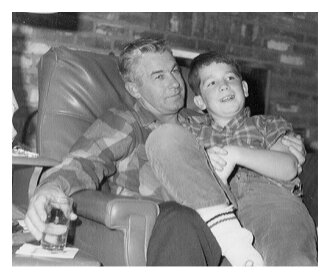
Thank you, that is amazing to hear. When you talk about what made Becker special, you have to start with Ted Danson. Ted is a brilliant actor, of course, everyone knows that. But he is the kindest, most generous person I’ve ever met. A joy to work with and know, every day you’re with him.

That show also had an incredible writers room, the best I’ve ever been in. In addition to Ian and the showrunner, Dave Hackel, you had this incredible group of writers: Dana Klein, Kate Angelo, Russ Woody, Matthew Weiner. Matt remains the funniest writer I’ve ever worked with. And there were veterans like David Isaacs and Bob Ellison who both taught me so much. 

Also, a lot of credit goes to the great Andy Ackerman, who directed a lot of our episodes. He had just finished years of directing Seinfeld, and he brought a lot of his Seinfeld crew over to Becker, so across every technical department on Becker you had people who were just at the top of their game. It was a fun set to be on, because you had Ted at the top setting the tone, and a crew full of really creative professionals, all working together. 

And if you watch Becker carefully, there’s a Duckman Easter egg: on the piano in his office waiting room are plush toys of Duckman and Cornfed.

The very funny and wildly successful 2011 film, Horrible Bosses, is another fine project in your resume. I am curious to know what drew you to this project? What made you want to tell this story. And what are your thoughts on the final product that would eventually make its way into theatres?

Thank you. After twelve years working on TV shows for Paramount, I got the sense that the studio was edging out of the TV comedy business. I knew the time was right to try screenwriting. And the story I wanted to tell was about the horrible bosses I’d had in real life. And not just in TV. I’d worked in a number of different industries before writing, and I’d collected quite a few horror stories about bosses. 

As a huge fan of Law & Order, I wanted to make it a crime story with twists. I loved Columbo, so I loved stories about planning a perfect murder. So I mixed all these elements together, and the story of Horrible Bosses became a fun puzzle to solve: could the mere act of planning a murder somehow create a series of events that would result in the murder? And the story all fell into place for me. 

I was very lucky that the script sold quickly, and Frank Oz came onboard to direct. What a pleasure to work with a filmmaker I idolize, just a brilliant, warm man. I worked with Frank on the script for about 18 months, and it was the best education I could have asked for. Ultimately, the casting of the movie never came together, and Frank finally had to leave the project to do Death at a Funeral, so what followed then was a long period of development, with actors and directors coming and going, and I did rewrite after rewrite.


I rewrote Horrible Bosses for about six years until all the pieces fell into place. We did a small writers table for the script, and then the studio had another team incorporate those ideas into the final rewrite — which was good, since I’d frankly run out of ways to rewrite it! — and they did a great job. From then on, things moved quickly. The perfect director, the perfect cast. It varied from my original script, of course, but I was thrilled by how much it was like the movie I’d first imagined. I was so proud of the story and the tone, and the final product was faithful to both. I loved it. 

Interesting side note, I wrote the part of Julia with Jennifer Aniston in mind, but never told anyone because the idea of her playing this filthy role was, I thought, just a farfetched joke in my mind. I was stunned that she did it, and that she was as great as I thought she’d be!

What does the future hold for you? Anything you would like to plug to our readers

My best friend in the world is Mary Gallagher, a phenomenally talented actress and stand-up. She recently did stand-up on The Late Show with Stephen Colbert. We’ve been friends since Second City, thirty years ago. Recently we started writing together, first time I’ve ever had a writing partner, and for me it brings a whole new joy to writing. We are working on a couple of screenplays and pilots, so I hope you’ll be seeing those someday!

What was the last thing that made you smile?

I get to work with my best friend. That makes me smile every day. 

Ian Gurvitz [Interview]


Hello Folks! Welcome to Day 1 of our “Week of Becker” here at Trainwreck’d Society. As we mentioned yesterday in our Sunday Matinee showcase, we are, basically as we have always been, all about one of the finest television programs (my personal favorite of all time) that is Becker. Today we are kicking things off with some wonderful words from a legendary writer and producer who was there throughout the series run, and has also worked on some other incredible shows that you all know and love. It’s Ian Gurvitz!

Ian’s credits on the series go all the way to the beginning of the series, and make their way all the way to the very end. Much like everybody we are sharing words from this week: Becker would not have been the incredible show that it was without him. And beyond the world of Becker, Ian also worked extensively on the hit television series Wings, which is another love of mine that I hope to get into someday. He has also worked on shows that have been mentioned before here at Trainwreck’d Society, such as Get A Life (featuring our dear friend Robin Riker), The Wonder Years (alongside another old friend, David M. Stern), and just damn much more. We are so honored to have Mr. Gurvitz join our little TWS family, and to kick off this incredible week.

Beyond the world of television, Ian is also an absolutely brilliant author, especially in the world of politics. He has some incredible books available now, which he will discuss below at great length. I highly encourage everyone to check them out. Let’s just say, in brief, that Mr Gurvitz is going to be known for being on the correct side of history.

So Folks, please enjoy Day 1 of our “Week of Becker”, and just the all around greatness that is the man himself, Ian Gurvitz. Enjoy!


******


When did you first realize that you wanted to work in the world of entertainment as a means of making a living? Was it something you were always pretty passionate about? Or did you just happen to find yourself in this world one day?

After living in Japan for a year, and deciding I wasn’t cut out to be an ex-pat,

I returned to New York and began working a series of crap jobs to stay alive. Through my one connection in L.A., I got a few freelance assignments writing jokes for comics as well as some un-credited sketches for a variety show. At that point I began writing spec pilots and features, and realized I wanted to do this for a living. 

Then, after about 7 years of spec work, along with occasional trips to L.A. for meetings, I eventually got an agent and optioned a movie to the producers of Jaws. It was set up at Columbia. We landed a director and worked on rewrites for a summer, and it was headed into production. Then the studio changed hands and it went into turnaround; i.e., it died. But in the meantime I pitched a movie rewrite at another studio, got the assignment, which lead to an overall deal, and that was my ticket out to L.A. I’ve been working ever since in half-hour TV comedy, while continuing to work on passion projects, which included writing four books, and producing and directing an indie feature.  

What was the very first project you remember seeing your name appear in the credits for? Do you remember how you felt when you saw it? And do you remember what exactly you were doing at the time?

My first real on-screen Written By was on a show called A Fine Romance. A one-hour romantic comedy shot in Europe, which the network, showing great faith in the show, put on opposite The Cosby Show at the height of its popularity. It got cancelled quickly, but I got my name on screen. It was a rush. 

I have stated on this site several times, especially with some of the writers and performers (including one of our very first interview subjects, Hattie Winston!) that my favorite sitcom of all time will always be Becker. The show was on throughout my teenage years, and I would not miss a week, and watched every re-run possible. And you are one of the fine folks that made this brilliant show possible. So I am very curious to know what it was like to bring this particular show to life. Was there anything that set working on this show apart from your previous work, or anything that you have done since? And did you enjoy your time overall?

Becker was the best time I ever had on a show. I was on it from before the beginning. A friend I’d met on Wings, Dave Hackel, created the show and staged a test reading for Ted Danson to see if he wanted to play the character. It was a big departure from Sam Malone. We did the reading and he was intrigued enough to commit to it. I stayed with the show for the entire run, wrote many episodes, and even directed one. I would have been happy to do another five years on it. I don’t think we would’ve run out of stories. I always thought it would break out more, as we touched on subjects most half-hour comedies didn’t. Still, we stayed on for over 100 episodes.


If you were to do a follow up/reunion time episode of some kind surrounding Dr. John Becker, now over 15 years since the show went off the air…what do you believe John would be up to now? What kind of life is living today?

He’d probably still be living in the same crummy apartment in the Bronx. I’d like to think he’d be in a long-term loving relationship but he’d probably still be living on his own with a stray cat for company. Who knows, maybe a talking bird. He’d probably still be raging though, after all this time, he might have crossed the fault-line from acerbic social critic to cranky old fart. 

Scrolling through IMDb, I noticed you are credited as a writer for an episode on another series that I truly loved, but didn’t learn about until many years after it was off the air. And that show would be the Chris Elliott fronted Get A Life, which featured another past guest of ours, Robin Riker. This seemed like a very unique project to be involved with, although it sadly didn’t last as long as it should have. So with that in mind, how did you become involved with Get A Life, and how did you enjoy your time working on this program?

I had an overall deal with the production company that was behind Get A Life so they tossed me in to write an episode. I pitched the story, worked it out in the room with Chris and the writers, and wrote the script, which was eventually re-written to the point that I think there was an “and” left. It’s possible the “and” was inserted during the rewrite and not even mine. That’s the nature of most freelance episodes. You write it as well as you can, then take the money and run. Years later, I worked with Chris Elliott on another show. He was a guest-star. Very funny, genuine guy with impeccable comedy genes. 

You have been writing and producing in the world of telvision for quite some time, and have put out some amazing work. I am curious to know what your thoughts are on the immense amount of changes that have been occuring in the world of television, especially with the technological advances that have been occuring since the prominence of the Internet and streaming services became available. Are things better now with or opportunities to work? Or do you believe the business is becoming oversatured and hard to keep up with?

For the most part movies have degenerated into super hero-based merchandising platforms. I get that they’re popular and that studios release relatively few films so each one has to gross billions, but the unfortunate result is that it’s contributed to the dumbing down of the culture. Once upon a time movies were grounded in the human condition. Now, they’re grounded in comic books. Frankly, every time I hear an adult rave about the most recent cinema incarnation of some super hero fantasy, my heart sinks. I don’t think it’s coincidental that shorts, T-shirts and flip-flops have become the new formal wear. It’s the outfit for men mired in terminal adolescence. Then again, it’s entirely possible that this could be a generational thing. Culture changes. The business that feeds the culture changes. You either get on board or find other interests. I just read that Avengers: Endgame opened to $1.2 billion worldwide. So, tell them they’re doing it wrong. 

Yet, in contrast to movies, there is a creative renaissance in television. Mostly cable and streaming. Since, their business model is to get new subscribers, it’s in their interest to take chances and give show creators more control. Cable and streaming platforms represent a creative paradise for writer/producers, while network TV, with some exceptions, is still stuck in the same tired categories. 

Culturally, our viewing habits have changed. TV is an a la carte experience. People cherry-pick their culture. What’s lost, however, is our shared experience, other than with major hits like Game of Thrones. This is a great time to work in TV, if you can get in. Also, given the tools available to anyone with a script and the single-minded determination to make it, it’s also a great time to do it yourself and promote it any way you can. 


What does the future hold for you? Anything you would like to plug to our readers?

After decades working in TV, I’m still compelled to write. I have an idea for another book and around 100 pages of notes. I just need the energy to write it. I recently consulted on a Disney show, and have been teaching writing at Chapman University, while continuing to work on my own stuff. 

As for plugs — sure, I’m shameless. These are links to my books:

Welcome to Dumbfuckistan: The Dumbed-Down, Disinformed, Dysfunctional Disunited States of America.

Freak-Out. The 2016 Election and the Dawn of the American Democalypse.

I also wrote a book on TV Development: Hello, Lied The Agent. 

And a book on religion: Deconstructing God. A Heretic’s Case for Religion.

There’s also a book of drawings I did, just for fun, called Talking Heads. 


What was the last thing that made you smile?

Good question. I’ve been accused of not smiling enough. I think I do, but maybe not on the outside. I laughed a shit-ton in writers’ rooms over the years. I remember rolling over in tears over Monty Python’s Life of Brian. And Fawlty Towers. If Trump’s hemorrhoids imploded on live TV and shot out his eyeballs, I think I would smile at that. 

Karimah Westbrook [Interview]


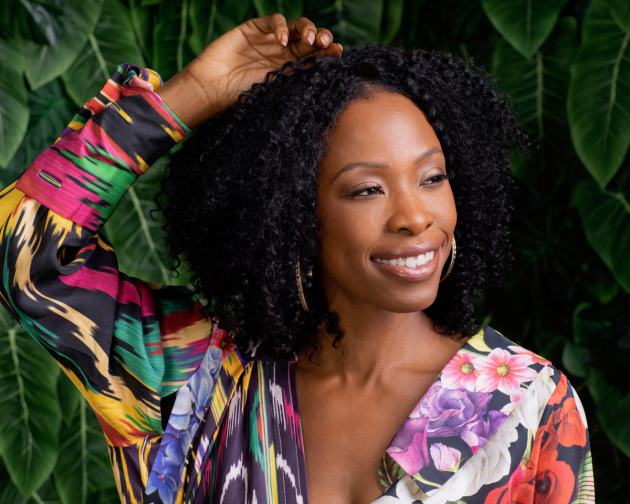
Happy Friday Folks! Today we have a wonderful interview to share with you all with one of today’s finest performers in the business. It’s Karimah Westbrook! Karimah has been killing it in the world of film and television for close to two decades and shows no sign of slowing down any time soon. While probably best known for her starring role on the hit CW series All American, Karimah is also just one of those performers that I have consistently been catching on all the best shows to air in the last couple of decades, as well showing in some of my favorite films, such as The Rum Diary and Baadasssss!.

Yes, whether you have caught her on All American, or other fine programs such as Shameless or Mad Men, also working alongside a plethora of the other fine folks we have featured on the site, you simply have to recognize that Karimah is one of the best out there and has an extremely impressive resume. And only adding to said resume in a great way, is her recent performance in Bolden, a wonderful biopic about legendary musician Charles “Buddy” Bolden, which is in theaters now.

So Folks, please enjoy some wonderful words from the absolutely brilliant Karimah Westbrook!


******


What inspired you to get into the world of performance? Was it something you aspired to do since you were a child? Or did you just happen to find yourself in this world one day? 

Acting was very fun for me growing up. It was a huge source of my entertainment. One of my favorite performers growing up was Whoopi Goldberg. In hindsight, there is something very spiritual about acting. I always feel like I’ve just left church afterwards. It is something that I had a lot of fun doing as a child but I didn’t consider it as a career until after high school.

What was your very first paid gig as a performer? And were there any sort of lessons learned form this experience that you still carry with you in your work today? 

I’m not for sure but I think it was for the film Save the Last Dance. I know that movie was my first union paying job. Working on Save the Last Dance, how I even got the role in the film, reconfirmed to me that believing in yourself and being fearless comes with major perks.

I am very intrigued by a biopic that you recently worked on entitled Bolden. What drew you to this project about Buddy Bolden? What made you really want to work on this project?

When I learned that Charles “Buddy” Bolden was a real person and that he made a major contribution to music, I wanted to be a part it. Stories that reveal a bit about history, especially black history, is something that I want to be a part of.  Buddy was truly a hidden figure.

A project I am very familiar with in which you appear on is CW’s All American, where you star alongside fellow wonderful performer, one Taye Diggs. So how has your experience been working on this program?

It’s been great! It is a dream come true working on All American. I think it’s a wonderful show that offers many great life lessons. I’m happy to be a part of a positive yet juicy narrative. What drew me to wanting to play Grace James on All American was the writing. I love my character. I believed that the show had a strong voice and was created in a world that I am very much familiar with. I too grew up without my father in a single-family household.


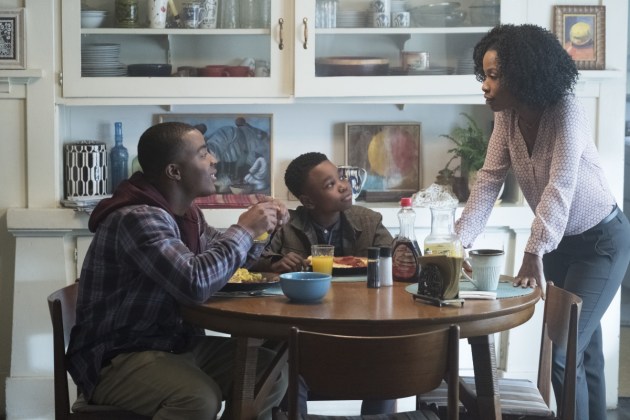
Karimah Westbrook in CW’s “All American”. Season 1 is currently on Netflix.


When it comes to acting, you have worked extensively on the big screen, television, the stage, and more in some very wonderful roles. I am always curious to know what an actor’s preferred set up for acting would be. So, if you were one day only able to choose one of these ways to act for a living, which would it be?

This is a tough question but I’d say film. I say film because I have a great appreciation for the entire process of making a movie. It really is a journey. For me, to see all of the moving parts of making a film comes together on the big screen, it feels very rewarding.

If you were handed the oppurtunity to create and star in the biopic of any historical figure in American history, who would you want to portray?

Shirley Chisolm because she was the first black woman in congress and the first to seek the nomination for Presidency.

What does the future hold for you? Anything you would like to plug to our readers?

The future for me holds more acting, writing, and producing. We were recently renewed for season 2 of All American so I am so excited to get back to that. And in the meantime you can rewatch season 1 on Netflix. Also Bolden is playing in theaters now.

What was the last thing that made you smile?

The last thing that made me smile was a little chihuahua dog. I was driving home yesterday and a guy was driving next to me in his convertible car with the top down. His little chihuahua was trying to stand on the drivers shoulder as the car was moving. The wind was too much but the dog tried to stand and balance himself with all of his strength. The chihuahua finally got his barrings and was able to stand up completely. The wind was blowing through his hair and his mouth was wide open as if he was catching the wind with his mouth. The dog seemed so happy. That made me smile.

Matthew Jacobs [Interview]

Welcome back to TWS, Folks! To perfectly commemorate the Memorial Day weekend being behind us, we thought we would share a wonderful interview with a damn fine Englishman! Trust me, it makes sense (or it doesn’t, either way, we are happy!). And that man would be writer, producer, actor, editor, director…..all of the things….Matthew Jacobs! I first became aware of Matthew’s work over 25 years ago, as he wrote the screenplay for the beautiful adaptation of a the series, Lassie. Of course, I was but a small boy when the film was released, so I wasn’t really aware of Matthew personally. So I thought I would do just that!
And as it turned out, Mr. Jacobs turns out to be an extremely nice person, and has done some even more amazing work beyond Lassie. Yes, Matthew’s work extended beyond just a film that was played on a loop in my doctor’s office up until at least 2003 when I stopped going. Yes, Matthew has written some pretty amazing words that would turn into classic films like Lorca and the Outlaws, which was directed by our old friend and former guest Roger Christian, as well as a couple of Bernard Rose films (Smart Money and Paperhouse), and another favorite of mine, The Emperor’s New Groove. And as we discuss below, he has also been heavily involved in a little series known as Dr. Who, which is insanely popular, with a very devote fan base. As we mentioned earlier, he has also worked extensively in the world of producing, directing, and even starring in a plethora of other projects as well.
We talk Lassie, Dr. Who, (briefly) portraying a despicable (depending who you ask. Me? Yes, truly disgusting) Supreme Court Justice, and so much more in these wonderful words from this absolutely legendary figure. So Folks, please enjoy some words from the brilliant Matthew Jacobs!
When did you first realize you wanted to join the world of entertainment? Was it an early inspiration you can remember having since your youth, or did you just happen to find yourself in this world one day?
My father was a TV and Radio actor (Anthony Jacobs), so for as long as I can remember I was inspired by him and like any young boy wanted to please him. At about the age of 11 in 1967/8 I got cast in a BBC 2 Classic adaptation of  Huxley’s Point Count Point and grew up fast, as child actors often do! I was playing a substantial little role opposite Max Adrien and Lyndon Brook for four episodes. However, even then I was more interested in what was going on behind the camera than in front of it.
From there, I was in lots of school plays and then got into The National Youth Theatre in 1973/4 where I played leading roles in a couple of shows: The Children’s Crusade and By Common Consent (which we also did as a BBC Play for Today.) However I soon found I was definitely more interested in being anything other than an actor. I LOVED performing, but almost everything else about the process of getting work and how we were treated in the NYT, I hated! The grass is always greener, eh?
So I luckily got a job as a runner for Ridley Scott Associates in 1974, and got sucked into the world of editing commercials. Both Ridley and Tony (especially Tony) were very encouraging and supported me going off to Hull University Drama Department where I trained as a theatre director, and then on to the National Film and Television School where I ended up focusing on screenwriting and directing for my MFA.
So it was a total immersion in that world right from the get go. I knew what I wanted to do from very early indeed.


What was the very first paid gig you can remember getting in this world? And where there any sort of lessons learned that you can remember from this job that still affects your work today?
My first professional gig was as a child actor in Point Counter Point. Very strange being so young and being with so many adults. My father was very strict about me turning up for the first rehearsal with all my lines learned. He was determined I would not appear to be unprofessional in any way. So “on time” was “late” and I had to deliver on expectations.
In those days you recorded each episode in one take and it was like a performance, with the cameras dancing from one set to the next. In one of my first scenes, the props people had forgotten to put a prop I was meant to show Max Adrien in it’s place, it simply wasn’t there!
Rather than stop the scene and make everyone go back o the top of the episode, I mimed the prop, and Max threw himself in front of where it would have been. Together we made the scene work. I was SO proud, and I guess the lesson I took from that was, “think on your feet, know how to turn problems into solutions!”
Corny, but I still live by that ethos.
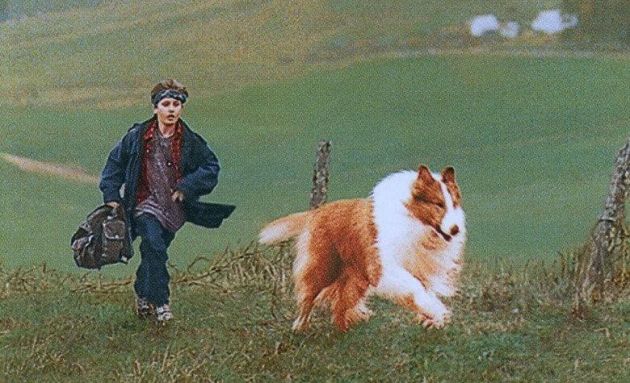
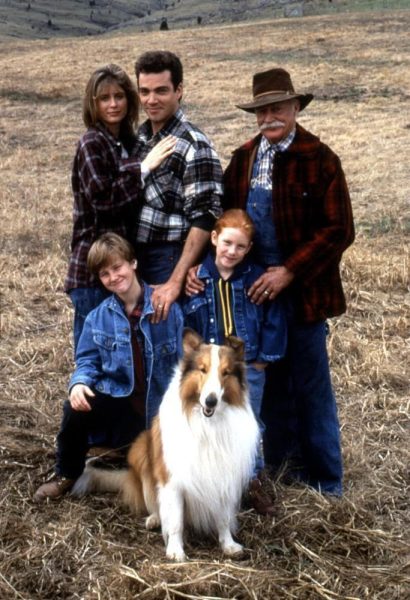
In 1994, you were responsible for telling the tale of everyone’s most beloved dog, Lassie, in the film that will always be my own personal representation of Lassie, as I was but a 9 year old boy when this wonderful film came out. So, I am curious to know what it was like to re-imagine such a legendary tale that had been around for decades prior to modernizing the story of Lassie?
Great question, and no one ever asks me about Lassie.
Lassie is a movie I have a soft spot for because it was my first truly Hollywood Movie experience. I had done a lot of TV and smaller movies by then but this was the first mainstream studio picture screenplay that got made. It was both a baptism of fire, and a lesson I will never forget. So excuse the length here …
Barnaby Thompson, who produced Wayne’s World for Lorne Michaels, knew my work well and one day asked if I had a dog movie I wanted to make. I told him the story of my own dog who had been there for me as a little boy after I lost my mother. How we went bankrupt and went to live in Dartmoor. I wrote it up as a true short story. He adored it and said, why not change the name of your dog to Lassie and set it in America? Remember, the original story of Lassie was also written by a Brit …
Lorne Michaels and Paramount at that time owned Lassie and were looking for a way of bringing it back with a classic story that focused around a family in trouble, in the same way as the original movie had done long before the TV show. Lorne really liked my story. However when we pitched it to the studio they said no way! Too depressing! But Lorne went ahead and commissioned a script anyway for WGA scale with more in the deal if it got made. A couple of months later heads had rolled at the studio and Sherry Lansing had taken control. She read it and green lit the movie almost immediately. I was over the moon. Careful what you wish for!
A very serious director was given the script and I was flown in to convince him to do a “dog movie” … (“Dog Movies” are generally looked down on in the industry.)
I showed him Ken Loach’s KES. A very intense film that showed how you really could make a wonderful film about a boy and an animal. As soon as I did the next draft for him, the project became VERY serious. I think we may have killed Lassie, I can’t remember … Added to which, my father back in the UK passed away. Paramount and the serious director couldn’t see eye-to-eye and and I went back to the UK to be there for my father’s funeral. So rather than ask me to do a rewrite, Gary Ross was brought in to make it “warmer” and more in the direction of my very first draft – at least that’s what I was told.
Gary Ross changed the name of the main character to Matt (eeek!) and had people telling each other that they loved each other all the time, and made everyone a bit older … He is a true pro, and hopefully was being well paid. The serious director walked away and was replaced by Dan Petrie Snr, a very nice man who knew how to please everyone. They hired ANOTHER writer and started casting and setting dates. The script got worse. They fired that writer. I was given another go at the script, but I was told that Petrie disliked the amount of exclamation marks I used! (That was long before that gag was used on Seinfeld).
Okay, so if it wasn’t messy enough, the studio themselves then mashed together a script from all the drafts. Then a younger very friendly writer, Elizabeth Anderson, was brought on board to smooth everything into the lovely mushy movie it became. It was still very much my story and a lot of my dialogue, but we all agreed to share the credit three ways rather than go to arbitration as was the fashion at that time at Paramount.
When I finally saw the movie it was like a surreal nightmare of watching my childhood played out with guns and Supergirl, Lassie and a soaring score, not to mention Michelle Williams as a crush-worthy local lamb-loving shepherd. The trial poster I was sent by Barnaby Thompson and Lorne Michaels had a wonderful typo in it … LASSIE … Love … Friendship … Loyality … That’s how they spell loyalty here they joked.
My elderly step-mother came over to California and saw it in the cinema, she loved it. She was being played by Supergirl. That my step-mother loved it was all that mattered to me at the end of the day. The movie’s heart is in the right place I guess. It has built its own audience over the years, including yourself and many small children … And people in the Far East …
In 1996 you became a huge part of the wildly popular series Dr. Who, which is a franchise with a very loyal and die hard fan base when you wrote and produced the original TV series by the same name. So, what was it like to join the world of that is so beloved by Whovians across the globe? And what were your thoughts of final product that would make its way to the screen?
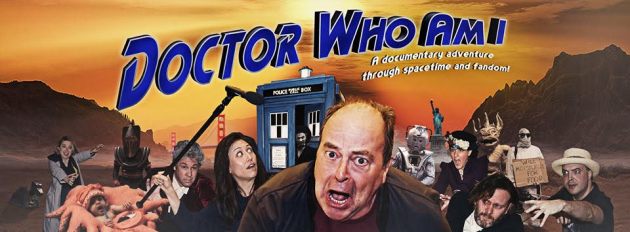
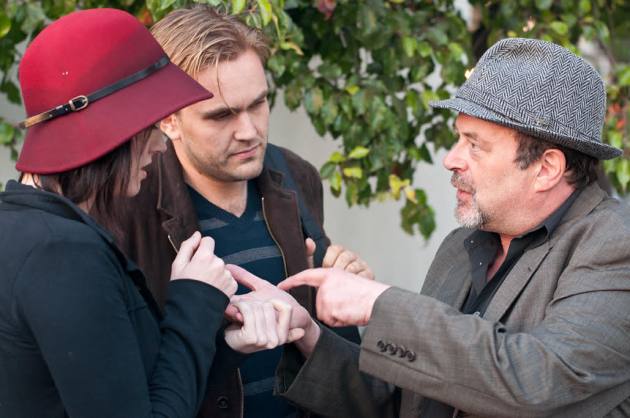
Here I stayed as in control of the film as I could while working for so many masters: BBC, Fox and Universal. By the time we made Doctor Who, I’d done Lassie, The Jim Henson Hour, Young Indiana Jones, and the first scripts for what became The Emperor’s New Groove plus lots of other stuff. Doctor Who was like coming home, and really was an enjoyable experience. I have been drawn back into the Doctor Who American fan world in the past few years making a documentary with Vanessa Yuille called Doctor Who Am I. All will be revealed there when that comes out next year and you can get a taste of the documentary by visiting our Facebook Page. https://www.facebook.com/doctorwhoami/
Last year you portrayed briefly portrayed Antonin Scalia in the absolutely incredible Oscar winning film Vice. I am very curious to know how this experience was for you?
Even though I shot for a couple of days and had the honor of improvising a duck-hunting scene with Christian Bale, my entrance was all that remained. I certainly prepared … Probably way too much! It was fantastic to be part of a big movie like that and even though I felt like I was strangely mis-cast I certainly did my best.
Recently I have done more acting in smaller movies: leading roles in Boxing Day, Your Good Friend, Bar America, and the Igor equivalent in Bernard Rose’s Frankenstein. Bernard Rose woke me up to acting again with Boxing Day, which is a really interesting little movie if you get the chance to find it.
What does the future hold for you? Anything you would like to plug to our readers?
I continue to write, direct, and sometimes act in much smaller films these days. Next up will be Doctor Who Am I as linked above, then hopefully a TV show which is going into development soon. I live happily in Los Feliz (Which actually means “the happy” I suppose 🙂  in Los Angeles … I like to support new filmmakers, coaching and teaching at universities from time to time, and I also constantly come up with new ideas. I have been SO lucky to have got this far doing what I love. I encourage people to see one of my recent films …Bar America … https://www.amazon.com/Bar-America-Matthew-Jacobs/dp/B017Y3V342

Jacobs directing Bar America.

What was the last thing that made you smile?
Anthony Jeselnik’s politically incorrect dark comedy special on Netflix the other night. A master of statement … Long pause … Reversal
For example,  “I often wonder, do I have it in me to take a human life? …. …. …. Then I remember. Oh yeah … Debbie.”
Also the June gloom has come early to LA this year, stunning flowers everywhere!!!!!  (lots of exclamation marks there)
Thanks for reading.

Leslie McRay [Interview]


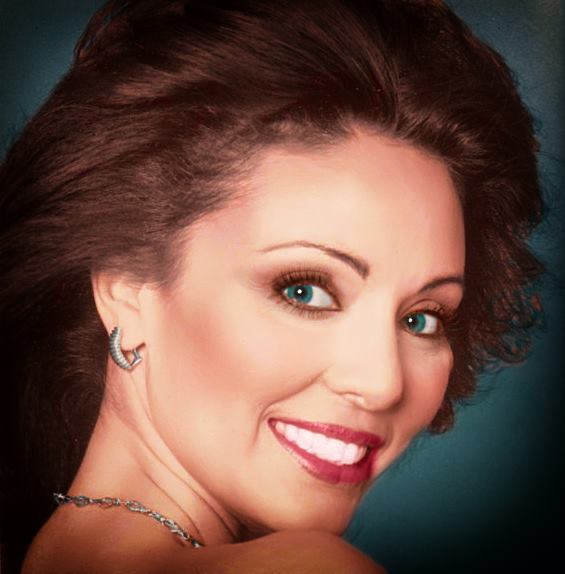
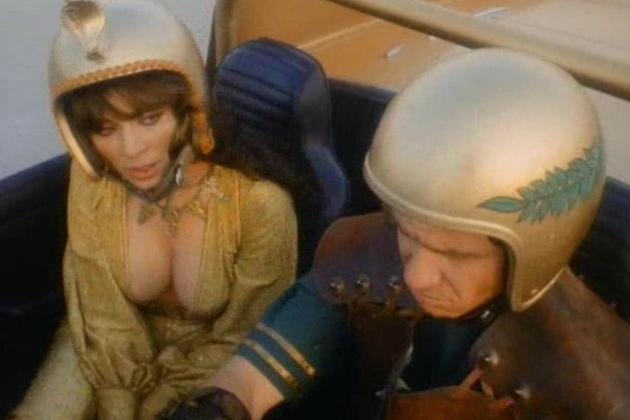
Hello Folks! Today’s interview subject is one we would consider to be an absolute legend in the world of film and television. Leslie McRay has worked in just about every realm possible in these worlds. Starting out as an international model, moving on to appear in several films and television shows, and eventually landing herself working behind the scenes as well as in front of it. While possibly not her biggest film, the main reason I was interested in having Leslie on the site was for her absolutely brilliant performance in one of my favorite films of all time, the Roger Corman classic film Death Race 2000. If you haven’t seen this one Folks, I implore you to do so! It is one of the most fun experiences you can have in watching cinema. And McRay shines throughout it. We get into a bit below.

Yes, Leslie McRay has had a career that should bring her just so much pride. She has done it her way, and has continued with great success throughout her career. We talked about Death Race, her work in the exploitation world, her new project revolved around celebrity miracles, and so much more. You’re going to love this one Folks!

So strap in, and please enjoy some wonderful responses from the absolutely brilliant Leslie McRay!


******


What inspired you to get into the world of entertainment? Was it something that you had always aspired to do since you were a child, or did you happen to find yourself in this world one day?

Since I was born on my mother’s 15th birthday she needed to send us to school in an orphanage.  Another family tried to adopt me.  This created an abandonment issue.  One day I cried to God “Someday the world will hear from me!”  Then when she became Mrs. Wyoming- I saw the pictures of her and knew my destiny.  She got me back, in time for us to move to California.  The kids at school told me that I was going to become an actress.

In more recent years, you have moved to be more behind the camera working in the world of producing, included working as an EP on the Oscars at one point, according to IMDb. So how did this transition come about? Did you always want to work on the other side of the camera? 

I am ambidextrous and very creative so setting around on the set waiting to say one line bored me. I began assisting in production and quickly developed the skills to produce.  While shooting the Award winning docudrama Day of Miracles (the miracle survivors of 9/11), I wrote the script at night through googling the incidents and produced during the days. 


One film you appeared in has to be one of my favorite films of all time, which would be 1975’s Death Race 2000. It’s not only a Corman classic, but it is just a classic all around in my mind. So what drew you to this insane story? And how was your experience working on such a truly unique film?

Just becoming an International Model, one of the first films that I acted in was the classic Death Race 2000.  I was offered the lead but I turned down the nudity.  Loved working with Carridine and Stallone. Stallone was bragging about a little boxing film, Rocky in which he had to raise the money, in order to play the lead! 

Throughout the 60’s & 70’s, you worked in the world of films now known as “exploitation films”, which have re-emerged in popular culture in recent years. As an obvious expert from the original world, I am curious to know if you had any opinions as to why the popularity and mystic of these films has only continued to rise? What is it about films like Girl in Gold Boots or Coffy that keep them relavent and beloved after a half of a decade? 

I feel that people love the 60’s – 70’s because they were more real.  Today’s films are frequently created from extreme-tech special-effects. In that other era there was an interesting story to follow.


I am very intrigued by a project of yours that I discovered on IMDb, but haven’t gotten the chance to check out, entitled Real Celebrity Miracles. You not only host the project, but you also wrote, produced, & directed the whole thing. Can you tell our readers a bit about this? How did this project come to life?

While interviewing for Celebrity Miracles on Oscar Night I asked inspirational questions and got amazing answers! The name of our show, Star Power, created an opportunity to ask “What is the power behind the Stars?”   Frequently the answers were, “God is the Power behind the Stars”(Dyan Cannon)!  Other answers were: “Yes- I have had an Angel experience” (Richard Dreyfus and Jane Seymour)!

Prince’s girl friend (Vanity), and background singer said “Due to the drugs and alcohol I had only minutes to live and someone prayed with me in the hospital.  “I had a complete miraculous healing!”  (Omar Sharif) one night wrote a check for almost everything he had.  His life completed turned around after that event! 

What does the future hold for you? Anything you would like to plug to our readers?

I am always on the look-out for inspirational stories. I am packaging a true story, Fighting Spirit, now which is about a Hispanic young boy who gets scholar-shipped into High School Wrestling.  Due to extreme working out he falls into a coma.  Doctors give him a slim chance to live.  His brother prayed and he miraculously recovers.  He then became the first High School Camp of California!

What was the last thing that made you smile?

Last smile  was Easter when I designed flowers for Sunday brunch for 40 tables for seniors.


Janet Scott Batchler [Interview]


Hello Folks! We have another absolutely wonderful interview to share with you all. Today’s interview subject is a screenwriter who has brought some incredible fun to the world of cinema through her work. Janet Scott Batchler, and her writing partner Lee Batchler, happened to work on two very specific projects that affected me personally at two very different times in my life. The first, if you haven’t guessed it from the absolutely hilarious (right? c’mon) photo above, is from within the world of Batman. Janet helped bring to life, the film that not only features my favorite performance of Batman (from Val Kilmer), but the film that felt it was made exactly for me at the time. And that film was Batman Forever. Arguably a wonderful film that moved away from the very serious (also incredible, I will add) and dark Tim Burton world, and brought the story of Batman back into the more outlandish stylized nature that it was always portrayed on screen prior getting the Burton treatment. And don’t get me wrong, I absolutely love the Burton and Christopher Nolan routes that Batman took, but I will definitely go on the record and say that Batman Forever is a film that was just SO MUCH FUN! And so much of that fun should be credited to Janet Scott Batchler. In terms of cinematic achievements, of course it constantly be compared to what The Dark Knight did, but it really shouldn’t. They are two very different tellings of stories of similar characters. And if you are a fan of comic books in general, you’ll probably understand this more than most.

The other project that Batchler brought to the world was the absolutely incredible My Name is Modesty, a screen adaptation of a very specific book series that I was very well aware of, although not well versed in, due to my young teenage obsession with all thins Quentin Tarantino, which was rampant in late 90’s and early 00’s. I was 10 years old when Batman Forever came to the world, and 19 years old when Modesty came out. Two very different people within myself existed between these times, and Batchler just seemed to be the person who was capturing my interest in focus of the moment at these exact times! It’s such a lovely coincidence.

And we are so excited to have Janet grace our digital pages today. So Folks, please enjoy some incredible words from the absolutely brilliant screenwriter as we talk Batman, Modesty, and so much more. Enjoy!


When did you first discover your passion for writing? Was it something you had always dreamed of doing professionally? And what specifically set you on the path of screenwriting?

I began writing as a very young child, for fun and self-expression. Writing was something I could always do. However, it never occurred to me to think of it professionally growing up because no one encouraged me that it could be a possibility. In fact, a career counselor told me that it was a ridiculous idea, especially for a woman. So I didn’t take the idea seriously. But when I met my husband-and-writing-partner-to-be, I began to think: Hey, maybe this *is* something I could do. And from the first time I started to dabble with screenwriting, I felt completely at home.

What was your very first paid gig as a writer? Were there any sort of lessons learned from this experience that still affect your work today?

I honestly don’t remember my first paid gig as a writer. But I do remember the first time I *didn’t* get paid. I was working in development for a TV movie company. We had been approached by a network to create a TV movie about Chernobyl. A writer was hired, but I was asked to do all the research. Okay, fine. But when the writer turned in his treatment, it was unreadable, poorly plotted, and ignored all the research about what actually happened. My bosses knew they couldn’t turn in something like this to the network, so they asked me to rewrite it. I did a page-one rewrite. My treatment went to the network under the official writer’s name, the project was greenlit to script, and the official writer was paid for the treatment… and I went “Wait a minute.” I left that company soon after (and the writer’s first draft of the script was so horrendous that the project was scrapped).


In 1995, a film that you worked on came out that was one of my absolute favorite films, and remains my favorite comic book movie of all time, even with the influx of other comic book movies recently. And that film was Batman Forever. I was 10 years old when it came out, and it blew my freaking mind! So how was this experience for you? Where you already a fan of the world of Batman or comics in general? 

I was a big Batman fan growing up — it was really the primary comic book that I followed. Writing Batman Forever and having a tiny part of the Batman legacy was a truly wonderful experience.

Another absolutely incredible film that you wrote was one that I would enjoy much later as an adult, and that would be My Name is Modesty. The director of the film, Scott Spiegel, is actually an old friend of ours here at TWS. I am curious to know where the idea for this film come from? What made you want to tell this tale?

My writing partner and I were actually approached by Miramax to write a large-scale, big-budget Modesty Blaise movie, which we did in fact write. Although we read and studied all Peter O’Donnell’s Modesty Blaise novels for the project, it was not based on any of them. One storyline of the movie involved reconnecting Modesty to her mentor and teacher Lob, who is mentioned only in passing in the novels — but that was the storyline that most fascinated Harvey Weinstein, for whom we were working…

However, while we were finishing up the large-scale screenplay, Miramax realized that their rights to Modesty Blaise were about to expire. In late January, they informed us that they had to have cameras rolling on a Modesty Blaise movie by early April — about 9 weeks away. And they asked if we could write a low-budget story featuring Modesty that could be prepped and shot in that unbelievably short time frame. We thought the best way to approach that would be to tell a story about Modesty before she became an international crime boss, before she teamed up with Willie Garvin — and we decided to dive deeper into that time period of her life, staying as faithful as possible to the little we knew about it from the novels. We were working with very limited locations and budget, so decided to key in on the time when Modesty worked at a casino, and built the story from there.

I’m very proud of the large-scale Modesty Blaise script that we wrote, by the way — one of my favorite pieces I ever worked on. But it got caught up in the Miramax/Disney divorce — I’m not sure anyone really knew who owned it. And after Peter O’Donnell’s fairly recent death, it’s unlikely that it will see the light of day as a movie, sadly.


I also noticed that the film was “presented” by none other than Quentin Tarantino. How did the addition of Quentin to the project come about? I know that him and Scott have a solid history together, but how did he manage to become involved with this specific project as well?

Quentin was involved with the project from the beginning. While I don’t remember how he became involved, he has a long history of loving Modesty Blaise. (Look at what John Travolta’s reading in the bathroom in Pulp Fiction.) Quentin was in fact the person who brought Scott on. Someone else was prepping the project, but when Quentin read the script, he loved it so much that he wanted to offer it to Scott, who stepped in to direct.

Another project of yours that I truly enjoyed was the 2014 film Pompei. The story of Pompei is a truly fascinating story to begin within, but you managed to make it even that much more compelling. Having actually been to Pompei, I can say that it is an eery place to be and to realize what exactly happened there. So I am curious to know what inspired you to tell this tale? Have you been to Pompei?

I have never been to Pompeii — but given that we needed to visit Pompeii in 79 A.D., we wouldn’t have been able to make the trip anyway. We were inspired because we find disaster movies fascinating, a chance to explore what people do when faced with a life-or-death situation they’ve never anticipated. Humans go through a very distinct psychological process when facing disaster, which is fascinating to journey through as a writer. My writing partner and I realized that a modern movie had never been made about a real-life disaster so legendary that people still know about it 2,000 years later. While the final movie was significantly different from the script we originally wrote (which raised $107 million overnight at the 2011 Cannes Film Festival), our personal journey diving into the history surrounding the disaster was very satisfying.


What does the future hold for you? Anything you would like to plug to our readers?

Waiting to see what the future holds. We have a movie casting, we finished a movie at the end of last year that’s out to directors, I’m on the second draft of a movie I’m writing with my daughter, and we’re in the early stages of a new project. Most immediate: I’m a screenwriting professor at the USC film school, and I’ll be wrapping up the semester’s grading this week and getting ready for summer to start.

What was the last thing that made you smile?

Some friends’ photos from their anniversary trip to Berlin.

Brian Kerwin [Interview]


Hello Folks! We have another absolutely wonderful interview to share with you all. Today’s interview subject is one of the people that I just sort of knew about, for basically my entire life. But, if I’m being honest, I wasn’t a wild follower of his work (until now). I knew Brian Kerwin as the caring and trying-oh-so hard father to a 10 year old soon who looks 10 years older than him in the absolutely legendary film Jack that I love so very much. I also knew him because of my on again/off again relationship with the daytime soap series One Life To Live, where I watched him for a few years depending on varying work schedules, if I were able to throughout the middle of the day. So with these two simple things in mind, I was curious to know a bit more about Brian.

And you as you should have guessed it by now if you are a regular reader of this site, he is one hell of a nice guy! And I will say, I was relieved to not be too surprised, but still have plenty of “oh, that’s cool” moments in reading his responses. Brian Kerwin is essentially a hippy who discovered his own voice through the art of performance. Performing, on stage as a probable preference, is how Kerwin expresses himself the best, and we are so damn happy for the career that he was able to build for himself. He’s one of the good guys, Folks. I just know you are going to love his charm that exudes through even on just the below digital print. That is if you aren’t already a fan of his, and are just tuning in to check out more, which is very likely as he is such gem of a human.

So Folks, let’s just get into it! Please enjoy some wonderful words from the absolutely brilliant Brian Kerwin!


******


When did you decide that you wanted to join the world of acting? Was it an early aspiration from your youth? Or did you happen to find yourself in this world one day?

I never decided —- acting sort of chose me. I remember when I decided to give professional acting a try: I was living in NYC in ‘72 with my girlfriend who was starting a career as a fashion model. We were living in the Village and I tried to open a little hippie store of handmade items — it was a miserable failure. I was also painting, and I fancied myself a singer-songwriter. I was doing a little bit of everything. And I was hanging out with a few actor friends, and they suggested I give it a try. I did, and within  a couple weeks I was cast in a little off-off-Broadway showcase, and one thing just lead to another. A year later I was in LA working on some pretty mediocre TV shows.

In 1996, you appeared in what would probably be my most re-watched film of my youth. That film would be the absolutely adorable and compelling Jack. It may be some of the most wholesome fun I have seen to date. I am curious to know how you enjoyed working on such a delightful family friendly masterpiece? Was it as enjoyable of an experience to work on as it was for me to watch?

I was so happy when I got cast in Jack. I loved the script, and all of the talent in the cast was a dream come true. I had worked with Diane Lane previously. Robin was already a legend, but he proved to be a lovely man to work with — we had fun together. I became lifelong friends with Irwin Corey, the iconic comedian. The entire cast was great….even Bill Cosby. And it was Jennifer Lopez’s first film — she was sweet.

Unfortunately the otherwise truly brilliant director, Francis Ford Coppola, is a very difficult person to be around. By the time that film wrapped everybody was glad to go. I only saw Robin a few times after that and was very sad to hear of his death.


Brian Kerwin in Jack (1996)


We have spoken with alot of folks who have worked in the world of Soap Operas. And you are no stranger to this world yourself, have appeared in hundreds of episodes of one of my personal favorites, One Life To Live alongside our dear friend & past guest Kassie DePavia. I am always fascinated by the break neck pace in which these shows are pushed out into the world on a daily basis, and what it must be like to work on one of these programs. So, how was your experience on OLTL? Did you have any tricks to memorizing so much dialogue in such a short amount of time?

The soaps are bookends to my career. The first job I ever had in front of a camera was in LA in 1976 on The Young And The Restless. For 6 months (40 episodes) I was Greg Foster. I hated it! And the producers grew to hate me, terminating my 3 year contract after only 6 months. I never even considered doing another soap until over 30 years later. I had just started a year and a half run on Broadway in August: Osage County when the producers of One Life To Live offered me a 4 year contract playing Charlie Banks, love interest to soap opera icon, Erika Slezak. I was definitely gun shy from my experience on Y&R, but a friend of mine on the show, Tuc Watkins, convinced me that it was a lot of fun. Thankfully he was right. Contrary to my Y&R experience, I loved it — the cast, the crew, the brass — all wonderful. I would have done it for 10 more years, but soaps had run their course by then.

Learning lines has always been easy for me, but for OLTL it was even easier because I had all my backstage time on August: Osage County to do my homework.

Might I add that not only is Kassie DePavia one of the most delightful people in the world, but she also changed my world. I suffer hearing loss, and now, very happily, wear hearing aids — but not back then. When I first met Kassie I knew that her son had severe hearing loss and I sought her out for advice. She hooked me up with her son’s wonderful Audiologist, Ellen LaFarge, and my life has never been the same. Kassie is one of my heros.

When it comes to performing, you have worked on numerous projects within the realms of television, film, stage, and beyond. With that in mind, I am curious to know what your favorite field to work on would be? If from this point forward, you were only going to be granted the ability to work in one outlet, what would it be?

STAGE!  Stage. Stage. Stage.

I love working on stage — I could care less about the other mediums — they can be fun, and it’s great to work with other talented people, and you make lots more money, but for me the only real satisfaction comes from the stage.

Why? …. I could write a book (and you wouldn’t want to read it). Onstage you’re dealing with, telling a story to, real live people. You can feel them listening. At its best, it’s like talking to a friend. I like that.


Having done so much incredible work in your career spanning 40+ years on screen and on stage, when you look back on your accomplishments and your career as a whole, what would you say you are the most proud of? Not necessarily a single project (although it could be), but maybe as a whole? 

I think, looking back, my finest hour was doing a play that few people saw — in the mid 80’s, in two productions in both San Diego and Los Angeles, Stephen Metcalfe’s brilliant play Strange Snow. I remember that play with great affection.

I’m very proud to have been a part of Harvey Fierstein’s groundbreaking LGBTQ (in 1986, before anybody used all those letters) film (and play) Torch Song Trilogy.

But other than any single project I suppose I’m most proud of having been able to pull off a successful career, and support a family of 5 in NYC as an actor. That’s not an easy thing to do, and I’m the first to admit that it involve a whole lot of luck. But I got to raise my kids in a great city, I got to travel the world (often with my family), I got to work with some wonderful and wildly talented people —and I got that all by doing something that I thoroughly enjoy doing. I’m very lucky.


What does the future hold for you? Anything you would like to plug to our readers?

I’m for all intents and purposes retired — I’m pushing 70. I sold my house in NYC, my kids are grown and out on their own, very sadly my wife, Jeanne, passed away 3 years ago, so I’ve built myself a new house on a lake in upstate New York. I intend to live there quietly and happily reading, and fishing, and painting, and playing music. And if any of my wonderful playwright friends, or directors, or my agents call me with any tantalizing possibilities I will give them all great consideration. I’m sure I would love to do another wonderful play.

What was the last thing that made you smile?

Truly?…the last thing that made me smile was your use of the term “digs” in your introductory paragraph. I haven’t heard that in years, and it warmed my heart. That was a vital part of my hippy vernacular many years ago. It made me smile just reading it. I dug it.

Blair Socci [Interview]

Photo by Corbin Chase

Hello Folks! We have an absolutely wonderful interview with another incredible human being to share with you all. We are kicking off our short break with another incredible person from the world of comedy. It’s Blair Socci, Everyone! Blair is an absolutely hilarious comedian that, for any true die-hard fan of comedy, is simply a household name at this point. I first became aware of Blair’s incredible comic sensibilities when she appeared on our dear friend Amy Miller’s podcast, Who’s Your God?, and then should up on a podcast done by our other dear friends Tom Thakkar & Tommy McNamara that we all know and love, Stand By Your Band. Now, I am just realizing that I am making Blair out to simply be a professional podcast guest or some shit, and that is because I am sometimes a stupid, stupid, person. So let me reiterate the fact that this is where I first found out about Blair’s comedic brilliance. It’s not necessarily the highlights of her career. Blair has done some absolutely incredible work in the world of stand up and comedy writing. Of course, being the simpleton that I am, I still threw in a question about her appearance in Stand By Your Band. I never claimed to be good at this, People. My apologies if I led you to believe I was.

What I am good at is searching out some of the most wonderful folks from the world of comedy and keeping my fingers crossed (for days at a time) that they might want to join us on the very weird journey that has been the evolution of Trainwreck’d Society. And I will be damned if some of them happen to answer the call of the stupid, and jump on the proverbial train that is this site, and by its namesake is only destined for disaster. And Blair Socci is an absolutely perfect example of an extremely talented human being that we are so fortunate to have grace our digital pages here at TWS. We love Blair, and would like to assume that you already do as well. Who in the hell could you not?


So Folks, please enjoy this wonderful collection of responses from the absolutely brilliant Blair Socci!


******


When did you discover that you were an absolutely hilarious human being, and that you wanted to make people laugh for a living?

I grew up in a loud, nutso Italian family and everyone was always making fun of each other so you had to be able to take it and also dish it out. Being funny was currency in my family. My parents are both really funny too.
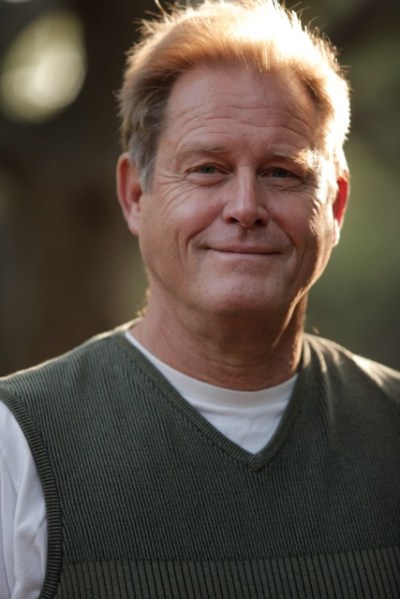
What was the very first paid gig you ever had in the world of comedy? And where there any sort of lessons learned from this experience that you still keep in mind in your work today?

I honestly can’t remember my first paid gig. I wish I had saved something to know. My first year and a half I barked for 6 hours every Friday and Saturday night for free in the village in New York for five minutes of stage time on the 8 and 10 pm shows. Sometimes the maniacal man who ran it gave us a few dollars out of a donation bucket lol but that’s not what you mean I think. He wouldn’t let the barkers talk to each other on the street or look at our phones for six hours! I did it during blizzards. Wow, comedy is a sickness. I hope you’re reading this Jeff Lawrence, you evil warlock. Umm no I was lucky cuz I got on an MTV show two years into comedy and then was able to start getting paid for sets after that which felt really cool because I never ever thought comedy was going to be my career when I first started.

As somebody who has been all across the country making people laugh, I am curious to know about some of the places you love to perform in. I’m especially interested in some places that people may not immediately realize are wonderful places for comedy. Even the the common comedy fan knows that L.A., New York, Chicago, etc. are great places because you all live there. But what about the “flyover states” and anywhere else in the country? What are some places you have found yourself truly pleasurable to work in that some people may not expect to know are such a joy?

Gosh, I’ve been lucky to go to so many cool places but one of my favorite places is Atlanta. They have such a great scene there and so many great comics I love started there. I also love the food. Wow, I just eat so much food there.


It has been a hot minute now, about a year and a half ago, but you once appeared on one of my favorite podcasts of all time hosted by our old friends & past guest Tom Thakkar & Tommy McNamara known as Stand By Your Band where you defended Good Charlotte. And I think you did a damn fine job, if I do say so myself. And whenever we have guests on here that were on this program, I am always curious to know how things were for you all after the show goes live. I love Good Charlotte, and have gotten plenty of backlash for it, just in every day normal ass conversations. So how about you? Did you have any sort of backlash for defending The Madden Brothers & Friends from the internet, or friends and family members?

I love Tommy and Tom so much! They both make me laugh so hard. Honestly, I love so much shitty music it was hard to choose a band but I’d be lying if I didn’t purposely try to choose the shittiest of them all for that pod. I received a lot of backlash especially from Jared at the Comedy Attic but I just pray for my haters.

I read on your website that you have a podcast coming out soon with our another old friend & past guest Johnny Pemberton, entitled Demon Hour. I am very intrigued, and will definitely be tuning in when it becomes available. Would you be able to tell us a bit about this project? How did this come about?

Thank you! Johnny is a wild dude and we just kind of immediately connected when I moved to LA. I love how wacko his comedic sensibility is. We have been slacking on getting the pod out cuz we’re both so busy but we did just shoot a short film together that I am super excited about.

And while I am currently based about 8,000 miles away, and haven’t been able to check out The Blair and Greta Show that you do each week in North Hollywood at Genghis Cohen, I am very intrigued by it, and I’m sure our L.A. readers (there has to be a few, I imagine) would love to know more about this show that you do with (hopefully) future guest Greta Titelman. So, can you tell us what compelled you to want to create this show that I can only presume is absolutely hilarious?

The Blair and Greta Show has been a huge blessing in my life and is my favorite part of every week! Greta and I both moved from New York to LA at the same time a year ago and we knew we had to start a show right away because we would be getting less stage time than we we’re used to in New York and would need a place to work out new material every week. It’s grown into an amazing, packed show with a fun, devoted audience and Greta and I can’t believe how lucky we are.

What else does the future hold for you? Anything you would like to plug to our readers?

Hmmm…I am really excited to go on tour this summer with Ron Funches and Gabe Dinger. They are two super funny dudes and great friends of mine. I know being with them will push me to get better at comedy but I also just love hanging out with them because they are so sweet and silly and fun to be around. I am also working on trying to sell a few things and always making more short films. I love working with Reggie Henke, Brooks Burgoon, Andrew Johnson and Xavier Rotnofsky on my series, Blair’s Lair, which you can find on my Instagram or online.

What was the last thing that made you smile?

I met this dog named Elmo the other night who was 70% poodle and 30% pitbull and I have never connected with anything more in my life. It was like Elmo was me and I was Elmo. He was so fuzzy and furry and laid in my arms like a baby on his back. We loved each other!

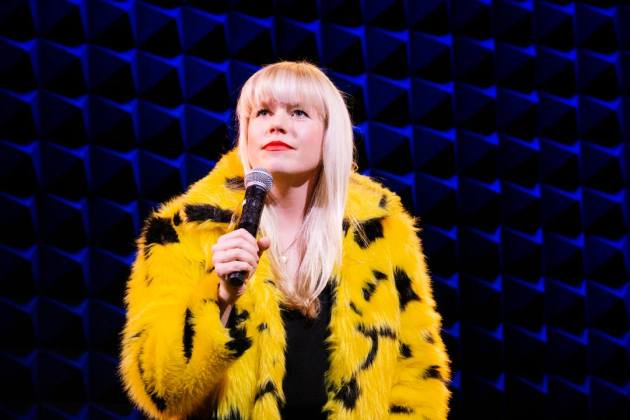
 

To keep up with Blair, check out her WEBSITE. And if you live in the L.A. area, be sure to check out The Blair & Greta Show every Tuesday at Genghis Cohen.


Upcoming Shows Across the Country:

June 20th, 2019 @Thalia Hall in Chicago, IL

July 11th – 13th, 2019 @ Comedy On State in Madison, WI

July 14th, 2019 @ Turner Hall Ballroom in Milwaukee, WI

August 8th, 2019 @ Stand Up Live in Huntsville, AL

August 9th – 10th, 2019 @ Zanie’s in Nashville, TN


& More to come!